
The Real Story of the New York City Blackout of 1977
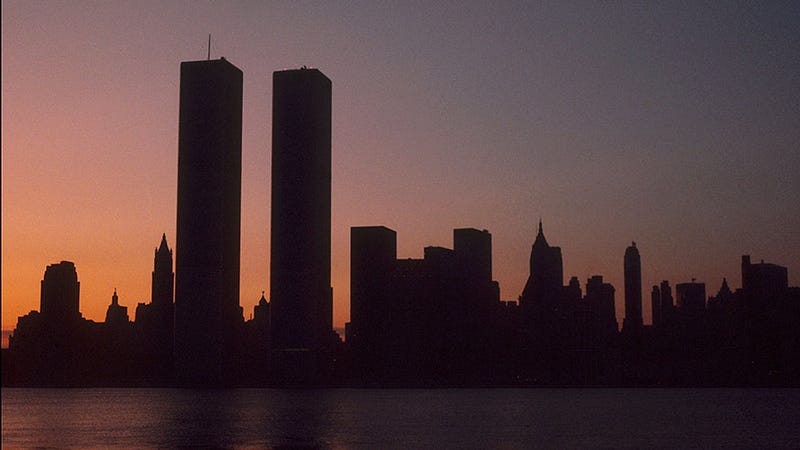
The citizens of the Big Apple lived in sheer terror during the sweltering summer of 1977. No, not because of the looming fear of a possible attack from the “.44 Calibur Killer” aka “Son of Sam” or the team of gangsters under the direction of the most feared mob boss, Carmine Galante. It wasn’t because of the rampant wave of crime and skyrocketed unemployment rate that hit the city. Nor the increase in record-breaking poverty. New York’s darkest hour came on the evening of July 13th when the city experienced one of the biggest blackouts in history. An event that catapulted the already deteriorating city into an utter breaking point.
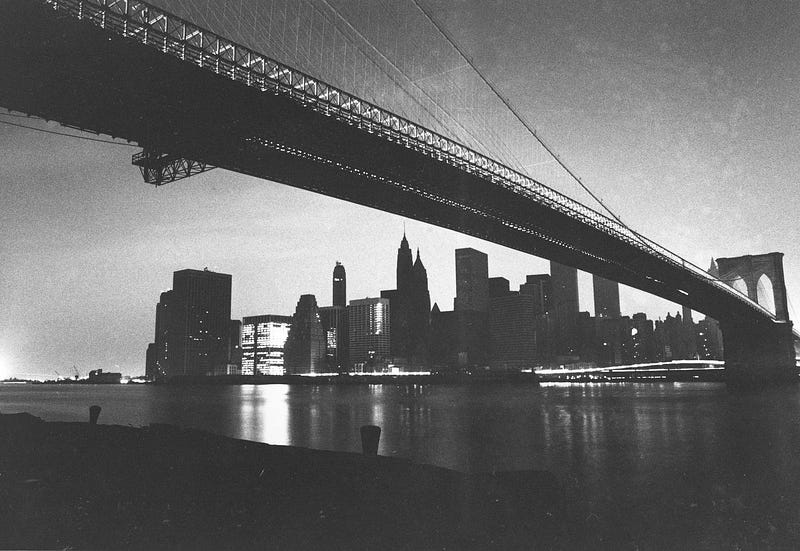
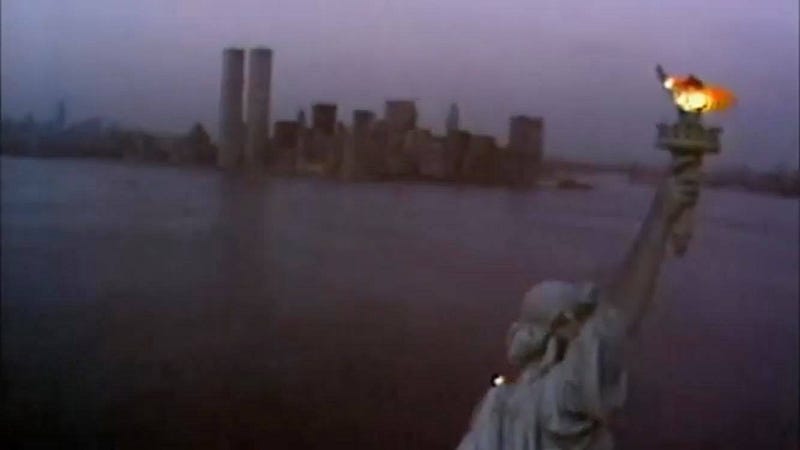
July 13th was a sultry, humid day that met an uncomfortably hot evening. The skies over New York City roared throwing out hundreds of lightning bolts that lit up the skies surrounding the island of Manhattan.
At about 8:37 PM lightning struck at Buchanan South, a substation on the Hudson River, which tripped two circuit breakers in Westchester County. Five minutes later, a second lightning strike caused the loss of two 345 kV transmission lines and the loss of power from a 900MW nuclear plant at Indian Point. Seven minutes later, Con Edison, the power provider for New York City attempted to start fast-start generation while no one was manning the station, and the remote start failed. Just a few minutes before 9:00 PM, a third lightning strike took out two additional critical transmission lines at Sprain Brook. A quarter past nine, Con Ed operators initiated first a 5% system-wide voltage reduction and then an 8% reduction. The final major interconnection to Upstate NY at Leeds substation tripped because of thermal overloading. At 9:19 PM due to the Leeds substation tripping the increased load on other substations cause them to trip. Three minutes later, Long Island Lighting Company opened its 345 kV interconnection to Con Edison to reduce the power that was flowing through its system and overloading 138 kV submarine cables between Long Island and Connecticut. At 9:27 PM the biggest generator in New York City, Ravenswood 3 (also known as Big Allis), shut down ending power into New York City. A few minutes later, the Goethals-Linden 230 kV interconnection with New Jersey tripped. Then the Con Edison system automatically began to isolate itself from the outside world through the action of protective devices that remove overloaded lines, transformers, and cables from service.
At 9:36 PM the entire Con Edison power system shut down. Leaving millions of New Yorkers in the dark.
There are more than 8,000,000 stories of NYC during the night of the blackout. A few shared their stories here.
“I was about 20 years old at the time. My family moved to New York City from a 12 bedroom chateau on about a 3 dozen acre vineyard in Southern France in 1975. The culture shock of moving to the polluted, dirty, and over-populated city was incredibly overwhelming to me. Another shock was that both my parents immediately took up with other people a few months after reaching the states. My father had a 25-year-old Columbia University student as his girlfriend. My former fashion model mother met a slick fashion industry executive and then moved up to Scarsdale.
My parents left me and my two younger sisters to live in an apartment down on Spring Street and Bowery. Anyway, that night, my sisters were up in Scarsdale with my mom, and I was up on 79th street having dinner with my father. I got into a cab after dinner at about 8:30 to head to Washington Square to get a friend and then meet my girlfriend who was dining with her parents at the Windows on the World restaurant in the North Twin Tower. My intention was to head to a disco after gathering my girlfriend and friend, John.
My mother’s boyfriend had given me a gorgeous pale blue silk shirt. I had on that shirt, white linen pants because it was hot as hell outside and wore white leather Oxford shoes with tan soles. Believe me, not the attire you’d want to be wearing when a catastrophe hits.
At around 9:00 PM, I reached Washington Square and met John. He was standing outside pissed for my being so late. We were supposed to be at the World Trade Center at 9:00 PM sharp to get my girlfriend. He hopped into the cab with me and it was bumper to bumper to the towers. For some reason, I did feel a bit of a thick tension in the air that night. Anyway as we were arriving, we looked across the river and didn’t see any lights on. That was really odd. Then a few minutes later, some buildings around us went black. The towers stayed lit. Dimly lit, but lit.
It was around 9:30 PM that I noticed complete black around us except for headlights from cabs and a few buildings that may have had generators. People were getting out of their cars, running like chickens with their heads cut off, rushing out of buildings. I told John that we better get out of here. He got furious and said he wasn’t leaving without my girlfriend. I knew she would be ok with her folks, so I left John and headed toward my apartment. I knew that something would seriously go wrong if we stayed out in the dark.
As I walked through the Tribeca, a few guys started to hassle me. All I had on me to double as weapons were some nail cutters, a fresh pack of cigarettes and a lighter. So I lit a cigarette, and when one of the guys lunged toward me, I smashed the lit cigarette right in his eye and then ran. I disappeared into an alley. I took the large bills and identification out of my wallet and stuffed them in my underpants. Good thing too.
Several blocks later, I was mugged by a group of thugs on the street. One of them slugged me and they were stopping other people around me attempting to mug them too. The thugs got away with my leather wallet and about three dollar bills.
Finally, I reached my apartment only to find that our security guy and doorman left. Non-residents were running into the building and up and down the stairs. I waited for some of them to leave then I put my lighter up to the fire alarm to set it off. It got those who didn’t belong there out of the stairwell ushering them out. I locked all the locks on the main door and told alarmed residents in the building what I had done to keep our small building safe. We all returned to our apartments. I watched the chaos from my window and man was it wild.
People who looked completely normal were breaking into places and stealing. After the power came back about a day later, I contacted my family and girlfriend. All were fine. But my girlfriend did leave me for John a few days later.” Jacques D. remembers with a chuckle.
Down on lower Manhattan, some 500 diners, including Jack’s girlfriend, continued to drink and eat at Windows on the World, the restaurant on the 107th floor of the World Trade Center, drinking the free champagne that the restaurant manager kept flowing, finishing their meals by candlelight as they watched all the boroughs below darken. Most rode to the ground on a service elevator when they were finished. The elevator was operational by an emergency generator.
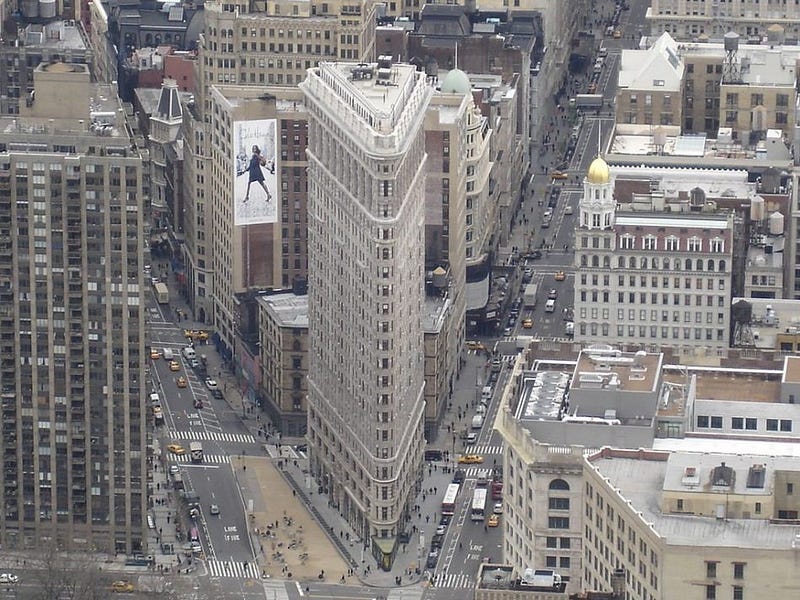
Film director, Mike Timm, recalls a story his friend told him. “Story editor, Chester Young, worked in the Flatiron Building for St. Martin's Press. Little did he know that night he would hear one man’s life story he’d never forget. A story about men’s last wishes, words, and tears just before they die… by the hands of a killer. A hitman for the mob. As Chester leaves his office, he finds himself stuck in the building elevator with Leo Maltempi, a blind old man from Italy. In the total darkness, Leo confides in Chester with his soothing voice. Obviously, Chester now experiences Leo’s everyday life. Living with no sight and in total darkness. Leo just signed a book deal with St. Marin’s Press and was leaving his meeting. Curious, Chester inquires about Leo’s story. Leo shares his tales as a mob hitman. Stuck in darkness, visions of Leo’s tales invade Chester’s imagination. By morning, Chester and Leo are rescued. Chester evolves from the darkness with new insights on life, love, and what matters most.”
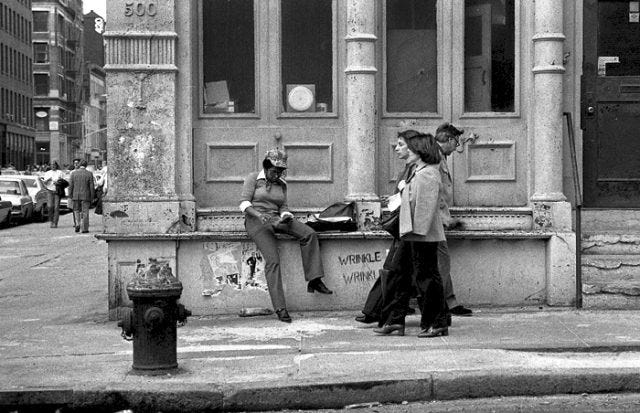
An East Harlem resident, then thirteen-year-old Marco Benitez, recalls the blackout vividly. “During the mid to late 1970s, the city was a beast. The crime in those days was unbelievably high. Especially in Harlem. But not all people in Harlem were crooks. There were good people who lived there who just didn’t have the opportunities that others had. A lot of immigrants were forced to live in depressed NYC neighborhoods. That night, I saw these good people do very bad things. After the first round of break-ins from criminally minded people, there was a second wave of looting from people who normally wouldn’t do such things. There were housewives stealing from grocery stores with other housewives. Bringing their children to help them carry the stolen groceries home. I saw an 80-year-old neighbor of ours, walking into our building with a brand new stolen record player. Crazy stuff! Fire trucks were going by and not able to stop and help people who were injured. I never saw one policeman or vehicle the whole night.”
A woman went into labor on the Subway. The police and transit workers had to evacuate roughly 4,000 people from the subway system.
A young photographer, John Berger, casually walked the streets with his chrome camera strapped to his shoulder. He strolled to the location where he would make his appointment with the vibrant and beautiful Ellen Hover. Ellen Hover left her Third Avenue apartment to meet her fate at the hands of Rodney Alcala aka John Berger aka the Dating Game Killer.
Broadway went dark. Literally. Theatre audiences were emptying out into the dim streets facing muggers.
As the lights went out on the packed city streets, good citizens did what they could to direct traffic for the line of cabs and vehicles attempting to navigate without direction or light.
Across the East River, in Queens, Long Island City and Brooklyn mayhem set in. A then six-year-old, Brooklynite, Sid Hammond remembers the event all too well, “I was walking down the street with my dad, who was armed with a baseball bat. I saw a kid my age walking down the street carrying a cash register.”
The only homicide that occurred during the blackout, was the murder of Dominick Ciscone. He was a 17-year-old aspiring mobster, who was shot in the dark and killed while hanging out with friends on Smith Street in the Carroll Gardens neighborhood of Brooklyn. Police investigated several local parties as Ciscone was known to have had disputes with others, but they did not identify any suspects. Despite several promising anonymous tips to police around the killing’s 20th anniversary in 1997, it remains unsolved as of 2020.
An already discordant NY law enforcement population was not equipped for the mayhem that transpired. No-fault of their own. In 1975, it was discovered that the city had misappropriated funds and depleted civil services. New York City was on the edge of filing for bankruptcy. When an appeal was made to then President, Gerald Ford, his chief of staff, Donald Rumsfeld, warned that granting relief to the deteriorating city would be disastrous. Hence, President Ford’s response to the cries for help was, “drop dead.”
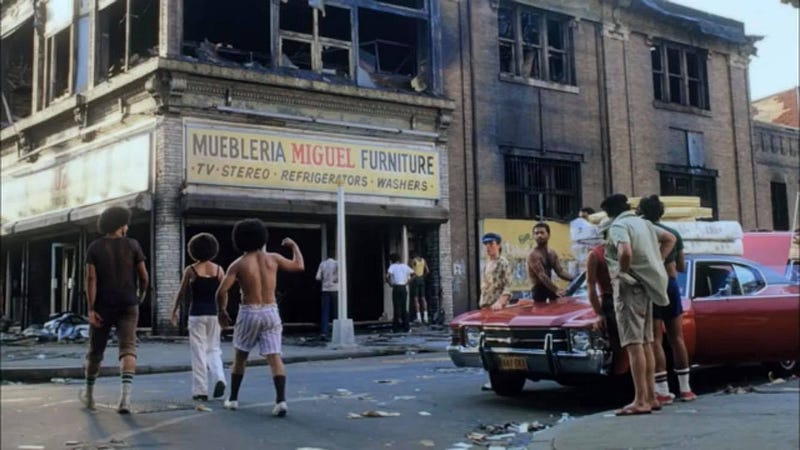
That night hundreds of thousands of New Yorkers joined in the mayhem that ensued during the blackout.
The amount of looting was unprecedented. 1,616 stores were damaged and looted. Police could not control any of the crowds. 550 police officers were injured during the civil disorder and 4,500 looters were arrested. Only a fraction of people that committed serious crimes that night. More than 1,000 fires were started. A congressional study estimated that the cost of damages amounted to just over $300 million which is about $1.27 billion today.
LaGuardia and JFK airports were closed for 8 hours, rerouting hundreds of flights.
For the first time in TV broadcast history, most of the television stations in New York City were off the air.
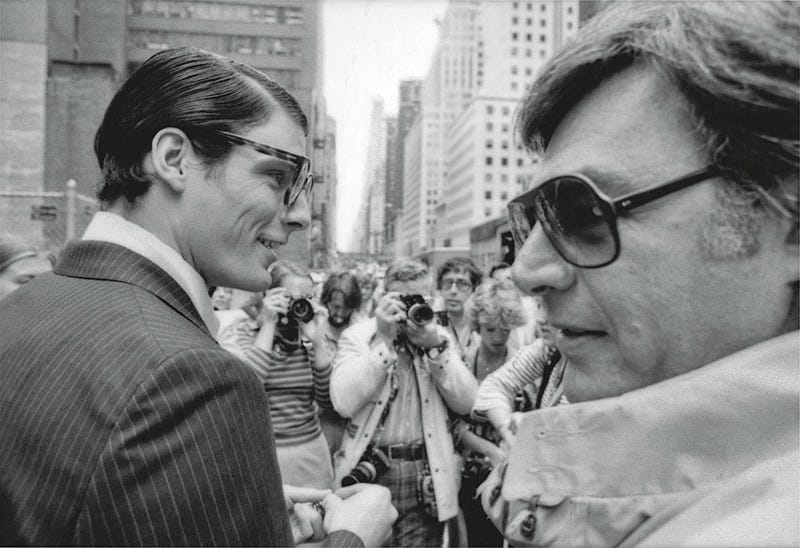
Production had to shut down on Superman as the city was being doubled as Metropolis. New York City had turned into a Gotham City that night in 1977, as the city was falling apart. New Yorkers were tired and felt that they had been neglected. Enough was enough.
In the six-inning of a Cubs-Mets game, Shea stadium went black. Sending more than 14,000 fans into the darkness to find their way home.
Then-Mayor Beame accused Con Edison, the power provider for New York City, of “gross negligence”. Koch criticized Beame for losing control of the streets and failing to get the support of Then-Governor Carey to call in the National Guard.
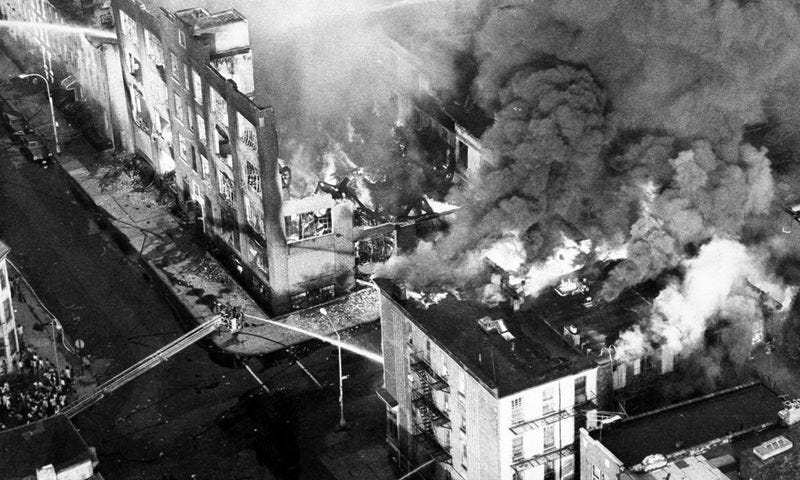
Though many people survived the blackout, it put the city’s overall economic, political, and moral decay into a national spotlight. It was a wake-up call to all New Yorkers and the politicians that they voted into office.
In the 1977 mayoral election, Ed Koch beat out the incompetent incumbent Abe Beame. Koch ran to the right of the other candidates on a “law and order” platform. Which the city desperately needed. The subsequent rioting during the blackout helped catapult Koch and his message of restoring public safety to front-runner status. However, it took a long while for the crime rate in New York to drop.
On the economic front, Ed Koch swung into action to help rebuild the economy in New York. In a short amount of time following New York’s dark period, the boom on Wall Street fueled the speculative real estate market, and unemployment numbers dropped noticeably. Koch successfully balanced the city’s budget ahead of schedule, allowing the city to re-enter the bond market and raise cash, effectively ending the city’s financial crisis by 1981.
Though it took a long time for New York to recover as a whole, eventually the city began to thrive again and the once embarrassed NY residents were proud to call themselves New Yorkers again.
© Gena Vazquez 2020


