
The Real Reason The US Government Wants TikTok Banned
What would you do if the US Government wanted to shut down your business?
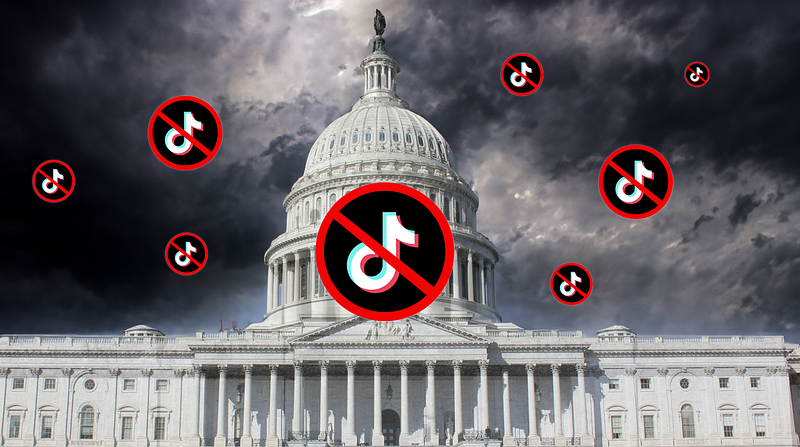
It is all about control.
- Control over people’s minds.
- Control over people’s interests.
- Control over people’s beliefs.
- Control over people’s data.
TikTok’s US destiny hangs by a thread.
Biden’s pen is ready to get rid of the untamed.
Let’s break this down.
The control tug-of-war
At the core of the TikTok drama, there’s a big, almost invisible game of control playing out.
Think of it not as a traditional power struggle, but more like a high-stakes, behind-the-scenes tug-of-war for what catches our eye and what doesn’t on the internet. This isn’t just about what goes viral or which dance challenge takes off; it’s about who gets to shape our interests, hobbies, and how we spend our online minutes.
The government’s push to ban TikTok isn’t just about what we do online.
It’s about influencing our deepest beliefs and political views, all through the videos we watch and share. Imagine the power to subtly shift the nation’s mood or political leanings, all with a few tweaks to what pops up on our feeds.
And let’s not forget about the data — our online breadcrumbs that tell tech companies everything from our shopping habits to our current mood. This data is like gold in today’s economy, and whoever controls it has a massive advantage in understanding — and influencing — what we do next.
So, when we talk about the US government wanting to ban TikTok, it’s not just a simple case of regulation. It’s about who gets to hold the reins in the wild west of the internet. It’s a story of control, influence, and the unseen battle over the digital landscape that shapes our lives.
Understanding the playbook
The House has thrown its weight behind a bill that could ban TikTok unless its Chinese parent, ByteDance, divests it. With President Biden’s endorsement, the spotlight turns to the Senate, where the path is fraught with procedural potholes and political landmines. The absence of a companion bill and the need for a 60-vote supermajority complicate matters, while Sen. Rand Paul signals potential opposition, framing it as a First Amendment battle.
It’s draped in the flag of national security, aiming to shield American data from potential Chinese surveillance and influence. The narrative is tightly focused on safeguarding personal information and maintaining sovereignty over the digital lives of citizens.
This isn’t the first rodeo where tech and government control lock horns.
Take the FBI vs. Apple encryption showdown, where the government sought a backdoor into iPhones for “security” reasons — a move critics argued would set a dangerous precedent for digital privacy. Or consider the NSA’s surveillance programs unveiled by Snowden, revealing a vast data collection operation under the guise of national security. These incidents highlight a pattern: security concerns often mask a deeper desire for control over digital domains and the power to monitor and influence public conversation.
At its core, this is about who gets to steer the cultural and political narratives that shape society. TikTok, with its algorithmic prowess and cultural clout, represents a new frontier of influence. The US government’s move is less about the data itself and more about who gets to wield the power that data confers — shaping trends, opinions, and, ultimately, beliefs.
But control, in the hands of a transparent and accountable government, might actually serve the public interest better than if left to foreign entities with unknown agendas.
The US, for all its imperfections, operates within a framework of checks and balances, offering a level of oversight and recourse absent in authoritarian contexts. The debate isn’t about eliminating control but ensuring it’s exercised within a system that respects individual rights and freedoms.
Sell or you’re banned explained
The House’s overwhelming vote to potentially ban TikTok or force its sale marks a pivotal moment, with 352 in favor and only 65 against, demonstrating clear bipartisan support.
Yet, the Senate’s decision remains a wildcard, with its outcome uncertain.
For TikTok’s fate to be sealed, several pieces must fall into place:
- The Senate needs to approve the bill, a step clouded in uncertainty as Senate Majority Leader Chuck Schumer has yet to commit to a vote.
- President Biden has signaled readiness to sign, pending Senate approval.
- Legal and constitutional concerns, voiced by figures like Sen. Maria Cantwell, need addressing, aiming for a balance between national security and civil liberties.
Amidst this legislative tug-of-war, certain players eye potential benefits. Meta, with its Instagram Reels, could emerge as a primary beneficiary, filling the void left by TikTok.
An 11-point increase in Reels usage among US teens underscores this potential shift. YouTube Shorts also stands to gain, offering an alternative platform for short-form video content.
TikTok’s divestiture faces significant hurdles, including finding a buyer capable of navigating the technical and financial complexities of such a deal. Big tech firms, wary of antitrust scrutiny, may hesitate to step in. Any sale would require approval from Beijing, adding another layer of complexity to the process.
Public opinion is divided, with a notable disparity between the general population and daily TikTok users regarding a potential ban. Former President Trump’s opposition to the bill, influenced by various factors including potential personal and political gains, adds another dimension to the debate. A ban would disrupt app distribution and updates, significantly impacting TikTok’s accessibility and functionality in the US. The broader implications for TikTok’s valuation and future, including its IPO prospects, hinge on its ability to operate in the US market.
The journey toward a potential TikTok ban or forced sale is fraught with legal, political, and economic complexities. The outcome will not only shape the future of TikTok but also the landscape of social media competition, potentially ushering in a new era dominated by existing giants like Meta and emerging platforms like YouTube Shorts.
I leave you with one final thought.
Control is fear in disguise.
Fear of losing power.


