The Real Meaning of the Four Seasons
More to life than hot and cold: The glory of sunrise on a cloudy day, real falls, lasting springs
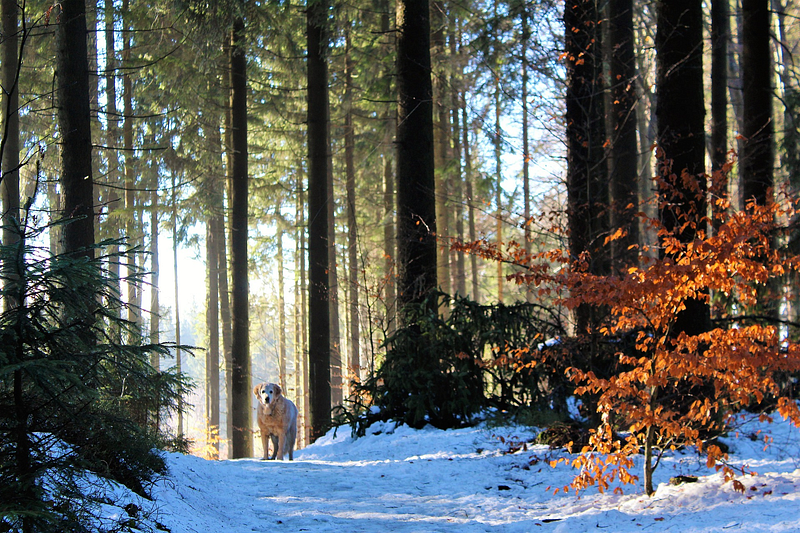
It was snowing as my bride and I got into her convertible and drove 879 miles during February’s deepest freeze. The Weather Channel called it: “Historic Winter Invasion.”
More of the United States is under winter storm advisory warnings (as I write this) than at any point over the past 10 years. Mostly warmer places like Texas, Tennessee, and Seattle are getting hit by snow and arctic chills.
During our drive from Michigan to South Carolina, we saw snow, fog, and rain before my wife saw South Carolina’s Low Country forest, declaring, “It looks like fall here.”
And finally, I am getting the meaning of an old South Carolina selling point: “We have the four seasons.” For decades, I’d hear those words and reflexively think, “Well, big deal. Everyone has four seasons.” Or at least, we think we do.
It’s the delusion I told myself until we drove into North Carolina in early December, seeing sunshine and the multi-colored leaves we call “fall colors,” five weeks after the trees back home were bare and empty.
The real, big question that explains your life (and tolerance for changes throughout life): How long are each of your four seasons?
I grew up in a “hot” and “cold” world (where fall and spring are short)
“What’s your season?” I never quite got the woman asking me that very odd-sounding question because I grew up in a hot and cold world. The standard guessing game of our childhoods? You’re always getting warmer or colder.
Very little in between. It’s sunny — or pretty much a gray day — in Michigan. And the question is, “Coat or no coat?”
Michigan people tolerate the cold months — or we make winter travel plans to escape to hot places like Florida, Mexico, or the Caribbean. Cold or hot. That’s basically our life.
So I never comprehended fashionistas looking at others trying to tie them to a particular season, partially the “less-cold” seasons like fall and spring.
My childhood vow was simple: I couldn’t handle people who always complained about the weather. Hence, I promised myself never to complain about hot weather (no matter how hot it got) because the heat was still preferable to our bitter winter cold.
“In the depth of winter, I finally learned that within me there lay an invincible summer.” ― Albert Camus.
Michigan people tend to be hot or cold as well. My bride summed me up during one argument: “You’re either goofy as … or yelling like a total ...” Warm or cold. There’s more to all of us actually, so we travel.
Our traveling doctor friend (who is enjoying the warmth of Mexico now) kept asking me why I love South Carolina, a second home destination since 1987. After all, South Carolina is only about 20 degrees warmer than Michigan right now (not warm enough to make winter feel like summer).
It’s taken me a half-century to understand the meaning of the standard Carolina answer: “We have the four seasons.’’
We all have four seasons — but how long do they last?
Every soul — and every region — has its version of four seasons. The actual difference is how long does each season last? And how predictable is that?
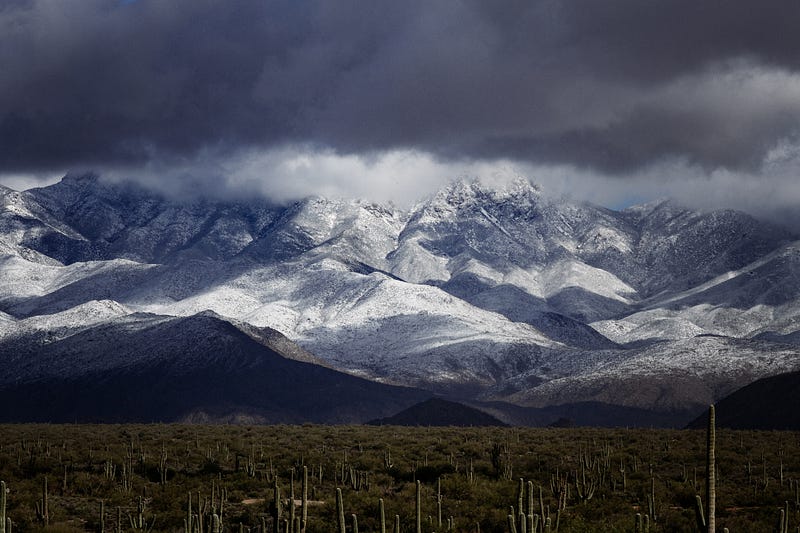
Most places have four seasons, of course, but their length and quality change based on where you are.
The number of days and weeks you wear coats varies by local climate.
The calendar says every season lasts three months, three months of winter, three months of spring, three months of summer, and three months of fall.
But our travels remind me that’s rarely the case. Instead, there tend to be mostly warm places and mostly cold places:
- In Michigan, it often looks or feels like winter in November (even though the calendar says winter doesn’t start until December 21). Winter often stretches into April (I remember an eight-inch snowstorm in April 2003, a week after a summer-like day). So the gray of winter can last up to six months. That leaves three months of summer and spring/fall to split between the three months that remain.
- In the Carolinas, it still looks like fall in December, and the feeling of “true winter” seldom lasts more than a couple of months. Myrtle Beach has summer-like weather from April through September. So it’s the reverse of Michigan: Six months of summer weather (versus Michigan’s six months of cold weather). After those six summer-like months, that leaves roughly two months (each) for winter, spring, and fall weather.
When you don’t know how to dress…
Flashback to my days living in Myrtle Beach: I didn’t know how to dress in Myrtle Beach’s non-summer-like months. When it gets cold in Michigan, you take out your winter coat and wear it for six months, which is very simple.
In Myrtle Beach winters or late falls, I could find myself putting on a winter coat in the early morning before realizing I only needed a spring jacket/windbreaker a couple of hours later. And at noon, when the sun was bright? I wouldn’t need any coat at all.
You realize the sunshine (or lack of it) has more impact than the temperature. So I got into the habit of keeping my winter coat and my spring jacket together in the back seat.
“Spring is the time of year when it is summer in the sun and winter in the shade.” ― Charles Dickens.
Suddenly, I get this whole four seasons thing: in my 20s, I asked Myrtle Beach people how they competed with warmer resorts in places like Florida and the Caribean.
They would always give that “aw shucks” grin, look straight in the eye, and drawl, “Why, we have the four seasons.”
I never got what they were talking about until now: The instinctive answer Carolina people offer is “the four seasons.’’ Northerners don’t quite get that answer. We roll our eyes cause we like sun or snow.
Finally, it hit me:
If we visit South Carolina in November or December, it’s not that hot beach we enjoy in the summer, but it truly feels like fall (at least) even when it feels like winter back in Michigan.
If we visit South Carolina in February or March, it won’t feel like “summertime on the beach,” but there’s a great chance it will feel and seem more like spring (that season we seldom seem to get more than a month of in cold climates like Michigan or hot climates like Florida).
Of course, winter has its own comforts: You don’t feel obligated to go outside and “do” something when it’s snowing and freezing. In fact, you feel and know it’s a right of the season to stay inside, eat warm food, enjoy the roar of a fire and the joy of a soft blanket.
Thirty years ago, my fellow Myrtle Beach newspaper reporters chuckled at the Canadians who jumped into the pool and Grand Strand ocean waves each March. The Canadians were basking in the sun, wearing bathing suits while the natives still wore their winter coats (convinced the tourists were crazy).
We chuckled at those “snowbirds” coming South in the winter (even in months when everyone felt like it was winter). Now, as we get to that “snowbird age,” I finally understand the behavior that puzzled the younger me.
You don’t always need 80 degrees and sunny. Sometimes, trading arctic wind chills for the Southern milder “winter” of 50 degrees seems like a real gift.
And seeing the sunshine again pop through on an otherwise cloudy day? Feeling that surprise sunshine touch your face after months without it? Priceless.
“What good is the warmth of summer, without the cold of winter to give it sweetness.” ― John Steinbeck.