
The Real Life “Witch” Who Inspired The Handmaid’s Tale
And why Atwood dedicated the book to her
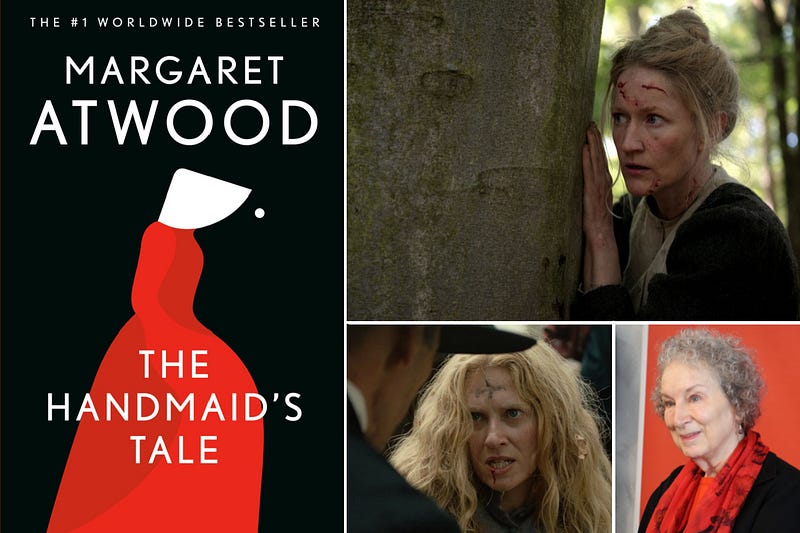
All night, she hung in that tree. A lynching, plain and clear. At least it would have been, if she’d died. But she didn’t.
They’d grabbed her, those young men, tying her hands as she screamed and fought. Forced the noose over her head and hung her in the tree.
And then they left. Left her to hang there, hour after hour, as the sky got dark and then light again and I can’t help but wonder what she was thinking all those long hours.
Margaret Atwood wondered the same thing.
But wait, let me start at the beginning.
Wives wanted for prosperous men!
Women were rare in the early days of the colonies. At the best of times, there were twice as many men as women. That’s why they started running ads back in England. Wives wanted for the prosperous men of the new world.
That’s how Mary Reeve and her parents ended in Springfield, Massachusetts in 1670. She was over 40 and not married.
Likely, it was her father’s decision.
Thomas Reeve, her father, knew he wasn’t going to live forever. Someone needed to provide for his spinster daughter. Likely, he hoped she’d find a husband among those men.
And she did.
Married William Webster that same year. He was 53. She was somewhere between 40 and 46. No one knows for sure.
The newly married couple settled in the small Puritan town of Hadley, Mass., just 20 miles north of Springfield, where her parents were.
Problem was, William Webster was not a wealthy settler. They were dirt poor. Lived in a tiny house and had to beg the townspeople to get by.
It all started with her big, fat mouth…
That’s what the people would’ve said. Every good Puritan knew women were instruments of Satan. It’s what the church taught. Men are holy and women are objects of Satan. Just like Eve and the apple.
Women had to be constantly mindful not to let the devil take over.
A good, pious, God-fearing woman knew her place. Knew she was not to show anger or attitude to men. Not to argue or contradict. To show attitude to men was to give in to the devil.
Good women were unfailingly polite. Meek. Submissive.
Mary Webster was none of those. She was angry and resentful that she’d left England for this place where she worked hard, earned nothing and went hungry too often.
Pretty soon the rumors started. She is not pious. She is not submissive to men. The anger. The resentment. The attitude.
Clearly, the devil is active in “that” one.
And that black cat that hung around didn’t help one little bit.
The witch trial…
They started calling her a witch. Not just men, but women too. She didn’t behave like women were supposed to. Too much attitude.
Oh, your butter didn’t churn? Prithee, was the witch was around?
Oh my gosh, prithee, I think she was.
She didn’t even have to be around. Maybe she just cursed you. When hens didn’t lay, cakes didn’t rise, children misbehaved — it was all her fault. That’s what comes of having a witch in the community.
The gossip found it’s way to court by way of complaints.
On March 27, 1683, the county court apprehended Mary Webster for an examination on suspicion of witchcraft.
The local magistrates didn’t want to deal with her, so they sent her off to Boston for a witch trial. When she arrived in Boston, they shoved her in a dark, dank jail to wait for her preliminary court date.
She sat in that jail from the beginning of April until May 22. Then she was tied up and dragged her in front of 11 men who would listen to the “evidence” and decide if she warranted a trial. Here’s what they said…
She had familiarity with the devil in the form of a warraneage, which is an indigenous word for black cat. They said she had the devil’s marks on her. Which means she had birthmarks. Not even kidding.
She was sent back to jail to wait for her witch trial.
On June 1, 1683, Mary Webster was tried as a witch.
She was found not guilty.
After 67 days in jail, it was over. They sent her home.
“Disturbing” the witch
Let me tell you the most disgusting practice of the witch hunt era. It was called “disturbing” a witch. If you beat a witch, it interrupts her powers. She can’t put a spell on you or curse anything while she is being “disturbed” by the vigilantes of the era.
The people of Hadley did not believe she was innocent. Not for one minute. You don’t get tried as a witch if you’re innocent. That’s what they said.
Somehow, the witch fooled them all.
It didn’t end when she was found innocent. It just fired up the vigilantes even more. Farmers said they couldn’t drive cattle or horses past her house, so they “had to” go in and “disturb” her.
That was her life. Ostracized, feared, hated and beaten. Regularly.
And it was about to get worse.
The witch hath cursed a man…
The year after Mary was found innocent, a very important man got sick.
Lieutenant Philip Smith — that was his name.
He was a Deacon of the church, member of the general court, county court, a politician and policy maker, and a lieutenant in the troops.
“Mr. Philip Smith, a man of about fifty years, a son of eminently virtuous parents, a Deacon of a Church at Hadley, a Member of our General Court, a man of the County Court, a Select-man for the affairs of the Town, a Lieutenant in the Troop…” — Magnalia Christi Americana
But get this. Lieutenant Philip Smith was one of the men who sent Mary to Boston to be tried as a witch.
One day, after Mary came back, her and Philip argued. In public.
Some say she was begging and he didn’t give her enough. But no one really knows what happened. They argued. That’s all we really know.
Then he got sick.
Never mind that it was winter. Never mind that hundreds of people died every winter because of brutal temperatures, no medicine, no central heat. Never mind that historians would later call him a “hyponchondriak person” who fancied himself a constant victim of “an evil hand.”
You know what they said, right?
Clearly, she cursed him.
Hang the witch…
When Philip got sick, he laid in his sick bed yelling to his Lord that he is a good man and sick only because he was cursed by the witch.
Some young men went and beat Mary soundly and swore that during the beating, Philip slept at ease like one who is not ill, but merely at rest.
Clearly, more drastic measures were needed if Philip were to get well.
They showed up at her house before sundown, and that was the night they put a noose around Mary Webster’s neck and hung her from a tree.
The next morning they returned after sunrise and cut her limp body from the tree and buried her in a snowbank.
With the witch taken care of, Philip would heal.
Imagine their surprise the next morning when they discovered Philip had died and Mary was quite alive in her house. She’d been unconscious, not dead. Came to in that snow bank and dragged her poor broken self back home.
If you open the front cover of “The Handmaid’s Tale” you’ll find a dedication.
To Mary Webster and Perry Miller.
Perry Miller was a Harvard historian of Puritanism. He helped a young Margaret Atwood understand the life and times of Mary Webster.
She wanted to write a book about her.
She’d wanted to ever since she listened, wide eyed, as her grandmother first told her Mary’s story. But it was more than a story…
“One of my ancestors was a witch. Her name was Mary Webster, and she was hanged for ‘causing an old man to become extremely valetudinarious’. Luckily, they had not yet invented the drop: in those days they just sort of strung you up.” — Margaret Atwood (source)
Mary’s story didn’t end with the hanging. Her husband died shortly after, but Mary lived another 11 years. With her husband gone, she became the most vile sort of woman in the eyes of the Puritans. An old women that did not have a husband, and now she owned land. Life did not get easier for her.
“When they cut Mary Webster down the next day, she was, to everyone’s surprise, not dead. Because of the law of double jeopardy, under which you could not be executed twice for the same offence, Mary Webster went free.
I expect that if everyone thought she had occult powers before the hanging, they were even more convinced of it afterwards.” — Margaret Atwood (source)
We know so little. We know she lived 11 years after the hanging. We know the town referred to her as “Half-Hanged Mary” and “The Witch of Hadly.” We know the people of Hadley continued to “disturb” her until she died peacefully in her sleep at around 70 years of age.
Tidbits. That’s all we have. There is documentation of the trial. Of the beatings, and of the hanging she survived.
Lack of information is not what haunts Margaret Atwood…
“The thing that we’ll never know is, how did she make it through the night? What was she doing all night when she was dangling from a tree? What was she thinking about?” — Margaret Atwood (source)
Afraid she couldn’t do justice to the story, she moved it to a dystopian future. Everything in the book, she says, is based on fact. On things that actually happened to women during the Puritan era.
The book is fiction. The characters are fiction. But the way women were treated — that was not fiction.
While the story of Mary Website is tragic, Atwood believes there is an element of hope in it, too.
“‘The Handmaid’s Tale’ is dedicated to Mary Webster because she is an example of a female person wrongly accused.
But she is slightly a symbol of hope because they didn’t actually manage to kill her. She made it through.”
— Margaret Atwood (source)
In one interview, Atwood says when she asked her grandmother about more details, she waved a hand and said oh, it’s not proper to discuss.
Did Mary Webster have a child? Did her brothers in England have children? What happened to the family?
No one knows. There are too few records. It was too long ago.
I hope one day she finds the connection.
“She is my favorite ancestor, more dear to my heart even than the privateers and the massacred French Protestants, and if there’s one thing I hope I’ve inherited from her, it’s her neck.” — Margaret Atwood (source)
Resources
— Mary Webster, the Witch of Hadley — Mary Webster, alleged witch — The Witch of Hadley — Puritan Women’s Rights — A 17th-century alleged witch inspired ‘The Handmaid’s Tale’ — The Handmaid’s Tale and its Dedicatees — Margaret Atwood considers relevance of ‘The Handmaid’s Tale’


