avatarHannah Davies

Free AI web copilot to create summaries, insights and extended knowledge, download it at here

4528

Abstract

ww.first-nature.com/fungi/psilocybe-semilanceata.php">Image via First Nature</a></figcaption></figure><p id="0dbb">In all the above examples, crossculturally, psychedelic use was never undertaken lightly. Instead they were taken for spiritual, ritualistic, and healing purposes, often as a rite of passage.</p><p id="afd4">Of course, most of us think of the history of “modern” psychedelics as beginning with the haphazard invention of Lysergic acid diethylamide, more commonly called LSD or acid, by Albert Hofmann. In 1943, Hofmann accidentally ingested some of the laboratory substance — originally intended as a blood stimulant — and promptly tripped his whole bicycle ride home.</p><p id="88dc">The drug became popular within the counterculture of the 1960s, while it was still legal and easy to obtain. It was explored as a more sinister experimental frontier by the American military and CIA, who investigated the drug’s potential use as a “truth serum” with little success.</p><p id="7b6c">Aldous Huxley, author of <i>Brave New World</i> (1932) and prominent 20th-century intellectual, was perhaps the drug’s most eloquent admirer with his literary trip report, <i>The Doors of Perception</i>:</p><blockquote id="c011"><p>“The urge to transcend self-conscious selfhood is, as I have said, a principal appetite of the soul.”</p></blockquote><p id="77bf">However, against anecdotal reports of drug-induced suicides and psychoses, with mounting social hysteria, LSD was promptly <a href="https://www.drugfreeworld.org/drugfacts/lsd/a-short-history.html">banned in 1968</a>. The drug was said to be <a href="https://www.washingtonpost.com/posteverything/wp/2016/04/01/lsd-could-make-you-smarter-happier-and-healthier-should-we-all-try-it/">“more dangerous than the Vietnam War”</a>.</p><p id="67a7">Hallucinogens remain a Schedule I Controlled Substance in the U.S, a <a href="https://www.aleretoxicology.co.uk/en/home/support/drug-classifications.html">Class A</a> drug in the United Kingdom, and a Schedule I drug under the 1971 UN Convention on Psychotropic substances: a status reserved for drugs with <a href="https://www.emcdda.europa.eu/publications/topic-overviews/classification-of-controlled-drugs/html_en"><i>“a high risk of abuse, posing a particularly, serious threat to public health which are of very little or no therapeutic value”</i></a>.</p><h1 id="a545">Present: Research on the benefits, caveats and “how” of psychedelics</h1><p id="823d">In contrast to its legal classification being shared with crack cocaine and heroin, from a scientific standpoint LSD is <a href="https://en.wikipedia.org/wiki/Drug_harmfulness#/media/File:Drug_danger_and_dependence.svg">one of the safest drugs available</a>: including legal drugs, such as alcohol and tobacco. There are no known cases of an individual dying from an overdose of LSD; the drug produces no physical or psychological dependency; it does no damage to vital organs of the body, even at high doses.</p><p id="e25b">This isn’t to suggest psychedelics don’t have their risks. Usage by people with a family history of psychosis is not recommended, as the jury is still out on whether it can trigger psychosis <a href="https://www.cambridge.org/core/journals/bjpsych-advances/article/psychosis-risk-timeline-can-we-improve-our-preventive-strategies-part-2-adolescence-and-adulthood/32EB820B8CB344AABACDA5900466E115">in an underlying genetic disposition</a>. Short-term, bad trips can be frightening and unpleasant: triggering acute anxiety, disorientation, paranoia, and existential fear. At high dosages, most people struggle to string sentences and trains of thought together coherently, alongside <a href="https://www.psychologytoday.com/gb/blog/the-athletes-way/201803/the-neuroscience-lsd-unlocks-the-doors-self-perception">a blurred sense of self</a>, in a way that may put them at risk in public spaces.</p><p id="2cc4">On the whole, however, the takeaway from the literature is that hallucinogens are the only category of drug most people<b> </b>feel the better for using, after using.</p><p id="a7eb">Some of the most prominent results from the past decade of research, in a nutshell:</p><ul><li><b>LSD: </b>Life satisfaction and well-being remained <a href="https://www.ncbi.nlm.nih.gov/pmc/articles/PMC5813062/">increased 12 months after</a> a single 200 μg dose. Reduced anxiety and depression <a href="https://www.tandfonline.com/doi/abs/10.1080/17512433.2018.1511424">in cancer patients</a>, as well as reduced alcohol and tobacco dependency.<

Options

/li><li><b>Psilocybin / magic mushrooms: </b>Increased positive affect and reduced trait anxiety at one-month <a href="https://www.nature.com/articles/s41598-020-59282-y">follow-up</a>. Reductions in depression and anxiety symptoms for <a href="https://link.springer.com/article/10.1007/s13311-017-0542-y">treatment-resistant depressives.</a></li><li><b>Ayahuasca: </b>Reductions in depression, improvements in quality of life, and reduced use of prescription medications for <a href="https://www.nature.com/articles/s41598-020-61169-x">first-time users</a>.</li></ul><p id="fe4f">There is, of course, the risk of researcher bias and the placebo effect in these studies; some involve small sample sizes, which beg replication on a larger scale. Nevertheless, the picture painted is overwhelmingly promising, and correlations <a href="https://www.sciencedirect.com/science/article/pii/S096098221631510X">between</a> subjective reported effects and observed neurochemical changes have been established.</p><h1 id="84c7">Future: Will psychedelic therapy go mainstream?</h1><p id="e199">The gulf between the science and the politics says: not anytime soon.</p><p id="4136">In the US, the most left-wing popular candidate for the 2020 election’s drug stance <a href="https://www.ontheissues.org/2020/Bernie_Sanders_Drugs.htm">centred around </a>legalising marijuana, now approved of by the <a href="https://www.pewresearch.org/fact-tank/2019/11/14/americans-support-marijuana-legalization/">majority</a> of the US population. In contrast, the question of using psychedelics for therapeutic purposes is relatively niche: not yet a wide-scale public debate.</p><p id="f045">It simply isn’t a pressing-enough desire to the majority of the population right now to be included in a manifesto. Until it is, it is unlikely the necessary laws to legalise psychedelics for therapeutic use will be passed.</p><p id="87e4">A drug reform measure put forward by Rep. Alexandria Ocasio-Cortez in 2019, which <a href="https://www.forbes.com/sites/tomangell/2019/06/08/aoc-pushes-to-make-it-easier-to-study-shrooms-and-other-psychedelic-drugs/#540e2a151002">proposed</a> to expand research into the therapeutic benefits of Schedule I substances, was defeated squarely by both Democrats and Republicans at 331–91.</p><p id="b4fe">In the UK, the political issue that <a href="https://time.com/5749478/get-brexit-done-slogan-uk-election/">dominated</a> voting patterns at the last 2019 General Election was Brexit. The ruling Conservative party have no promises or policies in place regarding increased legalisation of psychedelics: which would be off-brand, against their history of social conservatism.</p><p id="bed6">Psychedelics are already legal in a minority of countries: Portugal, Jamaica and the Netherlands, to name a few.</p><p id="9693">Globally, however, the struggle of coronavirus and how to best handle the economic fallout will dominate the conversation for years to come.</p><p id="5c38">But the political landscape may look radically different in five years time.</p><p id="7268"><b>As a personal estimate, I believe within a decade the debate around legalisation of hallucinogens within therapy will go mainstream.</b> <b>“Mainstream” as in politicians will be asked questions about it on TV. </b>It is still early days for the research, but as time goes on, conclusions solidify, and awareness grows, scientific pressure will mount if these considerable benefits and negligible risks continue to be found. If matched with a majority support of public opinion, legalisation for usage within therapy is likely.</p><p id="3cd9">(At a city-scale, baby steps of progress are already happening for the US, centred around California — over the last two years, psilocybin <a href="https://en.wikipedia.org/wiki/Psilocybin_decriminalization_in_the_United_States">was decriminalised</a> in Oakland and Santa Cruz.)</p><p id="1dca">Until then, interest in the potential of using hallucinogens to help patients shows no sign of slowing. In 2020 so far, an eye-watering <a href="https://scholar.google.com/scholar?as_ylo=2020&amp;q=%2Blsd+%2Btherapy&amp;hl=en&amp;as_sdt=0,5">4600 research papers</a> can be found including the keywords of LSD and therapy.</p><p id="1da2">As a pile of research evidence seems to only grow in the background, buckle up your seatbelts — the future may be quite the trip.</p><h2 id="ced3">📚➡ Learn more useful psychology with our research-backed e-book, How to Focus In An Unfocused World.</h2></article></body>

The Real Future of LSD In Therapy

Psychedelics are the new It Girl of psychiatric research. But will it happen?
Image via GIPHY

Noises have been made about the potential benefits of using LSD, magic mushrooms, and ayahuasca in therapy for years.

They have certainly been used for unofficial therapy sessions in fields, bedrooms and forests for far longer than that.

Psychedelic use experienced something of a renaissance in the 2010s, led by millennial Americans. Consumption of LSD in the U.S increased by 50% between 2015–2018. DMT, while still comparatively fringe, has also almost trebled in popularity.

This is paralleled by a resurgence of interest from the scientific community.

Named from the Greek psyche to convey the mind, soul, or essence of life, combined with -delic (derived from manifest, or clear) the mystery of a psychedelic can hardly fail to pique initial intrigue — but it wouldn’t be studied for long without promising, tangible results.

Luckily for psychedelics — and perhaps for humankind — those results have been found in abundance. Everywhere from Imperial College London to the University of Zurich is now taking a class of drug once associated with tie-dye and Woodstock seriously as a research frontier, with the potential to reduce death-related anxiety, increase openness to experience, and enhance long-term psychological well-being.

Psychedelics aren’t legal in most countries, or a perfect panacea — but they are in vogue.

(Literally.)

In this article we’re going to examine the past usage of psychedelics and present research breakthroughs, to answer the question of the future: will LSD and other hallucinogens be cleared for therapeutic use in our lifetime?

Past: The story so far

Psychedelics have been used in plant form for thousands of years. Native Americans ingested the peyote cactus, containing mescaline, for healing. Ayahuasca originated in popularity from the Amazon. Soma appears throughout Sanskrit texts, as the name of a drink said to grant immortality — believed to be derived from the Fly Agaric mushroom.

In Europe, ancient Greeks drank Kyleon for initiation into the cult of Demeter & Persephone. The drink is believed to have been brewed with the ergot fungus — which has very similar properties to LSD. Initiates experienced a descent, search, and ascent, following in the mythological footsteps of Persephone’s descent into the underworld.
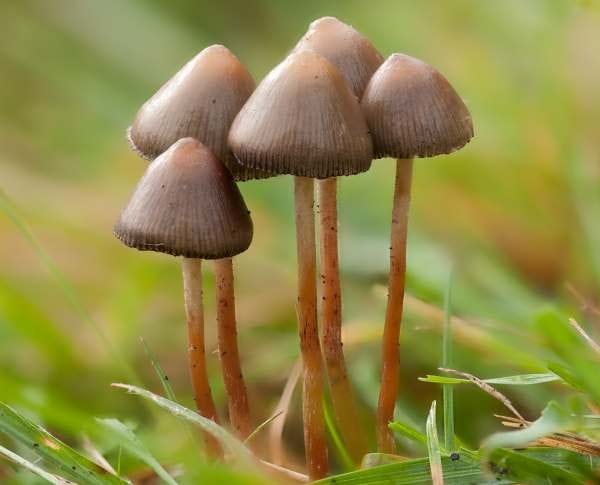
The humble magic mushroom has grown for thousands of years. Image via First Nature

In all the above examples, crossculturally, psychedelic use was never undertaken lightly. Instead they were taken for spiritual, ritualistic, and healing purposes, often as a rite of passage.

Of course, most of us think of the history of “modern” psychedelics as beginning with the haphazard invention of Lysergic acid diethylamide, more commonly called LSD or acid, by Albert Hofmann. In 1943, Hofmann accidentally ingested some of the laboratory substance — originally intended as a blood stimulant — and promptly tripped his whole bicycle ride home.

The drug became popular within the counterculture of the 1960s, while it was still legal and easy to obtain. It was explored as a more sinister experimental frontier by the American military and CIA, who investigated the drug’s potential use as a “truth serum” with little success.

Aldous Huxley, author of Brave New World (1932) and prominent 20th-century intellectual, was perhaps the drug’s most eloquent admirer with his literary trip report, The Doors of Perception:

“The urge to transcend self-conscious selfhood is, as I have said, a principal appetite of the soul.”

However, against anecdotal reports of drug-induced suicides and psychoses, with mounting social hysteria, LSD was promptly banned in 1968. The drug was said to be “more dangerous than the Vietnam War”.

Hallucinogens remain a Schedule I Controlled Substance in the U.S, a Class A drug in the United Kingdom, and a Schedule I drug under the 1971 UN Convention on Psychotropic substances: a status reserved for drugs with “a high risk of abuse, posing a particularly, serious threat to public health which are of very little or no therapeutic value”.

Present: Research on the benefits, caveats and “how” of psychedelics

In contrast to its legal classification being shared with crack cocaine and heroin, from a scientific standpoint LSD is one of the safest drugs available: including legal drugs, such as alcohol and tobacco. There are no known cases of an individual dying from an overdose of LSD; the drug produces no physical or psychological dependency; it does no damage to vital organs of the body, even at high doses.

This isn’t to suggest psychedelics don’t have their risks. Usage by people with a family history of psychosis is not recommended, as the jury is still out on whether it can trigger psychosis in an underlying genetic disposition. Short-term, bad trips can be frightening and unpleasant: triggering acute anxiety, disorientation, paranoia, and existential fear. At high dosages, most people struggle to string sentences and trains of thought together coherently, alongside a blurred sense of self, in a way that may put them at risk in public spaces.

On the whole, however, the takeaway from the literature is that hallucinogens are the only category of drug most people feel the better for using, after using.

Some of the most prominent results from the past decade of research, in a nutshell:

  • LSD: Life satisfaction and well-being remained increased 12 months after a single 200 μg dose. Reduced anxiety and depression in cancer patients, as well as reduced alcohol and tobacco dependency.
  • Psilocybin / magic mushrooms: Increased positive affect and reduced trait anxiety at one-month follow-up. Reductions in depression and anxiety symptoms for treatment-resistant depressives.
  • Ayahuasca: Reductions in depression, improvements in quality of life, and reduced use of prescription medications for first-time users.

There is, of course, the risk of researcher bias and the placebo effect in these studies; some involve small sample sizes, which beg replication on a larger scale. Nevertheless, the picture painted is overwhelmingly promising, and correlations between subjective reported effects and observed neurochemical changes have been established.

Future: Will psychedelic therapy go mainstream?

The gulf between the science and the politics says: not anytime soon.

In the US, the most left-wing popular candidate for the 2020 election’s drug stance centred around legalising marijuana, now approved of by the majority of the US population. In contrast, the question of using psychedelics for therapeutic purposes is relatively niche: not yet a wide-scale public debate.

It simply isn’t a pressing-enough desire to the majority of the population right now to be included in a manifesto. Until it is, it is unlikely the necessary laws to legalise psychedelics for therapeutic use will be passed.

A drug reform measure put forward by Rep. Alexandria Ocasio-Cortez in 2019, which proposed to expand research into the therapeutic benefits of Schedule I substances, was defeated squarely by both Democrats and Republicans at 331–91.

In the UK, the political issue that dominated voting patterns at the last 2019 General Election was Brexit. The ruling Conservative party have no promises or policies in place regarding increased legalisation of psychedelics: which would be off-brand, against their history of social conservatism.

Psychedelics are already legal in a minority of countries: Portugal, Jamaica and the Netherlands, to name a few.

Globally, however, the struggle of coronavirus and how to best handle the economic fallout will dominate the conversation for years to come.

But the political landscape may look radically different in five years time.

As a personal estimate, I believe within a decade the debate around legalisation of hallucinogens within therapy will go mainstream. “Mainstream” as in politicians will be asked questions about it on TV. It is still early days for the research, but as time goes on, conclusions solidify, and awareness grows, scientific pressure will mount if these considerable benefits and negligible risks continue to be found. If matched with a majority support of public opinion, legalisation for usage within therapy is likely.

(At a city-scale, baby steps of progress are already happening for the US, centred around California — over the last two years, psilocybin was decriminalised in Oakland and Santa Cruz.)

Until then, interest in the potential of using hallucinogens to help patients shows no sign of slowing. In 2020 so far, an eye-watering 4600 research papers can be found including the keywords of LSD and therapy.

As a pile of research evidence seems to only grow in the background, buckle up your seatbelts — the future may be quite the trip.

📚➡ Learn more useful psychology with our research-backed e-book, How to Focus In An Unfocused World.

Psychedelics
Lsd
Therapy
Psychology
Future
Recommended from ReadMedium