
“The Quiet Chernobyl” : The Devastation of the Aral Sea
A Soviet-era ecological disaster still unfolding today
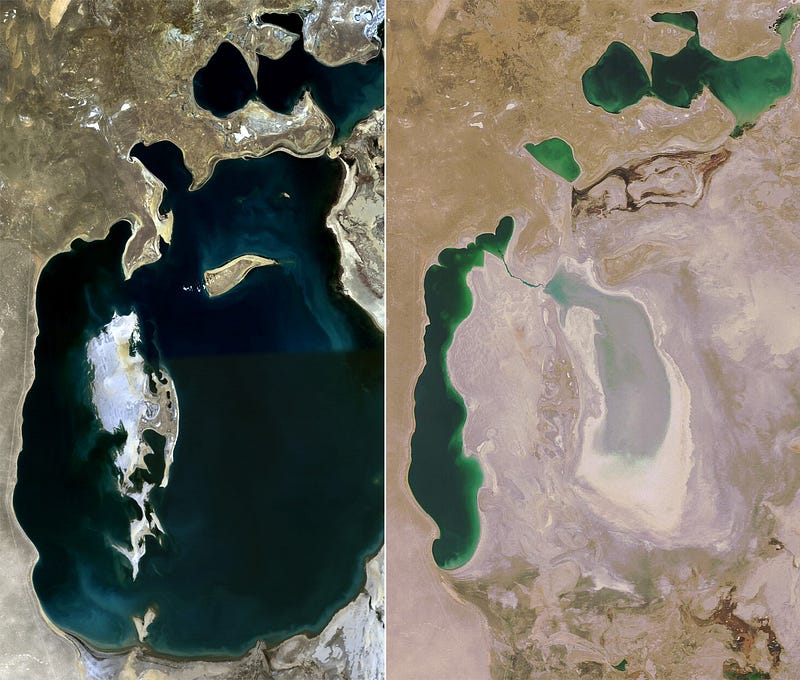
The Aral Sea used to be the fourth-largest lake in the world. Situated between Kazakhstan and Uzbekistan, it was about as big as Ireland. It has now shrunk to a tenth of its original size and is slowly becoming part of the desert landscape.
The reason? Cotton.
The Soviet Union, already eyeing the desert land in Central Asia for several decades, declared in the early 1960s that an irrigation plan is being put in motion.
The two inflows of the Aral Sea — the Sur Darya River to the North and the Amu Darya River to the South — would both be diverted towards the surrounding lands with the purpose of growing rice, some fruit, vegetables, and grain, but most of all “the white gold:” cotton.
The Soviets were well aware that this would result in the gradual disappearance of the Aral Sea but saw it as inevitable, a necessary evil. Their eyes were set on the prize: they were aiming to become the biggest exporter of cotton in the world.
“The end justifies the means.”
The two rivers were diverted, though very poorly. Most of the water was not flowing towards the Aral Sea but it was also not reaching the crops. The irrigation system had many faults: the water leaked and evaporated. 30% to 75% of it went to waste.
The Soviets, however, were strict about meeting their quotas. So the water kept flowing, and the soil — which quickly became depleted — was systematically rammed with fertilizers and pesticides.
In the Soviet Union, excellence and productivity were measured against quotas set down in “five-year plans.” People were paying attention to the short-term gain, and greed — as well as the Soviet system of reward and punishment — blinded them to the long-term loss.
By the 1980s, the Aral Sea had shrunk by half and the toxins from the pesticides and fertilizers had sunk into the soil and the remaining waters of the sea. And the Uzbekistan region had become the world’s largest cotton exporter.
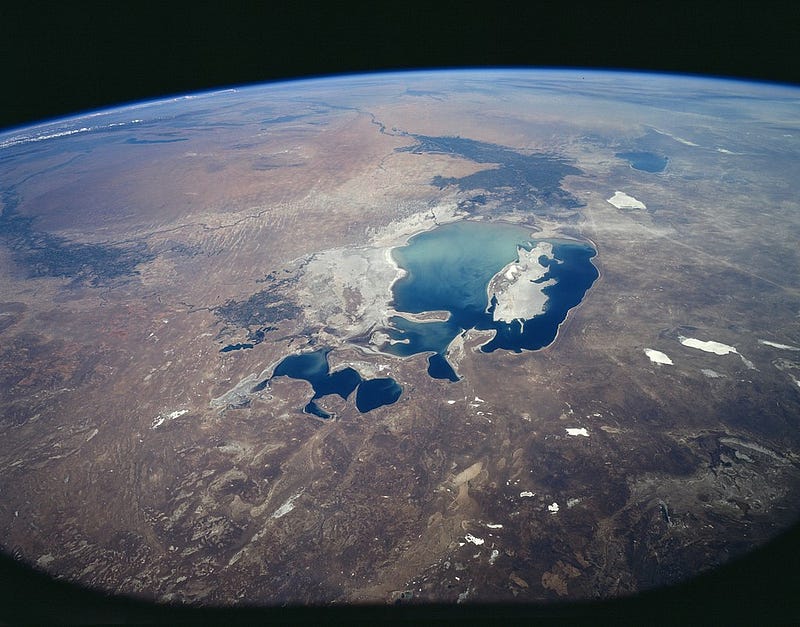
The Consequences
The full effects took years to come into plain view but did start taking shape immediately after the irrigation plan was implemented.
The salinity of the seawater shot up, killing the majority of the fish. The booming fishing culture (over 48,000 tons of fish per year) collapsed and left more than 60,000 fishermen without a livelihood.
A vicious cycle formed between the shrinking water and its levels of salinity. The bottom layers of the water would hold the bigger part of the salt. The higher the salinity, the heavier became the bottom layers. After a certain point, the water stopped mixing. The bottom layers, heavy with salt, were cold and immovable. The upper layers, not being able to mix with the colder water, evaporated that much more quickly.
The grey salty sand from the drying up Aral Sea was picked up by winds and blown all the way up to the Arctic, causing devastation to crops along the way.
But things were about to get worse.
Underground layers of the soil, clogged up with pesticides and fertilizers, would seep into the sea. The chemicals also formed a dust sheet on the soil, the fine particles of which would be carried by the winds over the nearby towns and villages.
With the water and air poisoned, illnesses followed. The rates of cancer, tuberculosis, leukemia, skin infections, and hepatitis doubled in the subsequent years. Child mortality grew. Pregnancies either ended tragically or with severe disabilities for the newborn. Mothers stopped breastfeeding their babies. To this day, the region has abnormally high rates of illness and mortality.
Many of these towns were abandoned. One example is Muynak, in today’s Uzbekistan, which used to be a seaport town with a population of over 42,000. Now it’s down to only a few thousand and continues to shrink.
The Split
After several years of being bled dry by the irrigation system, the Aral Sea split up in two separate lakes: North and South. Soon, the Soviet Union itself split up in several parts.
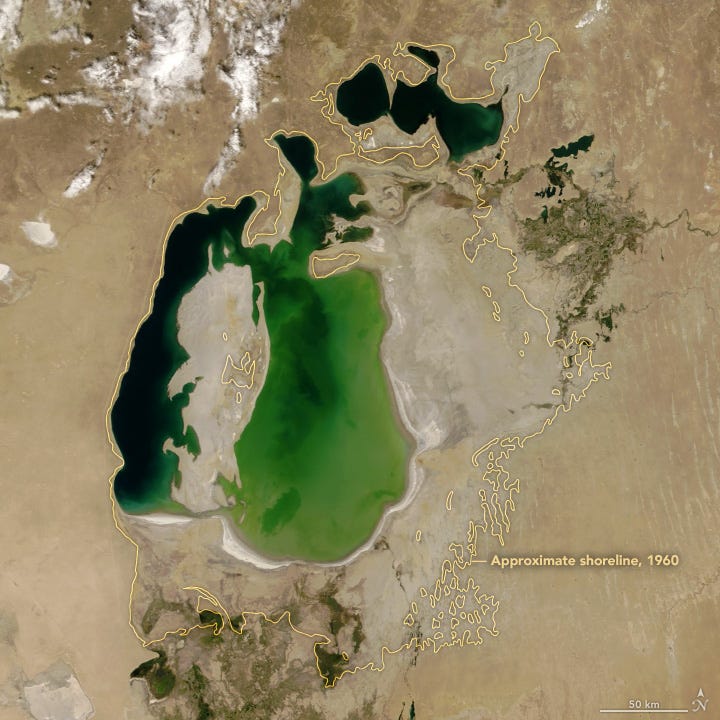
In 1991 Uzbekistan and Kazakhstan became autonomous countries. Now, each one had a part of the now-divided Aral Sea. Half of the bigger South Aral Sea fell in the territory of Uzbekistan. The other half, along with the smaller North Aral Sea stayed with Kazakhstan.
Uzbekistan had become the largest exporter of cotton in the world by that point. The leader of the newly independent country, Islam Karimov, was not concerned with ecology. He wanted to cement his strong economic position. So when it came to the cotton policy of the region it was as if nothing had changed. In fact, the pressure was even bigger. Most of the damage caused by pesticides and fertilizers was under Karimov’s rule, and his use of forced labor combined with the appropriation of the profits was compared by British ambassador Craig Murray to the US plantation slave system.
Meanwhile, Kazakhstan’s people have been taking steps in the opposite direction. Almost immediately after gaining their independence, they set out to improve the water flow of the Sur Darya river, and in 2003 announced a plan to build a concrete dam separating the North Aral Sea from its southern sibling.
Soon after the dam was built in 2005, the sea levels started rising.
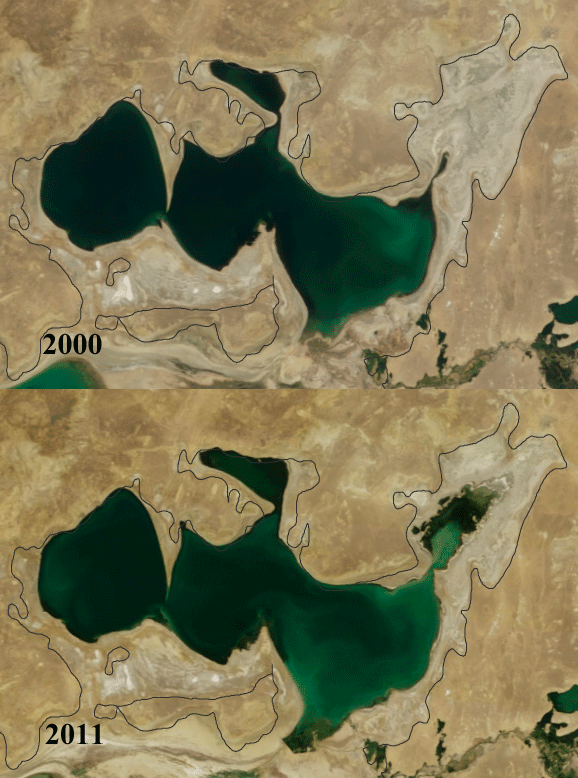
The salinity of the water decreased four times (from 30 grams per liter down to 8) and to many experts’ surprise, a few dozen freshwater fish species returned, partially reviving the region’s fishing industry.
Since Uzbekistan is still using the Amu Darya River for the irrigation of its cotton industry and has long abandoned any concern for the Aral Sea, the North and South parts of the lake are bound to be separated with a dam. Kazakhstan is administering regular — but rare — release of water from the healthier North Sea to its diminishing southern brother.
Today, the North Aral Sea and the South Aral Sea are the same size: each with a surface area of around 1,300 square miles. In several more years, the South Aral Sea will vanish completely and its basin will merge with the landscape, turning into one of the biggest deserts in the world.
