
The Quest to Make Games Accessible to All
We say gaming is for everyone. For that to be true, we must remove the barriers faced by players with disabilities.
When Steve Saylor jumped into The Last of Us Part II, he burst into tears. “I’m sorry. I don’t even know what to say. There’s so much here,” he said while sobbing in joy, looking at the game’s accessibility menu. Steve is a gamer who is legally blind.
Living with Nystagmus, he is forced to sit 1–2 feet from the screen to play any game. For its highly-acclaimed sequel, Naughty Dog added 60 accessibility options. These simple options were literal game-changers for Steve. As he puts it, “For the first time in my entire life, I was able to sit back on the couch and play the game without any barriers getting in the way.”
Since its launch, The Last of Us Part II has secured a whopping 215 awards. It’s now the most awarded game in history. But out of all these awards, the most important is the unofficial one of being the most accessible game to date. For disabled players like Steve, The Last of Us Part II was a massive leap forward.
If you were to take a step back though, you’d find that it’s a messier picture overall. While there have been many positive strides in recent years, gaming has yet to truly accommodate players with disabilities. It’s a complex quest, yet a main mission that requires our attention. This is the state of accessibility in gaming today.
How accessible are video games to disabled players?
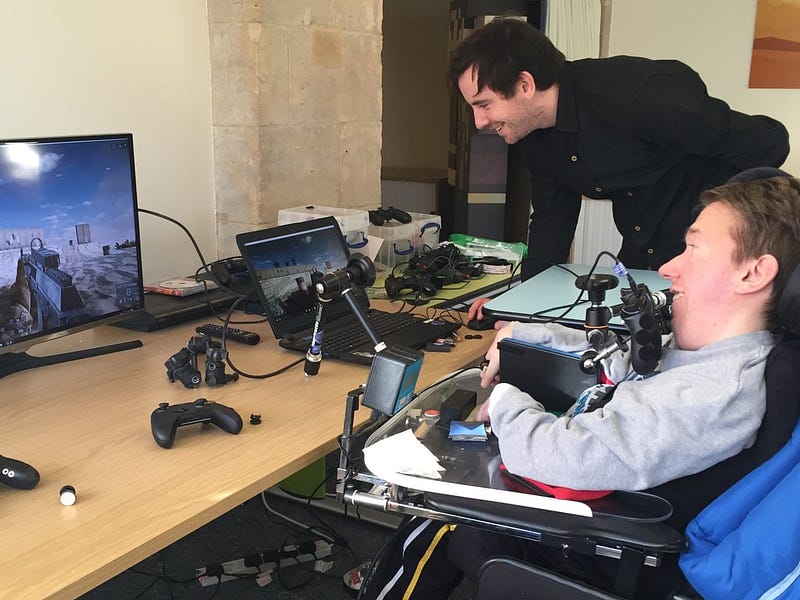
The National Library Service for the Blind and Print Disabled puts it bluntly — people with disabilities have limited opportunities to enjoy video games. Those with visual challenges struggle with games that are rich in graphics. Those with mobility challenges struggle to use a standard controller.
A 2008 survey by PopCap found that 1 in 5 casual gamers have a physical, mental or developmental disability. Within the US alone, it’s estimated there are 33 million disabled players. These are not small numbers.
“It is frustrating to love a piece of media that doesn’t consider how you have to play” — Elizabeth Garcia
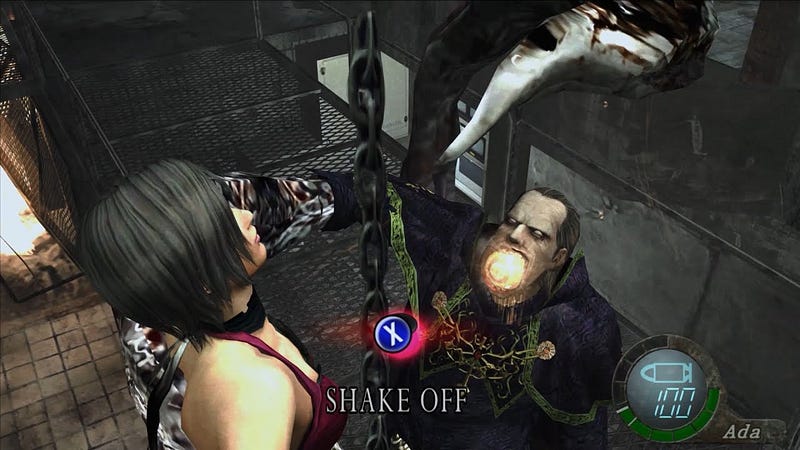
But a study in 2010 revealed 2% of the US population can’t play games, and 9% suffer from a reduced experience because of an impairment. An unfortunate example is Elizabeth Garcia’s journey in Resident Evil 4.
A long time fan of the series, Elizabeth suffers from debilitating joint pain. Regrettably, she recounted, “Resident Evil 4 is one of my favourite games on the planet. But now that I am sick, I cannot complete it without physically hurting myself because of the large number of button tapping needed to complete certain events. It is frustrating to love a piece of media that doesn’t consider how you have to play.”
It was a similar story that convinced Naughty Dog to prioritize accessibility. After the release of Uncharted 2, the studio received a letter. It was from a player who nearly finished the game but couldn’t rapidly press a button during a quick time event. “They were able to play all the way to that point, and then they were blocked from finishing the game,” said Lead Game Designer at Naughty Dog, Emilia Schatz.
Thankfully, in the decade since, there has been positive progress. Granted, there’s still much work to be done. Nevertheless, there’s a rich ecosystem of resources for disabled players that’s continuously growing.
How are developers tackling accessibility?
Contrary to popular belief, making games more accessible isn’t a costly endeavor for developers. Accessibility consultant Ian Hamilton points out that developers can make their games playable for disabled players by implementing some basic features.
Taking the example of Ubisoft’s titles, Ian points out:
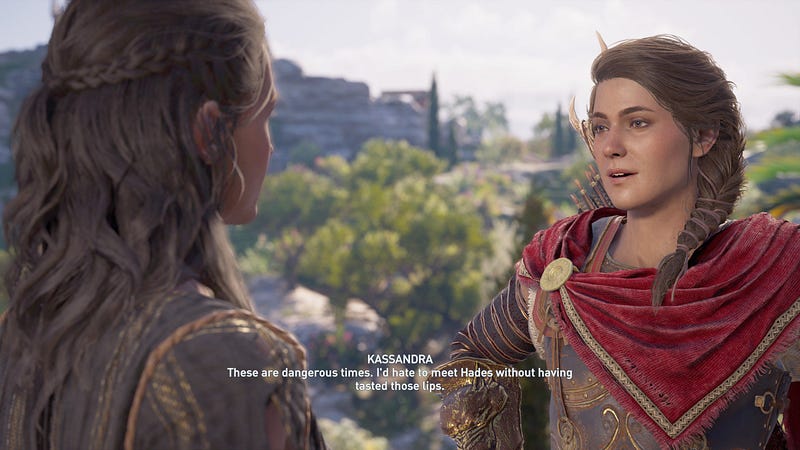
- Subtitles were off by default in Assassins Creed: Origins and 60% of players turned them on.
- When subtitles were on by default in Assassins Creed Odyssey 95% of players left them on.
- Similarly, in Far Cry New Dawn, 97% of players left subtitles on by default.
For players who are deaf, these subtitles made Assassins Creed Odyssey one of the most accessible titles in the series. Sadly, this same feat is why it’s regrettable that Ubisoft didn’t do the same for the latest entry in the series. Despite Ubisoft taking two steps back, other publishers have pressed forward.
“The decisions we make as designers, developers and content producers have way more impact on people’s lives than most people working in the industry realize” — Ian Hamilton
Among them is Square Enix, which released an accessibility guide in 2018 for Shadow of the Tomb Raider. Beyond the basics of subtitles and remapping some controls, the game offers visual cues at the easier difficulty levels. Such signals go a long way in helping players with low vision navigate the world of Tomb Raider and its puzzles.
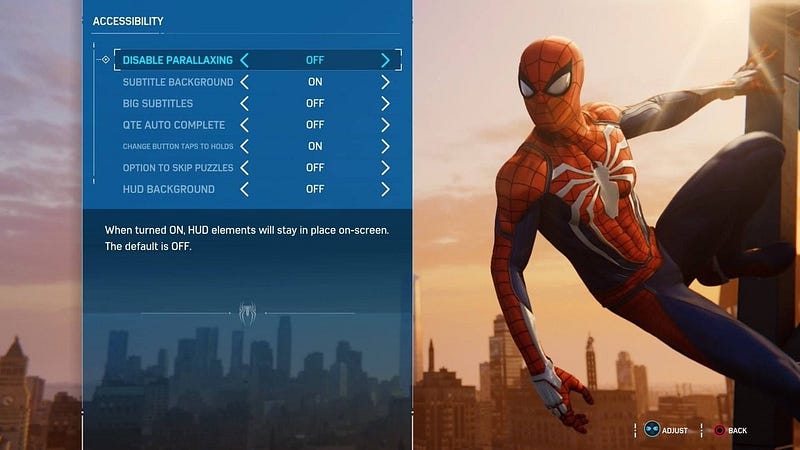
Other examples include the PS4 exclusives, God of War and Spider-Man. Both titles offer an option to hold down a button instead of tapping one during quick-time events. This simple option does away with the barrier we saw in the previous section with Elizabeth’s journey in Resident Evil 4.
It’s a promising sign that game developers are implementing features that make their games more accessible. Still, the gold standard of accessibility is The Last of Part II. So how exactly did Naughty Dog raise the bar, and can other studios replicate this success? The short answer to that question is — Yes.
Inside Naughty Dog and making an accessible game
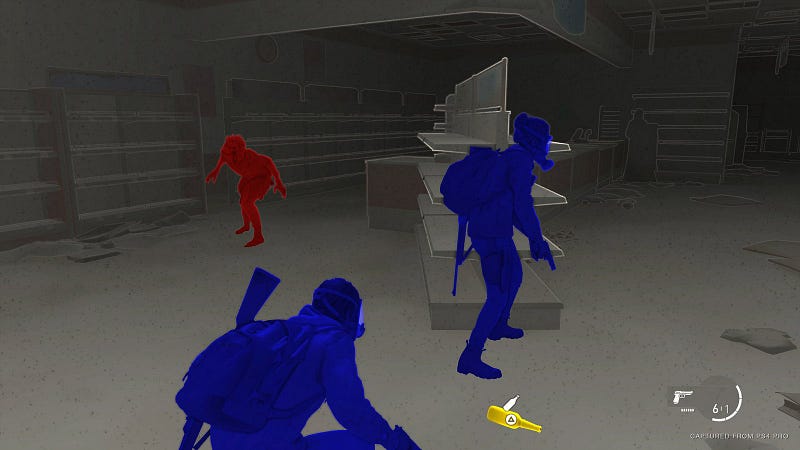
Diving into the menus of The Last of Us Part II, you’ll find almost 60 accessibility options. These offer players visual aids, audio cues, options to remap controls, and other means of navigating the world.
Some are relatively simple, like adjusting the UI or colours of subtitles for colour blind players. Others take things many steps forward for disabled players. A few notable examples are:
- The high-contrast mode that’s designed for players with limited vision. It renders the world in grey, allies in blue, and enemies in red. The feature was inspired by Uncharted 4’s thief vision.
- Audio cues that indicate nearby items and ledges players can reach to navigate the world.
- A text-to-speech option that reads out everything from menu items to notes that Ellie collects on her journey.
Of course, this is merely scratching the surface of the game’s accessibility options. So how was Naughty Dog able to incorporate so much? They prioritized accessibility very early-on in development.
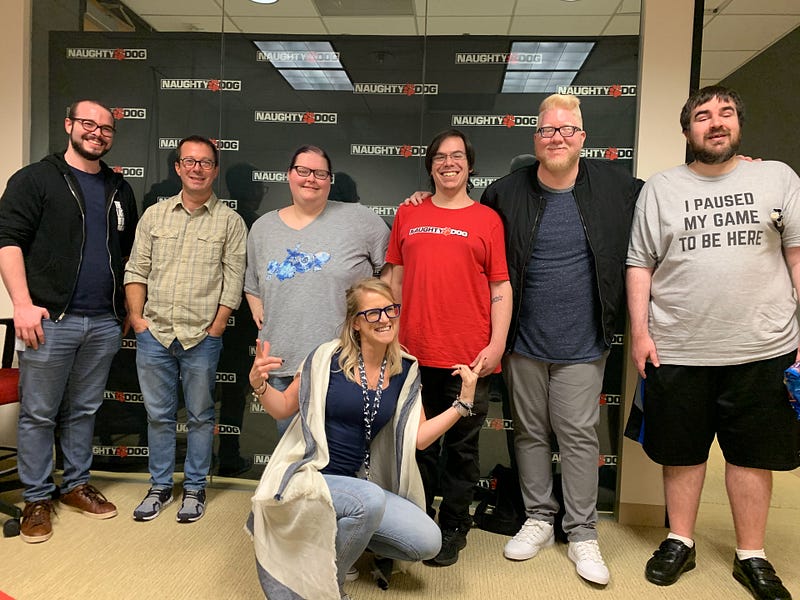
As far back as 2017, the studio worked with accessibility advocates, spoke to players, exchanged ideas with other developers, and conducted many focus tests. One of the many accessibility advocates that assisted Naughty Dog was Morgan Baker, an Accessibility Lead and Game Designer who is deaf.
Describing her experience as a consultant on the game, Morgan shared, “I felt both heard and was able to see my suggestions come to life, which is truly something special. This approach is the future of accessibility. I hope other developers are paying attention and will consider taking a similar approach. I remember when we first added directional subtitles. I nearly fell out of my chair with excitement. And the blind features? It’s unprecedented.”
Through this process, they fine-tuned the list of accessibility options to offer.
The bumps on the road to accessibility
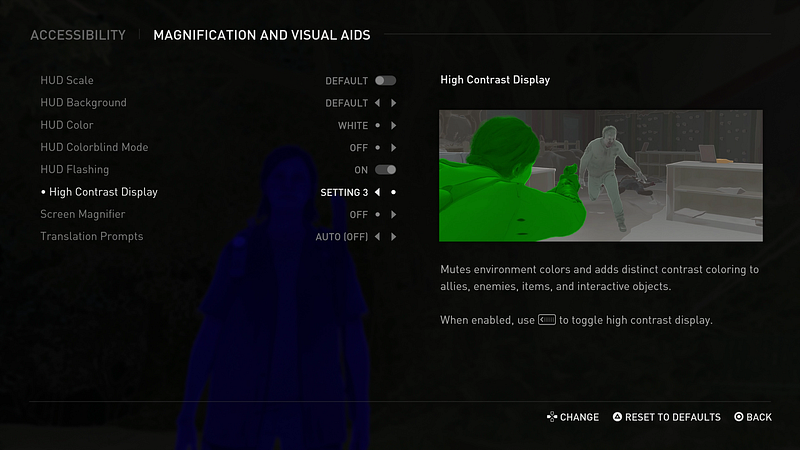
However, after coming up with so many accessibility options, Naughty Dog was faced with a unique challenge. As a UX designer would point out, asking users to select what they want from almost 60 choices is daunting. It was a fierce internal debate within the studio.
Ultimately, the team settled for having presets for different conditions — one for hearing issues, another for motor control, another for visual aids, etc. After presenting it to players, the idea of neat menus was scrapped. Game designer at Naughty Dog, Matthew Gallant, explained, “Instantly we got feedback that ‘this is not what we want.’”
Disabilities are different, and there’s no single magical brush that can solve everything. But it’s very much possible to offer the tools to make it easier. As Naughty Dog learned, players wanted to dive into the menus, get into the fine details, and adjust these options to their specific needs. Thus, while the accessibility menu of The Last of Us Part II may seem overwhelming at first glance, it was a conscious decision.
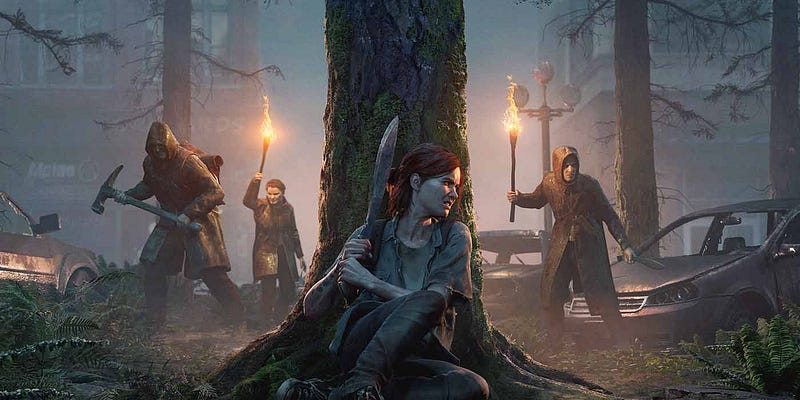
As development progressed, such debates continued. Another was how the high-contrast mode would work with the story. While the feature paints characters in arbitrary hues of red and blue, the story paints them in a morally grey light. Ultimately, Naughty Dog returned to the letter from the Uncharted 2 fan to make the final verdict.
As Mathew described the studio’s philosophy, “It feels like a failing on our part if a player reaches a part of the game that’s inaccessible to them in any way. It’s incumbent on us to be the ones to find the solutions. Accessibility just makes these games better.”
Overcoming the barrier of inclusive hardware
With its accessibility options, The Last of Us Part II certainly raised the bar. However, there’s still work to be done. Grant Stoner, the former Mobility Editor of Can I Play That? was diagnosed with Spinal Muscular Atrophy Type II at a young age. This is a neuromuscular disorder that weakens muscles over time and results in limited mobility.
Grant described his experience with The Last of Us Part II as, “ There was nothing but pure frustration. For approximately one hour, I tried, and subsequently failed, to twist and turn my hands just to be able to utilize my controller. The furthest I progressed was simply the dashboard of my PlayStation 4, and I only achieved that because my mother turned on the console.”
Still, he was optimistic and praised Naughty Dog as an example that other game developers should emulate. But Grant’s story highlights just how far software alone can go. For disabled players with limited mobility, games being accessible requires going beyond software.
The barriers placed by hardware must also be torn down. For most players with disabilities, the humble PC is their platform of choice. It enjoys universal hardware support. Consoles too enjoy popularity within the community, but they have a mixed track record of accessibility.
How inclusive are console manufacturers?
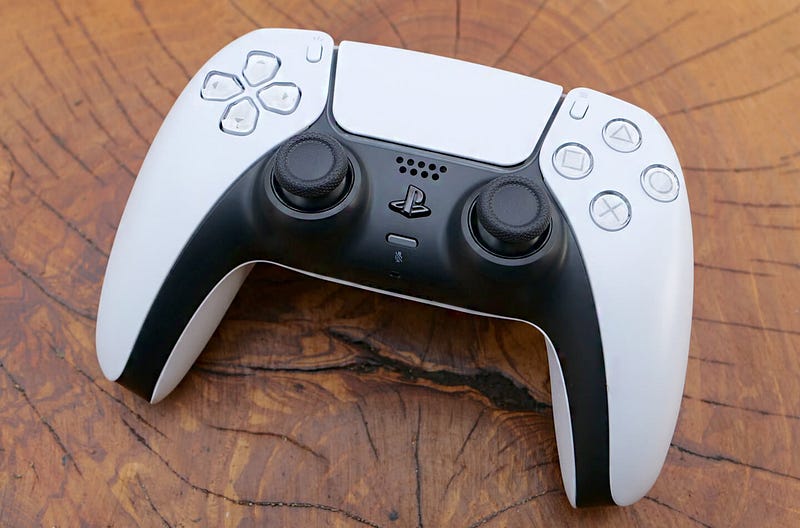
With the PS5, Sony took two steps forward and one step backwards in terms of accessibility. The console itself builds on the features of its predecessor. You will find options to invert colours, resize text, button remapping, close captions, etc. One accessibility option that stands out with the PS5 is the on-screen reader, automatically activating if no action is taken after the console is turned on.
However, the DualSense controller is huger and heavier compared to its PS4 predecessor. For Courtney Caven, Co-Founder of Can I Play That, it was uncomfortable to hold and use inputs like the touchpad and triggers. Further, features like haptic feedback can be painful for players with sensory processing disorders. Thankfully, these features can be disabled.
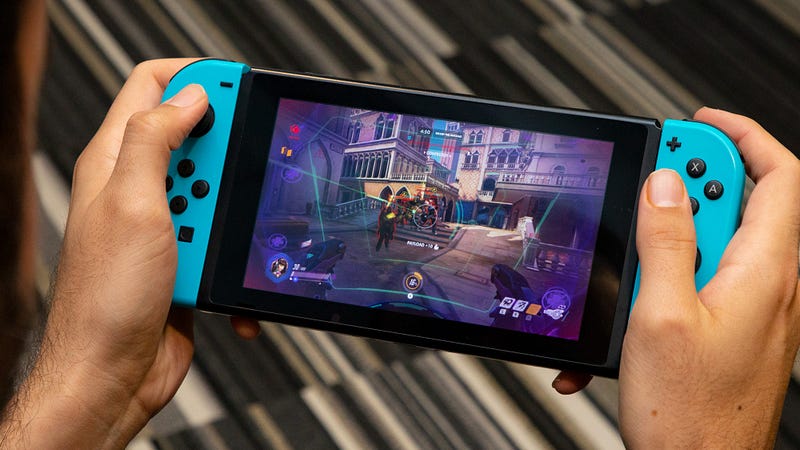
Meanwhile, Nintendo botched accessibility with the Switch early on. But it has since made strides to be inclusive of players with disabilities. Particular after last year’s 10.0.0 System Update that introduced button remapping.
Following this update, Grant, who was limited by the PS4’s controller, praised the Joycons alongside Nintendo’s selection of alternative controllers. He also highlighted that the Switch’s portable display can be placed in a location comfortable for physically disabled players.
While both Sony and Nintendo’s efforts deserve praise for effort, the poster boy for accessibility amongst them is Microsoft.
In 2018, the company working alongside accessibility advocates released a controller for physically disabled players. Known as the Xbox Adaptive Controller, it features large switches, buttons, and sticks that disabled players can customize to meet their unique needs. Admirably, the controller isn’t locked to Xbox and can be used on any gaming system.
Beyond the Adaptive Controller, the Xbox Series X and Xbox One come with various accessibility features. This is still only half of it. Last year, Microsoft released a detailed set of accessibility guidelines for game developers. Taking things a step further, it recently announced a programme where developers can submit their games to evaluated for accessibility by disabled players.
Needless to say, Microsoft has a clear lead here. However, it’s important to remember there is no miracle cookie cutter formula for every disability. Forgetting this important fact, risks the struggles of many disabled players becoming invisible.
“In the area of hardware, the Xbox Adaptive Controller is a great device, but it only helps one segment of the disabled gamer population. Yet the narrative seems to be that now everyone can play, because Microsoft released this device,” warned Founder of DAGERSystem, Josh Straub.
How the community is filling the void
At the end of the day, it’s commendable that console manufacturers are looking at improving accessibility. But the struggles faced by disabled players aren’t a new phenomenon. For years, the gaming community has stepped in to fill the void and offer solutions.
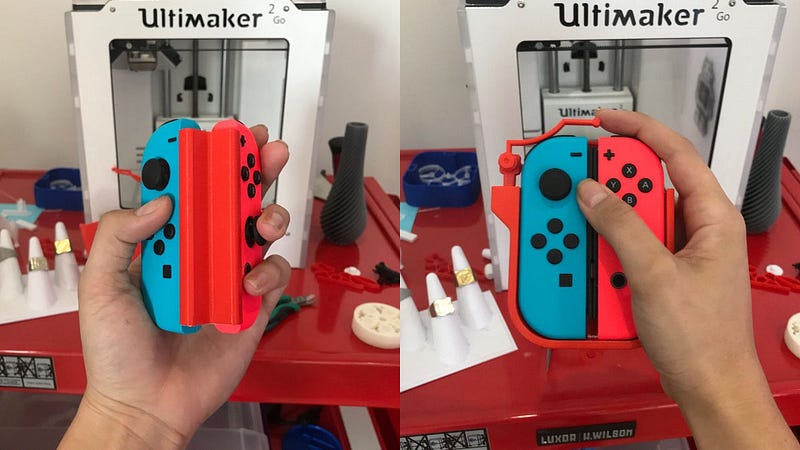
One such story is that of Julio Enrique Rito Vasquez. An engineer by trade, he designed a pair of adapters allowing one-handed players to use Nintendo’s Joy-Con controllers. Available as 3D printable designs, one adapter attaches both Joy-Cons atop each other, and another encases them side by side.
A similar story is when a Sony employee, through his own initiative, built a custom PS4 controller for a player with Cerebral Palsy.
Another more organized community effort is AbleGamers. Since its founding in 2004, the non-profit organization has been building controllers designed for individual disabled players.
An example of its earliest controllers is The Adroit Switchblade. It was a simple box with several 3.5mm jack switches that translated into different inputs. Mark Barlet, the Founder of AbleGamers, shared the most challenging part was “getting past the encrypted controller.” So they put an Xbox 360 controller board underneath the hood. This clever solution allowed the Switchblade to communicate with the console.

Microsoft took notice, and the rest, as they say, is history. AbleGamers has since expanded the versatility of the Xbox Adaptive Controller. From its experience, the charity knows well that a single device on its own won’t fix everything. But it can serve as a flexible foundation to create the solutions needed.
Working alongside ATMakers, it created The Freedom Wing Adapter that turns wheelchairs into game controllers. The adapter acts as a bridge between the wheelchair’s controls and the Adaptive Controller. Thereby allowing players with limited mobility to utilize the joysticks and buttons of their wheelchairs to play games.
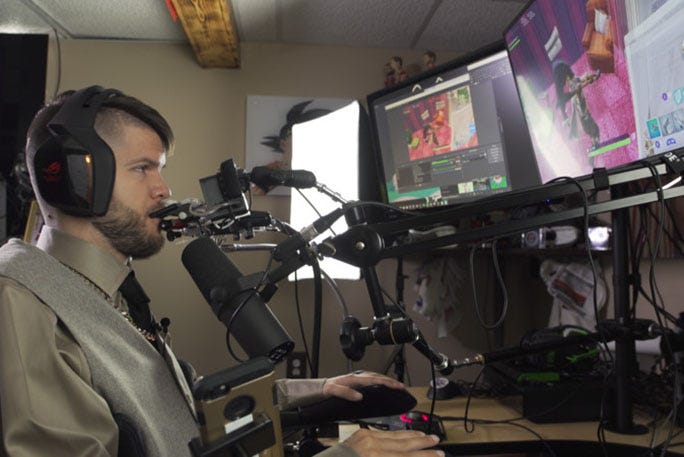
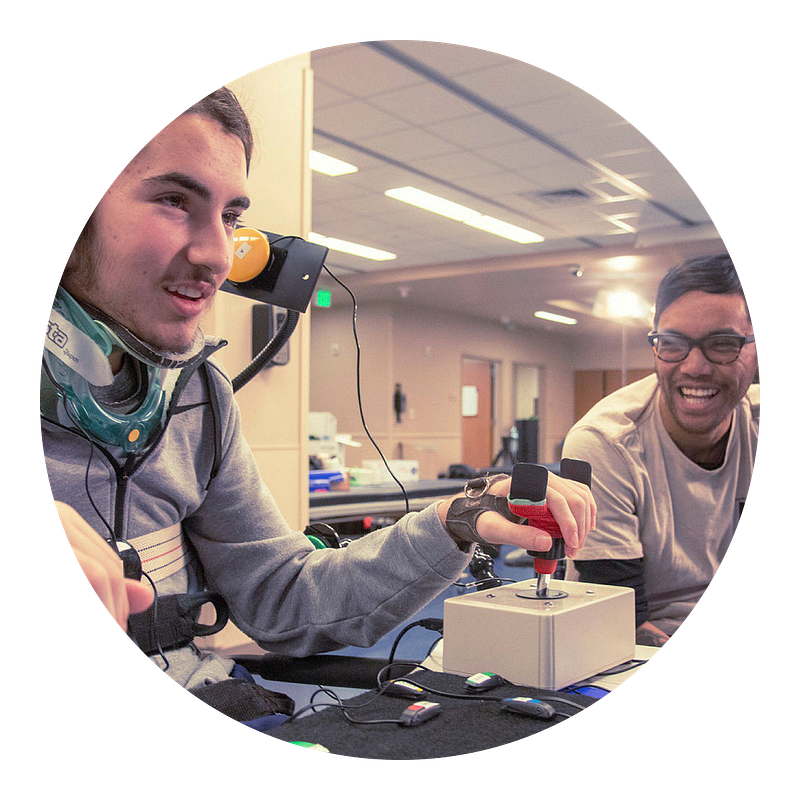
Another commendable third-party controller that was born out of the community is Quadstick. This is a game controller designed for quadriplegics to play games with only using their mouth. With it, Rocky Stoutenburgh set two Guinness World Records in Fortnite. It’s also used by the professional Quad Gods eSports team to play competitively.
‘The Quadstick features a joystick, four sip & puff sensors, a lip position sensor, and a push switch. These are connected to a 32-bit ARM processor that converts the sensor inputs into USB and Bluetooth signals for a console, PC, or Android device.
The above are just a few but inspiring examples of how the wider gaming community has solutions for disabled players.
The future of accessibility in gaming
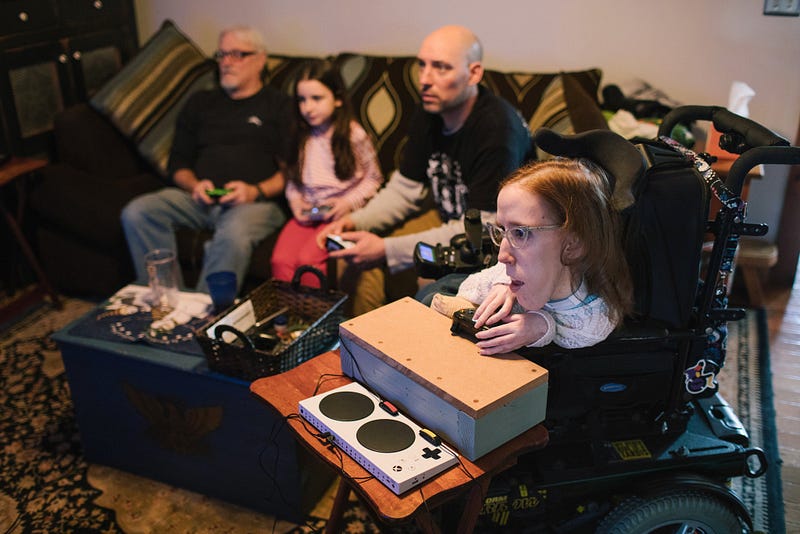
On the software front, The Last of Us Part II raised the bar for accessibility in games. Meanwhile, on the hardware front, the Xbox Adaptive Controller offers a foundation for building customized controllers.
These are both commendable strides towards making games more accessible to disabled players. However, there’s still much work to be done.
To quote Accessibility and Diversity Consultant, Cherry Thompson, “Really good accessibility is inclusive, it doesn’t segregate, and it benefits everyone with disabled people at the heart of it.”
Building such experiences demands inclusive hardware and software. In other words, both game developers and manufacturers need to work in tandem. Of course, this is easier said than done. The complex, differing nature of disabilities means there’s no single magical formula that’ll solve everything.
But that’s no excuse to shrug it off as impossible. As Naughty Dog and Microsoft have shown, it’s possible to build inclusive gaming experiences by listening to the community.
Ultimately, with each step forward, we remove barriers and empower players with disabilities to enjoy gaming.


