
Evangelicals Do ‘Counseling’ with a Gay Secret
“Biblical counseling” has a skeleton in the closet
In Evangelical churches, a service is offered that might be called “counseling,” or more fully, “Biblical counseling.” It’s not a mental health service.
It’s all religion, and it has a curious backstory going back to the 1940s, when a famous psychologist named O. Hobart Mowrer realized that psychotherapy had limits. He had a problem which resisted all cures.
He wondered if religion would work better.
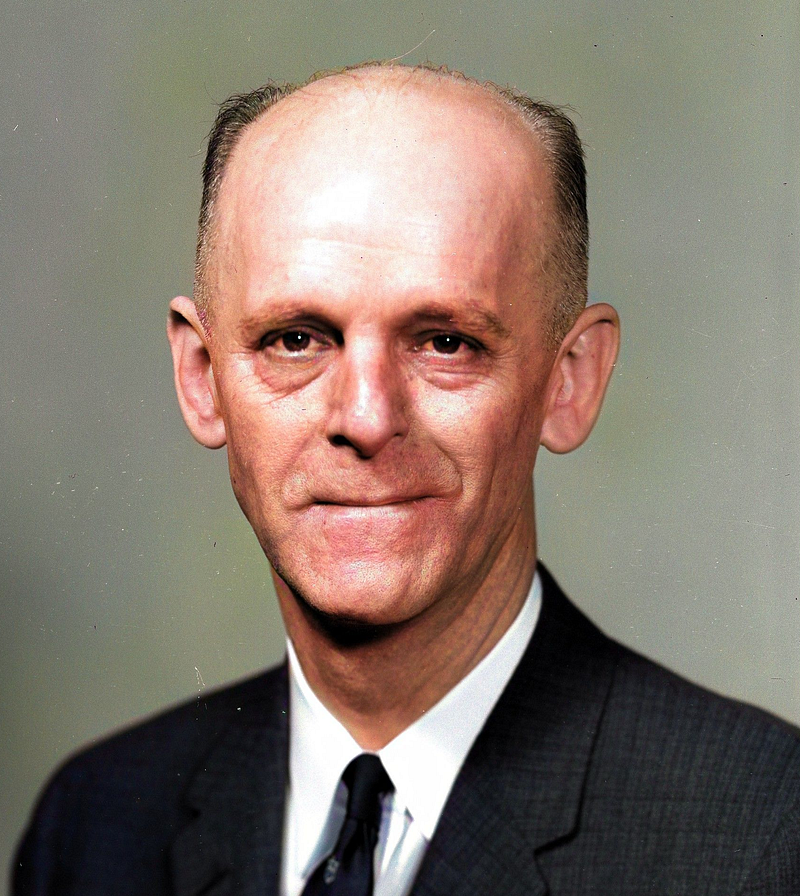
The story that was public was a famous psychologist expressed approval in religious concepts.
Mowrer elaborated the case in a 1961 book, The Crisis in Psychiatry and Religion, where he suggested that a better concept for dealing with wrongdoing and anxiety would be ‘sin’.
In 1961, Christianity Today reports: “Mowrer is no religious crank, nor even a theologian, but an eminent psychologist.” The way it read, publicly, was a famous psychologist was affirming conservative Christianity.
There was more to the story, a private side .
Mowrer’s reflections on religion were fueled by a private situation—what he called his “ugly sexual perversion,” or his “secret.” He made excessive statements of his love for his wife and children. But to be around him was to know, or surmise.
In 2017, the historian Corbin Page published a paper, “Preserving Guilt in the ‘Age of Psychology’: The Curious Career of O. Hobart Mowrer,” noting that colleagues had considered Mowrer to be a “latent homosexual.”
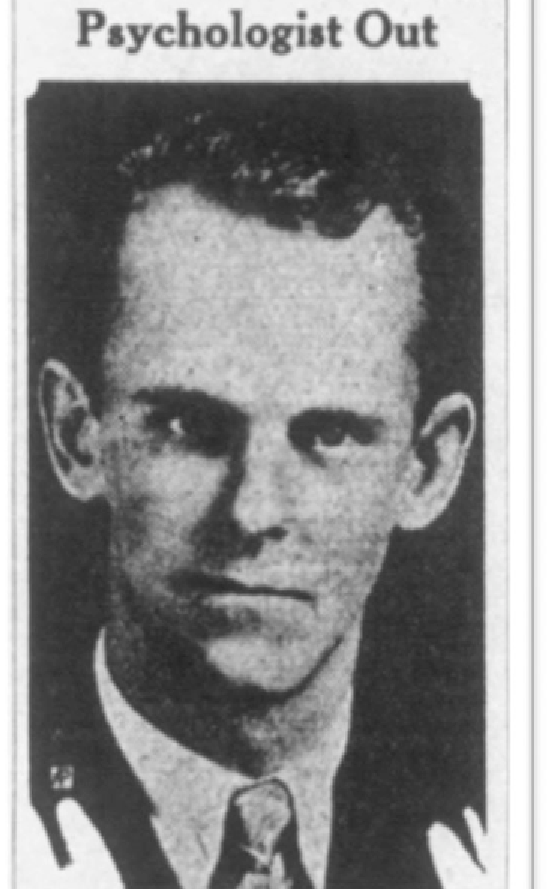

Throughout his life he’d had sex with men.
Then he tried to find a cure for the desire. All that seemed to help him was confessing to his wife. As Page narrates: “He told her about what he called his ‘perversion’ and revealed that he had been unfaithful to her.”
Afterward, Mowrer felt so much better. It seemed that ‘confession’ worked.
And so Mowrer began to think of Christian concepts as the best way to manage his situation. He liked the Christian rules around homosexuality, and he liked the idea of confessing to his wife.
Mowrer wanted to spread his ideas to Christians.
It was well-received. Page writes: “Many pastoral counselors were enthusiastic about Mowrer’s vicious attack on not just Freud but the whole fields of psychology and psychiatry.”
Christianity was eager to develop an alternative to psychotherapy. One seminary speech professor had been working on it for awhile. In 1964, Jay E. Adams was drawn into Mowrer’s orbit.
Adams felt that ‘mental illness’ was just sin, and felt that Mowrer’s methods weren’t perfected until Christianity was added in. Then, the “counseling” session would be truly effective.
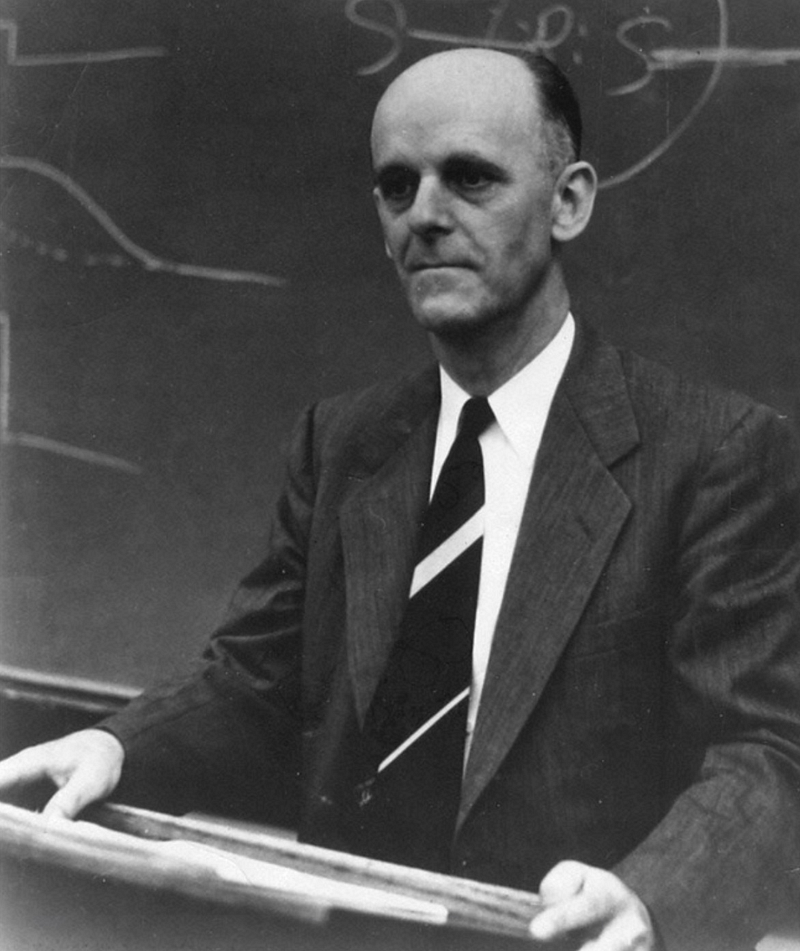
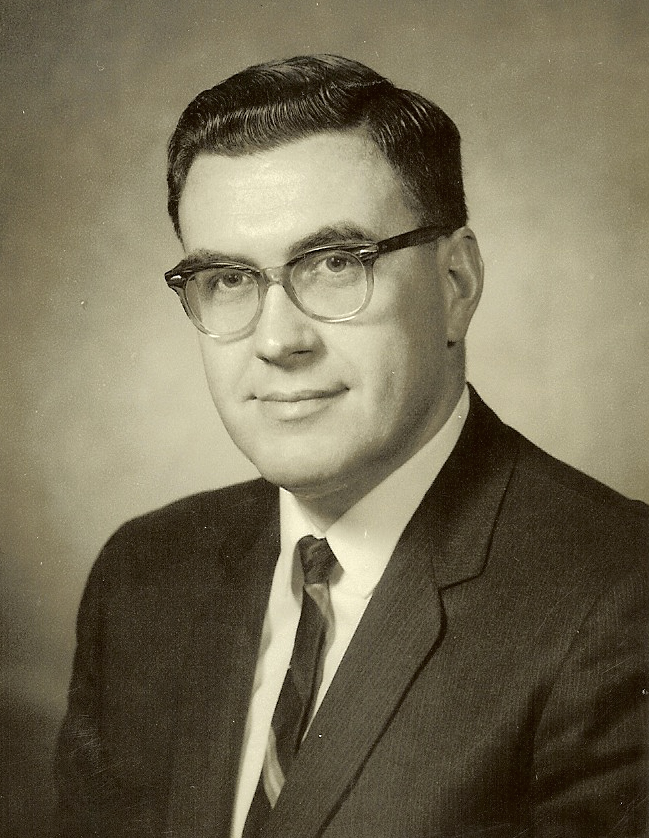
“Biblical counseling” as it was called was different from psychotherapy.
Adams didn’t believe, for example, in having many sessions, or what he called “promiscuous confession.” The experience was to be tightly focused on the specific problem at hand.
The whole point of the session was to drive toward a confession, as the pastor then issued a program of ‘biblical’ guidance to follow.
Adams’ book came out in 1970, and was a bestseller. Competent to Counsel was the good news that Evangelicals wanted to hear. Psychotherapy didn’t work, and pastors could take care of everything themselves.
Mowrer went on to develop a different experience he called “integrity groups.”
He seems to have wanted to re-think the experience of ‘church’ into a group of people getting together, without an authority figure, to support each other, and to make each other tell each other the truth. These “integrity groups” are considered a key influence on the emerging ‘self-help’ genre.
Adams found it all irrelevant, and notes being especially bewildered by Mowrer’s idea of “telling your story” to the group. He notes: “It is very painful for Mowrer to tell his story, but he believes suffering pain helps to take away the feeling of guilt.”
He refers to Mowrer’s “personal unrest” — without explanation.
Adams spent his next years churning out books and doing ‘counseling’ sessions.
It was an exciting new ground for church activity, and widely used for luring in converts. Psychotherapy was expensive and time-consuming — but Christians often did a divinely-empowered alternative for free!
The Evangelical world had especially liked a possibility that Adams had broached in a footnote to Competent to Counsel.
“But precisely because homosexuality, like adultery, is learned behavior into which men with sinful natures are prone to wander, homosexuality can be forgiven in Christ, and the pattern can be abandoned and in its place proper patterns can be reestablished by the Holy Spirit.”
Though not often linked to the emerging practice, Adams strikes me as the inventor of “conversion therapy”—the Evangelical effort to change sexual orientation by religious means.
To the extent that Mowrer had set Adams up, it seems that “conversion therapy” was invented by a self-loathing gay man.
Jay E. Adams became a religious hero.
To fans of the new Evangelical disciple of ‘Biblical Counseling’, he was a new Martin Luther! There were critics too. In a 2011 study, the scholar John Weaver writes:
“Biblical counseling is dangerous, not because it is a religious therapy, but because it masks its clearly psychological goals under a religious trapping.”
Mowrer kept up his career—developing the idea of small groups of people who would ‘confess’ everything to each other. But his secret seemed to weigh on him more heavily all the time.
Shockingly, he drifted into believing in eugenic solutions for the mentally ‘unwell’, with strong hints at wanting to exterminate gay people.
He writes in 1974: “Personally, I would like to see a widespread eugenic attack made on this and several similar problems; but there are many highly informed persons in this field who are against such a program.”
By the early 1980s, Mowrer was in despair.
A colleague writes: “With Mollie gone, his children grown, his work as he saw it done, the zest went out of him, and the depressions that had plagued him all his life finally had their way.”
In a brief autobiography published in 1983, he recalled that, growing up, he had been in his way ‘spiritual’. He writes:
“I was only nominally religious in the formal sense of the term, but from my earliest memories up to adolescence I felt a prevailing, at times very powerful, oneness with the natural world and human society as I knew it, which I can only describe as mystical. I still vividly recall the ecstasy I experienced when our orchard bloomed, when birds built their nests and sang lustily. As a boy of eight, I felt an indescribable joy and wonder when, for the first time, I played with a cousin and took walks with my father along an unspoiled stretch of Oregon coastline.”
But then, he added, “since early adolescence, I have had recurring difficulties with anxiety and depression.” He attributed it to hyperglycemia and described a long struggle with this condition. He concludes:
“Now as I move into the twilight of my existence, I feel sad for the reasons mentioned; but I am profoundly grateful for the gift of existence — and inexplicably awed by the miracle of earth and the wonder we call the universe.”
It was published a year after he killed himself.
As Corbin Page notes, Mowrer lived out his ideas to the end:
“He believed throughout his career that deviating from the norm was the cause of most psychological and social problems. Mowrer was consumed by the desire to stamp out deviation both in his own life and in society.”
In this, he read as religiously acceptable to Evangelicals, who shared the same aims of stamping out ‘abnormality’, and were, in the end, the primary audience for this aspect of his thinking.
The religion didn’t notice that he was gone. 🔶