The Quantum Turn in Social Science
Social Humanism as the New Metaphysics
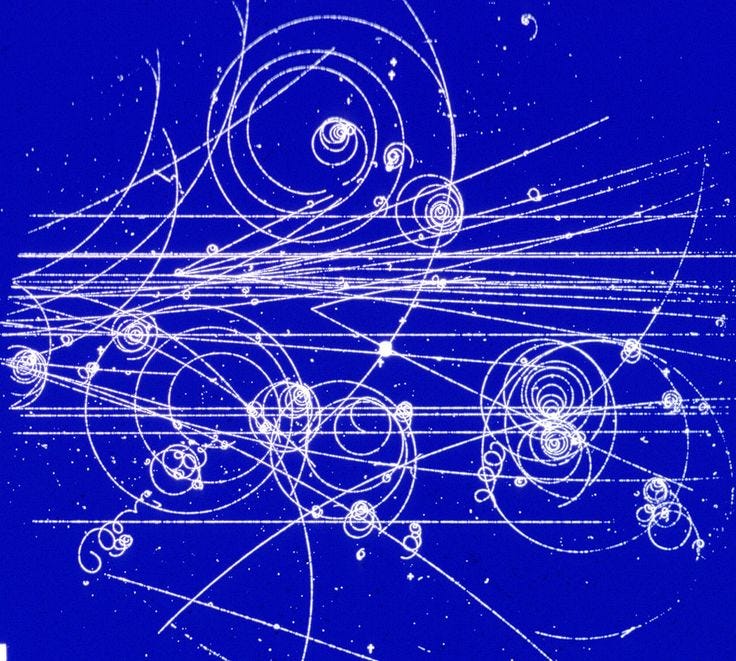
Quantum physics is very hip and attractive thanks to its scientific popularizers, but few people truly understand it yet, and little attention is paid to its developments in the social sciences. Recent literature indicates that a proposed quantum ‘turn’ may be taking place in the social sciences. It has already taken root in my worldview, so I will try to demonstrate the case why it has to happen. Paradigmatic ‘turns’ happen often in discourse, as with the constructivist turn (circa ‘90s) in International Relations, based on the work of Alexander Wendt. Wendt has left that paradigm behind and is now leading a new turn, towards a quantum social science.
The Quantum Turn
A quantum turn has been a long time coming, as scientists, academics, and writers have struggled to import quantum tools in more than a metaphorical way. New Agers have simultaneously hi-jacked the lexicon to make their own meaning out of it, thereby diluting the discourse. The main thesis goes back at least to Zohar and Marshall’s The Quantum Society (1993), which Wendt found as inspiration for his book, Quantum Mind and Social Science, eventually published in 2015. Their basic idea he ran with is that “the mind and social life are macroscopic quantum mechanical phenomena.” Also since 2015, Project Q has been exploring the topic and it’s various implications in annual symposia, but I will not discuss that here.
For all intents and purpose, the knowledge of quantum physics would be of no practical import to sociology, except for the fact that human beings and society itself are quantum phenomena — or at least, we are very much like it. This constitutes a major shift in how we do sociology. Classical social science, which is still the dominant mode today, is based on the study of real material objects and forces, but society is hardly real or tangible. You can only touch local instantiations of it, not the totality or abstract idea of it.
In classical social science, we take for granted certain entities as real, such as nation-states, which are actually provisional social constructions rather than natural objects. Thus, the answers we get are approximations based on assumptions, framed by the way we ask questions. That doesn’t mean they are not functional answers, but functional for who? The framing and perspective of classical theorizing is inherently one-sided and instrumental rather than holistic.
All our classical social science is flawed precisely because it is laden with assumptions of classical (mechanical) analysis, which then imperfectly structures theories and policies down the line. Quantum physics gives a more complete account of reality because it describes all the possibilities within a system, which collapses (decoheres) into a classical outcome at the moment of measurement. This does not mean classical science will be obsolete, but just secondary to the quantum approach.
Classical physics is predicated on the assumption of “dualism,” the distinction of mind and matter. Classical social science imports many empirical tools based on this assumption. But of course, the interactions of people and the fates of nations can’t be calculated like the trajectories of billiard balls; its much more random, or stochastic. We need to have a quantum approach to society, to consider potentialities and probabilites rather than deterministic relationships.

The ‘quantum consciousness hypothesis’ (QCH) is the cognitive basis for a quantum social science. “We are walking wave functions,” as Wendt likes to put it. And we are quantumly ‘entangled’ through language and communication. This serves as a bridge between quantum physics and quantum sociology. It even ties in abstraction explicitly, in how our visualization matrix (or imagination) is essentially a holographic projection:
“When considering a quantum-like model of the functioning of the brain … abstract mental images, such as concepts, are processed on the basis of the quantum-like representation of information. A physical mechanism of creation of the quantum-like representation of classical signals is presented. Quantum-like images are encoded by covariance matrices of classical signals. In the quantum terminology, these are density matrices. Thus concepts are represented by density matrices (which are in fact classical covariance matrices). The same model can be applied to “collective brains” and thus social systems.” p. 27, Quantum Mind and Social Science, Cambridge University Press, 2015
Contrary to fantastic beliefs that we might be living in a computer simulation, we are in fact living in a social simulation, constituted by the activities and beliefs of everyone participating. Wendt’s decisive proposal for a quantum turn suggests society is a holographic organism that we are linked to via our quantum minds. Each individual is an instantiation, embodying particular collective notions. Like a pixel, or holon, we encode information about the whole. Of course, it is not a perfectly homogenous hologram, but consistent enough and a much better methodological starting point.
For example, a nation-state constitutes a holographic social organism (its members are engaged in a collective identity), even though some individuals may conceive it slightly differently. Regardless of a given person’s interest in nationalism, they know what a country is, and their citizenship is invariably bound to the imagined community that they were born in to, thus they are complicit in the holographic projection of society and “the state.” They are delimited by its borders and laws. The social simulation, or “Matrix,” emerges from this and develops a life of its own, (re-)acting on its subjects. It exists as a system of potentiality, until the moments where it ‘collapses’ into a concrete form, such as a border crossing.
After laying the methodological groundwork in chapters 1- 5, the book communicates an immediate relevance to the reformulation and reformation of sociology and society;
“Chapter Six (“A Quantum Model of Man”) develops a quantum rival to the machine model of man, emphasizing free will, creativity, and the performative nature of agency. Chapter Seven (“A Quantum Model of Society”) interprets holist or discursive theories of meaning in terms of the concept of quantum information, to argue that society should be conceptualized as a super-organism with collective consciousness. Chapter Eight (“A Teleological Model of Social Evolution”) asks if society has a kind of consciousness, then could it also have “purposes”? This leads to a teleological view of social evolution at odds with the orthodox Darwinian account.” — Quantum Mind and Social Science, Cambridge University Press, 2015
The complexity of the book cannot be captured in a single blog post, but suffice it to say that I am only trying to report the turn here. Take it or leave it, as there is much more work to be done. Wendt’s thesis has garnered recognition, but not the level of exposure needed to actualize a quantum turn, which is why it is a core component of our agenda as a think tank.
Many paradoxical social problems are effectively solved through a quantum turn in the social sciences. This is because we would be upgrading to the correct methodological framework, insofar as society is metaphysical (quantum), rather than physical. Simply put, the answers to classical problems are typically ‘either/or’ and answers to quantum problems are ‘both/and.’ Both-and thinking is a key principle of metamodernism, so I will stake the claim that the new metaphysics is also an expression of metamodernism.
The quantum turn also ties in to the streams of abstraction and evolutionary globalization, the latter of which also invokes Wendt’s prediction of a world-state. I will say no more on it for now, but here are two book reviews of Quantum Mind and Social Science; one by Benjamin Lamb-Books (ASA) and one by Douglas Porpora (Critical Realism Network). And here is a 16 minute video of Wendt explaining Quantum Mind and Social Science for you:
A final note on the quantum turn concerns communication. Language too is meta-(physical), and cannot be easily reduced to a universal architecture. Quantum linguistics is a recent field which models how language is a basis for quantum entanglement between human beings. Complex equations aside, the simple insight of the quantum approach to language is the multiplicity of meaning (or potentiality) of a given word or phrase. Our messages are often lost in translation.
So it is interesting that it is a quantum physicist, David Bohm, who contributes a practical application for breaking through discursive stalemates. The quantum turn can help resolve disputes not only in social science, but in conversation. It is known as a Bohm Dialogue, and it sounds like an awfully good way to calibrate our holographic worldview;
“freely flowing group conversation in which participants attempt to reach a common understanding, experiencing everyone’s point of view fully, equally and nonjudgementally. This can lead to new and deeper understanding. The purpose is to solve the communication crises that face society, and indeed the whole of human nature and consciousness. It utilizes a theoretical understanding of the way thoughts relate to universal reality. It is named after physicist David Bohm who originally proposed this form of dialogue.” [Source: Wikipedia]
Abstraction and the New Metaphysics
Notwithstanding these quantum advances, I contend that there is a parallel turn in the social sciences that must be integrated. In Social Humanism: A New Metaphysics, Brian Ellis discourses on the prospect for a universal basis of agreement. The book precedes Wendt’s new thesis by a few years and makes no mention of the word ‘quantum’. Thus any quantum connection is not self-evident. However, I propose that the connection is staring us in the face with the subtitle ‘a new metaphysics.’
I would describe metaphysics as immaterial things like culture, society, language, and the relationships between it all. Metaphysics is the description of social reality and the meaning we ascribe it, rather than paranormal nonsense like ghosts.
Quantum physics is in a sense ‘meta-’physics, so we should reclaim the word metaphysics to refer to social science, quantum social science specifically. As it stands, the word is used too loosely to have any consistent meaning. By redefining metaphysics, Ellis tries to ground it in social humanism, which provides some lines towards a metamodern sociology.
“In this book, Ellis argues that moral and political objectives are not independent of one other, and so must be pursued in tandem. Social humanism is a moral and political philosophy that does just this. As a political philosophy, it justifies the implementation and maintenance of many of the characteristic social policies of welfare states. As a moral philosophy, it provides the foundation required for most human rights legislation… To this end, Ellis elaborates on the theory of social humanism and the need to reconsider the metaphysical foundations of morals. He develops the theory of social idealism as a meta-theory for both morals and social policy, exploring the global consequences of this new approach.” — Social Humanism: A New Metaphysics, Ellis, 2012
I argue that by developing social idealism as a meta-theory, Ellis is unknowingly flirting with metamodernism. And by defining social humanism as metaphysics, he is accidently courting the quantum turn as well. Not only that, his entire thesis is very explicitly abstract. In advocating for a global perspective, Ellis first guides the reader through a decidedly ‘abstract’ narrative within the history of philosophy.
“This abstract point of view was seen as being a natural counter to self-interest, which, it was thought, would otherwise dominate our thinking. The Thomists argued that synderesis provides us with knowledge of the Natural Law, which provides us with the universal premises required for moral reasoning. Aquinas believed that any actions taken freely in accordance with the universal premises supplied by synderesis would be acts of conscience, and therefore have special authority (D’Arcy, 1961). Secular moral objectivists do not, of course, believe in Natural Law theory or necessarily in the right of conscience. But many still believe that there is a set of objectively true moral principles that we could arrive at successfully, if only we were to cultivate the habit of thinking about them in this special way.” — Social Humanism: A New Metaphysics, Ellis, 2012
Synderesis is defined as the inclination of the mind to practical reason and further, to universal first principles. It is the capacity for metaphysical (first principles) thinking. This “special authority” and “special way” of thinking begins with abstraction, and will continue to be developed as a process of abstraction. This the only way we can ultimately arrive at universal humanism and objective moral principles, and I think it is complemented very well by the quantum conception of society. Ellis clarifies the points on abstraction:
“The ‘view from human kind’ inherent in the Thomistic theory of synderesis is essentially the same as Rawls’s view from behind his ‘veil of ignorance’. For, it is the view at which you would arrive by abstracting from your own position, characteristics, and so on and see yourself as just another member of the human race. It is what I would call ‘the humanistic or cosmopolitan point of view’. It is much less abstract than Thomas Nagel’s (1986) conception of a view from nowhere. But it is more abstract than what I would call ‘the social point of view’, which is just the view that you would obtain by thinking of yourself as simply another member of your own society. There are other abstractions too that lie in between the humanistic point of view and the view from nowhere. For, you could cut your human identity out of the equation altogether and see yourself as just another biological organism. This would yield ‘the biological point of view’. To reach the view from nowhere, you would have to take the process of abstraction still further. For, to do so, you must abstract from yourself as knower and consider how the world would be in itself, independently of our perception of it. This process of abstraction is the one that results in what we call ‘the physical point of view’. From this point of view, there is no normativity left to talk about. So, physically considered, there is no best of all possible worlds.”— Social Humanism: A New Metaphysics, Ellis, 2012, p. 161
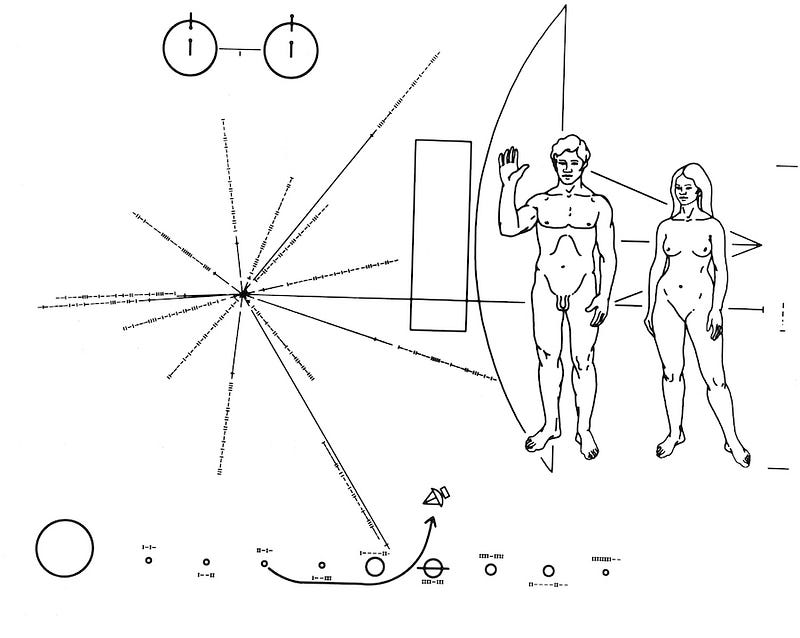
As a simple thought experiment, we can abstract up to the level of humanity (or down to the level of biology) to change our point of view. At the highest level, a humanistic or cosmopolitan view is naturally arrived at, because you have to process the contradictions within it, and think of yourself as a constituent of a whole. Ellis is searching for a universal, humanistic, cosmopolitan point of view that could be validated based on a universally accepted moral principle, and clearly that principle is predicated on abstraction. Rather than try to force the acceptance of principles, I think the paradigm shift can do the heavy lifting. Ellis continues;
“There is, at present, no global social contract in which such a principle could be embedded… [and] if any such principles could be found, they would have to be included as basic principles in this global contract.”
We would like to help develop a global social contract along with Ellis, as well as the vital principles it would be based on. Along with an abstract social contract, comes the prospect of an abstract constitution, and other abstract global legal precedents. The quantum turn supports these efforts, and facilitates the shift from what Ulrich Beck called “methodological nationalism” to “methodological cosmopolitanism.” The abstract turn makes these insights epistemologically viable. This is why I see a confluence between these parallel discourses.
Social Physics
In February 2017, physicist Philip Ball wrote “The strange link between the human mind and quantum physics” for the BBC. He writes that ““Quantum consciousness” is widely derided as mystical woo, but it just will not go away.” And much of it is (woo), so we must be skeptical. New insights and parallels keep unfolding, but it fails to pass hard scientific muster.
However, a quantum approach is resilient in social theory because of the common factor of “observer effects.” Our observation affects the outcome. The study of society is an experiment that affects the object of study — society — which itself its yet another kind of experiment. This effectively proves the notion that the classical approach will simply not work to describe such a dynamic system.
Moreover, I contend that whether or not our consciousness and our society are actually quantum is irrelevant, because its as if it is quantum. We need to realize that the moment any sociological data is measured, it is like taking a snap shot of a quantum state, just the same as a quantum physics experiment. It reflects something inexplicable back to us; a specific datum in a sea of potentiality.
Someone like Philip Ball is in a good position to mediate the application of physics to sociology, as he is also the author of the book on social physics titled Critical Mass: How One Thing Leads to Another. The book’s thesis suggests that on a macro scale human behavior operates in predictable ways, according to laws of (social) physics. Because societies are complex systems , they do not follow classical laws of determination.
First published in 2004, I have wonder how Ball would reimagine his approach to social physics given the quantum insights emerging now. And why does his lengthly article not mentioned any of the literature about a turn in social science which I’ve discussed? For now, it would appear outside the purview of his BBC journalism. But interestingly, in the book, under the subheading of “Who Should Run the World?” Ball states:
“There is no field in more urgent need of an answer to the problem of society’s ‘discontents’ than that of international relations.” — Ball, Critical Mass, 2005
In turning to international relations (also my undergraduate degree), we must look to those experts, like Wendt, who are providing answers to the most pressing questions. The world just may not be ready for that truth, especially if they are on the fence about a quantum social science.
The Meta- Turn
In my introductory post Beyond Metamodernism, I introduce the new paradigm that is beginning to make waves. It has its roots in literary theory, art criticism, and cultural analysis, but in the last few years, it has begun to unfold more in new dimensions, such as religious, political, and philosophical. We are on the cusp of a full-fledged paradigm shift, which is why I propose it is such a good fit with the quantum and abstract turns as well.
Within postmodernism we see the seeds of a quantum approach in ‘interpretivist’ methods, but what they are doing is rejecting the classical assumptions without replacing it with anything. Conversely, positivists embrace classical assumptions and resist the intrusion of quantum theory on social phenomena. There can be a compromise, such as what Bernard d’Espagnat called “open” realism, says Wendt.
A large part of the conflict around postmodernism relates to the tension between social and physical sciences, and how we delineate them. Interestingly, much of (but not all) the critiques of postmodernism come from outside the discipline. Sokal and Bricmont, the famous debunkers of postmodern deconstruction, are in fact physicists, for example, not social scientists at all. Sokal, Bricmont, and others certainly have valid critiques of postmodernism, but imagine the absurdity of a social scientist dismissing quantum physics as gobbledygook simply because it is unintelligible to the layperson.
Progressing discourse is by and large a communication problem, that perhaps Bohm dialogues could resolve. But it is also a methological problem that the quantum turn can solve. The sooner we get on the same page paradigmatically, the sooner we can resolve the violent tensions and contradictions that abound, which all seem to stem from the problem of dualism: left vs. right, social science vs. physical science, tribalism vs. globalism, etc.
Metamodernism and quantum social science do not throw out the baby with the bathwater, but rather refine and integrate the postmodern and classical paradigms that precede them. I contend that these books by Wendt and Ellis (and to some extent Ball), to single out a few impactful works, are pointed in that same direction, and fully aligns with our goals as a global humanist think tank. Those who do not take the quantum turn in social science, will continue to come up with bipolar answers to the problem of dualism.
The Abs-Tract Organization (TATO) is a boutique research and media think tank, centered around the broad concept of “abstraction” and five other vital research streams.
If you appreciate the work we do, please support us on Patreon for $1.
Please like and share this article. Join and support our growing metamodern project at http://www.abs-tract.org and on twitter @TATO_tweets.