
The Purpose We Share
The one thing we have in common may be greater than all that divides us.
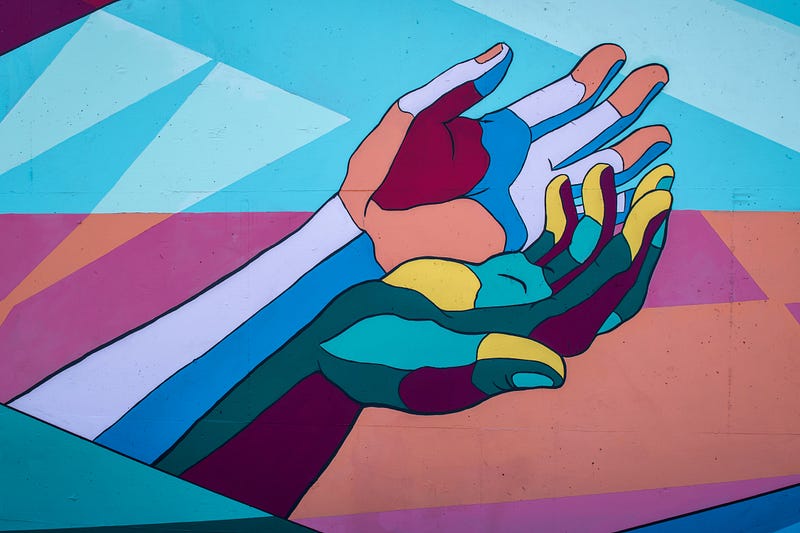
We seem pretty disconnected nowadays.
Scratch that, we are pretty disconnected. From one another, from ourselves, from our planet. We are 7 billion+ humans moving in infinite directions each trying to achieve a million different things. From getting the kids to school to saving for retirement. From finding a hot meal to hoping this year’s harvest erases last year’s debts. From getting basic human needs met to working toward changing entire systems of society. There is no end to the ways in which we move through this world differently from one another.
But those are all actions. What about our motivations?
When I was 14 I lived in The Netherlands, and attended an American school that was really only half-American. The other half were from all over the world. From Canada to Cameroon, South Africa to Sweden, Germany to Japan. There were two girls in my class who were inseparable best friends. One was Israeli, the other Palestinian. Like all teens, we wanted acceptance, and to be embraced for who we were (or, who we were learning we were). Once we were removed from our comfort zones and placed in a situation where we were all identified by vague labels of nationality, it allowed us to strip away assumptions and inherited notions. We connected with each other on basic, human levels. And we found that while our cultural differences were interesting to learn about, they said nothing of who we were. There were no cliques at this school because we realized we were all the same in a way that never would have been possible had we remained in our domestic bubbles.
As we grow up we come to want the same things the generations before us have wanted: Security and stability; a good life for our families; for those of us that choose to have children, to make sure they’ll be ok after we’re gone, and we all want to leave this world a little better than we found it.
Often, we look at these desires through the narrow lens of our immediate loved ones. Or, maybe a little wider, to our community. But if we open the lens even wider still — as wide as it will possibly go — it reveals to us our shared purpose. What making the world a better place, and doing so for the next generation, really means.
Our shared purpose, it turns out, is to move humanity forward.
Ever forward, inch by excruciating inch, toward a better, more equal, more just world for all. When an impossible Utopia is the goal, a world that’s better than now is within reach. As the famous motivational quote goes: “if better is possible, then good isn’t enough.” I’m not talking about something we take on pro bono at work, or as an after-hours volunteer hustle. And not something we long to do when we have the time, or a dream we shelve for retirement. This should be the goal of our every action and interaction. Day in and day out.
“Is what I’m doing or saying moving humanity forward?” That’s the question to pin to the fronts of our minds. The filter through which we can evaluate our own actions and experiences. Very often the answer may be no. In these times perhaps we’ve been neutral or a non-factor (though hopefully never antagonistic). But that’s ok, because by maintaining awareness of that goal, the answer will be yes more often than it otherwise might be.
Answering yes to this question, often, comes through small daily acts. Holding a door, paying someone a compliment, being mindful of our words, donating spare change, or a million other little things. We also do this through larger, intentional efforts. Raising money for Alzheimer’s research or advocating for racial equality and justice, for example.
And, for myself, that effort often takes the shape of advocating for the climate. Whether you believe that we humans are the caretakers of the planet, that we should look out for our fellow man, or even that we should only do that which profits ourselves best, making changes in the face of our changing climate is in both your own best interest and our shared purpose.
By leaning into technology, progress and science, and marrying them with compassion both for each other and our world, we create beneficial products and systems. And throughout human history when we create in this way we, by and large, end up better off. Fighting against these things though, is akin to standing amidst the Industrial Revolution and refusing to give up your oxen plow as your neighbors buy steam-powered contraptions that do the job in half the time. Sure, you remain comfortable and unchanged, but for how long? And what about your kids who will someday take over the farm?
We both solve the climate crisis and move forward through innovation, dialogue and understanding. It’s a lovely Venn diagram of human intention.
Ultimately, this experience of being human is about connecting to one another on a level that strips away the labels and allows us to see each other for what we are: people who want to feel connected, and be accepted. Who want to feed their families and look out for their neighbors. It just so happens we’re saving our home in the process.
So, while moving humanity forward can take many forms — and can be done every day in an infinite number of small ways — fate does, occasionally, bring us an opportunity to move forward through a great leap. Such an opportunity now sits at our feet. If we leap with courage and a conviction to better all of humanity, we will not fall. We will succeed, landing firmly in a better, greener tomorrow.