The Purpose of Pruning: The Perfect Cuts Save Lives, Transform Pileups Into a New Paradise
In life and the great outdoors, strategic trimming, pruning shockingly saves all involved
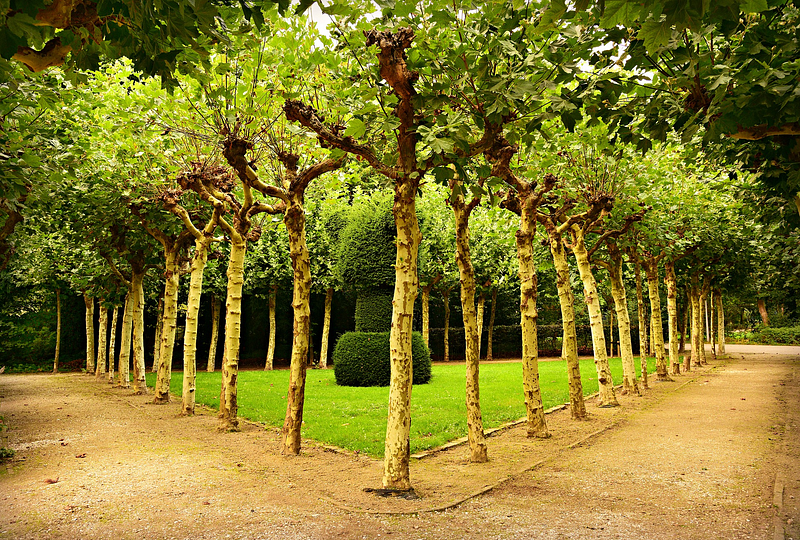
Where’s the fruit in your life? Pruning means cutting away something dead or overgrown to make others fruitful (productive).
In our productivity-obsessed economy, pruning sounds downright scary if you’re the “deadwood” or “weak link” in a family or organization. But does pruning mean you could get killed, fired, laid off, or dumped?
Did Jesus really curse a mere tree?
In Why I Am Not a Christian, nearly a century ago, agnostic Bertrand Russell disputed the greatness of God by bringing up the time Jesus “cursed the fig tree,” destroying a mere tree.
In Mark 11:12–25, we learn Jesus “was hungry,” and “seeing in the distance a fig tree in leaf,” Jesus found no fruit because “it was not the season for figs.”
Jesus looked at the tree, saying, “May no one ever eat fruit from you again” (Mark 11:14, RSV2CE).
Then, Jesus went to the temple, driving out money-changers for making it “a den of robbers.” The very next morning, the cursed tree was “withered away to its roots.” Peter points it out, and Jesus told him: “Have faith in God,” and forgive others so we too can be forgiven.
Why does pruning matter? To city-born 21st century Americans like myself, many of the Biblical stories connected to agriculture can seem confusing or foreign to non-farmers who seldom, if ever, grow crops from seeds.
What we learned living in the woods for 17 years
Have you ever stopped two innocent lives from colliding? Living in the woods teaches you how easy it is for perfectly good people — and great trees — to crash into each other’s space.
I’m definitely not a farmer. After nearly 17 years, I’ve yet to count all the trees surrounding our home (but the total is well over 100).
Our friends who live in the suburbs all have stories of a tree crashing to the ground and having to spend thousands of dollars to clean up debris. But our wooded property includes multiple acres of trees, so the idea of paying someone to trim so many trees seemed daunting — and way too expensive.
So we mainly left the trees alone. My deal with nature is simple: I leave it alone — but if nature invades our house (like the two bats who decided to fly into our bedroom and living room last week), I fight for our space.
Trees are totally different: they die — and simultaneously threaten us and each other — with little warning. Now and then, a storm will hit, and big branches, or whole trees, will collapse:
- Fallen trees and branches have blocked roads into and out of our home.
- The convertible top of my 1996 Mustang was torn by a fallen tree (providing a new entryway for chipmunks who liked having their own car condo).
- The metal roof of the pole barn is permanently bent from fallen branches.
- The 1,776 feet of wiring in our dog’s Invisible Fence has been broken by uprooted trees three or four times.
- One big tree fell quite close to our door. The greatest fear? That one day, a tree will crash into the house. So we befriend men who love chainsaws.
Pruning actually saves every life it touches
From jungle to order? Pruning opens up new space and can turn a mess of tangled branches into a beautiful, manicured garden. From anything goes to true landscape artistry?
It’s like the difference between getting a great haircut and letting everything “grow wild” for four months (something we tried at the height of the pandemic).
This summer, after the latest tree crash, we broke down and found Henry, a young man who loves to trim trees (who worked for a price we could afford). His work got me paying more attention to how pruning could save lives (including ours and those of the plants and animals filling our land).
The Bible, written when nearly everyone planted and cared for plants, can seem alien to modern people like me who seldom “plant seeds.” But once you start pruning, you see how everyone benefits.
For example, two trees planted 16 years ago were literally growing into each other. Without pruning, both could have died. But a few strategic cuts (lopping off two “shoots” coming out of the main tree) saved both trees, literally giving both room to breathe and thrive.
Those two “strategic cuts” made me think how God can see us growing into each other’s space and periodically intervene to save both from disaster.
“I am the true vine, and my Father is the vinedresser. Every branch in me that does not bear fruit he takes away, and every branch that does bear fruit he prunes, that it may bear more fruit. Already you are clean because of the word that I have spoken to you.
Abide in me, and I in you. As the branch cannot bear fruit by itself, unless it abides in the vine, neither can you, unless you abide in me. I am the vine; you are the branches. Whoever abides in me and I in him, he it is that bears much fruit, for apart from me you can do nothing.” (John 15:1–27).
We aren’t anything close to gods, but we have similar “life and death” decision-making power over our homes. So we can choose to review “our worlds” and strategically cut away the unproductive branches to help everything thrive.
As Khang Kijarro Nguyen explained, our job is often to help all who surround us by deciding to “Prune the ill branches so that a tree grows. Prune the dilapidated buildings so that a city flourishes.”
Everything happens for a purpose? How often have you lost a job — or a relationship — and been crushed by the unexpected “pruning?” How often have you realized — years later — how that sad loss allowed some new wonder to sprout up and grow into that new open space?
In The Untapped Wonderer In You, Ernest Agyemang Yeboah describes God giving us each seed — and a choice. We alone decide what we will do with the gifts we’ve been given:
“If God gives you a seed, He expects you to plant it; if He plants it for you, He expects you to water it; if He waters it for you, He expects you to prune it; if He prunes and keeps it for you, He expects you to harvest it; if He harvests it for you, He expects you to store it; if He stores it for you, He expects you to keep it safe from getting rotten and if He keeps it from getting rotten for you, He expects you to account for the seed.”
Yeboah concludes, “Life is all about purposefully fulfilling a purpose. We are expected to be doing something at each moment in our life, or we live without purposefully living.”