
The Public Broken Body of Emmett Till Could Help Us Confront the Human Horror of Our Gun Victims
Sometimes reality has to smack us in the face before we boldly speak our truth
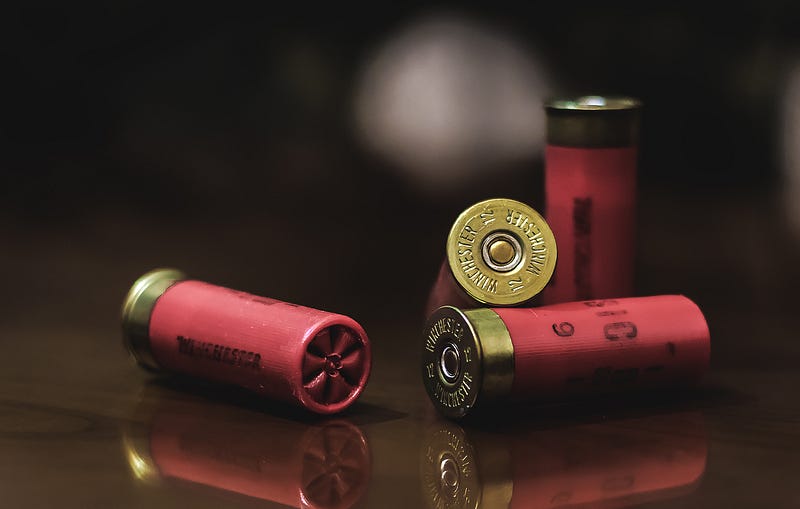
I don’t want to write this. I don’t even want to think it. The toxic combination of outrage and paralysis in response to the carnage of gun violence leaves me as the victim of my own horror, and the impotent perpetrator of my inaction. And I am not alone.
The story of Emmett Till
Emmett Till was ravaged by a Southern gang for the sin of speaking like a regular person to a horrified white woman. For his “sin,” this innocent boy was beaten with a viciousness that stole his life, to the point that he was rendered absolutely unrecognizable.
Rather than follow our popular customs of hiding the hard facts of death by cosmetizing, covering up, and denying the reality of death, his mother steeled her agony and pronounced that her son would be viewed exactly as he died. That his image would be an impenetrable scar on memories that are more “comfortable” with more distant abstract “words,” like hung, lynched, beaten, burned, assaulted and shot.
People were appalled or awakened. No matter what, the image of that child in his coffin, could never be retracted. “Look what you monsters have done!” his silent voice cried. “Look what you nice people, stuck in your silence have done! he screamed.
Seeing the film
The film, “Till,” was, for me, a second chance to understand what his mother did. I had to stay riveted, heartbroken and sickened for a long while in the theatre. Few films have had such haunting power for me.
My own paralysis
For most of my life I have had the recurring nightmare in which I stand glued to the middle of the road, as a car barrels down. My mind screams, “Run!” But my eyes are hypnotized by the oncoming danger. My feet will not move. I am certain of my impending destruction.
It never goes beyond that. I wake up. I am saved. But it is hours before I shake the sweat. Before my heart slows. Before the terror eases. And before I can quiet the strident voices in my head that demand, “Why didn’t you do anything?”
Yesterday, today, tomorrow
This month, we have heard of the repeated slaughter of the innocents, some so young that they had no conception of the weapons of their demise. People who, in seconds, lost the simple comforts of living “regular lives,” doing “regular things.” Being unsuspecting, or optimistic, or believing that there are things we all do (like shopping, or praying, or dancing, or skipping down a school hall) are no protection. In fact, it seems they are an invitation.
Impotence
“When?” we cry and commiserate. “When will this stop?” we ask. But the question is really, “WHEN WILL WE STOP IT?” Thoughts and prayers are so much easier. Frankly I wonder if those sentiments go down a special chute in Heaven, directly into the trash.
Reality
There is a part of me, a small, scared part, that thinks of Emmett Till. Of his mother’s brutal, honest voice that said, “Look! Up close! You want to see the weaponization of hate! Look!”
I think of moving past the pictures on TV news, with captions like, “she was a ray of sunshine,” and showing victims at the seconds of their deaths — deprived of beautiful humanity in a second by forces that shear bones and muscles, that steal identity and sanctity.
That would be unbearable to witness. But is that what we must do to jettison us from whatever it is that is pushing us underwater so hard we are close to drowning?
Could I offer up my dead child for the revelation of the evil we are up against? I don’t know. It is almost obscene.
But her very destruction itself would have been worse, as would the certainty that her brothers and sisters would be similarly annihilated in the cruel future.
Stuck in the middle of the road
I have no answers. I just have the question posed by Emmett Till’s mother. What is it going to take for us to move one millimeter against this evil. She put her faith in sharing jagged, shocking, “in your face” reality, as horrible as it was.
How will we take our next step?


