
The Psychology of the Echo Chamber: How Our Brain Seeks Affirmation and Polarizes
Knowledge is soon changed, then lost in the mist, an echo half-heard. — Gene Wolfe
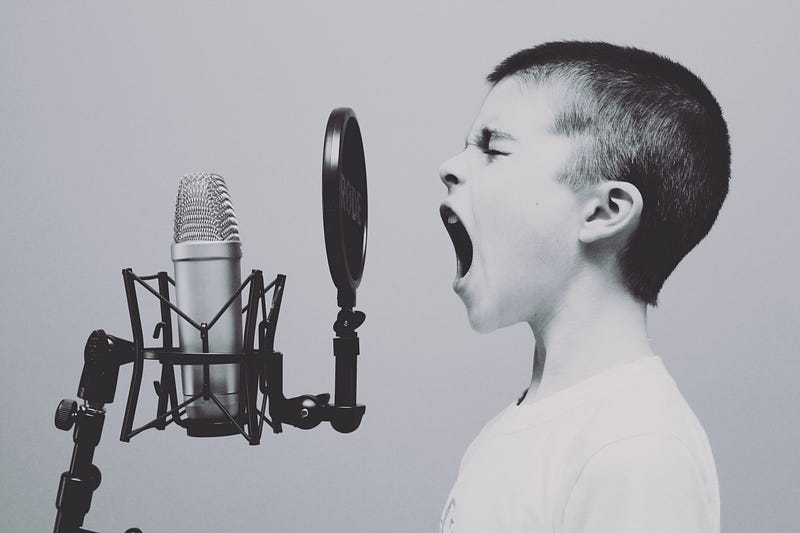
The echo chamber phenomenon has been an area of interest for many researchers, psychologists, and social scientists. At its core, an echo chamber refers to a closed system where individuals are only exposed to opinions and information that align with their own beliefs, reinforcing their pre-existing views without being challenged by contradictory evidence. This phenomenon is not only prevalent in political arenas, but it also finds its manifestation in various social and online platforms. As we delve into the psychology of the echo chamber, it becomes crucial to understand its underlying mechanisms, consequences, and potential mitigation strategies.
Cognitive Mechanisms Underlying Echo Chambers
The human mind is innately wired to seek comfort in the familiar and reduce cognitive dissonance, a psychological state where one holds conflicting beliefs or attitudes (Festinger, 1957). This drive toward cognitive consistency is at the foundation of why individuals gravitate toward echo chambers. Confirmation bias, a well-documented cognitive bias, explains our tendency to seek out, interpret, and recall information in a manner that confirms our pre-existing beliefs (Nickerson, 1998). In the context of the echo chamber, this bias propels individuals to surround themselves with like-minded individuals and information sources, thus perpetuating their original viewpoints.
The difference between an echo chamber and a filter bubble in my mind is an echo chamber you choose to in with likeminded people, a filter bubble chooses you and you don’t really see it. — Edward Greenspon
Consequences of the Echo Chamber
Echo chambers can be detrimental in various ways. Most prominently, they hinder the growth of individual and collective knowledge. When one is continuously exposed to a singular viewpoint, the ability to critically analyze multiple perspectives diminishes. This leads to a more polarized society, where understanding and empathy between differing groups decrease (Sunstein, 2018). Moreover, echo chambers can facilitate the spread of misinformation. When false information is repeatedly echoed without being challenged, individuals begin to accept it as truth, leading to potential real-world harm (Del Vicario et al., 2016).
Social media aggregate people around common interests eliciting collective framing of narratives and worldviews. (Zollo et al, 2017).
The Role of Social Media
The rise of social media platforms has arguably exacerbated the echo chamber effect. Algorithms on sites like Facebook, Twitter, and YouTube are designed to show users content similar to what they have previously engaged with, creating personalized information feeds (Pariser, 2011). Consequently, users are often unintentionally insulated from diverse viewpoints. In addition, the nature of these platforms allows for easy dissemination of information, true or false, which can quickly amplify within specific echo chambers, further entrenching divisive or incorrect beliefs (Zollo et al., 2017).
Mitigating the Echo Chamber Effect
To counteract the negative implications of echo chambers, individuals, communities, and platform designers must take proactive steps. Encouraging media literacy is paramount. By fostering critical thinking skills and teaching individuals to discern credible sources, one can combat the rapid spread of misinformation (Lewandowsky, Ecker, & Cook, 2017). Social media platforms can also play a role by redesigning algorithms to promote diverse content and by providing tools for users to become aware of their information bubbles. Additionally, fostering open dialogue between opposing viewpoints in moderated settings can help bridge understanding and reduce polarization (Garrett et al., 2014).
The echo chamber phenomenon is a multifaceted issue rooted in our cognitive mechanisms and amplified by modern technology. Its implications on individual cognition and societal polarization are profound. However, by understanding its psychology and actively seeking interventions, there is hope for a more informed and cohesive society.
References
Del Vicario, M., Bessi, A., Zollo, F., Petroni, F., Scala, A., Caldarelli, G., Stanley, H. E., & Quattrociocchi, W. (2016). The spreading of misinformation online. Proceedings of the National Academy of Sciences, 113(3), 554–559.
Festinger, L. (1957). A theory of cognitive dissonance. Stanford University Press.
Garrett, R. K., Gvirsman, S. D., Johnson, B. K., Tsfati, Y., Neo, R., & Dal, A. (2014). Implications of pro- and counterattitudinal information exposure for affective polarization. Human Communication Research, 40(3), 309–332.
Lewandowsky, S., Ecker, U. K., & Cook, J. (2017). Beyond misinformation: Understanding and coping with the “post-truth” era. Journal of Applied Research in Memory and Cognition, 6(4), 353–369.
Nickerson, R. S. (1998). Confirmation bias: A ubiquitous phenomenon in many guises. Review of General Psychology, 2(2), 175–220.
Pariser, E. (2011). The filter bubble: How the new personalized web is changing what we read and how we think. Penguin.
Sunstein, C. R. (2018). # Republic: Divided democracy in the age of social media. Princeton University Press.
Zollo, F., Bessi, A., Del Vicario, M., Scala, A., Caldarelli, G., Shekhtman, L., Havlin, S., & Quattrociocchi, W. (2017). Debunking in a world of tribes. PloS one, 12(7), e0181821.


