
The Psychology Of Money In 10 Minutes — Part 1
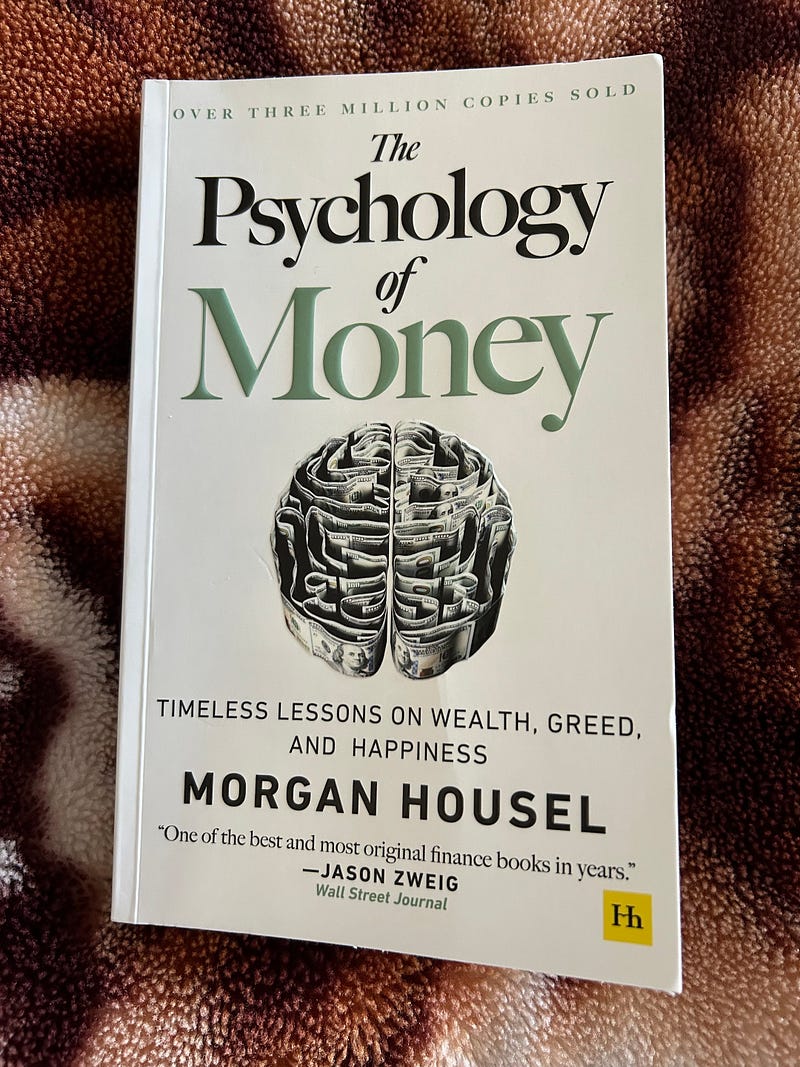
One of the best books on Finance
After reading all the jargon and total crap on the topic of Finance, I read “The Psychology of Money” by Morgan Housel. This is the only Finance book that didn’t sound theoretical and impractical.
This is a must-read nonfiction book.
While you should read the entire book, I have captured here a few key points that I want to remind myself regularly.
This is Part 1.
Health and Money
2 topics impact everyone: Health and Money.
Due to advancements in science, our health is getting better and life expectancy is rising. However, despite the world’s greatest minds trying to analyse the finance realm, we are still not better investors and our debt is not reducing.
The reason according to Morgan Housel is that we tend to think about Money too much like Physics (rules and laws) and not enough like Psychology (emotions and nuance).

The way you understand Money is different from what others think
If you think others are crazy about how they handle money, then you are wrong. No one is crazy.
People from different generations, raised by different parents who earned different incomes and held different values, in different parts of the world, born into different economies, experiencing different job markets with different incentives and different degrees of luck, learn very different lessons.
In theory, people should make investment decisions based on their goals and the options they have. However, that’s not what they do. Instead, their investment decisions are based on the experiences they had in their adult lives.
Luck and Risk
We all know Bill Gates is a genius. However, Bill Gates also was lucky to be attending the Lakeside School where he got access to a computer at the age of 13.
Bill Gates apart from Paul Allen had a good friend named Kent Evans. Evans was as skilled with computers as Gates and Allen. Kent could have been the founding partner of Microsoft with Gates and Allen. But Kent died in a mountaineering accident before he graduated high school.
The odds of being killed in a mountain accident at high school age are roughly 1 in a million. And the odds of being at Lakeside School are also roughly 1 in a million. The same force, the same magnitude, working in opposite directions.
No one thinks there is a role of luck in financial success. Since it is hard to quantify luck and rude to suggest people’s success is owed to it, the default stance is often to implicitly ignore luck as a factor of success.
The cover of Forbes magazine does not celebrate poor investors who made good decisions but happened to experience the unfortunate side of risk. But it almost certainly celebrates rich investors who made OK or even reckless decisions and happened to get lucky. Both flipped the same coin to land on a different side.
We think Mark Zuckerburg is a genius for turning down Yahoo!’s $1B offer in 2016. But people criticise Yahoo! with as much passion for turning down Microsoft’s offer! So what is the lesson for entrepreneurs here? No one knows as risk and luck are so hard to pin down.
The line between “inspiringly bold” and “foolishly reckless” can be a millimetre thick and only visible with hindsight.
Not all success is due to hard work and not all poverty is due to laziness.
Studying CEOs and Billionaires
Studying a specific person can be dangerous because we tend to study extreme examples — that of CEOs and billionaires, or the massive failures that dominate the news.
The more extreme the outcome, the less likely you can apply its lessons to your own life, because the more likely the outcome was influenced by extreme ends of luck or risk.
Having Enough
At a party given by a billionaire on Shelter Island, Kurt Vonnegut informs his pal, Joseph Heller, that their host, a hedge fund manager, had made more money in a single day than Heller had earned from his wildly popular novel Catch-22 over its whole history. Heller responds, “Yes, but I have something he will never have … enough”. Enough.
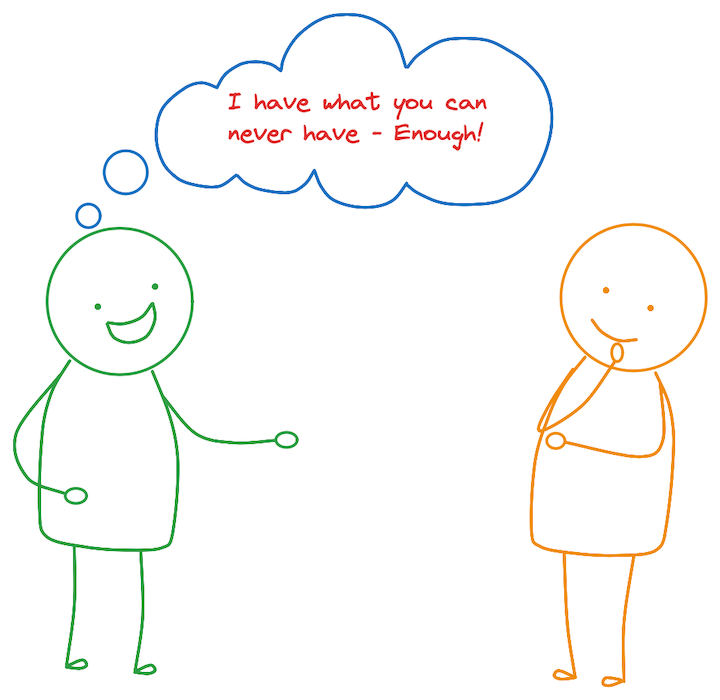
If your salary is sufficient to cover every reasonable thing you need and a lot of what you want, then remember a few things.
a. The hardest financial skill is getting the goalpost to stop moving.
Modern capitalism is pro at 2 things: generating wealth and generating envy. Life isn’t any fun without a sense of enough.
Happiness = Results minus Expectations.
b. Social comparison is the problem here.
The ceiling of social comparison is so high that virtually no one will ever hit it. The best thing to do is to accept that you might have enough, even if it’s less than those around you.
c. Enough is not too little.
The idea of having “enough” might look like conservatism. But it is to realize that the opposite — a never-ending appetite for more — will push you to the point of regret.
d. There are many things never worth risking, no matter the potential gain.
Reputation is invaluable. Freedom and independence are invaluable. Family and friends are invaluable. Being loved by those who you want to love you is invaluable. Happiness is invaluable.
The best shot at keeping these things is knowing when it’s time to stop taking risks that might harm them.
Getting Wealthy vs Staying Wealthy
Getting money is one thing. Keeping it is another.
40 years ago there was a third member who was investing along with Warren Buffet and Charlie Munger. Rick kind of disappeared relative to Buffet and Munger’s success. When asked the reason, Buffet said “Charlie and I always knew that we would become incredibly wealthy. We were not in a hurry to get wealthy. Rick was just as smart as us but he was in a hurry.”
Applying the survival mindset to the real world comes down to appreciating 3 things.
- Sticking around for long enough when compounding works wonders is better than aiming to get big returns.
- Planning is important, but the most important part of every plan is to plan on the plan not going according to the plan.
Many plans fail not because they are wrong, but because they were mostly right in a situation that required things to be exactly right.
3. A barbelled personality — optimistic about the future, but paranoid about what will prevent you from getting to the future — is vital.
Optimism is believing that things will go well. Sensible optimism is a belief that the odds are in your favor, and over time things will balance out to a good outcome even if what happens in between is filled with misery.


