
The Proven Healthiest Diet
The Mediterranean Diet has withstood the test of time and provides the most scientifically proven prevention of cancer, heart disease, and Alzheimer’s dementia
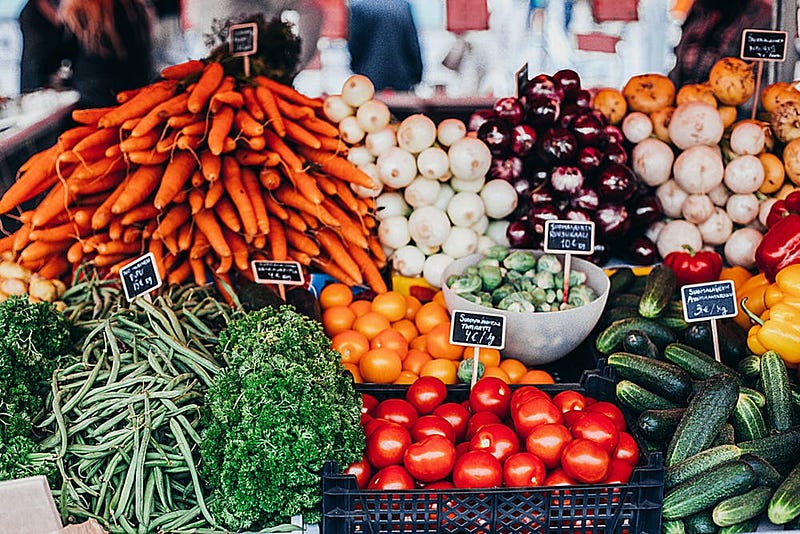
Google the word “diet” and you will see 1.2 billion hits. Yes, that’s billion, not million. Our interest in diets is limitless, even with a pandemic raging. The word alone elicits intense reactions, research, and discussion.
The definition is not so simple: a noun meaning “food and drink regularly provided or consumed” or “habitual nourishment” or “the kind and amount of food prescribed for a person or animal for a specific reason”, Merriam Webster 2020.
However, when we hear the word, most of us think of the fourth definition: “ a regimen of eating and drinking sparingly so as to reduce one’s weight.” With the majority of western society now overweight, if not clinically obese, the last definition has become a holy grail.
I will acknowledge that there are many diets that promise you will lose weight…at least for a short period of time. But I’m referring to a proven method that can give you better health and keep your weight more ideal. It’s the Mediterranean Diet or the Med Diet.
It is a diet traditionally followed in Greece, Crete, southern France, and parts of Italy that emphasize fruits and vegetables, nuts, legumes, whole grains, low-fat dairy, olive oil, as opposed to butter, and grilled or steamed chicken and seafood, as opposed to red meat, and low amounts of alcohol.
This is not to say you can never have butter or red meat. It’s just those that should not be a major or frequent component of the diet. You can have pasta too. Just not too much or too frequently, and preferably made with semolina or hard durum wheat. The health data supporting the use of this diet is enormous.
Heart Disease

There was a pioneer study of the relationship of the Med Diet and heart disease called the Lyon Diet Heart Study, (so named since it was carried out in Lyon, France). It was published in 2001 in the respected heart journal, Circulation, (https://www.ahajournals.org/doi/full/10.1161/01.cir.103.13.1823.
The study design was randomized and chose patients after their first heart attack to see if adherence to this diet could lessen the recurrence of heart disease in the future.
The study was discontinued after 46 months because ethical monitoring of the results showed an enormous improvement when this diet as compared to the patients’ usual diet before enrollment.
To be exact, the patients on the Med Diet had 50–70% lower risk of heart disease, defined as cardiac death, nonfatal heart attacks, angina (heart pains), stroke, and congestive heart failure.
The study results are even more powerful when one considers that during the randomization process, both the study and control, (prior diet), groups were matched for the same levels of blood fats, blood pressure, weight, and smoking.
The authors of the study concluded: “It would be short-sighted to not recognize the enormous public health benefit that this diet could confer with adoption by the population-at-large…” The striking results have since been confirmed more than once.
Cancer
Although not as bold a difference seen with heart disease, many studies have shown reduced cancer risks for people who adhere to a Med Diet, (https://www.aicr.org/resources/blog/reducing-cancer-risk-with-mediterranean-diet-your-questions-answered/).
The reason that the benefits of cancer reduction are not as striking as with heart disease could be that all cancers are different. Risk factors for lung cancer are not the same as for stomach, prostate, or breast cancer. Risk factors for heart disease have not changed over the years.
However, even accounting for the pleomorphic nature of various malignancies, the Med diet does seem to afford protection, particularly with some cancers of the breast. Other aspects of the diet, such as low added sugars, high fiber, and anti-oxidant foods most likely have cancer prevention roles as well.
Dementia

Studies show people who closely follow a Med diet are less likely to have Alzheimer’s disease than people who don’t follow the diet, (https://www.mayoclinic.org/diseases-conditions/alzheimers-disease/expert-answers/alzheimers-disease/faq-20058062).
It is not clear which component, or components, of the diet may be protective here. But clearly the risks of developing this devastating disease are less for people who adhere to it. Some less rigorous studies also show that the Med diet might prevent Parkinson’s disease, (https://www.apdaparkinson.org/article/nutrition-and-parkinsons-disease-part-three/).
And a comprehensive study sponsored by the National Institute of Health, (https://www.ncbi.nlm.nih.gov/pmc/articles/PMC5625964/), suggests a reduction in other chronic diseases too.
The Mediterranean diet explained
I hope I have convinced you of the benefits of this diet. How does one adopt it? For many people who follow a healthy diet now, it isn’t as difficult as those following a traditional Western diet.
The latter is high in red meats, salt, sugar, alcohol, unhealthy fats, and refined grains and carbohydrates. It is low in fruits, vegetables, healthy fats, fish, and seafood. The more one can transition to the healthy components of the Med diet, the better health you will enjoy. Small and progressive steps are the easiest for breaking old eating habits and making new ones.
For example, for the Western diet folks, limit red meat consumption to three times a week rather than six or eight. Every few weeks cut down a bit more. Use more olive oil and less of other fats for cooking and eating. Eat more nuts, whole grains, and consume less alcohol. Have at least 5–6 servings a day of fresh fruits or vegetables.
Keep in mind that in most cases, the whole fruit is better than the juice. That is because there is more fiber, less sugar, and calories in the fruit. One cup of orange juice has about 110 calories as opposed to 45 in orange.
If fresh is not possible, frozen is a great second choice, provided there are no added sugars. And no, carrot cake does not count as a vegetable. Neither does zucchini or date nut bread. Nuts, although calorie-dense, are full of healthy fats and fiber. Use them or nut butter as snacks.
Here is the breakdown or short version of the diet as explained by The Mayo Clinic:
- Eat more fruits and vegetables. Aim for 7 to 10 servings a day of fruit and vegetables.
- Opt for whole grains. Switch to whole-grain bread, cereal and pasta. Experiment with other whole grains, such as bulgur and farro.
- Use healthy fats. Try olive oil as a replacement for butter when cooking. Instead of putting butter or margarine on bread, try dipping it in flavored olive oil.
- Eat more seafood. Eat fish twice a week. Fresh or water-packed tuna, salmon, trout, mackerel, and herring are healthy choices. Grilled fish tastes good and requires little cleanup. Avoid deep-fried fish.
- Reduce red meat. Substitute fish, poultry, or beans for meat. If you eat meat, make sure it’s lean and keep portions small.
- Enjoy some dairy. Eat low-fat Greek or plain yogurt and small amounts of a variety of cheeses.
- Spice it up. Herbs and spices boost flavor and lessen the need for salt.
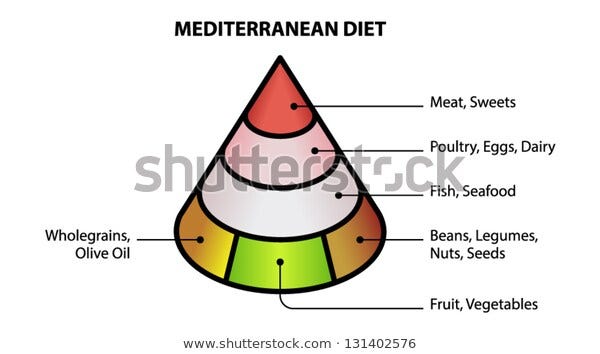
There is plenty of information now about this diet. I counted a few hundred cookbooks on the subject on Amazon’s website. Some will mention the DASH diet. This is very similar to the Med diet but with more focus on limiting sodium intake and reducing high blood pressure.
Remember the adoption of this diet is a process. It not like a Paleo or Keto diet with sudden and drastic alterations in what and how you eat. Take the transition at your own pace. It’s okay to fail or cheat every so often. Instead of reaching for pretzels or chips, try a handful of nuts. Or have some nut butter with low-fat Kefir as a snack.
Like most other routines in our lives, what we eat is a habit. Old ones are die-hard. New ones take time, patience, and effort. However, with this diet, your body will thank you.
If you enjoyed reading this or found it interesting, please follow me on Medium https://medium.com/@davidmokotoff/, Facebook, and or Twitter @DavidMokotoff. Thanks, and please keep yourself safe.