
The Protests of the Digital Millennium
GiaB prompt #16 social media
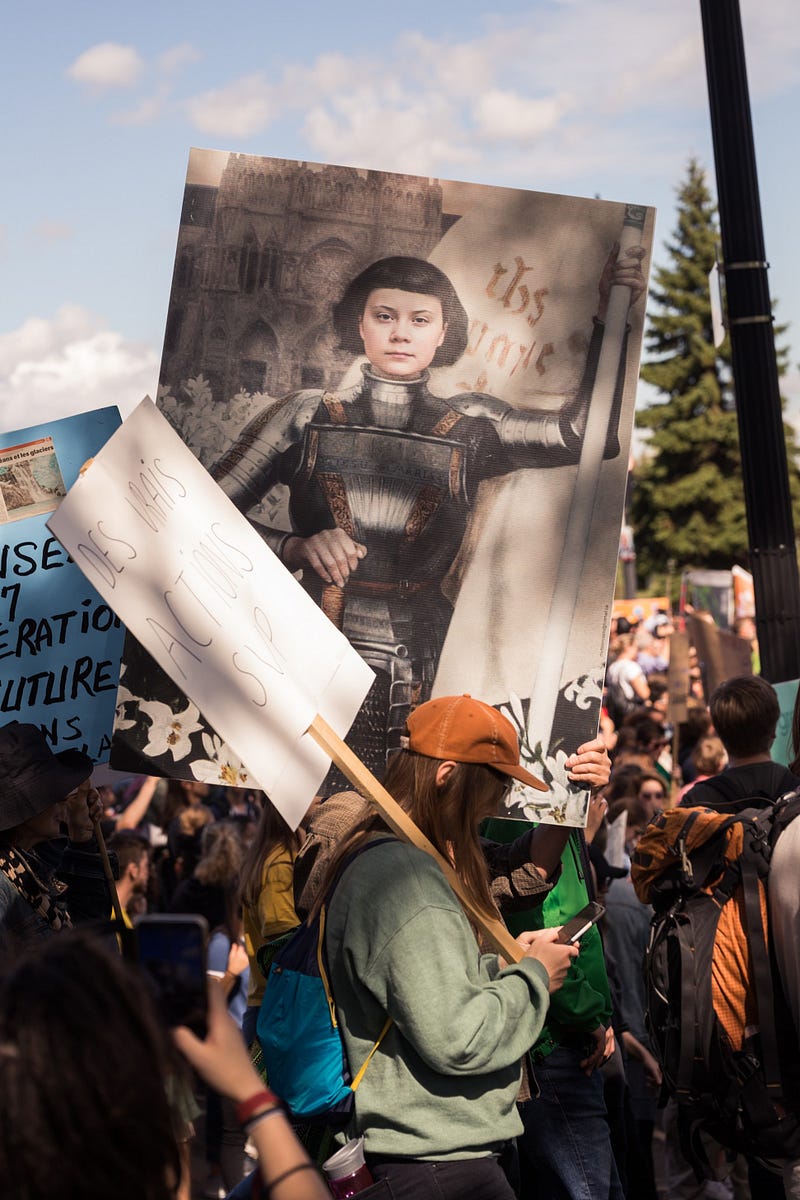
The demonstration winds its way through the city. The whole route is lined with the officers of the law. They sweat. They spit. They are being paid overtime. The asphalt is almost 140 degrees. The Autumn unrests have come early this year.
A thousand cell-phones capture it. The mob is self conscious, and this time it reflects on itself within the internet. “#MandateLost! #TahrirSquareFull! #ParisBurns!” a bird chirps from nowhere and everywhere.
Here drums are beaten, women bear their breasts, young families hold hands and try and stick together. So far the march has been a peaceful one — as was promised. Still, parents begin to wonder if things are not getting out of hand. Those who work their way to the outside of the throng are now allowed through the lines on any stupid, little pretext like needing to pee. But only those who make their way.
Here and there the protesters find the rhythm in some utterance like, “Liberty! Liberty! Liberty!” but the unrest is either too young, or not yet ripe. It only knows how to babble. It finds its voice to lose it moments later.
The procession turns onto a wide avenue, one of the city’s sacred highways, the one that runs straight and true through the monuments downtown.
They will not get that far. Just as the stragglers round the corner, those at the front bump into a wall of shields. Behind the shields are light armored vehicles, and on top of the tank at the center of the line stands a man in a crisp blue suit. The brim of his cap and the epaulets on his shoulders gleam in the harsh sun. He has given them a fresh coat of wax this morning.
He has no riot act to read this time. He has no megaphone. He only gives a sign with his hand, and in the back of some nondescript van an unshaven oaf of a man in a pit-stained shirt presses a single button.
And the music starts blaring:
A dozen loudspeakers actuate almost to the point of ripping themselves to pieces. A quartet of LRAD devices concentrate the voices into beams that sweep across the crowd. Eardrums burst and children scream.
Waterloo as recorded by ABBA themselves is what they’re hearing.
© 1974 Universal Music. All Rights Reserved.
Those further back in the crowd — those who can still just barely hear themselves think — begin to laugh at the absurdity.
“So what? You guys wanted a dance party?” One man jeers, trying to subvert the eerie posturing of the officers on the sidewalk. He gives them the disco finger.
Do they not hear the music? he thinks to himself. Do they not see this absurdity? They stand with white knuckles on black truncheons, pretending as if they’re deaf to their own pop.
Then without anyone anywhere doing anything at all, as if by the will of some divinity, every single live-stream coming from the street is terminated.
Even those furthest back can now perceive the music's deafening qualities. They tap their phones with frustration, or wave them at the sky as if in prayer.
Then a line of mounted officers rounds the corner behind the mob. Their formation is three horses deep and spans the whole width of the street. The riders have their faces masked, their heads encased in protective shells. They survey the scene clinically, as if they too are deaf to the absurdity of the beat.
Two and three quarter minutes after it began the song comes to an end, but while it winds down the orchestra is already starting up.
Do You hear the People Sing?
Specifically, the loudspeakers sing that recording which had been made for the cinematic adaptation of Victor Hugo’s 1862 novel, Les Misérables.
© 2012 Universal Studios. All Rights Reserved.
The most apperceptive of the youtubers and the tick-tockers suddenly get the message. They curse. Who knows what deity is the target of their invectives, the god of the algorithms perhaps. In any case, the absentee actors have already began to chant the first lines.
Do you hear the People Sing?
Singing the song of angry men
It is the music of a people who
Will not be slaves again…
That is the signal. The rasps go unheard as the mounties together draw their cavalry sabers.