
The Price Tag of Practice
Training Medical Professionals Without Killing the Patients
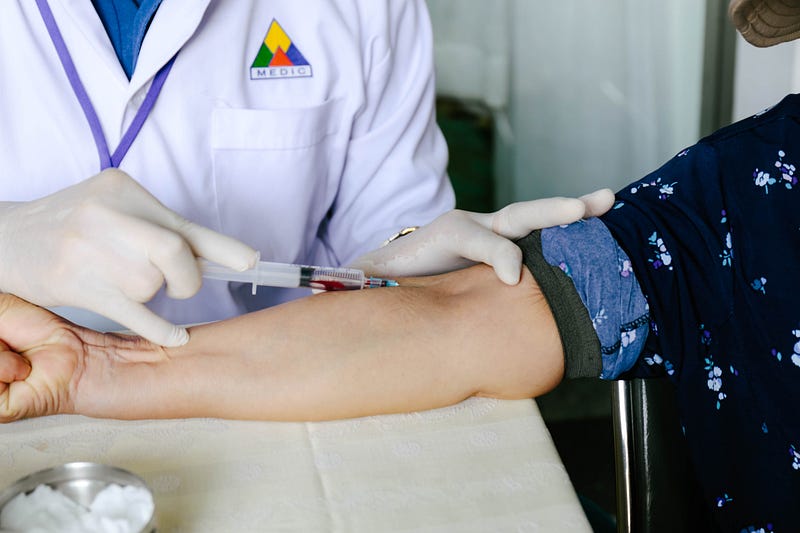
At any given time, in just about any hospital in the United States, sick people may be unknowingly at the mercy of students: medical residents, surgical residents, nursing students, nurse practitioner students, physician assistant students, respiratory therapist students, pharmacy students . . . you name it.
It’s not that these students aren’t being supervised, they are, but from various distances.
Taking care of real patients is one of the best ways for students to learn because, unfortunately, it requires practice to learn how to take care of sick people.
But the practice doesn’t come all at once, there’s a learning curve.
Initially, it comes with direct supervision and a plethora of questions.
Then oversight widens into graduated responsibility and spot checks. This is called deliberate practice and it’s what turns conscious learning into unconscious knowledge. It’s what turns nursing students into nurses and residents into doctors.
The reality is this: in healthcare the learning curve is more like a hamster wheel.
Lessons Learned Through Practice
Some years ago, I was a nursing student on the med-surg floor at a large teaching hospital. I was paired with a medical resident for the day who looked about 14-years-old, with shaggy brown hair and a perfectly pressed white lab coat.
I followed him into the patient’s room where he walked up to the bed and simultaneously mumbled a vague greeting while grabbing the sheet and pulling it off our patient.
She screamed at the top of her lungs.
This patient had abdominal surgery two days ago. It is very common to have numerous tubes protruding from your abdomen following these types of surgeries. She had two Jackson-Pratt drains, one T-Tube, and a Foley catheter, not to mention the fresh surgical incision.
Thankfully, the resident had missed the tubes and the incision and no harm was done. But this patient yelled until her face was red about how easily one of the tubes could have been pulled out by him yanking the sheet off her.
Although the resident never actually taught me anything, that moment was teachable because it was a vital lesson.
Do not touch a patient without permission. Ever!
Needless to say, the emotional impact of the patient’s response is well imprinted on my hypothalamus. She had every right to be upset about the encounter.
I also learned a lot watching the resident attempt to recover from his gaffe. Which provided lesson #2.
Professionals should immediately own up to their mistakes.
The resident heehawed around a proper apology for some time. He kept trying to explain his actions to the upset patient, instead of immediately apologizing and starting over.
The patient would have no part of his excuses (good for her, I say!) and for several minutes things escalated because of the resident’s poor response.
Trying to explain away your actions or words is never an appropriate response to an upset individual, let alone when that person is your patient.
This resident needed to stay on his hamster wheel where he could get more practice with post-surgical patients.
More Practice
Practice and more practice, that’s what makes a solid medical provider but it shouldn’t be at the expense of the patient even though it often is.
Medical ethics and public outcries insist that patients have a right to the best care possible above and beyond the objectives of those in training. Patients are not required to let students practice on them but they should consider the benefits.
Some studies have shown that patients in teaching hospitals have better outcomes than those in non-teaching hospitals. This is likely related to a few differences.
First, students are more eager. They ask more questions and take more time. They are privy to the latest textbooks and research. They are more persistent and willing to spend additional time searching for answers. They haven’t yet lost the thrill of the hunt.
Second, there are just more people paying attention to the patient. The more the disease or condition of the patient is reviewed, the less likely something will be missed.
Patients benefiting from medical and nursing students may be hard to grasp because, when it’s all said and done, patients are the ones who have the most to lose from student mistakes.
Mistakes Are a Part of the Process
Mistakes are a part of practicing and practicing is what students do.
On the one hand, if there were no students, healthcare would never have any experts.
On the other hand, just like the med-surg patient with all the abdominal tubes, someone has to pay those hefty learning tolls.
I’m a nurse practitioner. And thanks to the shaggy-haired resident, I still approach every patient I encounter with an introduction and a request for permission to touch them.
Practicing medicine as a nurse practitioner means I’m willing to let my colleagues critique my actions, offer input, and provide feedback. When the procedure I’ve just completed remains a mystery to me, I’m willing to practice more. There are ways to lower the price humans must pay.
Regardless, medical professionals should never stop practicing because there is no better way to learn this profession . . . at least not yet.
It’s not talent that makes a great medical professional . . . it’s the practicing, the consistent reaching for perfection, and the focusing on best outcomes for patients no matter where we are on the hamster wheel.


