
Art|AI|Artificial Intelligence|Medium|
The Precious and Demanding Script of the Art Piece
AI-Artificial Intelligence: Art’s New Canvas
To know the Pen, one must know the artist.
Every digital artist possesses an individual narrative to share; here’s mine.
Growing up, I was surrounded by artists; my mom had private lessons at the house, and while growing up, I used to join the art session and observe mom paint with her teacher. My sister went to London for art school soon after graduating from high school, and my daughter did the same.
I, on the other hand, could not draw, even if my life depended on it, until AI, Artificial Intelligence.
My mother always told me I had my head up in the stars and I day-dreamed too much.
Well, what if I could articulate what I was day-dreaming about?
What if I could bring back any reality from the past with just a memory?
What if I could tie an emotion that is felt when looking at a digital art piece?
As the brush stroke is unique to an artist, a digital art piece can be created through a unique script, which we can call the artist’s pen.
Remember this thought:
As the Brush is Unique to the Art, so is the Pen Unique to the Narrative
Artistic expression has always been a reflection of human creativity, emotions, and imagination. I have always wanted to draw and have been consumed by emotions. I wanted to bring emotions of love, fear, death, rebirth, and dying into my art pieces.
So, how could I ever express what I could not draw?
With the rise of artificial intelligence (AI), a new canvas for creativity has emerged. AI-generated art has captured the attention of both artists and enthusiasts, showcasing the potential of machines to create stunning works of art.
At the heart of this process lies a precious and demanding script, a digital brush that empowers AI to craft visual narratives that were once solely within the realm of human artists.
My mother was from the Hawaiian Islands; she went to high school in the US, and my dad was Filipino; he received his Master’s from Columbia University and his Doctorate in Madrid, Spain. My parents had plans for my future as a medical physician. They filled my nursery full of Disney books when I was born, including the entire set of Nancy Drew and Hardy Boys, Reader’s Digest, National Geographic, and the whole Britannica Encyclopedia.
They hired a midwife who would read these books to me even before I could say dada.
So I have been thoroughly seasoned with backgrounds about our great artists from our history, especially artists like Renoir, Monet, and Michaelangelo. Due to my background and the influence of reading all about them growing up, my digital pieces reflect my knowledge about each artist that spills over into my digital canvas, making my script unique to the art piece.
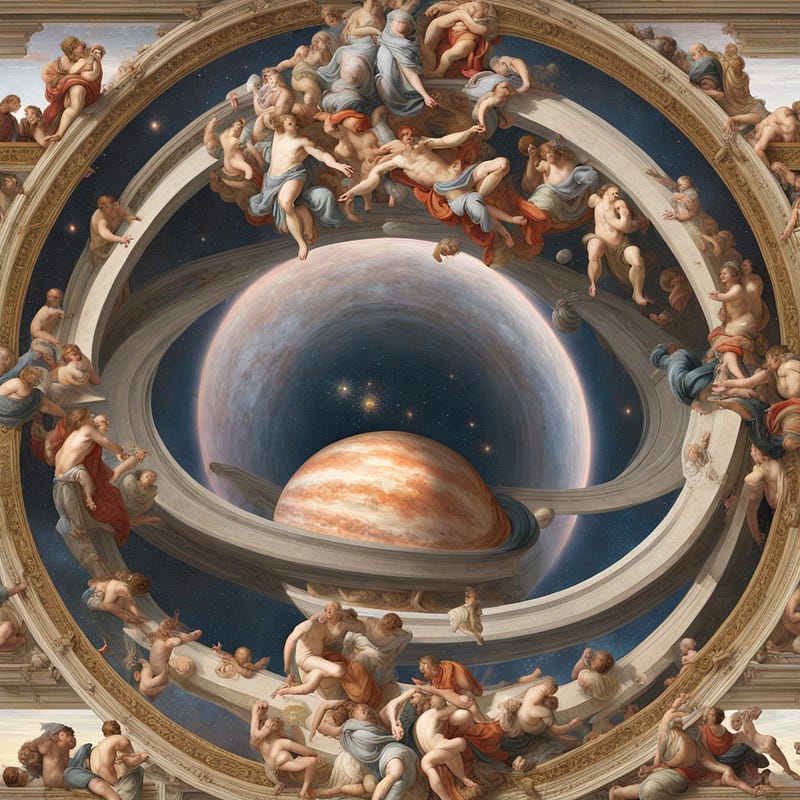
The first picture you see above was inspired by? Yes, Michaelangelo. This piece, which I named “Multiple Realities," was inspired by the master of master artists, Michaelangelo Buonarroti.
I wanted to tag Nouriel Gino Yazdinian, as he had just published a piece about the Master or Masters, Michaelangelo Buonarroti. (Nouriel, I hope you will join our publication.)
Monet.
Here’s a second picture inspired by Monet. I am using the same script to describe what I would like to create digitally, with a touch of Monet.
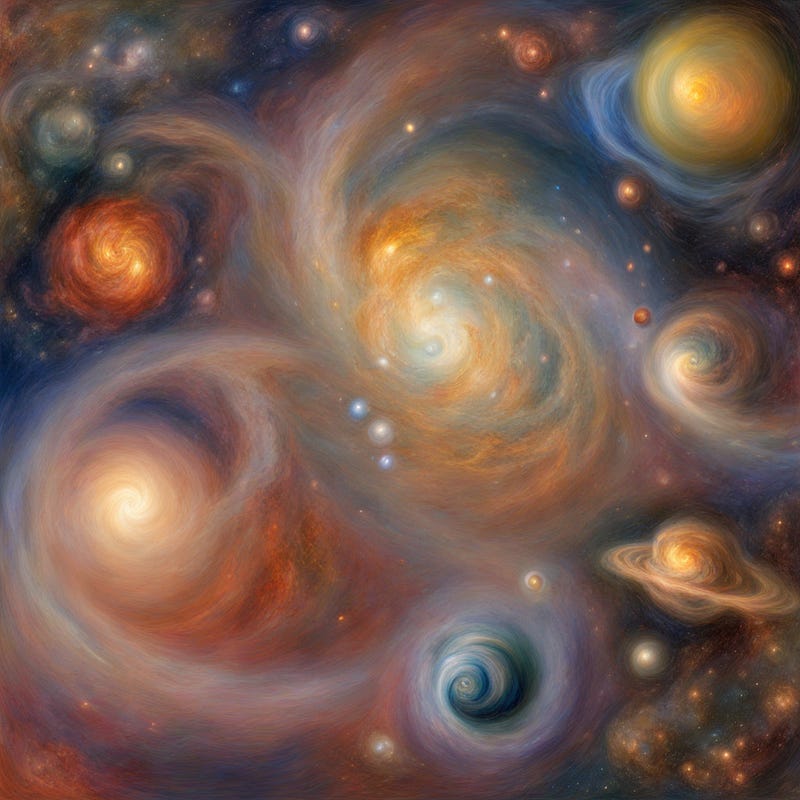
Monet, (1840–1926) considered one of the most typical Impressionists. Monet’s aim was to catch the passing impressions of light and atmosphere, “The most fleeting effects”, as he called them.
“With water streaming under his caper, he painted the storm amid the swirl of the salt water. He had between his knees two or three canvases, which took their place on his easel one after another, each for a few minutes at a time. On the stormy sea different lights appeared. The painter watched for each of these effects, a slave to the comings and goings of the light, laying down his brush when the effect was gone, placing at his feet the unfinished canvas, ready to resume work upon the return of a vanished impression.”
Monet’s accounts were sometimes heroic but absurd, don’t you think? His greatest drawback may have been their approach to painting: the effects of nature are unpredictable, and the artists have less time to depend on a picture since the effect has now gone.
Here’s a third digitally created art piece, inspired with Renoir.
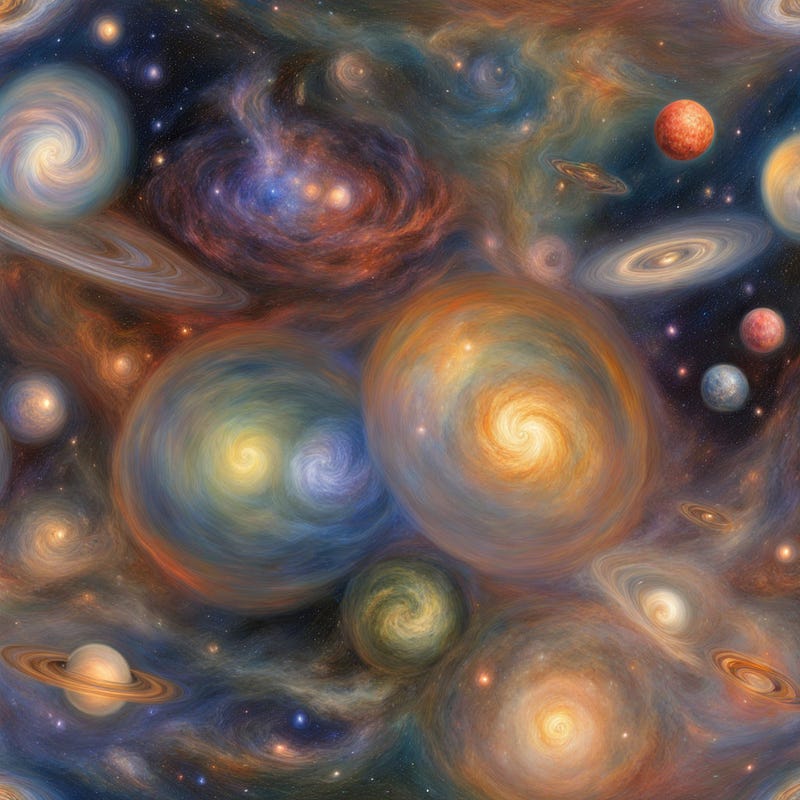
Pierre-Auguste Renoir.
He was called a friendly impressionist. His background included visits to the Louvre during lunch hours while working at a factory. His influences and loves were the 18th-century pictures of courtly gaiety painted by Watteau, Boucher, and Fragonard and the colorful canvases of Delacroix.
What I am trying to relay is that each of the artists mentioned that I have been inspired for developed their own styles based on their backgrounds, experiences they were exposed to at the time.
Renoir closely worked with Monet in the Forest of Fontainebleau, then developed his own style.
There are three more digital pieces I’d like to showcase inspired by the three artists already mentioned: Michaelangelo, Renoir, and Monet.
Let me digress and get back to AI and the Power that is the Script, unique to the Pen.
The script, in the context of AI-generated art, acts as the guiding force behind the creation process. It serves as the foundation upon which intricate algorithms are built, allowing AI models to analyze, learn, and produce art. Just as a skilled artist wields a brush with precision and intention, the script becomes the digital tool through which AI breathes life into its own visual narratives.
Crafting a script for AI-generated art is also a challenging and an intricate endeavor. It requires a deep understanding of art theory, aesthetics, and the nuances of various art forms. Artists, technologists, and researchers collaborate to design a script that captures the essence of the intended artistic style, ensuring that the AI model can learn and replicate it fully.
The real value of the script. The script is used to train the AI model, exposing it to vast amounts of curated artwork and allowing it to comprehend patterns, styles, and techniques. Through a combination of machine learning algorithms, neural networks, and generative models, the AI artist gradually hones its skills, acquiring the ability to generate original pieces that mimic the desired artistic style.
There has been much controversy around AI-generated art, questioning the authorship and originality; artists and researchers are concerned with the ethical implications of AI-created works of art and strive to strike a balance between the machine’s creative contributions and human intent.
The script is an essential tool for me personally, as it plays a crucial role in maintaining my vision and ensuring that AI-generated art remains a collaborative effort rather than a replacement of my skills.
Here are three more examples I created to showcase for this piece. I want everyone to join and tell me which artist inspired these pieces.
My script: Create a goddess of love…with ___style. Try to guess which artist/s inspired me for this digital piece.
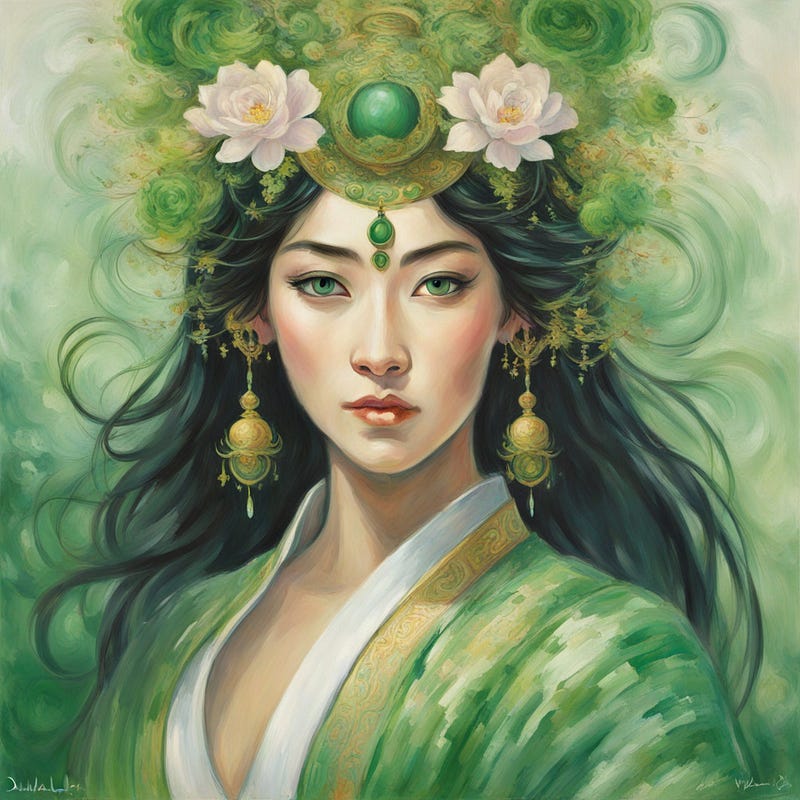
2nd piece of the Goddess of Love:
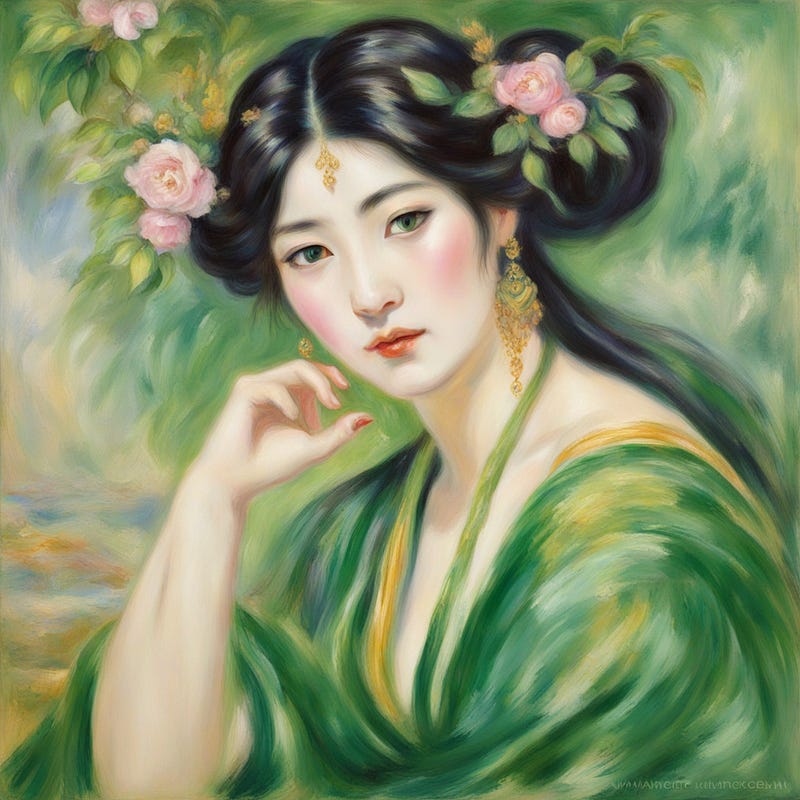
Here’s a third piece, please try to guess who was the artist/s I was inspired of for this piece.
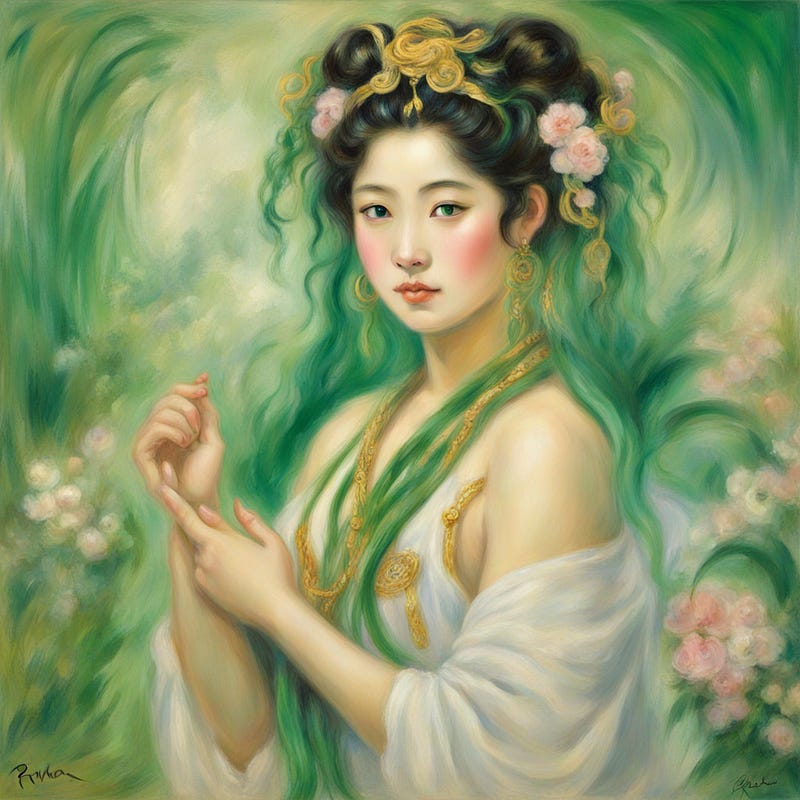
I hope everyone can join and guess which of the three artists I was inspired of when I created these pieces of digital art. (Renoir, Monet or Michaelangelo)
AI-generated art has the power to push the boundaries of what is possible in the realm of creativity. The script, serving as an ever-evolving blueprint, allows for experimentation, innovation, and the exploration of new artistic frontiers, even creating an entirely novel visual language.
As AI-generated art continues to evolve, the script will undoubtedly become a precious and demanding element in the creative process. It empowers AI models to wield their digital brushes with increasing skill, producing artworks that captivate and challenge our notions of artistic expression. The marriage of human creativity and machine learning offers a unique opportunity to explore uncharted territories fostering a very new era of artistic collaboration.
Where the script becomes both a guiding light and testament to the limitless possibilities of AI-generated ART.
Know the pen, know the artist.
My Pen is Love.
Thank you Francis Lee for inviting me to become an editor for this publication. I hope many more artists can join this publication, “Believe It, This is Art, please let us know in the “comment” section if you’re interested in joining. This is the publication invite from Francis Lee’s post.
My website is under construction. What can I bring to the table for this publication?
I hope to feature additional digital art creations and how I personally develop the scripts and draw inspiration for them.
I would like to feature other digital artists as well, including my daughter, Jessica Crystle, owner of MacaronArt.
Please let me know if you have additional topics you would like me to feature.
For prints, contact information and collaborative projects email: [email protected]