
The Precautionary Principle
Why is it so hard to take a small precaution now instead of greater action later?
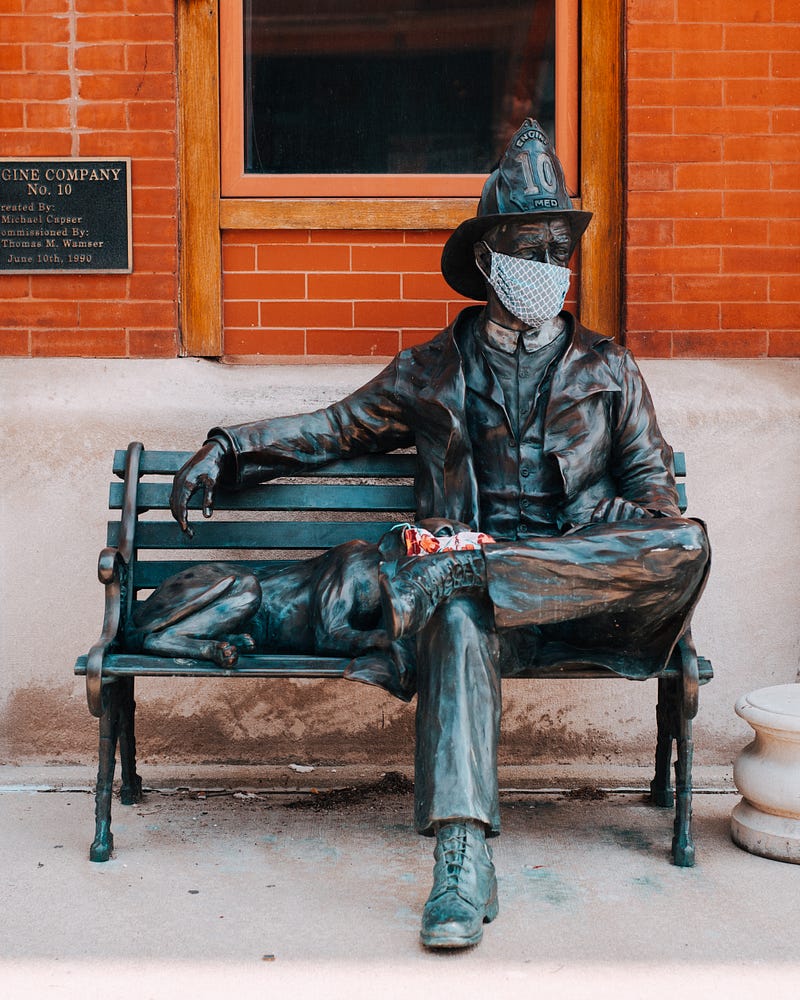
Why is it so hard to take precautions? It is not always possible, if the risk is unknown. How can you act to stop something you are not even facing? You are oblivious, but it’s not your fault. What about when you know the risk, you know the harm, and yet you proceed? The SARS-CoV-2 novel coronavirus and the ensuing pandemic provide just such a test.
The virus likely emerged from a single animal-to-human transmission in Wuhan, China in late 2019, reaching pandemic levels across the world by February 2020. Italy in particular has been hard hit. And yet, the feeling of watching the news does not quite convey the gravity of the situation. A news media primed to deliver 24/7 *BREAKING NEWS* has a hard time conjuring up the appropriate level of concern for a threat that will build slowly and then suddenly. We are mired in a stupor based on a skepticism of a media that cries wolf all day, every day.
Stepping back from the news though, one must consider the situation abstractly rather than in the particular. The Precautionary Principle comes to mind: when facing a situation with harms of unknown magnitude, and guiding data are lacking, a strategy of caution proportional to presumed harms should be pursued. The Wingspread Statement is a more formal definition:
When an activity raises threats of harm to human health or the environment, precautionary measures should be taken even if some cause and effect relationships are not fully established scientifically. In this context the proponent of an activity, rather than the public, should bear the burden of proof.
Take going out without wearing a face mask. In normal times, this decision point would not exist. During a pandemic though, the burden should fall on the maskless to justify why they are not wearing a mask. Rarely, some people should not wear masks due to respiratory conditions, and should provide a doctor’s note explaining their situation. For most though, there is no sufficient rationale to avoid wearing a mask. They should take precaution, if not for themselves, then for others.
While the principle is aimed at policy makers, one can and should apply it in one’s own life. With many carriers of coronavirus being asymptomatic, we as individuals should practice social distancing. Not because it is rational or proven, but because it is precautionary. We should take it upon ourselves to prove that the benefit to ourselves and to society of our going out outweighs the potential harm to ourselves and others. This view justifies a doctor going to staff an emergency room, but not an office worker breaking up the ennui of work from home by going out to eat with friends.
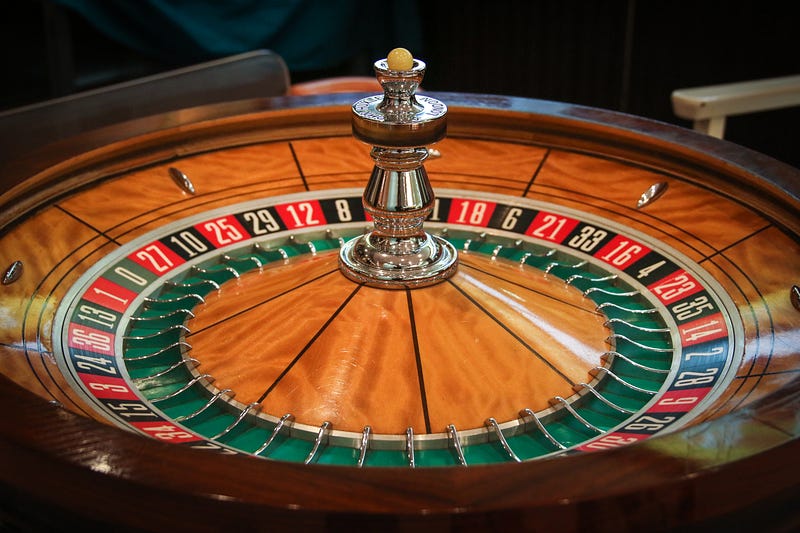
A related concept from the worlds of finance and gambling is the risk of ruin. The likelihood of losing all of one’s capital entails this risk. In practice, this risk is difficult if not impossible to calculate. Conceptually though, it should guide the upper bound of how much risk one is willing to take. For example, you should not put all of their savings in a single stock. Even if it is a top performing company. Even if you know all the ins and outs. Even if you know all there is to know, there remains a small but non-zero risk that the company could go bankrupt. Enron is a great real world example of how this could play out.
No one knows how the COVID-19 pandemic will play out in the US. Will technical interventions ‘flatten the curve’ leading to a less severe caseload here? As the Stoic Seneca noted centuries ago, time will reveal truth.
Thanks for reading! Follow me on Twitter to read my latest.