
The Powerful Effect Motivational Quotes Have on Your Brain and Your Life
Why they inspire us

Quotes, Cash, and Inspiration
I get high on motivational quotes. They’re on my calendar, my office wall, and stamped on my brain. I keep a Pinterest board filled with quotes and fill notebooks with wise sayings. It must be some kind of addiction since I am seemingly unable to resist them.
Social media sites are filled with motivational quotes. Every day, blogging sites are crammed with inspirational sayings. Mantra-loving entrepreneurs are making money from advertising revenue on their quote sites, drawing thousands of followers simply because they post sayings written by other people.
T-shirts. Posters, plaques, mousepads, mugs, water bottles, umbrellas, and keychains. Quotes are everywhere, pumping us up and motivating our minds. It’s no wonder that the personal gifting market has quadrupled its size in the last five years and is on target to reach 77 billion dollars in sales by 2022.
Quotes make money. They also draw us in like metal to magnets.
The Attraction Our Brain Has With Motivational Quotes
Why do motivational quotes draw us and affect us? Why are we so obsessed with reading snippets of wisdom?
As with everything else, it turns out some of us have brains that are wired to light up when we read inspirational quotes. When our brain is affected, so is our behavior.
Some people are more prone to believing in and understanding motivational quotes because they “self-select.” The definition of self-select is,
“to select oneself as opposed to being selected : to opt in or out of something (such as a group, activity, or category) in accordance with one’s personality, interests, etc.”
What that really means is that some people read motivational quotes and identify themselves with those words. They see their reflections in that quote. One communications expert even suggests that the ability to self-select is biological. The nature of human beings is aspirational. We look up to and emulate leaders. The desire to identify with others is a primal urge.
When a leader or celebrity says something, we are wired to identify with that person, to select ourselves to ally ourselves with those beliefs. We want to be with the “in” crowd.
“A powerful impulse is written into people…this urge to want to differentiate ourselves to declare our category.” — Alix Spiegel
4 Psychological Reasons That Quotes Inspire Us
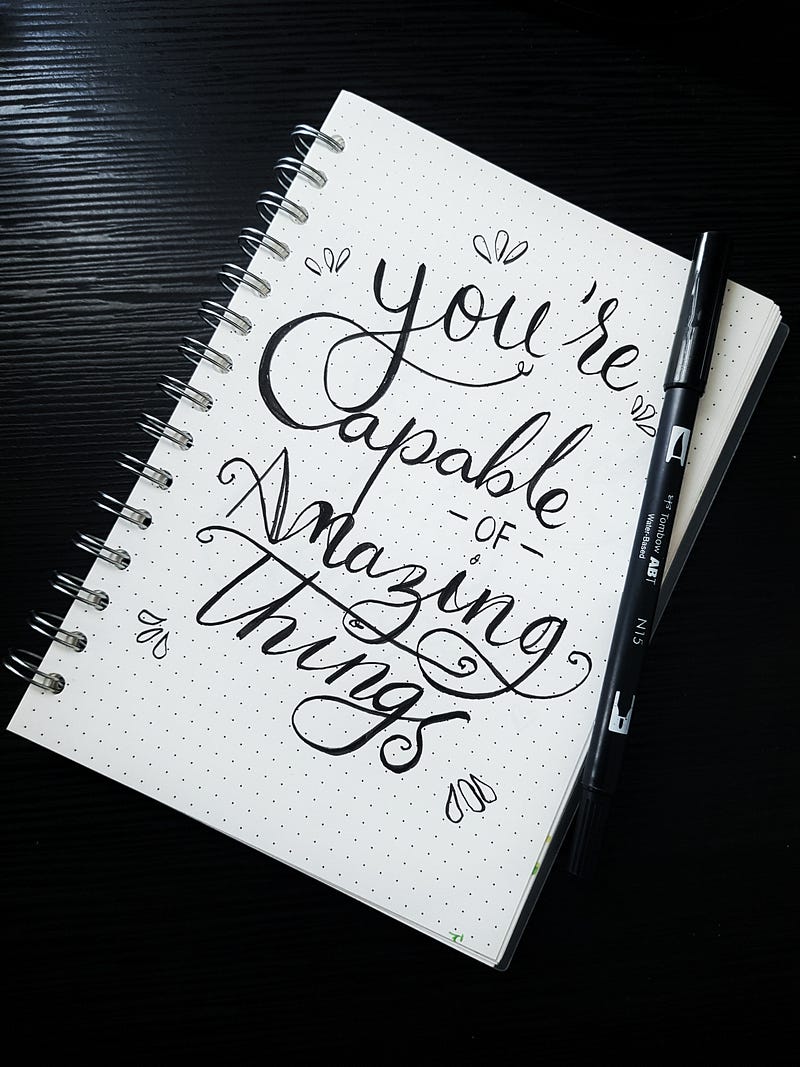
Motivational quotes affect our brains and our behavior for four reasons:
Coaching Effect:
Reading a quote is like getting a coach. If a mentor, a teacher, or a quote believes you can do it, you believe you can, too. Inspirational quotes are like someone shouting to you from the sidelines, “Go, Go, Go!” “Come on!” “You can do this.”
One Thought Leads to Another:
Little tidbits of eloquence, quotes can spark thoughts. With each spark, another thought pops up. New perspectives on your ideas can encourage you to keep thinking and growing. It’s like having a conversation with an invisible confidante who’s urging you to delve deeper.
Validation of Self:
A quote can validate what you think you know about yourself. If you see yourself as a fighter, quotes about conquering fears or problems will resonate with you. “Diamonds grow big under pressure; oaks grow strong in a storm,” you’ll be bolstering your identity as someone who can fight against problems and survive.”
Self-Efficacy:
Motivational quotes affect our brain, our behavior, and our lives because they make us feel like we are in control of our own success, and that we have self-efficacy. Quotes make us believe that we have the confidence to complete a task successfully, which is different than having the motivation to succeed. Motivation means to WANT to achieve. Self-efficacy is the CAPACITY to achieve.
Thousands of quotes bolster feelings of self-efficacy.
“If you can dream it, you can do it.” — Walt Disney
“Where there’s a will, there’s a way.” — Geroge Herbert
“It’s hard to beat a person who never gives up.” — Babe Ruth
and
“There will be obstacles. There will be doubters. There will be mistakes. But with hard work, there are no limits.” — Michael Phelps
One success leads to a boost in the motivation to continue, forever linking self-efficacy to motivation.
Motivational Quotes are Word-Working Wonders
If you’re a writer, you understand the craftsmanship involved in taking a complex thought and whittling it down to a shiny nugget of truth. That’s what quotes are. People love them because they can be both quick to understand and profound at the same time.
Let’s face it. The language of quotes can be beautiful.
Ward Farnsworth, the author of Farnsworth’s Classical English Rhetoric, suggests that inspirational quotes are “little triumphs of rhetoric.” He says,
“People have an appetite for well-expressed wisdom, motivational or otherwise.”
He also notes that how well these phrases are expressed affects how valuable we judge the information to be.
- Parallel structure, when evenly balanced, helps us perceive the idea as important: “Marry in haste; repent in leisure,” is one example.
- When rhyming was incorporated, people perceived the quote to be true: “Work for a cause, not applause. Live life to express, not to impress.”
- Metaphors make the meaning more compelling. “Failure is the condiment that gives success its flavor.”
The Impact of Quotes On Your Life
I’m not alone in loving those motivational quotes. Millions of people do. We appreciate them because quotes deliver wisdom and motivation in one swift quick. We may not be able to sustain an entire life by reading some inspirational words, but we can get a short-term boost through the power of well-worded thoughts.
Think of quotes like a shot of espresso for your psyche.
“Go forth and conquer.”
“Live your best life.”
“Follow your dreams.”

Originally published in The Ascent, which closed publication in September of 2021.


