
Life Lessons, Racism, Self-Empowerment
The Power of White
Undoing white power to embrace my Chinese skin
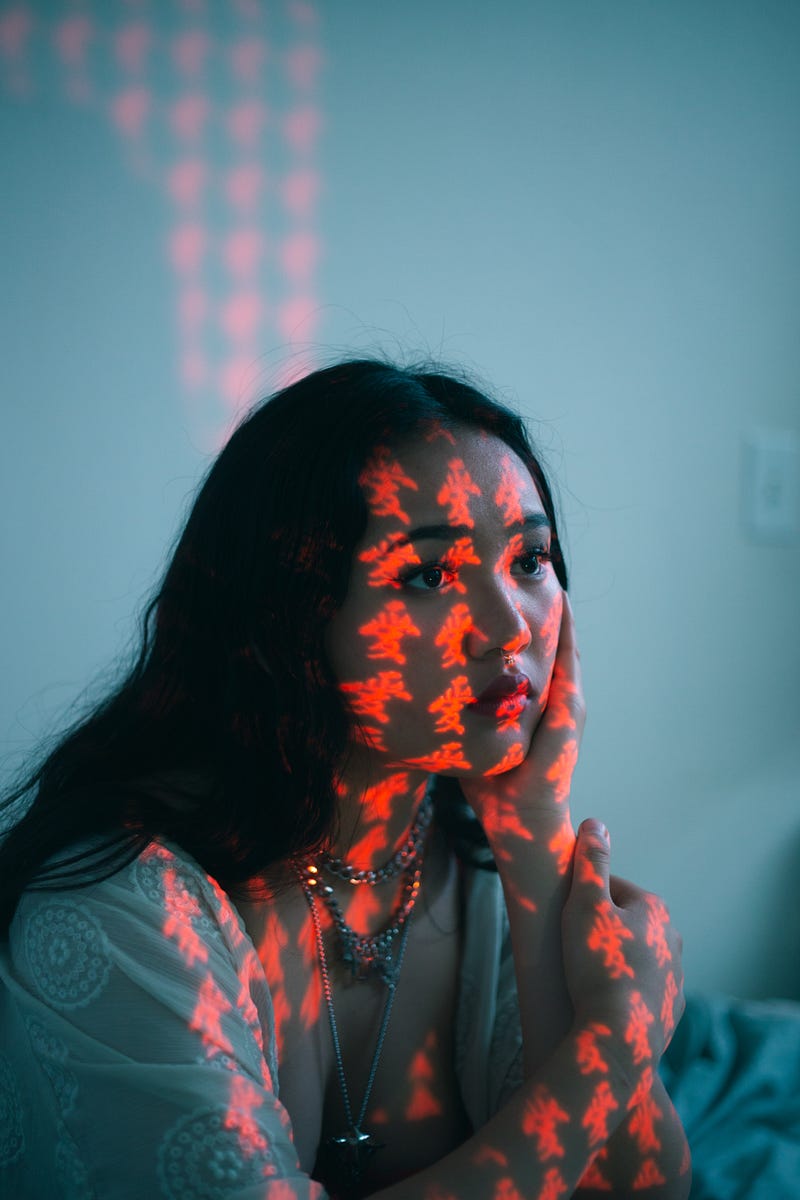
White Beauty: How little Chinese girls grow up in a big white world.
It started with my slanted eyes. The elementary kids at school teased me with that horrible chant, “Chinese, Japanese, dirty knees — look at these!” To go with rhyme, they’d use their pointer fingers to lift the corners of their eyes “up and down” to slant them (“Chinese, Japanese”), then bend down and cusp their knees with their hands (“dirty knees”), and for the finale, point to their nipples — “look at these!”
The kids laughed every time they mimicked or heard the rhyme. Sometimes I laughed along with them to prove that I was a good sport, but I hated the joke even though the punchline was about breasts — not the shape of my eyes.
The riddle embarrassed me.
My flat nose.
It was flat, boring, and could barely hold up a pair of cool sunglasses. It wasn’t pointy and pretty like the attractive blonde and brunette girls in my class.
My thick lips.
A trend developed at elementary school where “thin lips” were the rage and considered beautiful. I thought my own lips were too full — they stuck out too much. Sometimes I tucked them in so that they were “hidden” from view, particularly in photographs.
My eyelids.
Like many Asians, my lids lacked that “perfect crease.” Sometimes I’d put Scotch tape on my lids before bedtime, hoping to wake up the next morning with double eyelids without surgery.
I disliked my features and wished for big round eyes with long eyelashes, a ridged nose, and thin lips — like the white girls.
I was ashamed of being Chinese.
From home to school
Before I started school, I took little notice of my physical features. I only looked at myself in the mirror whenever I brushed my teeth, washed my face, or tried to untangle the big knots in my long, straight hair with my brush. After I brushed and untangled the fussy knots, I’d smile at the 5-year old girl in the mirror, do a little dance, and say, “I did it!”
My features and skin color were similar to the faces of my parents and siblings. I saw that most of the people in our neighborhood were white, but a handful of families were of Asian or East Indian descent.
I understood that there were differences in our skin colors, but I figured we all had the same body parts and organs.
The bad word
At school, I learned that chink was a bad word.
Typically white kids called me by this ethnic slur if they thought my features were ugly or different from theirs, or when they tried to hurt my feelings or were trying to tell me that they were better than me and that I didn’t belong.
Not everyone teased me. My close friends treated me well and never called me the c-word. They knew the word stung when they saw my tears. Real friends make you laugh. They don’t make you cry.
Stripping away my Chinese parts
Inadvertently, throughout childhood, I stripped away pieces of my racial and cultural identity. I didn’t want to learn to write Chinese characters when my mother tried to teach me. It was too hard, uncool, and I only wanted to learn English because it was easier, and that’s what all the kids spoke at school.
Children teased me about using funny chopsticks and eating rice every day. Who eats with two pieces of wood? They thought it was weird. I’d ask to use a fork or a spoon at home because it was easier, and I fought against using chopsticks. I wanted to stop eating rice every day, but I couldn’t. I loved rice and my mother’s cooking.
Kids would mock me and speak English with a Chinese accent — the same way my parents spoke English — in broken pieces. I learned to speak Mandarin before English, but I never spoke with an accent because I was born and raised in Canada, but they still teased me. They nodded, placed their palms together, and squinted their eyes when they feigned the accent — laughing in between the broken English words.
I never laughed with them.
Wishing for whiteness
Sometimes I wished I was white like the other kids so they wouldn’t call me a chink or slant their eyes with their fingertips. They taught me that white people were better than Chinese people and everyone else who wasn’t white.
If I tried to defend myself and tease them back with the derogatory word “honky,” it didn’t seem to bother them one bit. They smiled and laughed — like they were lucky and proud.
I remember one kid said, “I’m glad I’m a honky, and not a — ”
I knew that the last word was the bad word kids called me, but the bell rang, and he didn’t finish the sentence. It was only a handful of mean-spirited kids who teased me about my race and culture, but that’s all it took to hurt me.
They taught me that honky was a good word.
Teenage white beauty
Throughout adolescence, I still wished for perfect eyelids. But surgery was expensive, and my parents couldn’t afford it and would never pay for it even if they could. I couldn’t wait to grow up to get a job so that I could save up money to pay for my own eyelid surgery.
My mother told me I was beautiful just the way I was, but I didn’t believe her. She told me I needed to be proud of being Chinese and Canadian because that was a part of who I am. She told me I was smart, kind, helpful, and that I was a good girl.
We thought it was odd that many of the household items we owned or the clothing I wore were “Made in China.” She’d smile, giggle and tell me with pride — that I was “Made in Canada.”
I idolized the blue-eyed blonde women on the covers of the local fashion magazines I flipped through. They looked just like the Barbie dolls I outgrew. I never saw an Asian or any BIPOC people on the cover that I could identify with.
One of the Chinese girls at high school called me a banana — white on the inside and yellow on the outside. I didn’t speak Mandarin fluently and couldn’t read or write Chinese, and I only dated white boys.
I wore a “white blanket” to fit into a white world because I learned that beauty was white.
Young adulthood
When I became a young woman and started working, a sense of maturity, responsibility, and inner confidence came with it. I took pride in how I dressed and selected fashionable clothing that was stylish and flattered my figure. I took care to apply my make-up and style my hair, and I did aerobics to keep my body in shape.
I got a decent-paying job at an office, purchased my first car — a beat-up red Honda with crappy brakes with a rearview mirror that fell off at random times whenever I was driving. I moved out of our family home against my parent’s wishes because they wanted me to live at home until I got married. But I defied them, wanted freedom, and I rented my first place with a girlfriend.
I was an attractive woman in my early 20’s discovering the power of my independence. But when I looked in the mirror, my slanted eyes were still there. I’d saved some money over the course of a year, but it wasn’t nearly enough to afford the cost of eyelid surgery.
I needed to save more.
Over a year later.
One evening after a bubble bath, I wiped the steamy mirror to clear a space to see my reflection. I got up close to the mirror and took a few moments to study my features.
I didn’t see slanted eyes, a flat nose, or thick lips. I saw me. I didn’t need eyelid surgery or a nose job. I accepted that this was the face I was born with. The children, teenagers, and adults who teased me or shamed me for being Chinese throughout my life — weren’t a part of me anymore.
I let them go.
They weren’t better than me. They were either ignorant or learned their behavior through society, their parents, role models, or peers, or had their own insecurities or mental health issues. They didn’t learn how to respect, appreciate and value the beauty of different races and cultures that didn’t resemble their own. They didn’t see the significance of their actions and how they impacted the ones they hurt.
They didn’t “get it.” Maybe some of them will get it — with time, effort, and an open willingness to learn.
But some of them — may never get it.
Taking back control
They no longer have control of me because I grew up — I’m an adult in control of my own life. The only way I would shine on my own was by learning to be confident, proud, and happy in my own skin.
I can’t change anyone’s perspectives, behaviors, or beliefs that I disagree with or find unacceptable, hurtful, or wrong.
But I can teach myself to respect, appreciate and value my own ethnicity and culture, and embrace it by learning more about it. I also have the courage, desire, and capability to do the same for other ethnicities and cultures that I don’t understand, know little about, or feel intimidated by.
11 ways I grew up to love my Chinese skin
- I had to grow up to understand why people said those hurtful words to me.
- I had to grow up to understand that blonde Barbie dolls and blue-eyed cover girls were not the only definitions of beauty.
- I had to grow up to understand that I shed some of my identity because certain people taught me that “white was the best color.”
- I had to grow up to understand that I never needed to be ashamed of my race or culture.
- I had to grow up to ask myself self-reflective questions about my own childhood, adolescence, and early adulthood.
- I had to grow up to embrace my maturity, intelligence, and independence and find self-empowerment as a woman and an adult.
- I had to grow up to forgive myself and reclaim those precious pieces of me I lost that I thought didn’t matter.
- I had to grow up to learn that children are both resilient and impressionable but that childhood scars last a long time.
- I had to grow up to learn to love, respect, and value my own race, ethnicity, and culture.
- I had to grow up to forgive others for hurting me and accept that they may or may not learn from their mistakes, but I hope that they do.
- I had to grow up to understand that I needed to let go of my own guilt because none of this was my fault.
I was just a little Chinese girl growing up in a big white world.
Listen to your mother.
I wish I could go back to my childhood and tell myself to listen to my own mother instead of the people who called me names and the society that taught me that white was the best color.
Now, I’m rediscovering the Mandarin language one word at a time and teaching my son the joys of using chopsticks and making homemade dumplings. I hope that my 10-year-old bi-racial son doesn’t need to grow up before he learns to embrace, respect, and appreciate his race, ethnicity, and cultural identity because I’ve taught him to love himself for all that he is — now and today.
My mother spoke the truth. She meant it when she told me I was beautiful and that I need to be proud of my own identity.
I’m proud of that little girl who looked in the mirror to brush out the knots in her hair who thought she was great just the way she was, and I’m proud of the woman I’ve become — a healthy, happy, vibrant, confident Chinese Canadian who was “Made in Canada.”
Today, I love the slant of my eyes, my flat-shaped nose, and my full lips. This is me — my features are the combination of my mother’s face shape and lips, my father’s eyes, and his nose.
I wouldn’t change a thing.
Thank you to the following readers who provided me truthful feedback on my story before publishing, Shaya Sy-Rantfors, Bingz Huang, Kelly Eden, Ash Jurberg, Sandi Parsons, Sandy Gold, Catherine Lee, Cindy Shore Smith, and Rosalind Pagan.
Questions for readers:
Let’s open up a conversation because that’s how we make sense of the past and how we take steps to understand each other further.
- How does this story resonate with you?
- Did this bring up memories from your own childhood or parts of your life?
- If so, what would you tell yourself back then, with the knowledge and life experience you have now?
About the Author: Mary Chang is an award-winning short story fiction writer, published memoir article writer, blogger, and Medium newbie writer. Fueled by cartwheels, laughter, and the beauty and freedom of reclaiming and re-writing pieces of her life story — one day at a time. Read her blog at www.marychangstorywriter.com.


