
The Power of the Written Word
…and its limitations.

I have always been a strong believer in the power of the written word. I’ve been a devout reader since age four, and a dedicated writer almost that long. We were back-to-the-land hippies with almost zero possessions, yet somehow the corners of my little sleeping cubby were stuffed with books — the Chronicles of Narnia, Winnie-the-Pooh, the Lord of the Rings trilogy (long before I was old enough to grasp the story). And of course an ever-rotating supply of library books.
When I got to college in the fall of 1984 and found myself shunted into Rhetoric 1A instead of the English 1A class I was trying for, I was deeply disappointed. English had always been my best subject in school. What in the world was rhetoric? It sounded faintly disreputable; I didn’t even know how to pronounce it. “I’m in rhe-TOR-ic,” I sighed, much to my parents’ amusement.
My disappointment didn’t even survive that first week of classes, where I learned what the study of rhetoric actually entails: argumentative and persuasive writing. Creating it, analyzing it — studying what makes a piece of writing work, in order to hone one’s own skills as both reader and writer.
It was amazing. I ended up majoring in rhetoric.
In my freshman year, I didn’t yet know that, though I eagerly signed up for Rhetoric 1B at the end of the fall semester. I was learning astonishing new skills, and having a great time doing it. Reading amazing works of both fiction and nonfiction. Taking ordinary words and building sentences of power out of them.
Making an argument.
So, way back then in early 1985, when I decided to move in with my boyfriend — let’s call him “Sam” — I knew that the way to break the news to my mom was to write her a letter.
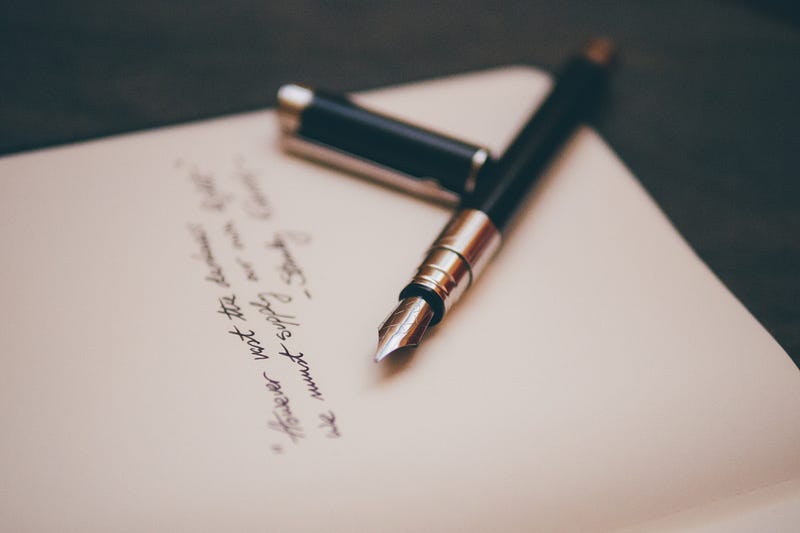
I’d been sending her letters since I got to college, all those months earlier. Long-distance phone calls were expensive; going home for a visit only happened a couple times a year. So I wrote her once a week, posting chatty, entertaining letters full of the daily news and trivia of my exciting new life at college.
This news…was not that news. But I was up to it. I was a rhetorician.
I worked out the letter on lined notepaper, rewriting and honing and perfecting it before transcribing it in my best handwriting onto fabulous stationery, my precious supply of cream-colored paper with dragons and flowers and curlicues around the borders. I deployed my irresistible arguments: my rent would go down by twenty-five dollars a month (Mom was famously frugal). I wouldn’t be living with a pot dealer anymore (actually, I’m not entirely sure Mom knew that particular detail, but it was clear she wasn’t impressed with my skeevy landlord/roommate). I’d be closer to the campus (by a few blocks).
And, my strongest point, my rhetorical kicker: it wasn’t even technically cohabitating, because I’d have my own room. Sam rented one room in a funky two-story house from “Fred,” a benign alcoholic who lived downstairs; I’d be in a different room down the hall. A better room than I had now! It had a garden view!
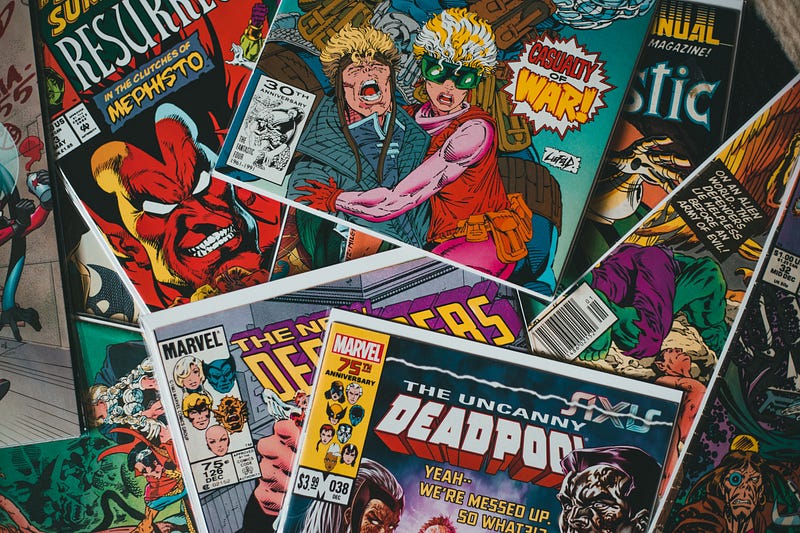
Fred had inherited this house from his parents. I’m not sure why he wanted roommates — he didn’t need the money. Perhaps it was for the company; in all the time I knew him, I saw no evidence that he had any actual friends. He kept talking about renting out the third upstairs bedroom as well, except he’d have to clear out his comic book collection from it first.
I was eighteen whole entire years old, all grown up, and — to be clear — I was already supporting myself. I paid my own way through college via a combination of working, a small amount of financial aid, and the fact that not just college but life was all much, much more affordable in the 1980s. I didn’t need Mom’s permission to move in with my boyfriend. But I wanted her blessing. I wanted her to be supportive of my decision. I wanted her to be happy for me.
So I constructed and constructed and constructed my beautiful, irresistible, powerful web of words. I wove my arguments, stated my case, led the reader to the irrefutable conclusion that I should, I must move into this ant-infested, filthy, ramshackle house in the Berkeley hills, with Fred and Sam and Fred’s Doberman (Storm) and his insane Siamese (Banshee) and all those pervy creepy comic books (look up Cherry Poptart).
(Or, actually, don’t).
I learned another valuable lesson then. As it turns out, you can control the writer-side of the equation, when you build a beautiful piece of rhetoric; but once you turn in that essay, publish that book, mail that letter, the reader-side remains out of your reach.
Further, mothers have a preternatural ability to sense rhetoric (or “bullshit,” as my major has also been called), and to be on their guard for what that rhetoric is busily, prettily obfuscating. My mom undoubtedly noted the fancy stationery, careful handwriting, and elegant, wordy paragraphs, and skimmed ahead to the punch line, which I had carefully nestled in the middle of page two.

Rhetoric is not magic, and even the most beautiful words are not all-powerful.
And sometimes, though it pained me greatly to admit it at the time, self-supporting grown-ass eighteen-year-olds aren’t as smart as they think they are. I moved back out of that house five months later, though stupidly it took me another half-year or more to finally break up with the character now known in my life story as The Evil Sam.