
The Power of Storytelling
The Meaning of Mariah Carey highlights the power of writing— its ability to capture difficult moments, enigmas and the authenticity of experience.
I hurriedly walked into the bookstore on a crisp October day, in the middle of a pandemic. With my mask fogging up my glasses as I entered the store, I made a beeline straight for the book as soon as I saw it. Barely able to see the woman behind the cash register, I quickly made the purchase and walked out with a copy of The Meaning of Mariah Carey in my hands.
There’s an article in the Washington Post which aptly reads: “I was always drawn to Mariah Carey’s music. After reading her memoir, I understand why.”
In the New York Times best-selling memoir, the reader is reminded that Carey is not only a talented singer but also an equally gifted songwriter. Written with Michaela Angela Davis, Carey tells readers about the personal stories, the writing process and artistry behind her iconic music — songs which already offered hints about her life.
In the memoir, Carey intricately reveals the story of a difficult childhood, her challenging relationship with her family and the racism surrounding her from the perspective of a child. And in the face of it all, Carey shares with readers the inspiring story behind an early, uncanny awareness of her talent and the impact it has on others, as well as the iconic pursuit of her dreams.
Throughout the memoir, Carey illustrates the importance of writing about events and feelings that are difficult to explain. For example, she describes the what it meant to her, at 8 years old, of having her friend validate for her that she could sing. In another instance, she describes the experience as a child of having her grandmother tell her with an ethereal conviction — in the midst of a volatile moment — that her dreams will come true.
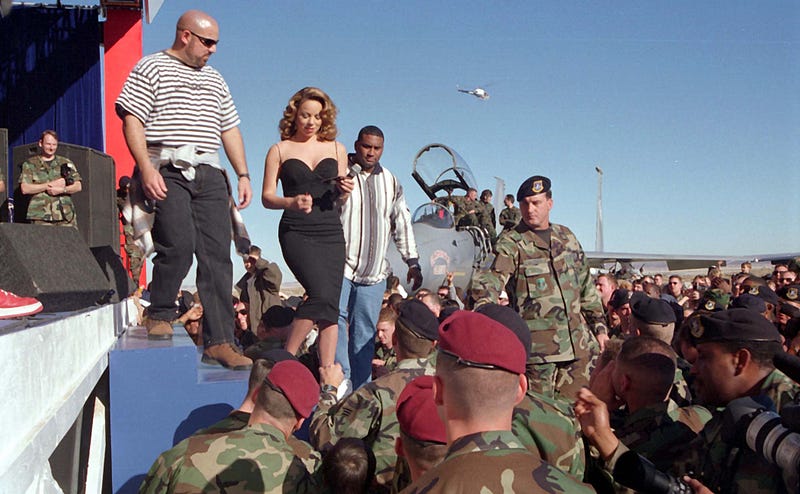
As a result of her prolific career (a #1 song on the Billboard charts through four consecutive decades) I’m sure that I am not alone when I say that Mariah Carey’s songs are like chapters my life. When I was 8 years old, I used to watch the video for Carey’s cover of “I Still Believe” whenever it was on TV. There was something really captivating about the video. Filmed at Edwards Air Force Base in California, I knew that Carey was dressed up as a retro character — an homage to Marilyn Monroe.
Of course, even at that age, I knew that Mariah Carey was already an icon. I was already well-versed in Carey’s musical career through watching old VHS recordings of her performances and interviews on MTV whenever I was home from school sick.
Reading the memoir, I wonder if the “I Still Believe” video mirrors some themes that Carey shares with readers about her life, especially with its reflection of the images of Black, white and multiracial military members cheering and listening to her sing.
I wonder how much of her father’s experience of racism in the U.S. military — which hung over her family’s life like a shadow — played a part in the making of the video. As with all of her videos and performances, it seems that no matter where Carey took her fans, she made sure to always reflect the multiracial reality of America — offering the world a window into her unique perspective and understanding.
The Meaning of Mariah Carey made me think of a novel I read years ago written in 1929 by Nella Larsen called Passing. Written in the aftermath of the 1896 Plessy v. Ferguson U.S. Supreme Court decision, the novel explores the life of biracial women, and, among other themes, the notion of passing in a legally-enforced segregated United States.
Due to stringent segregation laws and practices of the time, one of the women named Clare Kendry, is hiding her Black identity from her white husband, and much of society. There’s a passage from the book where the main character Irene Redfield is on a rooftop restaurant wondering why Clare is staring at her.
Unaware that they were once family friends and afraid that Clare might tell on her for being Black in the racially segregated environment they are subject to, Irene is anxious. Larsen describes Clare’s eyes looking at Irene as: “they did not seem to her as hostile or resentful. Rather, Irene had the feeling that they were ready to smile if she would.”
It was perhaps through this view that Carey must have looked at the world as a young child, growing up in the 1970s in New York. Carey describes painful ways in which children and adults would react when they would find out that she was biracial, as well as the traumatic experience of being cornered by a group of her former friends who continuously yelled a racial slur at her — with no adults nearby coming to help her.
Later on in her life as a singer, she is vexed by her ex-husband’s disinterest in discussing her biracial identity as well as her label executives’ unease regarding her artistic turn towards hip-hop and R&B in the mid-90s.
In a chapter titled “Shook Ones”, Carey, describes experiencing a new-found freedom at a critical moment of rupture. In doing so, she explains the story behind the sudden instinctive formation of one of her most personal songs that she wrote after hearing “Shook Ones, Part II” by Mobb Deep on the radio. Not only is the moment very liberating for her, it also sets off a chain of events that signal the beginning of a new era in her music and artistry.
I think the most important takeaway from Carey’s memoir is the true freedom in writing: that you can write it all down — as it’s happening, as it is, all of it — especially the events that are hard to explain.
Movingly, Carey leaves readers with lines from “Hero” and urges them to follow their dreams. It shows the resilience of someone who inspires so many, season after season, to believe that things can happen — if you ‘make them happen’ — as one of her iconic songs and one of my favourite parts of the book detail.


