
The Power of Philosophical Fiction
On Clarice Lispector’s 1977 masterpiece, “The Hour of the Star.”
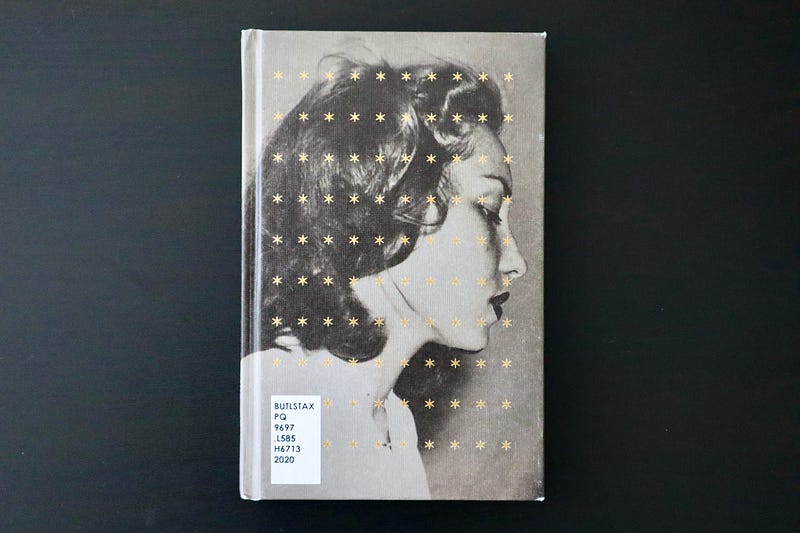
This isn’t a novel you read just once. It’s a novel of ideas, of linguistic and narrative games, of intense poverty and richness, of misogyny and misanthropy, and of love. The plot of Clarice Lispector’s 1977 novel, The Hour of the Star (translated from Portuguese by G. Pontiero in 1992 and then by B. Moser in 2011), is simple yet in a mere 86 pages a whole universe is exposed. In the literary world, it is the biggest bang for your buck.
The Story
The story is about a writer, Rodrigo S.M., who wishes to create a fictional account of Macabéa, a 19-year old woman he happens to see on the streets of Rio de Janeiro. He does not know her, does not talk to her, and yet envisions her entire life history: her poverty (apparently she only eats hot dogs), her failures at love, and even her medical issues.
The Macabéa (he affectionately calls her “Maca”) he produces is equal parts captivating and oblivious. When walking with her boyfriend Olímpico, she exclaims, “I’ll miss myself so bad when I die.”
She works as a typist, so she mirrors Rodrigo, and indirectly Lispector. It’s a classic conceit, but one that the author(s) stretch to dizzying effects. Is Lispector writing about herself by creating Rodrigo to create the alter ego Macabéa? Or, is Rodrigo the alter ego, and Macabéa a symbol for the ineffable muse that Lispector desperately reached for at the end of her life? The Hour of the Star was published shortly after Lispector died from ovarian cancer.
The Conceit
The mechanics of authorship is central to this deeply philosophical novel. In the Dedication by the Author, after which the author puts in parentheses “(actually Clarice Lispector),” Lispector lists a bevy of dead composers from “Old Schumann and his sweet Clara” to “the tempest of Beethoven” and “To Stravinsky who frightened me and with whom I soared in fire.”
Acts of composition, whether it's an author writing a book of characters or a maestro assigning parts to an orchestra are heavily pluralistic endeavors that are the only avenues towards subjectivity. Lispector says it better:
“…to all those who reached the most alarmingly unsuspected regions within me, all those prophets of the present and who have foretold me to myself until in that instant I exploded into: I. This I that is all of you since I can’t stand being just me, I need others in order to get by, fool that I am, I all askew, anyways what can you do besides meditate to fall into that full void you can only reach through meditation. Meditation doesn’t need results: meditation can be an end in itself. I meditate wordlessly and upon the nothing. What trips up my life is writing.” (xiii-xiv)
Lispector writes with such glaring, existential accuracy that as readers we are shocked to encounter the narrator of the actual novel Rodrigo who is similarly philosophical but painfully disorganized. At one moment he’s talking about the Big Bang and then he’s musing about toothaches and then he’s comparing women from Brazil’s rural Northeast to those from the urban Southeast. Rodrigo doesn’t start Macabéa’s story until nearly 20 pages into the book:
“I also forgot to say that the account that is soon going to have to start—since I can no longer withstand the pressure of the facts—the account that soon is going to have to start is written with the sponsorship of the most popular soft drink in the world[…]As for the girl, she lives in an impersonal limbo, without reaching the worst or the best.” (Pg. 15)
Why You Should Read It
You should read The Hour of the Star if you like quick reads. You should read it if you like re-reading. You should read it if you like complicated existentialist notions of identity. You should read it if you like literary theory and distorted narrative structures. You should read it if you’re prepared to jump down the rabbit hole that is Clarice Lispector’s dark and humorous bibliography. The author is dead, but her characters are monstrously alive.