avatarEva Schicker

Free AI web copilot to create summaries, insights and extended knowledge, download it at here

3588

Abstract

left to right: square, round, irregular shape.</figcaption></figure><p id="9dab">The shape is distinguished between square and round, and then the odd irregular wrapper shape, although in essence, this shape could be part of the round category.</p><h2 id="1d2e">3. Sorting by individual candy quantity — 5 groups</h2><p id="40c8">A <b>quantity hierarchy</b> is always a clean and obvious choice. It is not about the size or quality, but the number of available items that define inventory. A quantity inventory is possibly the most obvious way to organize quick moving items.</p><figure id="9628"><img src="https://cdn-images-1.readmedium.com/v2/resize:fit:800/1*I15tlyGrfNhnAFeqA1P3nQ.jpeg"><figcaption>Hierarchy category 3: Quantity of individual items gives a quick overview of inventory. 8–4–3–3–1.</figcaption></figure><p id="9172">Most notable here is that the <i>1 item left</i> <i>(peppermint patty) </i>can also be described as the <i>last</i> item left, and thus make it more valuable within the collection of items.</p><h2 id="547f">4. Organizing by stackable packaging attribute — 2 groups</h2><p id="2151">Ask any owner of multiple things what their space allocation looks like. Most likely, the answer will be that space is limited. For this user, the fact that the candy is <b>stackable</b> is the most important attribute, and a significant one.</p><figure id="c840"><img src="https://cdn-images-1.readmedium.com/v2/resize:fit:800/1*42gSoqOZCFi_KT0FVqP9Wg.jpeg"><figcaption>Hierarchy category 4: Stackability of package. A simple yes/no system provides a clear organization of the candy inventory.</figcaption></figure><p id="bd2c">The importance of such a index signifier cannot be overlooked. For instance, if you are a book collector, you rely on books being stackable in some way. Only because of this attribute, a book collection can be successful. Similarly, user #4 needs to know about this candy stackability attribute.</p><h2 id="221e">5. Is it shiny? — 2 groups</h2><p id="c3e2">This user delights in visual appearance.</p><figure id="1421"><img src="https://cdn-images-1.readmedium.com/v2/resize:fit:800/1*Ryw2g5DQxENq3FqP8L1ndA.jpeg"><figcaption>Hierarchy category 5: Shiny appearance of candy. This prioritization of visual appeal clearly indicates the importance of wrapping the candy in a light-reflecting material.</figcaption></figure><p id="73e7">The question whether the candy is wrapped in <b>shiny</b> foil overrides all other concerns, an important consideration when choosing the right product for this user.</p><h2 id="d14a">6. Does the candy have a soft filling? — 2 groups</h2><p id="4fbc">This user appreciates a very different type of candy attribute, the soft filling. Never mind the look or packaging, this user organizes his candies to please his <b>taste</b> <b>buds</b>, in particular, his fancy for a soft filling.</p><figure id="45bb"><img src="https://cdn-images-1.readmedium.com/v2/resize:fit:800/1*sXGlYAzOY239J0c_WHSzVQ.jpeg"><figcaption>Hierarchy category 6: The inside of the candy. In this instance, the hierarchy presents as yes or no, with almost all candy presenting a soft type of filling.</figcaption></figure><p id="2e5d">This is a 2 group hierarchy, but it is based on different principles than in examples #4 and #5.</p><h2 id="5547">7. Flavor — 2 groups</h2><p id="e71e">User #7 opts for a flavor system. Is it chocolate or mint?</p><figure id="f437"><img src="https://cdn-images-1.readmedium.com/v2/resize:fit:800/1*AEF37nGhu0pxeJmwQRJHGA.jpeg"><figcaption>Hierarchy category 7: Flavor. This option allows for the set-u

Options

p of a flavor palette.</figcaption></figure><p id="445a">This might be an indexing that is not hierarchy-based, but rather a two-tier approach to base flavor identification. This is a nice to build a basic palette of flavors.</p><h1 id="eb96">Seven distinct organizing principles leading to different hierarchy priorities</h1><p id="3a17" type="7">1. Brand 2. Shape 3. Quantity 4. Stackability 5. Shiny wrapper 6. Soft or other filling 7. Flavor, chocolate or mint</p><p id="63a8">These 7 unique approaches are important factors to consider when building product inventory and its customer-facing presentation. While a quantity-based system might be a good way to proceed for a seller, a customer will focus more on the actual experience category, such as flavor and appearance.</p><p id="a727">These system hierarchies need to be researched carefully in user interviews and user testing.</p><h1 id="f47f">In summary</h1><p id="3bc6"><b>Organizing principles are important factors to research early in the UX data gathering phase.</b></p><p id="7434"><b>Every user will have a different approach to organizing any given volume of inventory.</b></p><p id="d87b"><b>Organizing principles can include many sensory systems, such as preference of color or outer presentation.</b></p><p id="0a37"><b>Try this exercise with your collection of candy, or any other items that are fun to index with.</b></p><h2 id="e7df">Expand your UX mind. Join Medium.</h2><div id="5a45" class="link-block"> <a href="https://evaschicker2012.medium.com/membership"> <div> <div> <h2>Join Medium with my referral link - Eva Schicker</h2> <div><h3>As a Medium member, a portion of your membership fee goes to writers you read, and you get full access to every story…</h3></div> <div><p>evaschicker2012.medium.com</p></div> </div> <div> <div style="background-image: url(https://miro.readmedium.com/v2/resize:fit:320/0*xGOzrhCjVAsEAxqM)"></div> </div> </div> </a> </div><h2 id="3105">Read up on more design ideas.</h2><div id="6db2" class="link-block"> <a href="https://readmedium.com/writing-the-perfect-problem-statement-for-ux-research-ac93a7178522"> <div> <div> <h2>Writing the perfect problem statement for UX research</h2> <div><h3>How to choose the right sentence structure</h3></div> <div><p>medium.com</p></div> </div> <div> <div style="background-image: url(https://miro.readmedium.com/v2/resize:fit:320/1*qpzuEG6ZpxmYmKeXAXb2uw.png)"></div> </div> </div> </a> </div><div id="6b99" class="link-block"> <a href="https://uxdesign.cc/how-3-stunning-bottle-designs-and-their-contents-reflect-the-post-pandemic-zeitgeist-a3722c18c572"> <div> <div> <h2>How these 3 stunning bottle designs reflect the post-pandemic zeitgeist</h2> <div><h3>Producers and designers are reaching new levels in innovation and thus reaching new audiences in the process</h3></div> <div><p>uxdesign.cc</p></div> </div> <div> <div style="background-image: url(https://miro.readmedium.com/v2/resize:fit:320/1*OWjY_9fDS-vUTNIZgaDWdA.jpeg)"></div> </div> </div> </a> </div><p id="b4bb"><b>Thank you.</b></p></article></body>

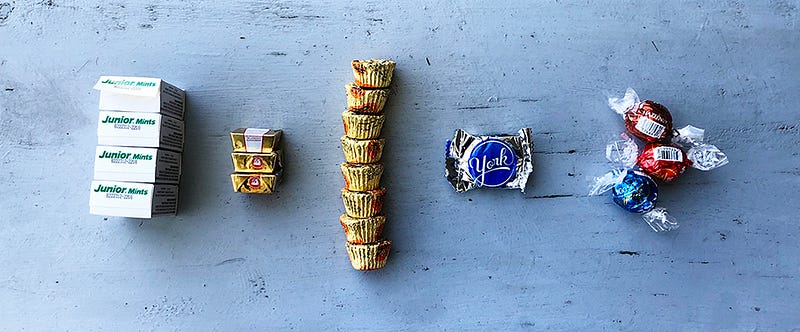
Organizing one’s candy stash in rows and columns.

The power of organizing principles in UX

Every user perceives content differently, and often surprisingly so

What is an organizing principle?

An organizing principle is a unique reference point for a sum of objects which allows individual objects thereof to be arranged, valued, located, or classified based on such established reference point. (Note: ‘objects’ can mean non-physical items such as topics, ideas, events, occurrences, and a many others.)

Commonly used organizing principles include alphabetical ordering, such as a dictionary, chronological ordering, such as a timeline, or numerical ordering as a list of priorities.

Organizing principles in UX

User research reveals that every user accesses a bolus of inventory or information differently. For that, we need to understand what the users’ organizing principles reveal in the first place.

Hierarchies of product data need to be intuitive, easy to use, and accessible by any user.

Often, what seems like an obvious hierarchy system for the product design team is not what the user sees as a pertinent system for product choice or use.

Let’s review different organizing principles through a delightful case study exercise.

The candy collection: 7 users, 7 different organizing principles

Ask seven children and adults to organize a stash of candy so that an easy-to-follow overview is established, you will get seven different points of view on how to present the logical organization of the following candy bounty.
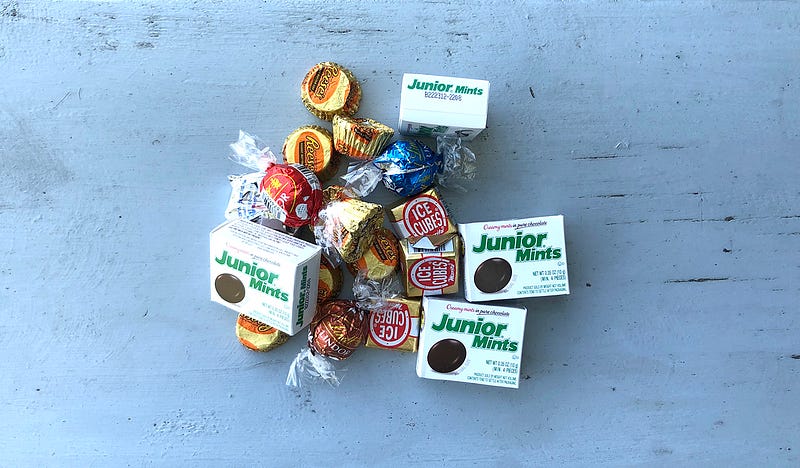
To get started, not much is know about this stash, other than it was purchased at a grocery store at random.

Each candy eater is presented with this stash of random candy. There is not much to information as to the history of the candy, other than it was purchase at a local store.

It will quickly be apparent that each user has his or her own set of organizing idea. Based on the users’ principles, different numbers of groupings will establish themselves. Hierarchies can become succinctly detail-focussed, or on the other hand, can get broadly defined as this or that.

1. Organization by candy brand — 5 groups
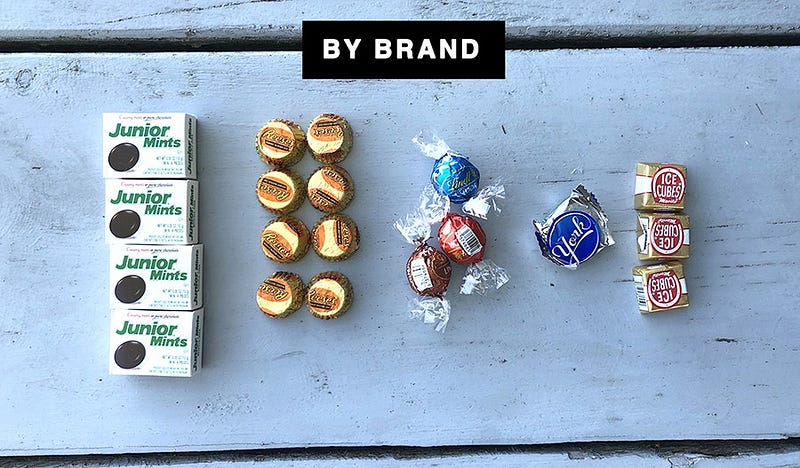
Hierarchy category 1: Brand reference. From left to right, Brand A mints, Brand B peanut butter cups, Brand C chocolate balls, Brand D mint patty, Brand E chocolate cubes.

Organizing by brand type seems logical. This is the obvious, inventory-taking type of approach. This user‘s hierarchy is based on brand reference.

2. Sorting by candy shape — 3 groups

User #2 takes a visual approach to organizing the candy. Shape becomes the most important parameter.
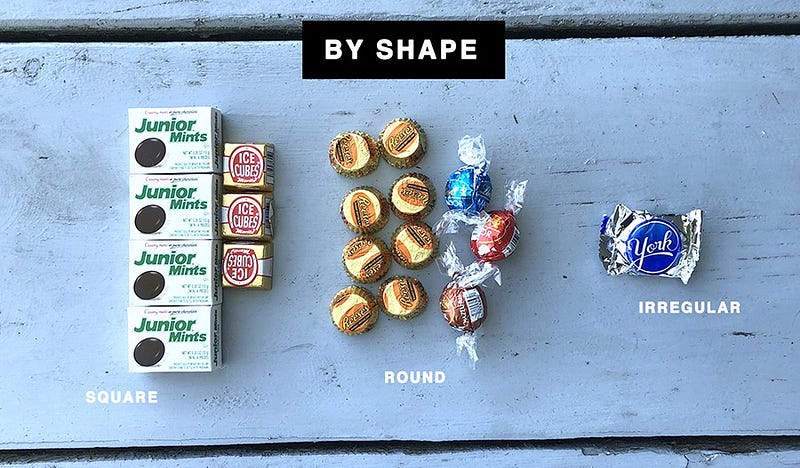
Hierarchy category 2: Visual shape of candy. From left to right: square, round, irregular shape.

The shape is distinguished between square and round, and then the odd irregular wrapper shape, although in essence, this shape could be part of the round category.

3. Sorting by individual candy quantity — 5 groups

A quantity hierarchy is always a clean and obvious choice. It is not about the size or quality, but the number of available items that define inventory. A quantity inventory is possibly the most obvious way to organize quick moving items.
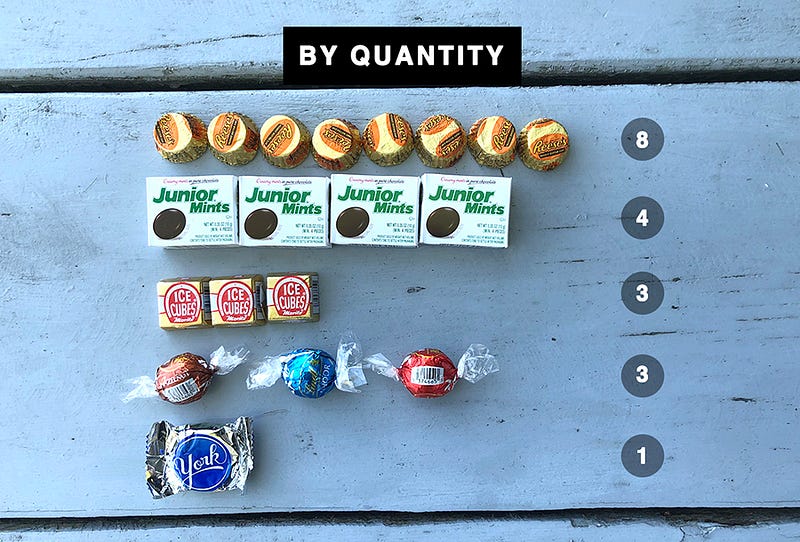
Hierarchy category 3: Quantity of individual items gives a quick overview of inventory. 8–4–3–3–1.

Most notable here is that the 1 item left (peppermint patty) can also be described as the last item left, and thus make it more valuable within the collection of items.

4. Organizing by stackable packaging attribute — 2 groups

Ask any owner of multiple things what their space allocation looks like. Most likely, the answer will be that space is limited. For this user, the fact that the candy is stackable is the most important attribute, and a significant one.
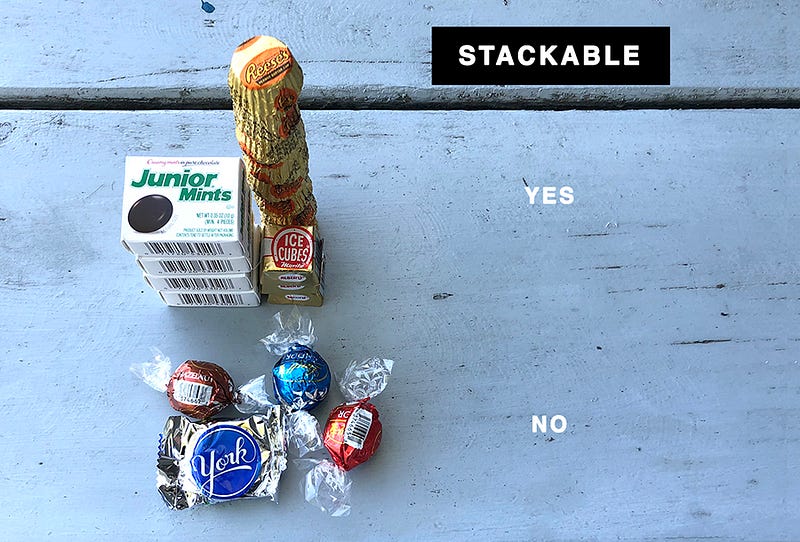
Hierarchy category 4: Stackability of package. A simple yes/no system provides a clear organization of the candy inventory.

The importance of such a index signifier cannot be overlooked. For instance, if you are a book collector, you rely on books being stackable in some way. Only because of this attribute, a book collection can be successful. Similarly, user #4 needs to know about this candy stackability attribute.

5. Is it shiny? — 2 groups

This user delights in visual appearance.
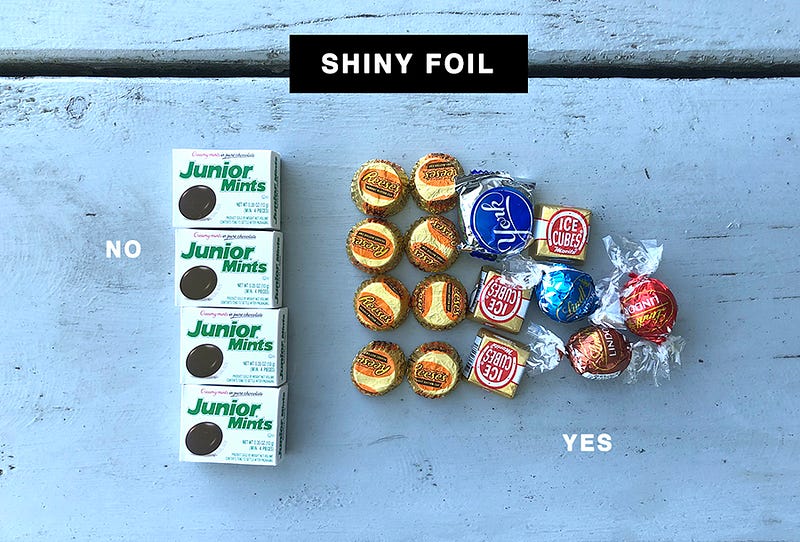
Hierarchy category 5: Shiny appearance of candy. This prioritization of visual appeal clearly indicates the importance of wrapping the candy in a light-reflecting material.

The question whether the candy is wrapped in shiny foil overrides all other concerns, an important consideration when choosing the right product for this user.

6. Does the candy have a soft filling? — 2 groups

This user appreciates a very different type of candy attribute, the soft filling. Never mind the look or packaging, this user organizes his candies to please his taste buds, in particular, his fancy for a soft filling.
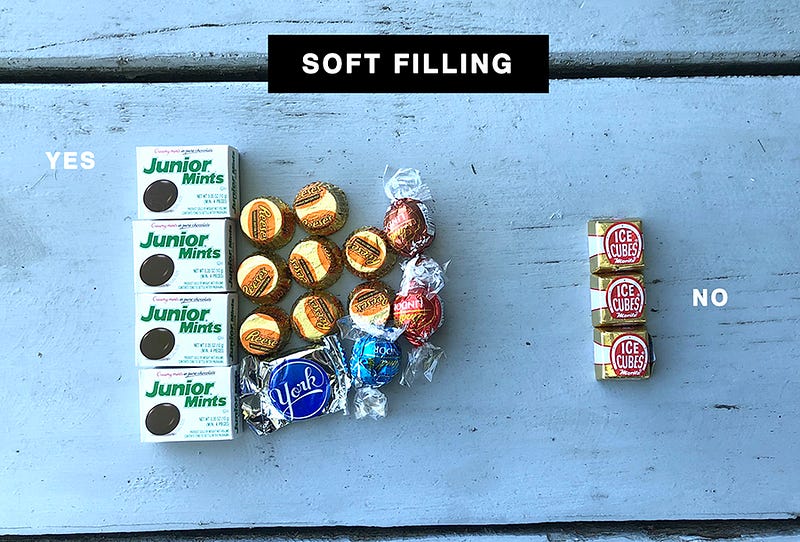
Hierarchy category 6: The inside of the candy. In this instance, the hierarchy presents as yes or no, with almost all candy presenting a soft type of filling.

This is a 2 group hierarchy, but it is based on different principles than in examples #4 and #5.

7. Flavor — 2 groups

User #7 opts for a flavor system. Is it chocolate or mint?
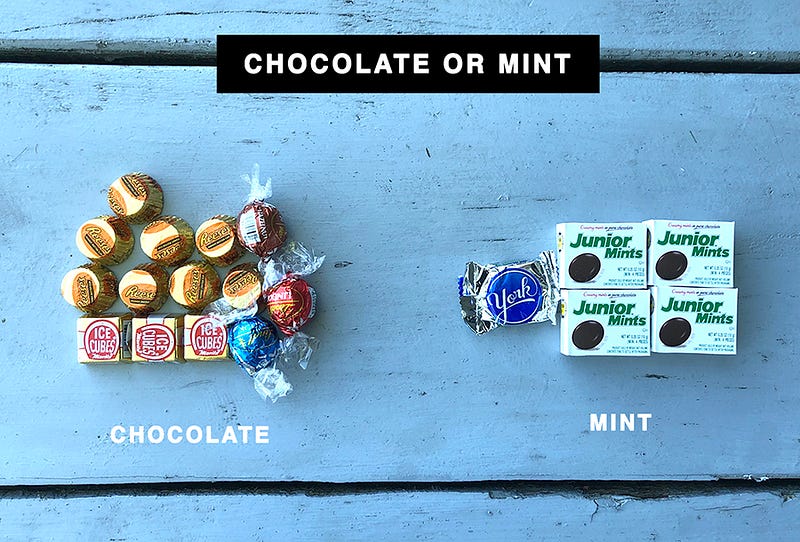
Hierarchy category 7: Flavor. This option allows for the set-up of a flavor palette.

This might be an indexing that is not hierarchy-based, but rather a two-tier approach to base flavor identification. This is a nice to build a basic palette of flavors.

Seven distinct organizing principles leading to different hierarchy priorities

1. Brand 2. Shape 3. Quantity 4. Stackability 5. Shiny wrapper 6. Soft or other filling 7. Flavor, chocolate or mint

These 7 unique approaches are important factors to consider when building product inventory and its customer-facing presentation. While a quantity-based system might be a good way to proceed for a seller, a customer will focus more on the actual experience category, such as flavor and appearance.

These system hierarchies need to be researched carefully in user interviews and user testing.

In summary

Organizing principles are important factors to research early in the UX data gathering phase.

Every user will have a different approach to organizing any given volume of inventory.

Organizing principles can include many sensory systems, such as preference of color or outer presentation.

Try this exercise with your collection of candy, or any other items that are fun to index with.

Expand your UX mind. Join Medium.

Read up on more design ideas.

Thank you.

UX
UX Design
Hierarchy
Design
Candy
Recommended from ReadMedium