The Power Of Optimism
Why pronoia is a good mental tool

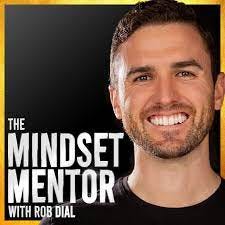
Rob Dial has a way with words. I’m a regular listener to his podcast The Mindset Mentor, and while (over the hundreds of episodes he has released) he often says something impactful, sometimes it’s the same words in a different suit. Repetition is good. It’s how our brains remember, but novelty is also good because it makes us pay attention. In the latest episode he said a word I hadn’t heard of before:
PRONOIA
Pronoia is a term that was conceived by sociologist Fred Goldner in 1982. It is considered to be the positive equivalent of the word paranoia, which is more commonly used in the English language. Pronoia has its roots in Greek words:
Pro: in favour of
and
Noia: mind
Pronoia = in favour of mind.
Paranoia, as we know, is the belief that everything and everyone is conspiring against us. It is generally considered to be a negative way of thinking, and in some people is a severe psychological condition.
This excerpt from Oxford Academic proposes Fred Goldner’s thesis that pronoia is problematic:
Pronoia is the positive counterpart of paranoia. It is the delusion that others think well of one.
It’s easy to see how pronoia could be just as debilitating as paranoia. Like everything in life, there must be a middle ground. Those with paranoid tendencies fail to see the good in most things, people on the side of pronoia struggle to see the pitfalls. Reality is the middle ground. While the work of a respected sociologist is not to be sniffed at, Rob Dial’s take is different. He refers to pronoia as “proactive positivity.” Pronoia, if utilised consciously, could be a tool for working towards your dreams and building the life you want.
You may be sceptical. It might just look like another word for positive thinking. It’s impossible to think positively all the time. After all, we can’t control our thoughts. That’s true to a point. We can’t control ALL of our thoughts. Who would want to? That would be exhausting! We can, however, control our conscious thoughts. You have the choice. Do you want to think negatively, believe everyone is against you, drown your dreams, and extinguish your spark? Or do you want to believe that anything is possible, people are your allies, and see that spark fully ignite? I know which way I’d vote.
As humans, we are wired to think negatively in the first instance. Our primitive ancestors had to assume danger and act with survival in mind, rather than happiness. A caveman concerned with happiness rather than a ferocious predator would have been devoured in an instant. Modern humans, although it doesn’t seem like it at times, have less life-threatening worries. However, from an evolutionary standpoint, nothing much has changed with our brains in the last 200,000 years. In general, we will think a negative thought before a positive one. It’s automatic. We cannot change our first thought, but we can choose the second and take it from there. Consciously adopting a positive way of thinking can only help in the long run. It’s hard to feel motivated to do anything when you’re in a slump. If your second thought is a negative one, it’s likely your third thought will be too, and you will just follow the spiral down. Do you want to feel down and defeated, or up and winning? While adopting the delusional part of pronoia isn’t recommended (we have to keep a foot in reality), where’s the harm in believing that everything is working for you, everyone is on your side, and everything will work out for the best?
In the episode, The Power of Optimism: The Key To A Positive Life Rob asks, “What if we became addicted to a thought process of thinking that the world is actually for us? There are some people who are addicted to thinking that the world is against them.”
He then points out that their body will be in constant stress. Anxiety, adrenaline, cortisol will be coursing through their body. The brain is stressed, and the body is stressed. Changing to a positive thought process can generate “happy” hormones such as dopamine (reward) and depending on the actions arising from those thoughts, you may also experience endorphins (for example, a rush after exercise), oxytocin (the love hormone) or serotonin (relaxation). Pronoia really is sounding like a better bet.
Sure, there will have been challenging moments in your past. Some situations may have felt like they would destroy you. But guess what? They didn’t. You’re here. You rose from the devastation and carried on. Next time you experience adversity, have the confidence to know that you can kick its ass! Think of the legend of the phoenix rising from the ashes. You are that phoenix. You came back with renewed hope and vigour, bigger and better than before and you can repeat that process as many times as you need to. Life will throw up hard times. You can’t stop that, but you can stop looking for them. Look ahead with hope and enthusiasm.
What is there to lose? Nothing. Add pronoia to your mental toolbox and reap the rewards. I’m interested to hear your thoughts on this. Leave a comment below. Let’s get pronoid!
Links below to the Oxford Academic article and Rob Dial’s podcast on YouTube. Enjoy!
Oxford Academic article about Pronoia
The Mindset Mentor (Rob Dial) — The Power of Optimism: The Key To A Positive Life