
The Power of Encouraging a Child’s Creativity: A Tale of Two Homes
A reflection on the importance of nurturing creativity in children and the impact of culture and education on their development.

Today I’ll write about something that interests me and that my friends are always curious about. I moved to Australia from India a few years ago. I now live in Melbourne and consider it my home. I have and will always have a strong emotional connection to my upbringing in India. The tale I’m writing today incorporates memories and observations from both places I have called home. I hesitated to write about it because it involved my own theories, but I recently came across the works of a renowned psychologist that gave me a more substantial basis to write on.
At this time, my daughter (Rupu) is ten years old and quite an inquisitive and creative child. This has to do with the early stages of schooling. Many of my friends are interested in hearing about my daughter. The questions they ask in general are like how did she find to grow up in Australia; what kind of learning obstacles she faced as a result of the lockdowns. Several friends who have just become parents are naturally interested in their child’s development and ask me about mine.

Before we sent her to kindergarten, she was shy and quiet. She always had a special connection with me. I was a little worried about how she would adjust as some friends said their children struggled. After a few months, I noticed that she was genuinely opening up with her thoughts, talking a lot, and expressing herself well. When we admitted her to primary school, we were told to encourage her to hold the pencil, just scribble if she wanted and not worry about anything else.
A few months later, something remarkable happened. My wife used to take a weekend class, and my routine was to take Rupu to a swimming lesson and then prepare lunch. I was cooking something, and she came and sat on a high chair next to the kitchen area. She asked me to tell her the recipe. Surprised, I asked, “What do you know about a recipe?” She continued, “Oh! I know all about a recipe — they have ingredients and processes. I have been told in school to write about what I observe. I see you are cooking and want to write about it.” I told her what I was making, and she wrote it down herself. I checked it later; there were spelling mistakes, but she got it right.

This was something I often shared with my friends. Sometime later, Rupu came and told me that she had to do a show and tell at school and I should give her ideas. I helped her draw a solar system diagram and told her a few things about it. Next week the same routine followed, and we picked up another topic. After that, she didn’t return to me for help for a while. One day I asked her, “What is going on at school — when do you have a next show and tell?” She said, “Oh! We had one last week.” Startled, I asked, “Why didn’t you ask for any help — what did you talk about?” She said, “I had a spiderman toy, and I took it to school for my show and tell. I showed the toy and told them who spiderman was — but I also said that a spiderman is a man; I haven’t seen a girl become spiderman.” To my delight, it was just what I had hoped for. I must return to some of my stories to help you know more.
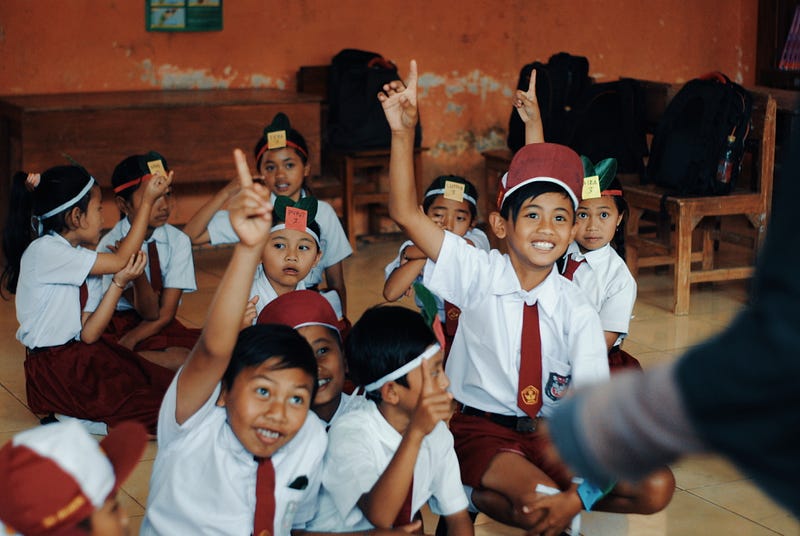
I saw that most of my friends struggled to express themselves in school and even in college and university. It always seemed to me that it had something to do with how we were taught. We were taught from the beginning of our language studies to only answer questions in a specific way, whether it was for reading comprehension or writing activities. I studied four languages in school, but none of them inspired me to write freely. Whenever I tried something new, I was told that it was not the right way. I often wondered why should this pattern be followed. This principle crippled many students to express themselves correctly. I am not writing this article to criticize India’s education system, and doing so would be pointless because I am not a certified educator. Having said that, it is a mindset of art and language studies I have always critically questioned.
Whenever a friend would be nervous about their child, I would share these two stories with them — conveying how important it is to enable children to be independent and confident. Unfortunately, a lot is going on in today’s education sector in India, which is nothing short of a mad rat race, that, in my opinion, is counterproductive to the intellectual as well as cognitive growth of children.

Now I’ll talk about the covid days. Melbourne had one of the world’s strictest lockdowns. Schools were closed, and remote learning ensued. Rupu wanted to go to a drawing class, but there were none nearby. She was really keen to take art lessons. So one day, I shared a story from my own life. Whenever I wanted to draw something, my art teacher would come and say it was not nice. Then he would change something or correct something, add a new colour or a line or some effect to make it nice. I was so dependent on what my art teacher would do to make my painting good that I never became confident with my own art. So I told her, “I am going to get you all the art supplies you need — just draw and keep drawing. It doesn’t matter if it is good; if the paper is wasted ~ keep painting until one day, you feel you are able to create what you want to create one day. Do not give up. I think you can do this.” She followed what I said, I kept encouraging her and kept telling her that she was doing good and she could do better. Gradually her sense of art improved in both digital art and painting.
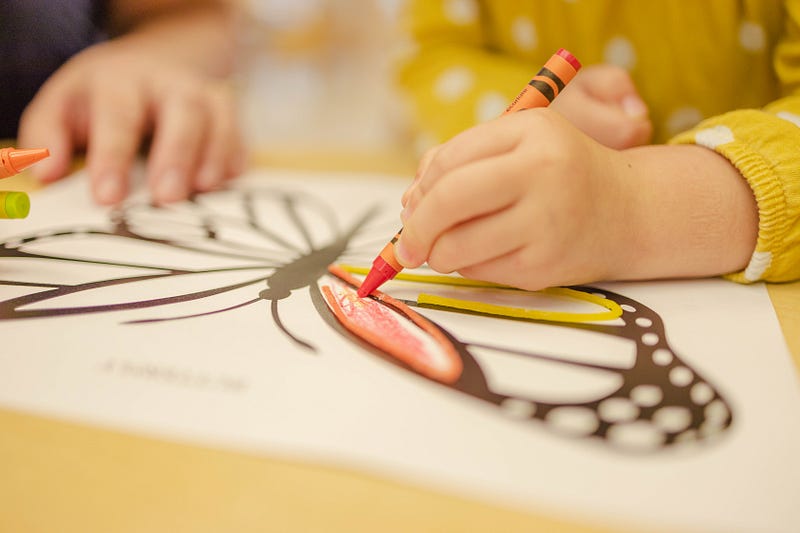
Cut to post-covid days — her teacher tells me that Rupu has an eye for detail and is very creative in her class, but I don’t need her teacher to tell me that; I already know she is. I have shared this story with my friends too. However, I came across the works of developmental psychologist Eric Erikson last week, and when I was reading about his theory, especially Industry vs. Inferiority (school age), I felt that it was something I had been practising without knowing.
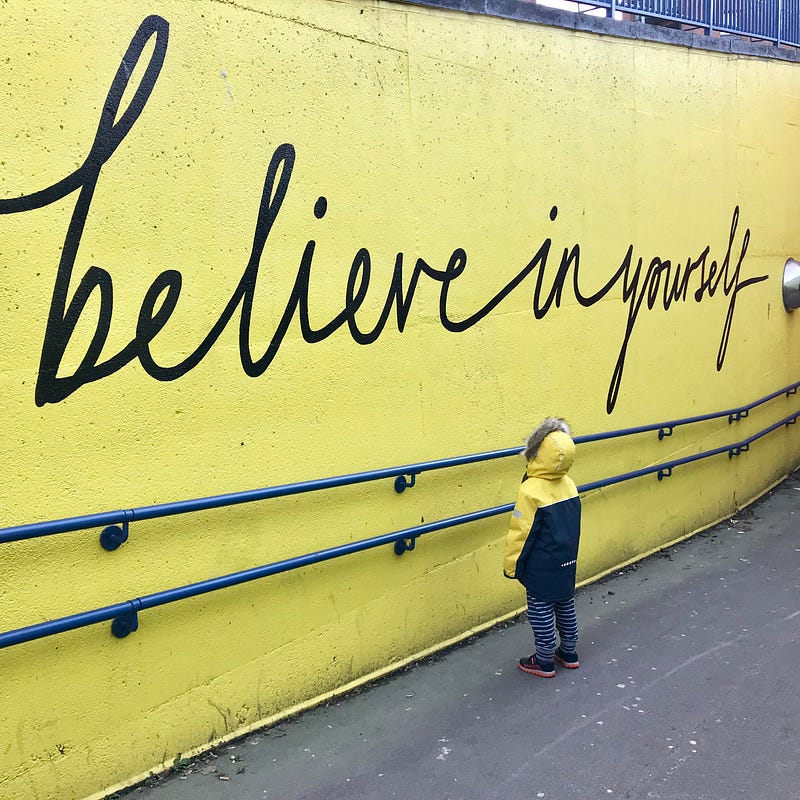
Industry vs. Inferiority is Erikson’s fourth psychosocial stage. Between 6 and 11, it occurs in school. By learning new skills and challenging themselves, children gain confidence and self-esteem. They’re learning to collaborate on more difficult tasks like academics, sports, and hobbies. When they succeed, kids feel proud and competent. However, if they fail or are criticized often, they may feel inferior. They may doubt their ability to succeed or compare themselves to others. Inadequacy, low self-esteem, and a lack of motivation can result.
Thank you for taking the time to read my post. If you have enjoyed it, I invite you to visit my blog to read the fictions, anecdotes, and poems I have written. If you want to support my writing endeavours, you can buy me a coffee here. Your support would mean the world and help me continue creating new and exciting content.
Thank you again, and I hope you continue to enjoy exploring my blog.
You can use my referral if you are considering joining Medium.


