
The Portuguese ‘Wolf Hand’ Ripper
A chilling retrospective of the cases classified as the ‘Wolf Hand Murders’
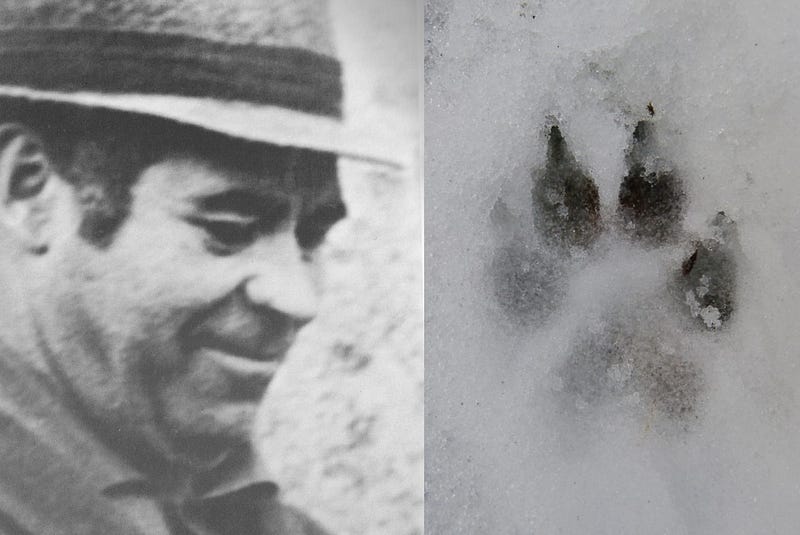
The ‘Wolf Hand Murders’ will go down in history as some of the most vicious hate crimes in Portugal. Zé “Wolf-hand” Borrego was one of my country’s most cold-blooded psychopaths who, in his own words, had received a mandate from the Virgin Mary to travel to the Portuguese capital in a xenophobic murderous rampage.
José Domingos Borrego was born in Penamacor, Portugal. “Zé” wasn’t tall, standing at 5’7", but he was sturdy, weighing 200 pounds.
Borrego’s most distinctive feature was a pair of large hands capable of easily squeezing the life out of his victims, thus earning him the nickname “Wolf Hand.”
At 43 years old, Borrego had a diverse work history, having been a former shepherd, scissor sharpener, construction worker, and later a sewing machine tuner and trinket salesman at fairs and markets.
The crimes I’m going to tell you about date back to the 1960s. The series of murders has never been fully explained, and there’s still an aura of mystery surrounding one of the most violent and gruesome serial killers in Portuguese history.
Below, you’ll find a condensed version of a larger article on criminal minds and mental health that I’ve been working on for a university paper. This is based on information extracted from research conducted on the actual case files of Zé Borrego.
Case file #1: The debt murder
Zé Borrego allegedly had a feud with his business partner, José Pedro dos Reis, known as “Sanduga,” because the latter didn’t want to return a large sum of money he had borrowed.
The two men had been shacking up for a month and a half in the Lisbon district.
At some point in the altercation, things escalated. Sanduga threw the bills at Borrego, yelling:
“Take the money and shove up your arse!”
José immediately grabbed him by the neck, suffocating the poor man, and then smashed his head with a stone.
The police reports mention how Borrego lay down, resting for half an hour in the shack next to Sanduga’s and spent the night thinking about getting rid of the body.
Afterward, he took a saw and defiled his victim, starting from the head downward.
Borrego put the torso in a plastic bag and the head and limbs in another one, placing all the parts in a wooden suitcase.
Sanduga was defaced beyond recognition; he had his eyeballs yanked out and his ears cut off.
The very next day, Zé traveled by train to the capital with his grim luggage.
From there, he went to the municipal dumpsite in Paço de Arcos, where he disposed of the victim’s head, arms, and legs. Zé didn’t want to leave the remains all in one place; hence, he went back to his shack to spend the night.
The next day, he again took the bloody suitcase and traveled to the southern bank of the Tagus River.
Then he traveled to Quinta de São João, where he had worked. There, he dumped the second half of the body into an empty well.
Nevertheless, despite Borrego’s efforts to conceal the corpse, Sanduga’s remains were eventually found.
The man had a criminal record. Consequently, the forensic police processed his fingerprints and obtained a matching ID.
After a brief inquiry, authorities made the connection to José Borrego, and he was detained.
With Zé Borrego under custody, investigators dug into other unsolved crimes, and Leonel Abrantes da Cunha’s case file surfaced.
He had also been found partially disfigured and half-naked in the Setúbal district and had also been seen in the company of a man resembling Zé Borrego.
The “Wolf Hand” ripper would eventually spill the tea about case file number two.
Case file #2: The missing razorblade
Leonel was a married tailor and coffee smuggler from Manteigas, living on the outskirts of Portalegre. He was also a convicted felon with a criminal record like “Sanduga.”
The police investigators traced back the connection between José Borrego and Leonel da Cunha to Portalegre’s onion fair, where they had a business together.
Borrego told the police how one night, when they were both drunk, Leonel took him to a friend’s house, where they stayed overnight.
The next day, after parting ways, Zé noticed his razor blade was missing.
Believing Leonel had stolen it, he confronted him. They fought, but Borrego had the upper hand, and he choked him to death with his hands.
On November 16, 1970, a young woman, Silvina Barbas Salvado, discovers a dismembered corpse with a mauled face near Moscavide.
Leonel da Cunha was wearing only an undershirt and had been choked and beaten to death.
Case file #3: The purge
After a first taste of carnage, the “wolf” in Zé Borrego’s mind (and hands) directed his thirst for blood toward the gay community.
Zé allegedly seduced several men and then brutally murdered them in rest houses by choking them to death.
Afterward, he would dispose of the victims by dismembering their bodies and disposing of them along water lines.
Zé believed this was the only way to have his victims “cleansed from evil.”
“This wolf hand of mine is unforgiving.” — Zé Borrego
However, nobody knows what triggered the rural strongman to go on a murdering rampage across the province and onwards to the capital with the objective of “purging the country of sin.”
Until that moment, he didn’t exhibit any clear signs of psychopathy. However, he was a wolf in sheep’s clothing, which didn’t show any emotion for his victims (the Portuguese word for lamb is borrego).
Zé Borrego would explain to the police investigators that he could not resist the voice of the Virgin Mary, urging him to do so.
He claimed she would come to him in a dream, saying:
“Go to Lisbon and kill those who commit crimes against the natural order” (sic).
The authorities were able to establish a connection between the murderer and at least four deceased individuals.
However, Borrego had already admitted to killing at least ten more as he traveled from place to place, disposing of the bodies without raising suspicions.
Aftermath
Borrego was detained, sent to Limoeiro Prison, and sentenced to spend the next 30 years of his life in prison.
Inmate 649 in cell 4 of the Lisbon Penitentiary will go down in pop culture as the first Portuguese ripper who continued his murderous rampage even behind bars.
In the Lisbon Penitentiary, the guards were known to despise murderers, and his custodians allegedly beat Zé Borrego to the point where he promised to kill the guards or die trying.
He kept his promise and killed two of the guards with his bare hands.
When asked to put a stop to his crimes, he said.
The only way to spare the lives of the prison guards is for me to put an end to my own kind.
One morning he was found hanging by the neck in the cell; legend has it that he used his pants as a hangman’s rope.
References:
- José Bento Amaro, “A história de Zé Borrego, o único assassino em série,” Público, July 25, 2010.
- Tânia Pereirinha, “Com mão de lobo, Borrego estrangulou quatro e gabou-se de ter morto mais dez. O primeiro estripador português foi preso há 50 anos,” October 18, 2020.
- Unsolved Serial Killings; Portugal, Lisbon. GeoCities.
- Wikipedia, “Estripador de Lisboa.” License (CC BY-SA 3.0), Creative Commons.


