
The POM | AUGUST THEME
The POM Hosts Mental Health & Poetry Month for August
Introducing Monthly Themes to The POM. Our kick-off month is an important one.
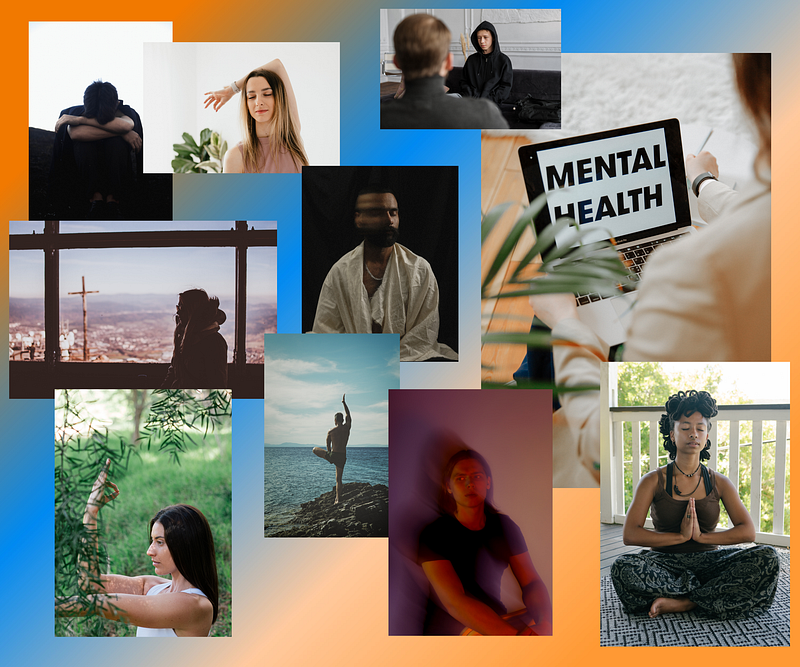
For the month of August, The POM is kicking off a theme: Mental Health & Poetry. Throughout the month, we’ll explore this topic through our work as we move toward openness, acceptance, authenticity, and connectedness through our poetry. We’ll show each other empathy. We’ll analyze our own connections between our need to poet and our own mental health. We’ll confess our struggles. We’ll make peace with how our minds work.
And through it all — we will grow.
Take a look at this:
Dr. Ludwig looked at more than 1,000 prominent people in eight creative-arts professions and 10 other professions. He concluded that psychiatric disturbances were much more common among the artists. Dr. Ludwig found that roughly 20 percent of eminent poets had committed suicide, compared with a suicide rate of 4 percent for all the professions he examined. The suicide rate in the general United States population is around 1 percent, he said. — NY Times article, Going Early Into That Good Night by By Felicia R. Lee
You may be familiar with the article which came out in 2004 and put into black and white something that we poets really don’t like talking about.
The world of poetry and poets has a problem with suicide. Our poet to suicide ratio is terrifying. Many poets suffer from a host of mental health issues. Some suffer very few, if any, mental health issues. Some question whether our gifts, talents, and vision for the world around us is in and of itself a mental health issue.
Regardless, it’s something we, as poets, need to talk about. Let’s begin this conversation. You can:
- Comment here.
- Comment on the themed posts in our Facebook Group.
- Prepare your own submissions to be posted anywhere on Medium. (Please see below for tagging directions.)
An upswing in mental health awareness
Just last week, Olympic gymnast Simone Biles shocked the world when she admitted — my brain cannot right now. And in admitting that truth she gave up on quite a lot to stand by her body and her mind to do what was right and safe for her own health. Some heralded her a hero, others bashed her for “quitting.”
What Simone does every day, day in and day out, is obsessively train for her sport. She lives, breathes, and is gymnastics, but as she discovered this week and admitted in a Tweet:
The outpouring of love and support for Simone Biles right now, an athlete, who is expected to perform no matter what is going on inside (stress/bad day/mental break — whatever) is hopeful for me as a creative individual who often has to say — right now my brain just cannot. It happens. And for creative individuals or those who suffer any form of mental challenge, illness, or neurodivergent thinking patterns, this struggle between mental clarity and creativity is a very real thing.
In short — what we do for a living or for self-expression can sometimes be tied up in who we are as people, but it isn’t everything. But — our mental health IS everything. And we must, if we want to continue doing anything we love, take care of the mental health that keeps our minds strong and clear.
How, then, do we do this if the very thing we love about ourselves — might even be the thing that breaks us. Does it work that way for you? Do you question the connection between your own creative talent and some kind of inner instability? Or, do you write the best when you are mentally strong, well, organized, and feeling your best?
Or, do you follow in the footsteps of so many poets and creative thinkers who came before us…and pour some kind of creative stimulant at it: alcohol, drugs, psychotropics, downers, reckless behavior, etc.? Do you put yourself in a place of misery and then explore all the creative colors you find there?
Worse yet, do you feel that without some kind of emotional unrest, you’d have nothing at all to say in your poetry? Many of us fear this.
Poet statistics that may shock you
The incidence of mood disorders, suicide and institutionalisation was 20 times higher among major British and Irish poets between 1600 and 1800 according to a study by psychologist Kay Redfield Jamison. — Poetry, the creative process and mental illness, By Alex Hudson, BBC News
Ever heard of the Sylvia Plath Effect? That’s the concept that poets are more susceptible to mental illness than other creative writers — and we named it after Sylvia Plath, obviously. Because — well, we couldn’t simply remember her for her brilliance, as a female poet in her day, right? As infuriating as it is to me, labeling her by her death rather than her life’s work, at least it is bringing the conversation to the table.
A different perspective
Maybe some “mental illness” is just hornswabble. It’s creativity without purpose. It’s a poet or a painter lost in a world that doesn’t let them be a poet or a painter. Sometimes, I think about these things. Don’t you?
Maybe we poets are pressing the envelope with our own mental health — for the sake of our writing work. Should we allow our minds to do whatever they please and follow along? (This is my strategy, most days.) Or do we care for our own mental health, mind and spirit, and trust that the muse will come and spend time with us, leading us from project to project, poem to poem?
About my article “Poetry Is Not Your Therapist”
I must address an article I wrote some time ago entitled Poetry Is Not Your Therapist. In some ways, I stand by this article as a call for poets to take their poetry past the cathartic release of it and elevate the final poems with polishing, poetic device, and structure.
But in some ways, I almost regret writing this article as I think it is so easily misinterpreted as a criticism of the creative poetry-writing process. I hope that readers will understand the call for greater emphasis on the finished poem and the value it provides for the reader.
How might we, as poets, use poetry as our own personal therapeutic device, but still create poetry that is respected, valued, and enjoyed by our readers? This, too, is an important part of the conversation. I would love to know your thoughts on this.
For August: Mental Health Month at The POM
Here’s some of what we want to see:
Essays (Here are a few ideas.)
- How mental health and poetry are connected — your theories.
- Research-based essays on mental health and an individual poet. Please reference some of their poems, too, so we can get to know this poet more deeply.
- Write a rebuke or your own interpretation of Poetry Is Not Your Therapist.
- Share your thoughts in an essay on a popular myth or belief about mental health & poetry.
- Share an essay about how poetry has saved you, helped you, or improved your life in the area of mental health.
- Write an essay on how poetry is a part of your own mental health self-care.
- Write an essay on how you keep your mind healthy as a poet so you don’t follow the “trend” or “Sylvia Plath Effect.”
- Any other themes/ideas you have for essays that combine these two themes: poet/poetry and mental health.
Be sure to tag essays: “Poetry Article” (if you put it in The POM and these two required tags for this event: “Poetry” and “Mental Health”.
(Please tag this article in your work so that others may see what this theme is all about.)
Poetry
Any poems on the theme of mental health are encouraged. Explore this theme for yourself and see where creativity leads you.
- Write a poem on the theme of mental health.
- Write a poem exploring or depicting your own mental health.
- Write a poem about a mental health crisis in your life.
- Write a poem that uses metaphor to describe your own mental health challenges.
- Write a poem that celebrates your own connection to mental health & wellness.
- Choose a mental health poem and write your own response poem.
Be sure to tag poems: With these two required tags for this event: “Poetry” and “Mental Health”.
(Please tag this article in your work so that others may see what this theme is all about.)
Reading
Take this month to read some mental health-related books on poetry, creativity, or psychology. Here are a few suggestions (and we welcome your suggestions in the comments.)
Poets on Prozac: Mental Illness, Treatment, and the Creative Process
Love letters to a Narcissist by Raquel Plank (This is a poetry book by one of our members of The POM which explores, in its entirety, the mental health path of a relationship with a narcissist.)
Depression & Other Magic Tricks (Button Poetry) by Sabrina Benaim, one of the most-viewed performance poets of all time according to the Amazon book description. I have not read this one but thought it fit in well here for our theme.
Call to other publications to get on board
I’d like to call out a few other publications that may want to get on board with our August theme, show support, and share our efforts with their own readers so we can thoroughly discuss the relation between poetry and mental health.
I would also love to have the input of doctors, nurses, psychologists and other mental health professionals.
Invisible Illness. Editors Ryan Fan, Sara Becker, Austin Harvey, Meredith Arthur, Juliette Roanoke
Sky Collection. Editors Samantha Lazar, Melissa Coffey
ILLUMINATION. Editor Dr Mehmet Yildiz
Any other publications that house poetry and want to join us in this movement, feel free to share this post and invite your writers to contribute to your pub on these themes.
(Please tag this article in your work so that others may see what this theme is all about.)
Thanks for reading. We, here at The POM, want ALL of our poets to know and understand this — we support you. We care. And together, we represent a very important genre of writing. Some feel it burdensome, but others feel it is a gift. Some say it is both. Regardless, we want to offer you our support in whatever you are facing as a poet. We encourage you to write and explore your creativity as a way to care for yourself and grow as a person. We are here for you.


