
The Politics of Deforestation
Forests are a natural sink of carbon dioxide, but they’re also a source of cash
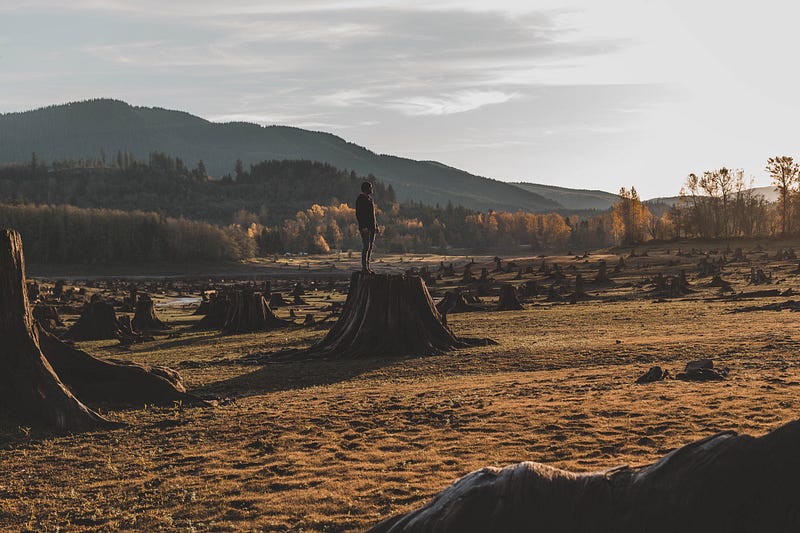
The Amazon rainforest is being destroyed at a rate that climate scientists are finding extremely alarming. The world’s forests are very important for reducing the amount of carbon dioxide in the atmosphere. But with less forest, there’ll be more carbon dioxide. Climate scientists are worried that this will have a catastrophic environmental impact.
One major reason these important forests are being destroyed in South America is that clearing space for agriculture has a positive short-term economic impact. So, some powerful domestic politicians such as Jair Bolsonaro support deforestation for these small financial gains.
However, in the long-term, this is a very risky business, since the global environment, worldwide ecosystems, and the international economy, will suffer, if global warming and climate change both continue.
Deforestation and climate change
Most of us learn at school that plants photosynthesise. During photosynthesis, plants consume carbon dioxide and produce oxygen. Forests are composed of vast numbers of plants and trees, that convert carbon dioxide into oxygen.
Land-based plants produce about 28% of the oxygen in the atmosphere, with marine plants responsible for nearly all the rest. To produce all this oxygen, plants take carbon dioxide out of the atmosphere.
Carbon dioxide is one of the gases which contributes to climate change. When fossil fuels are burned (fossil fuels are hydrocarbons), carbon dioxide is released. At present, 50% of this carbon dioxide stays in the atmosphere. Land plants absorb 25%, helping to mitigate the impact of carbon dioxide on global warming. The remaining 25% is absorbed by the oceans.
However, deforestation threatens to reduce the amount of carbon dioxide absorbed by land plants. By chopping down forests, the number of trees in the world is reduced. When the number (and mass) of trees in the world are reduced, there is an overall reduction in the amount of gas exchange that takes place between forests and the atmosphere.
Deforestation, therefore, threatens to reduce the amount of carbon dioxide being absorbed from the atmosphere, making global warming worse. So, the politics of deforestation are intimately linked with climate change.
A case study — deforestation in Brazil
The American rainforest in South America makes up around 17% of earth’s carbon stores. About 60% of the Amazon grows within Brazil’s borders. In just the last 50 years, about 17% of the Amazonian forest has been lost to deforestation and fires. By reducing the carbon locked up in the Amazon rainforest, deforestation could quicken global warming.
However, for many developing countries like Brazil, deforestation is a means of producing timber that can be sold, and for clearing land so farmers can move in to begin growing crops and rearing livestock. Between 2001–2013, 63% of Brazil’s deforestation took place to make space for cattle ranching.
Brazil’s economy is the 7th largest in the world, with an annual income (or GDP) of $2.25 trillion in 2013. However, wealth is not distributed very evenly. The average person in Brazil earns an income of $11,208, meaning many Brazilians effectively live in poverty. Globally, the average Brazilian income ranks 63rd in the world.
One growing sector striving to redress the imbalance of wealth in Brazil is the agricultural industry. At present, agriculture makes up over 5.8% of Brazil’s GDP. The beef export industry alone is responsible for over $5 billion of the country’s $2 trillion GDP. The politics of deforestation are therefore connected with economic growth, as well as with climate change.
One major political reason deforestation has been encouraged by the current Brazilian president, Jair Bolsonaro, is therefore its connection with economic growth. However, the risks for global ecosystems are enormous, and the relative economic gains of deforestation are comparably small.
The majority of the space occupied by the Amazon which was deforested between 2001–2013 has now been taken up by cattle ranching. However, the cattle industry makes up just a sliver of the country’s GDP. Those responsible for governing the country must ask themselves whether the global risks are therefore worth taking, given the gains are only marginal.
Expert climate scientists think that eroding the world’s largest forests could catastrophically accelerate global warming, decimating ecosystems across the world. It is therefore important that Brazilians establish means of economic growth not so dependent on destroying the world’s lungs.
Conclusion
The politics of deforestation are intimately connected with economic growth. Timber from trees chopped down can be sold. The space created by clearing away dense forest can be used for agriculture. But in doing so, less carbon dioxide is absorbed from the atmosphere and fixed in the forests. Hence, the politics of deforestation are also connected with climate politics.
It is doubtless difficult to see politics from a global perspective when one’s countrymen are living and starving in poverty. However, there are always difficult trade-offs to make in politics, and one of the biggest challenges of the next few generations will be to reduce climate change.
Another considerable challenge will be to reduce climate change while continuing to enable sustainable economic growth. By increasing the concentration of carbon dioxide in the atmosphere, deforestation contributes to global warming. Although profitable in the short term, deforestation can only lead to long-term environmental damage, due to the net impact global warming will have on global ecosystems.
The economic growth facilitated by deforestation is therefore not sustainable. It is therefore important that sustainable methods of economic growth are established, however hard it is to develop and implement them.
If you want to subscribe to receive my articles straight to your inbox, just follow this link and add your email address.