
The Polio Epidemic Also Kept Children Home
And polio didn’t just go away.
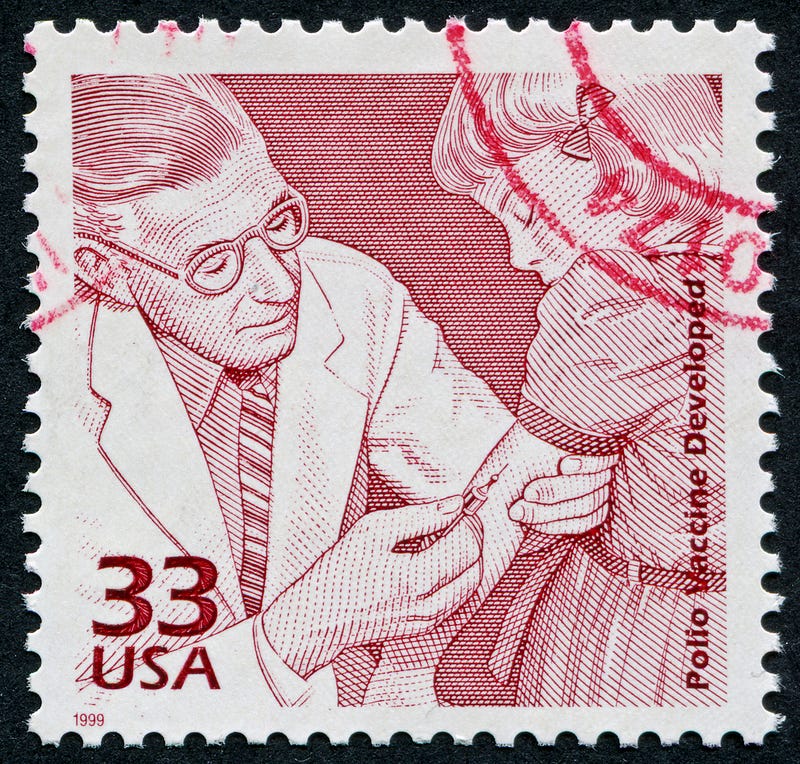
There is no cure for polio. Yes. Polio has gone away in the United States. It’s gone because of a vaccine.
Some cities got rabid about getting rid of it; in other words, they realized that since there is no cure, the next best step is to prevent it.
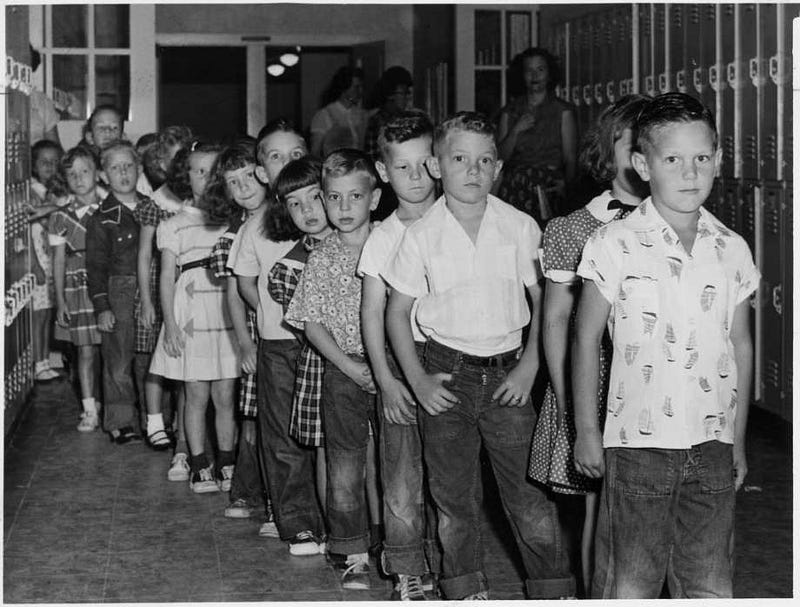
For cities that didn’t do like Dallas? People stayed home. That sounds so 2020.
They knew back then that when you can get next to a vaccine…you take it.
Or back then in the 1950’s you could just borrow an iron lung.
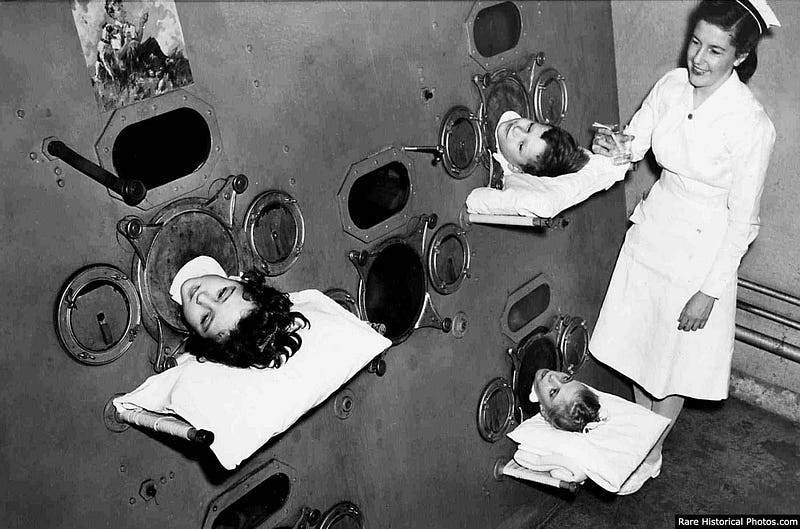
And, like the COVID19, most people who get it are asymptomatic. Ninety to ninety-five percent of the people who got polio had no symptoms at all.
But for those who have symptoms, the results can be catastrophic. Polio, short for poliomyelitis, is a virus that attacks the nervous system and can cause paralysis and even death. Patients died because their breathing muscles became paralyzed. They could no longer breathe. It seemed to affect children quickly, but any age is eligible to contract the disease.
And then there’s this; those infected with polio can unknowingly walk around for up to six weeks spreading the disease to those around them.
People didn’t know they were spreading polio because they weren’t even sick.
Polio was so devastating to families all over the world — and it caused people to panic. People feared the atomic bomb. The second fear was polio.
No one knew where it would strike next
When the disease hit the United States in the 1950s, there were 15,000 cases of paralysis each year. Polio was considered one of the most deadly diseases in the world.
The first safe and effective polio vaccine was invented not by Dr. Jonas Salk or Dr. Albert Sabin, but by Dr. Hilary Koprowski (1916–2013) in 1950.
Dr. Koprowski’s version was used for hundreds of thousands of individuals all over the world safely but was never licensed for use in the United States. It meant that thousands of American children and adults were needlessly put into iron lungs from 1950 to 1955…when Dr. Jonas Salk’s version (by injection) was approved.
A few years later, Dr. Albert Sabin developed an oral version; some people still remember the sugar cube with the medicine on top of it.
[By the way, Sabin developed his vaccine from a sample of attenuated poliovirus that he received from Koprowski.]
This is a surprise…There was a race to create a polio vaccine. Dr. Koprowski’s version was injected into thirteen million people safely (Europe, Russia) — but not in America. At the same time, American children were being placed into iron lungs, with a certain percentage of them dying…it was a horror show in real life.
Vaccines have saved millions of lives, but we lost more than a few due to factors other than science during the polio epidemic.
The United States announced that polio was finally eradicated in the United States in 1979.
Could there be a life-saving delay caused by something other than science regarding the COVID-19 today?
Will we repeat history?
Before the vaccine arrived
Parents in communities where polio appeared kept their children at home. They didn’t have a choice; many schools, theatres, and pools closed. Rumors spread that cats spread the disease, so they were slaughtered wherever they were found. Some even blamed bananas. The thought was that tarantulas were injecting poison into the fruit. And others even blamed immigrant families.
The disease started out with symptoms like headache, fever, nausea, fatigue, and a stiff neck. Then parts of their bodies, like a leg or arm, would fail to work. Some could not move at all.
We know now that contact with fecal matter will cause the disease — which is why so many seemed to contract polio after a swim at a local pool. The 1950s advice: wash your hands, avoid large crowds, and disinfect all surfaces.
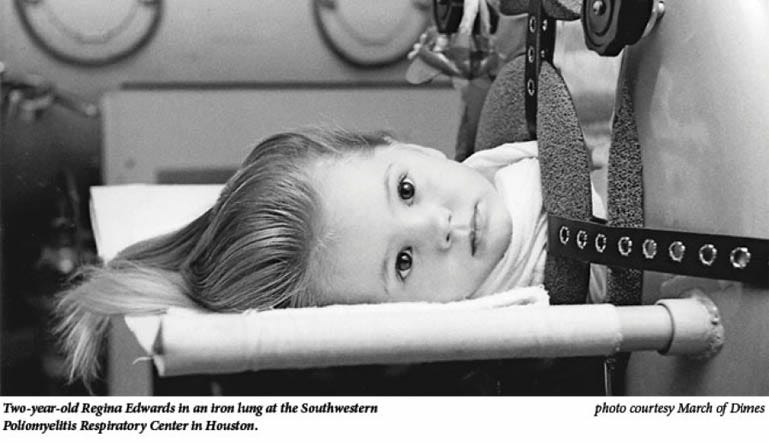
The 1952 U.S. epidemic was the worst polio outbreak in American history. 52,000 (mostly children) became infected. There were 21,269 victims, like two-year-old Regina Edwards, who became paralyzed in one fashion or another that year. At least 3,145 people died.
Did I mention that there is no cure for polio?
So American children stayed home. In the meantime, their parents prayed for a vaccine.
The ramifications of closed schools
Several studies were completed when educators took a look back at students from 1916 who lost some school time due to that polio epidemic. Of course, there was no way for children to obtain an education unless their parents were wealthy and hired a tutor…which some did.
It was similar to the pods of today — where upper-class parents hire a certified teacher to teach a group of students to ensure that they do not fall behind.
However, there was a key group of students between the ages of 14 and 17 who simply got a job and went to work. Their formal education stopped, but they did obtain on the job training.
School-aged children who were old enough to have labor market alternatives (those who were between ages 14 and 17), and who were living in areas more affected by the pandemic had lower educational attainment than similarly-aged children living in areas with lower polio morbidity rates.
When I was younger, I remember several older persons who’d say they went to the school of hard knocks. For those who are not aware of this phrase, it is an education gained from usually negative experiences in the real world, as opposed to formal education.
Times were different. One wasn’t required to have a high school diploma or a college degree to get a job. You needed to pay attention, work hard, get the job done, and ultimately, if it was possible — work your way up the ladder. As for children younger than 14:
This result, which is strong, robust and consistent across specifications, does not hold for age groups who were not of legal working age, nor does it hold for slightly older children who had already completed their secondary schooling.
So, in this study, children younger than legal working age, which at this time was 14 years — eventually caught up in educational attainment.
Nevertheless, results suggest that there is a long-run cost when schools are closed as a response to disease outbreaks.
There are simply too many gaps. In fact, today, 17 million children have no access to online education. They are disconnected. Without some kind of intervention, they are left behind.
There are similarities between poliovirus and the COVID-19
Both require a vaccine to eliminate. Polio returned year after year; it came in the summer, along with pools, crowds, and infection, and then it receded in the winter.
However, indications are that the COVID-19 is not affected by the weather. It is equally deadly in summer as it is in fall and winter.
In addition, Dr. Robert Redfield of the Centers for Disease Control (CDC) said that the convergence (of the flu and the COVID-19) could create “one of the most difficult times that we’ve experienced in American public health” this fall and winter.
Hopefully, the COVID-19 vaccine will not take long to appear.
Our educational system depends on it.


