
CREATIVE CORNER AUTHOR INTERVIEW SERIES
The Poetry-Memoir Hybrid Style of Author Lindsay Soberano-Wilson Is Sure to Surprise and Inspire
On using a poetry-and-prose hybrid style to tackle issues and traumas that may otherwise be inaccessible
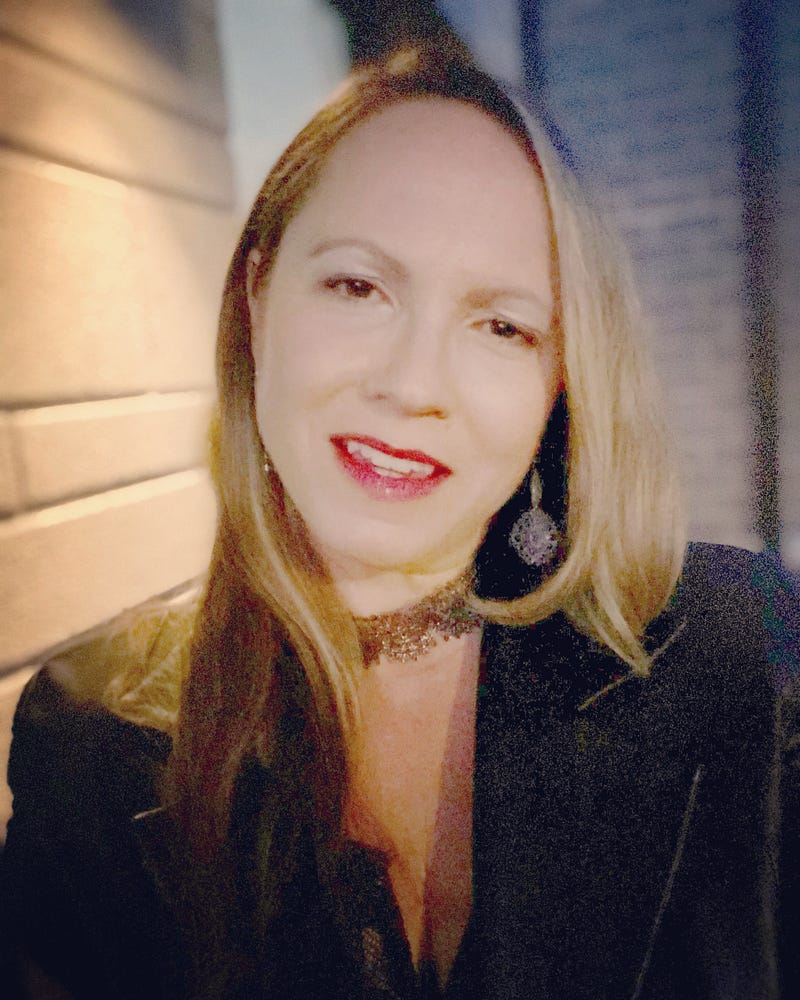
Lindsay Soberano-Wilson is a feisty, brazen, badass Jewish-Canadian bisexual woman who writes across the gamut. Lindsay tackles feminism and sexuality with confidence and flair — and, she doesn’t always hold the “popular” opinion on such issues. She writes Poetry, Memoir, Creative Non-Fiction, Articles and Essays.
Since joining Medium in December 2020 Lindsay has founded the poetry and memoir publication Put It To Rest and co-edits for iPoetry. Many of Lindsay’s works appeared in Age of Empathy (now known as The Narrative Collective).
Lindsay’s inaugural book is written in a hybrid style with both poetry and memoir. Casa de mi Corazón: A Travel Journal of Poetry and Memoir was released through Poetica Publishing in June 2021.
The reviews are compelling:
“Lindsay Soberano-Wilson’s Casa de mi Corazon: A Travel Journal of Poetry and Memoir is a beautifully written collection of poems and prose, flirting with place, identity, and the human condition. For those of us who aren’t Jewish, we are given a window into realities, carefully crafted and shared with the utmost honesty.”
— Dwayne Morgan, Writer. Speaker. Connector. Scarborough Walk of Fame Inductee
Why do you write creative nonfiction? I write creative nonfiction because I like the freedom and break from tradition that it truly allows me to explore. I’m a poet at heart, and I find that creative nonfiction enables me to play around with hybrid forms of poetry and prose. Since my writing is poetic, visual, and descriptive, there is something liberating about expressing myself in a free-flowing pattern of poetic prose. But while creative nonfiction is a liberating genre, it’s also a form of writing that shields me. For example, it allows me to touch on personal issues and dress them up in metaphorical language to share such experiences with my readers.
When and how did you break into creative nonfiction? I only began to really explore creative nonfiction when I joined the medium community in December 2020 and was lucky enough to discover the Age of Empathy. Though, in looking back, I see how my earlier writing about personal issues, such as recurrent miscarriages gravitated towards creative nonfiction. As I reflected earlier, the mix of poetry and prose grants me the creative license to share personal issues. That’s because I can reflect on sensations, feelings, and impressions rather than specific facts and/or dialogue.
I also experimented with creative nonfiction when writing my debut chapbook, Casa de mi Corazón: A Travel Journal of Poetry and Memoir (Poetica Publishing) when exploring inner and outer aspects of travel. For example, the memoir Kaleidoscopic Viewpoints of Israel and Toronto, captures my impressions of how both myself and the city of Jerusalem had changed in response to the ongoing conflict.
Where have you learned the most about creative nonfiction? For example, from reading other writers, advanced education, workshops, or elsewhere? For aspiring writers, are there workshops you would recommend?Personally, I have learned the most about creative nonfiction just by reading the amazing writers on medium. When I first joined the medium community, I was really drawn to creative nonfiction, especially on the topic of travel, time, and place. I was especially drawn to the creative nonfiction by Aimée Gramblin, Tre. L. Loadholt, and Kay Bolden who I got to know when writing for P.S. I Love You.
I also had the pleasure of attending some workshops by Janelle Hardy who teaches about Personal Myth-Making.
Who are your 3 favorite creative nonfiction writers? As I said before my three favourite creative nonfiction writers are here on medium!
What are your tips on writing astounding creative non-fiction?I think that the most important tips reside in accessing your own story and your own hidden gems. I find that tapping into your memories to access your own associations can help bring the work to life. This also goes hand-in-hand with trying to be specific and concrete enough in your writing to paint a clear picture, while also touching on the more subtle nuances that tell a story. For example, when responding to a writing prompt for Age of Empathy about my childhood home, I found it very beneficial to describe the home by appealing to emotions and the five senses.
What are your future projects?
I would like to eventually compile a book of personal essays, including creative nonfiction work, to present as a collection. But until then, I will keep plugging away…
Author Information
Lindsay Soberano-Wilson is a poet, teacher, and editor of Put It To Rest and iPoetry. She holds a MA (English Literature) and a BEd from the University of Toronto, and a BA (Creative Writing and English Literature) from Concordia University. Her debut chapbook, Casa de mi Corazón: A Travel Journal of Poetry and Memoir (Poetica Publishing) explores how her sense of community, identity, and home was shaped by her travels to Israel, Morocco, and Europe. To learn more about the collection, please visit lindsaysoberano.com.
Social media
Follow her on Medium, Instagram, Twitter, or @poetry.matters on Tik Tok.
Publishing credits
Her poems and articles have appeared in FreshVoices22, Embrace of Dawn, Poetry 365, PoetryPause, Quills Erotic Canadian Poetry Magazine, Canadian Woman Studies Journal, Running with Scissors, Poetica Magazine, Scary Mommy, Travel Thru History, The Canadian Jewish News, and Jewish Women of Words.