
The Poetry Meet 16th April.
Men are Having Less Sex in this Generation.
I reached the venue at 3:30pm, arranged the pillows on the stone couch, removed my notebook, and started writing down a few thoughts. We hold the poetry meet at the side of the hostel which is the smoking zone. A lady turned up to smoke. We know each other, we are what you would call once-upon-a-time kinda friends. She had come for a smoke, before doing what brought her to do. She sparked a conversation, reminding me of The Lantern Meet of Poets obligations, and the things we did to inspire a generation.
She stepped away, after 20 minutes of giving me wisdom. I did put up a fence against her wisdom.
In that silence is where Loic found me. Loic is wise and has good vibes. Relief flooded inside of me, at least someone is here and I won’t have to discuss poetry by myself. As we were discussing a few things, catching up on what the other has been up to, which isn’t much from my side, Makeeri dropped in. I hadn’t seen him since the year started, and I was excited.
In the true fashion of Makeeri, we jumped right into the story of the week, the footballer Achraf Hakimi whose wealth is his mother’s name, so his ex-wife couldn’t get anything. And on this conversation backbone there a conclusion was made: Men are having less sex. It’s only the 1% of men who are well, having all the women, as the women don’t dare date below them. This conversation spanned, Tikia and Alice arrived, and George also came with a visitor, whose name is the same as a Queen who miles to see a man who had it all, cementing the conversation in stone.
The first poem was read by George, and written by Loic. “Dandelion for Asiya” I believe if the reader is allowed not to be the first to comment on the poem, George would have taken his time, seated in silence, pondering not on the meaning of the poem, but the heaviness of the poem on his spirit. There was a sort of silence in the circle. I felt it. Maybe it was mostly my own silence which i felt. The poem required confusion to be able to understand it. The poem is as fleeting as a Dandelion caught in the wind, and playful as well as this flower that no one seems to want.
What caught my eye was the opening quote.
“Many Congolese people attribute the symptoms of psychiatric disorders to spiritual problems or black magic.
— Anna Inghram for BORGEN MAGAZINE”
This idea that Africans attribute psychiatric disorders to spiritual problems or black magic, is a deep problem that is rooted in having your own stories and history told by another through their religious beliefs.
The poem addresses this very thing in a very subtle way, where it puts a spiritual happening, an imagination, a bullet and a Bible all in one place. In the end, you will ask yourself, WHAT THE HECK HAVE I JUST READ? And then on the second or the tenth round of reading, if you are like me, you will find the answer, when the persona says,
“Her eyes are fixed on me and she says,
yet another man who won’t allow me to be anything other than a rose.”
After my 20th reading, I believe the key to the poem is in the quote. The quote is so specific to a group of people. And if you miss that, then you miss who the main character is, and you miss the meaning of the poem.
After a few deep breaths, Tikia took us on a journey, an early morning journey of a person who is engrossed in the moment of their commute to somewhere. Many times, we leave our beds early in the morning to head to work, we are machines that it’s so hard to appreciate the moment you are in, it’s all a blurry of sorts. We are hooked on the highs of our day, and the highs are things that create value for our financial status or our relationship status.
And this made sense when Makeeri disagreed with the praise that Loic gave the poem, that it is sexy.
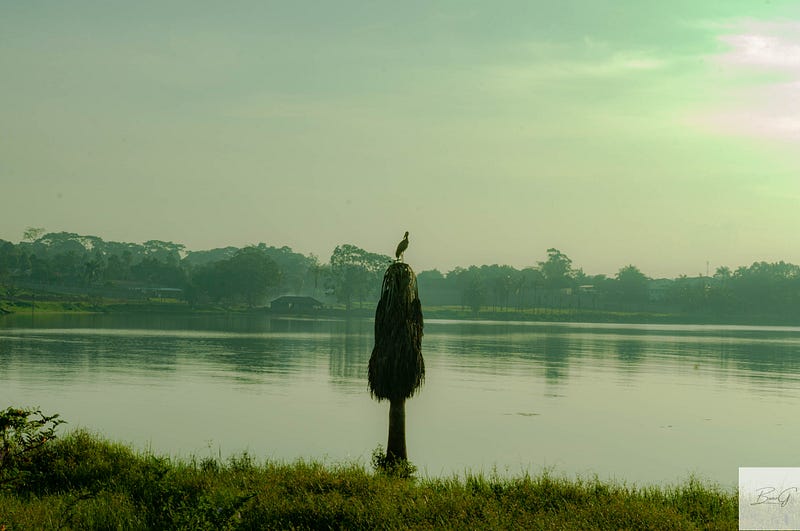
The poem: early mornings. Madam Jackie who arrived amidst the discussion of the last poem pointed out the clarity of this poem and its consistent rhythm. If you have ever been in a car at 6:20am, passed via Kitubulu Entebbe, and found the orange sun hanging by a thread over the lake, this poem will hit you. Or if 6:30pm found you at Impala as you connect to the express highway on Entebbe side, getting onto Nambigirwa Bridge, you will see what George saw, what his pen captured aptly.
I like the advent of early morning,
cruising on a highway -
how the sky hangs, a fair gray.
how mist looms, its stronghold atop
papyrus heads, naming the swamp
for its own.
Alice read the next poem which was titleless, and this was also dubbed sexy by Loic. The poem written by Bwojji, made Tikia think about a side chic, and Alice, about someone who has chosen their lane and wouldn’t poke their nose in another’s business. Madam Jackie found the poem fascinating, that it fits in so many situations, that it couldn’t be tied to just one. Which assessment left Goerge with a tinge of sour taste, for the poem didn’t lead him anyway. It left him hanging on its noose. Makeeri, found this poem sexy, for its hope was besieged by two mountains made of stanzas of a melancholic nature. As the discussion moved on, someone, who I can’t remember, said the first and last stanzas made them think of a blowjob. Right there, the discussion stopped, and the group descended in a chorus of laughing and a reminder of the first conversation, Men are Having Less Sex.
But for now,
Clean your hands
Keep away
From chests, not yours
Don’t open your mouth
Staff it with a cloth
Keep your heart open
From it flows goodness.
Personally, i felt that this poem’s imagery needed a bit of brushing, it reminded me of a deformed tree amongst a forest of straight trees.
The last poem, read by Bwojji: Patrice written by Loic, was a poem that tags on the strings of a True Pan Africanist. But also to anyone who knows the history of DRC. The poem casts us in the future, 2060, when the persona is 63 years old, with a lover, a son or a daughter, a grandson or a granddaughter, who interpret the conversation the persona is having with the version of Patrice Lumumba which was bought off Amazon. The poem chooses its points of focus, and a reader can’t miss them.
Patrice asks why the word martyr is spelled the same in French and English
I don’t know, I say. I tell him that it originates from the old Greek word for witness. But he knows this already. He’s quiet. I hear my lover’s body sink into our bed. on the news
A new mineral is discovered in the place formally known as Kisangani. The US government will be bringing their freedom soon. Patrice says I never got to witness any of it. What happened outside the vat of acid? I say you’re my hero. You’ve lived well. You’re no martyr
This poem, had me breathing hard. It had Makeeri on his feet, and the rest in a contemplative silence of what a shitshow horror we are leaving in. Nothing ever changes in Africa, if you choose to look behind the iron curtain, as this poem does.
The next poetry meet will be happening on 30th April, at the Bush Pig Hostel.
Get in touch with Bwojji if you would love to attend at +256781911520.


