
The Plight of the Pangolin — the Most Trafficked and Endangered Mammal
Source of COVID-19 tracked to Huanan Seafood Market in Wuhan
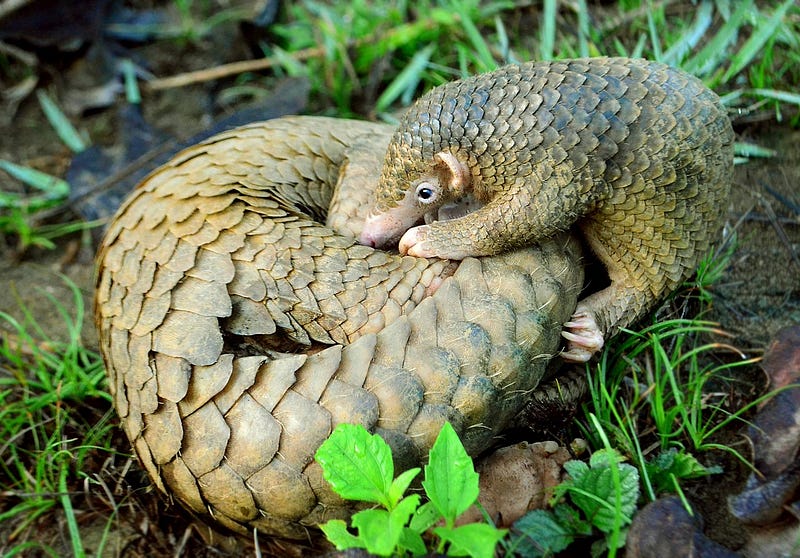
When the news broke on 23 January, my first thought was “pangolins” because I knew “seafood market” was a misnomer.
Wet markets are prevalent in China. Outdoor stalls squeeze together to form narrow lanes where shoppers are in close proximity to live and dead animals — wild and domesticated.
(The SARS virus of 2003 started in a wet market too.)
The Huanan market was closed on 1 January, where vendors sold processed meats and live consumables, including chickens, donkeys, sheep, pigs, camels, foxes, badgers, bamboo rats, hedgehogs, snakes AND PANGOLINS.
Two weeks later, science confirmed my intuition was spot on.
Coronaviruses are zoonotic diseases, meaning they first spread to people from animals.
With SARS and COVID-19, bats were the original hosts. They then infected other animals, which transmitted the virus to humans.
“When you bring animals together in these unnatural situations, you have the risk of human diseases emerging,” says Kevin Olival, a disease ecologist and conservationist at the EcoHealth Alliance.
Researchers from the Baylor College of Medicine in Houston, Texas, have studied samples taken from 21 Malayan pangolins at a wildlife rescue center in China’s Guangdong province, which show that highly endangered pangolins are vectors for the viral strain COVID-19. T
The pangolin DNA analysed offers a near-perfect match for the current outbreak.
Researchers at the South China Agricultural University have confirmed these results.
“Tens of countries are involved in the illegal trade of wild pangolins, but Asian countries — and the dirty, “pressure-cooker” conditions of wildlife markets of China, in particular — are the most prolific consumers.” — Our Burning Planet, 7 February 2020.
Though I do not condone China’s authoritarian regime, they protected the rest of the world from the consequences of the pandemic spreading.
In what other country would the population have accepted the lock down of an entire city (Wuhan) and province (Hubei)?
The Chinese obeyed instructions. For that, we are indebted to you.
And a big thank you to the dedicated doctors, nurses and volunteers for your hard work and commitment in providing comfort and care — you are superheroes.
Let’s not blow things out of proportion.
The WHO estimates that up to 650,000 people die each year from respiratory diseases arising from seasonal flu.
The Spanish Flu pandemic of 1918–1919 wiped out around 50 to 100-million.
But today we have vaccines for seasonal flu.
According to US-CDC, most deaths occur among those aged over 75 years, and in the world’s poorest regions. Sub-Saharan Africa accounts for the greatest flu mortality risk, followed closely by the Eastern Mediterranean and Southeast Asia.
The WHO statistics for COVID-19 as at 19 February are:
China — 74,280 cases with 2006 deaths — a 2.7% mortality rate.
Other Countries — 924 cases with 3 deaths — a 0.32% mortality rate.
There’s no vaccine yet but there’s no need for fear-mongering and panic.
Please don’t place the burden of guilt on pangolins.
The confluence of illegal animal trafficking and the outbreak of COVID-19 highlights a deeper issue.
A wake-up call from Mother Earth to stop these despicable practices.
I leave you with this four-minute video from National Geographic.
Thank you for reading.