avatarRicky Lanusse

Free AI web copilot to create summaries, insights and extended knowledge, download it at here

8893

Abstract

on dioxide by utilizing water and sunlight to generate oxygen and organic matter. In doing so, they <b>contribute at least 50 percent of all oxygen to our atmosphere</b> and transfer 10 gigatons of CO2, an estimated 40% of all CO2 emissions, into the deep ocean yearly. To put things in perspective, this is equivalent to the amount of CO2 captured by 1.70 trillion trees <b>— four Amazon forests’ worth — </b>each year.</p><p id="ef46">Marine biota heavily relies on these phytoplanktons as a source of food. However, when these phytoplanktons ingest plastic fragments, they reduce their organic carbon consumption, disturbing the “biological carbon pump” within marine ecosystems. This surge in carbon within marine bodies leads to <a href="https://www.sciencedirect.com/science/article/pii/S0048969723012433?via%3Dihub#bb0510">ocean acidification</a>. Notably, research indicates that the rate of photosynthesis in marine phytoplankton after ingesting microplastics has been reduced by <a href="https://www.sciencedirect.com/science/article/abs/pii/S0045653518310270">approximately 45%</a>. Moreover, <a href="https://www.sciencedirect.com/science/article/abs/pii/S0269749116309204">ingestion</a> of nanoplastics by green algal species, such as <a href="https://www.sciencedirect.com/topics/earth-and-planetary-sciences/scenedesmus"><i>Scenedesmus</i></a> and <a href="https://www.sciencedirect.com/topics/earth-and-planetary-sciences/chlorella"><i>Chlorella</i></a>, has decreased <a href="https://www.sciencedirect.com/topics/earth-and-planetary-sciences/chlorophyll-a">chlorophyll A</a> content and increased active oxygen formation in cells.</p><p id="8631">Similarly, zooplankton, critical for regulating carbon concentrations in water bodies, suffer from reduced carbon consumption due to <a href="https://www.sciencedirect.com/science/article/abs/pii/S1342937X21002252">microplastic ingestion</a>. Microplastics also impede the sinking rate of zooplankton’s sinking fecal pellets, extending the time they drift through the water and making them more susceptible to breakage and consumption by other organisms. This disruption significantly reduces the chances of carbon reaching the seafloor for permanent storage.</p><p id="a056">Smaller microplastics are particularly susceptible to ingestion by marine organisms, leading to <a href="https://www.sciencedirect.com/science/article/pii/S0147651321009325">inflammation</a> of the intestinal cavities. After ingesting microplastics, <a href="https://link.springer.com/article/10.1007/s13762-023-04789-w">marine organisms</a> exhibit changes in behavior, reduced appetite, oxidative stress, and fertility issues. An illustrative study has even suggested that the presence of microplastics in water bodies disrupts the ability of <a href="https://www.mdpi.com/2076-2615/13/6/1055">hermit crabs</a> to choose shells, affecting their fundamental behavior of shell swapping.</p><p id="a0ba">Bottom line — Microplastics in the ocean have several significant impacts: 1) they can disrupt phytoplankton photosynthesis and growth; 2) pose toxicity to zooplankton, disrupting their development and reproduction; 3) they interfere with the marine biological pump and affect the ocean’s carbon stock 4) affect biodiversity by ingestion.</p><figure id="6a8c"><img src="https://cdn-images-1.readmedium.com/v2/resize:fit:800/1*cq8BMC5XkSn5bsQsZfgoAA.jpeg"><figcaption><b><i>Effect of plastic production and corresponding CO2 emission on the marine ecosystem</i></b><i> (Source: <a href="https://www.sciencedirect.com/science/article/abs/pii/S0048969723012433?via%3Dihub#bb0405"></a></i><a href="https://www.sciencedirect.com/science/article/abs/pii/S0048969723012433?via%3Dihub#bb0405">Contribution of plastic and microplastic to global climate change and their conjoining impacts on the environment)</a></figcaption></figure><h1 id="5d00">The White Polar Regions</h1><p id="ba8a">Despite their small size, microplastics have found their way to extreme environments, including Polar Regions. Their presence is attributed to <a href="https://link.springer.com/article/10.1007/s10661-019-7842-0">various factors</a>, including <a href="https://www.nature.com/articles/s41467-020-17201-9">atmospheric transport</a>, wind patterns, and precipitation. Snow, for instance, captures these tiny plastic particles during snowfall, as evidenced by the discovery of microplastics in <a href="https://muse.jhu.edu/article/783809">snow samples</a> from Greenland and Svalbard.</p><p id="a5a4">The persistence of microplastics in these extreme ecosystems is a <a href="https://www.sciencedirect.com/science/article/abs/pii/S0048969721022191">significant threat</a>, given their low genetic variation and vulnerability to climatic changes. Polar regions, typically considered untouched environments, are facing dramatic changes, from glacial retreat to rising sea levels. These changes, in turn, are affecting biodiversity, altering population distribution, phenology, and ecosystem composition and function.</p><p id="436e">Because microplastics are infiltrating sea ice and sediments in these vulnerable regions, not only contaminating but also reducing <a href="https://www.sciencedirect.com/science/article/pii/S1674927822000673">snow albedo</a>, accelerating melting, and further compromising the delicate balance of these environments.</p><figure id="8007"><img src="https://cdn-images-1.readmedium.com/v2/resize:fit:800/1*9XnyJI7gTvOkzaQGciRE1w.jpeg"><figcaption><b>Sketch map of airborne microplastics (AMPs) transported to the glacier and potential albedos feedbacks</b> (Source: <a href="https://www.sciencedirect.com/science/article/pii/S1674927822000673#fig2">Microplastics have light-absorbing ability to enhance cryospheric melting</a>)</figcaption></figure><h1 id="4578">Ripple Effects on Arctic and Antarctic Species</h1><p id="3e97">The decline in sea ice due to rising temperatures reduces ice algae, a vital nutrient source in icy conditions. Zooplankton, which feeds on ice algae, sees a decline, affecting Arctic cod. As Arctic cod populations dwindle, predators higher up the food chain, like polar bears, face the brunt of this ecological imbalance.</p><blockquote id="0022"><p>The equation is easy:</p></blockquote><blockquote id="bc23"><p><b><i>Less zooplankton = less Arctic cod = less polar bears = less carbon capture</i></b></p></blockquote><p id="8a61">In a <b>positive feedback loop</b>, whales eat krill. After digestion, the fecal plumes act as a fertilizer for phytoplankton. Krill then eats the phytoplankton. Moreover, whale movements — especially when diving — tend to push nutrients from the bottom of the ocean to the surface, where they feed phytoplankton and other marine flora, fish, and other smaller animals. But if microplastics disrupt the phytoplankton cycle, there is less krill, then less food for whales.</p><blockquote id="773c"><p>The equation is much the same:</p></blockquote><blockquote id="3a8f"><p><b><i>Less phytoplankton = less krill = less whales = less carbon capture</i></b></p></blockquote><h1 id="8e56">Air and The Green Earth</h1><p id="a88b">Apart from its evident effect on marine life, plastics in soil alter fundamental parameters, affecting vital nutrient cycles and <a href="https://www.mdpi.com/2075-1729/11/12/1349">food production</a>. This disruption can lead to soil erosion and forest fires, ultimately causing a loss of land biodiversity.</p><p id="3d31">Tiny plastic particles in the air <a href="https://www.sciencedirect.com/science/article/abs/pii/S0166445X2100309X">hamper pollination</a> by mimicking pollen size and obstructing pollen grains. Mainly, this issue is pressing in tropical regions, rich in endemic plant species. The persistence of these plastic fragments in such areas endangers diverse plant life, especially the rare and endemic species, threatening their seed banks and overall biodiversity.</p><p id="262c">In the terrestrial system, one crucial component affected by microplastics is the soil, which plays a pivotal role in maintaining nutrient cycles and serving as a foundation for food and feed production. Soil ecosystems receive substantial amounts of plastic debris from various sources, including soil compost, effluent irrigation, plastic mulching, and <a href="https://www.sciencedirect.com/science/article/pii/S0048969723012433?via%3Dihub">biosolids</a>. This influx of plastic alters fundamental soil characteristics and triggers emissions of N2O and CO2, ultimately diminishing soil fertility. Furthermore, these plastic fragments bring about shifts in soil temperature conditions and modify soil decomposition rates, potentially <a href="https://link.springer.com/chapter/10.1007/978-981-15-6564-9_7">jeopardizing soil ecosystem</a> services.</p><p id="e659">The changes in physicochemical soil parameters have far-reaching consequences, notably in

Options

forested areas. They can result in <a href="https://www.sciencedirect.com/topics/earth-and-planetary-sciences/soil-erosion">soil erosion</a> and forest fires, ultimately leading to biodiversity loss. Soil temperature, alongside other physicochemical factors, plays a pivotal role in supporting micro and macro soil fauna. Soil temperature conditions influence egg hatching and the determination of hatchling sexes. The persistent presence of plastic in soil ecosystems significantly impacts the population dynamics and the survival of <a href="https://www.sciencedirect.com/science/article/pii/S2001037022001167">microbial fauna</a>.</p><h1 id="c76d">The Pollutant and the Polluted</h1><p id="1086">Plastic production is expected to <a href="https://ourworldindata.org/grapher/global-plastic-production-projections">double</a> in the next 25 years. Oceans will be <a href="https://ourworldindata.org/grapher/macroplastics-in-ocean">filled</a> with plastics by 2050. Over 700 marine species have been adversely affected due to marine plastic pollution and the “plastisphere.” Soil is also changing, experiencing physicochemical modifications and exacerbated droughts and fires. The air is transporting all these microplastics to the <a href="https://www.nature.com/articles/s41467-020-17201-9">remotest regions</a> into the human food chain.</p> <figure id="53e3"> <div> <div> <img class="ratio" src="http://placehold.it/16x9"> <iframe class="" src="https://cdn.embedly.com/widgets/media.html?type=text%2Fhtml&amp;key=a19fcc184b9711e1b4764040d3dc5c07&amp;schema=twitter&amp;url=https%3A//twitter.com/RobJGreenfield/status/1580182228294062081&amp;image=https%3A//i.embed.ly/1/image%3Furl%3Dhttps%253A%252F%252Fabs.twimg.com%252Ferrors%252Flogo46x38.png%26key%3Da19fcc184b9711e1b4764040d3dc5c07" allowfullscreen="" frameborder="0" height="281" width="500"> </div> </div> </figure></iframe></div></div></figure><p id="d3d4">The threat posed by plastics has obvious and predictable repercussions for human health. Microplastics have now infiltrated our food chain, showing up in meat, <a href="https://pubmed.ncbi.nlm.nih.gov/32274556/">table salt</a>, and even <a href="https://www.theguardian.com/environment/2022/oct/07/microplastics-human-breast-milk-first-time"><b>human breast milk</b></a>. When ingested or inhaled, these minute particles pose <a href="https://www.sciencedirect.com/science/article/abs/pii/S0048969722011172">serious health risks</a>, including inflammation, cardiovascular diseases, and neurodegenerative disorders.</p><p id="99a6">The toxicity of plastics is further exacerbated by the chemicals they harbor, such as phthalates, lead, and brominated flame retardants. These compounds disrupt endocrine systems, causing reproductive disorders and developmental issues. Shockingly, even unborn fetuses are not immune, with plastic particles detected in the <a href="https://pubmed.ncbi.nlm.nih.gov/33395930/">placentas</a> of pregnant women.</p><p id="c06f">If it wasn’t clear enough yet, the plastic menace we are producing has environmental and, thus, health consequences at every stage of its lifecycle, emitting greenhouse gases and exacerbating global warming. It all starts with its production:</p><ol><li>Plastics, derived from petroleum, rely on oil and gas extraction materials. In 2019, plastics <a href="https://www.oecd.org/environment/plastics/increased-plastic-leakage-and-greenhouse-gas-emissions.htm">generated</a> 1.8 billion tonnes of greenhouse gas emissions — 3.4% of global emissions — 90% from their production and conversion from fossil fuels. By 2060, emissions are set to more than double, reaching 4.3 billion tonnes of GHG emissions.</li><li>Leakage of methane, ethane, and other gases at fracking sites contributes to around 33 million metric tons of greenhouse gases annually, akin to <a href="https://ourworldindata.org/greenhouse-gas-emissions">Serbia’s emission</a> in 2021.</li><li>Pipelines ferrying fracked gas to processing plants leak more greenhouse gases.</li><li>Ethane “cracker” plants that turn fracked gas into plastic are major greenhouse gas emitters.</li><li>Plastic production not only warms the planet but also releases harmful chemicals into the air, water, and soil.</li><li>Plastic insulation’s blowing agents, like hydrofluorocarbons, emit a staggering 24.5 million metric tons of greenhouse gases annually. Some agents can trap heat over 1,400 times more effectively than CO2.</li><li>Hydrofluorocarbons from plastic insulation can leach into the air for decades, persisting even after the insulation is landfilled.</li><li><a href="https://www.npr.org/2020/09/11/897692090/how-big-oil-misled-the-public-into-believing-plastic-would-be-recycled">Improper plastic disposal</a>, mainly through burning due to inadequate recycling, releases nearly 13 million metric tons of greenhouse gases annually, equivalent to the emissions of <a href="https://ourworldindata.org/co2/country/united-states">800,000 Americans in 2019</a>.</li><li><a href="https://grist.org/climate/this-solution-to-the-plastic-crisis-is-really-just-another-way-to-burn-fossil-fuels/">“Chemical recycling”</a> facilities often convert discarded plastic back into fossil fuels for burning.</li><li>Every year, an estimated<b> <a href="https://www.iucn.org/resources/issues-brief/marine-plastic-pollution#:~:text=environment%20and%20biodiversity.-,At%20least%2014%20million%20tons%20of%20plastic%20end%20up%20in,waters%20to%20deep%2Dsea%20sediments.">14 million tons of plastic waste</a></b> enter our oceans, wreaking havoc on marine life and <a href="https://oceanservice.noaa.gov/hazards/marinedebris/plastics-in-the-ocean.html">ecosystems</a> and emitting potent greenhouse gases like methane and ethane when degraded by sun and water.</li></ol><figure id="6ee7"><img src="https://cdn-images-1.readmedium.com/v2/resize:fit:800/1*t-NC1WaZdLTpfiNHJKuBXQ.png"><figcaption><b>Overview of the lifecycle of plastic and GHG emission.</b> (Source: <a href="https://www.sciencedirect.com/science/article/pii/S1674927822000673#fig2">Microplastics have light-absorbing ability to enhance cryospheric melting</a>)</figcaption></figure><p id="f3c2">So, how long will we keep denying our environmental impacts, our deeply flawed systems and values, and the self-inflicted climate crisis? Will we keep feeding our embryonic babies, hermit crabs, phytoplankton, and everything in between with toxic plastics? All while catastrophes pile one on top of the other to the point where we seem to live in a constant loop of floods, droughts, hurricanes, and wildfires?</p> <figure id="8d0d"> <div> <div> <img class="ratio" src="http://placehold.it/16x9"> <iframe class="" src="https://cdn.embedly.com/widgets/media.html?type=text%2Fhtml&amp;key=a19fcc184b9711e1b4764040d3dc5c07&amp;schema=twitter&amp;url=https%3A//twitter.com/Ros_Rodriguez_/status/1694641996806152550&amp;image=https%3A//i.embed.ly/1/image%3Furl%3Dhttps%253A%252F%252Fabs.twimg.com%252Ferrors%252Flogo46x38.png%26key%3Da19fcc184b9711e1b4764040d3dc5c07" allowfullscreen="" frameborder="0" height="281" width="500"> </div> </div> </figure></iframe></div></div></figure><p id="20a0">The cost of climate inaction is exorbitant. Recent groundbreaking research, <a href="https://actuaries.org.uk/media/qeydewmk/the-emperor-s-new-climate-scenarios_ifoa_23.pdf?ref=theissue.io">just published</a> by the <a href="https://actuaries.org.uk/?ref=theissue.io">British Institute of Actuaries</a>, delivers a stark conclusion: half of our economies could be destroyed by 2070. 50% of GDP. Gone. Actuaries have no incentive to exaggerate; their essence lies in precision and accuracy. They calculate risk, the backbone of the insurance industry. On the contrary, even a modest addition to annual global infrastructure investments could significantly limit temperature increases.</p><p id="398c">What I will ask for now is hard, but it could be game-changing: assess your consumption patterns, take notice of all the plastic you devour, and re-evaluate. Then, go spread the word: that’s when we start making a positive impact. Because if we stay arms-crossed, expecting somebody else to do it, it will be too late.</p><p id="7baa"><i>Thank you for your thorough reading and support! If you crave more insights into climate change, scientific progress, and geopolitics with a Patagonian twist, subscribe to the newsletter <a href="https://rickylanusse.substack.com/?utm_source=navbar&amp;utm_medium=web&amp;r=271e6q"></a></i><a href="https://rickylanusse.substack.com/?utm_source=navbar&amp;utm_medium=web&amp;r=271e6q"><b>Antarctic Sapiens</b></a> <i>and dive into thought-provoking content weekly.</i></p></article></body>

The Plastic Paradox: When Convenience Fuels Climate Chaos

From mountain peaks to ocean deeps, plastics spare no one.
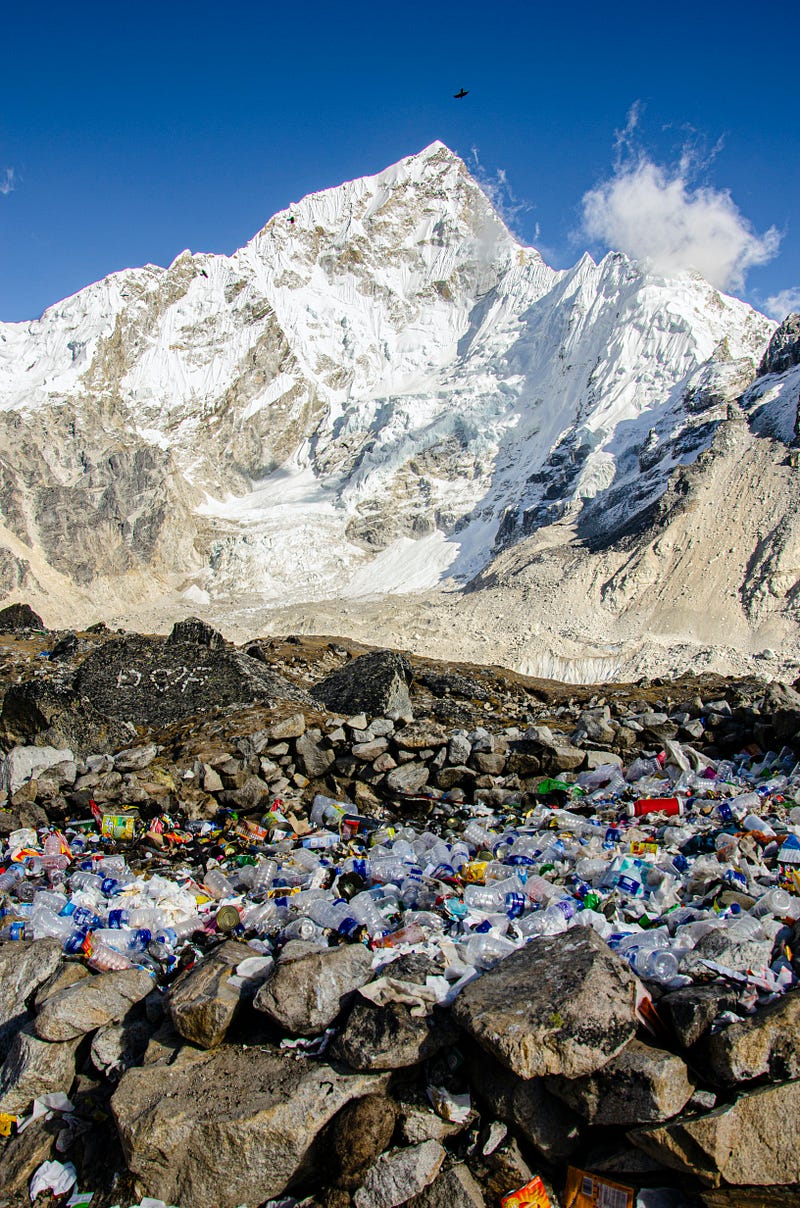
Photo by Sylwia Bartyzel on Unsplash

The keyboard, the mouse, the screen. The chair, the table, the lamp. Plastic, plastic, plastic. Everywhere I see, everything I touch: plastic. Appliances, fabrics, packaging. Automobiles, construction, and medical equipment.

Plastics are the building blocks of the modern world, at a cost of 160 liters of water for one kilogram of plastic. And at an alarming growing rate of disposal, especially in consumer products, textiles, and packaging permeating the oceans, it is cluttering landfills and creating a near-permanent contamination of the natural environment.

As if that weren’t bad enough, it is also a major contributor to climate change. Because plastic does much more than just clutter — each stage of its lifecycle emits greenhouse gases, posing a significant threat to ecosystems and communities. No matter where you live, the planet is choking on plastic.

Hidden Threats Beyond Sight

When we think of plastic pollution, images of vast ocean “garbage patches” or overflowing landfills often come to mind, representing the glaring macroplastics wreaking havoc on marine life and terrestrial ecosystems. One of the most alarming aspects of plastic pollution is its longevity. Plastics can persist in the environment for hundreds of years without fully degrading. This persistence ensures that the detrimental effects of plastic pollution endure over generations, affecting not only current but also future inhabitants of the Earth.

However, beneath this visible pollution lies a more concealed menace — microplastics. These minuscule fragments, smaller than 5 millimeters in diameter, result from the breakdown of larger plastic items into smaller and smaller pieces as they degrade. Their diminutive size, spanning into the nano territory at just 0.000001 millimeters, renders them nearly invisible to the human eye, masking their profound impact. Despite their small size, microplastics yield equally destructive consequences as their macroscopic counterparts.

Conjoining Forces: Plastic Pollution Meets Climate Change

The alarming reality is that plastic pollution and climate change are not isolated issues. They intersect in their impacts on the environment and human health, creating complex challenges.
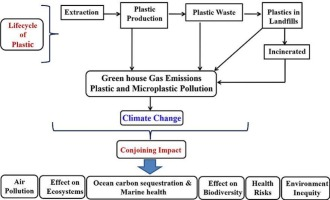
Source: Contribution of plastic and microplastic to global climate change and their conjoining impacts on the environment

These minuscule particles infiltrate every corner of the globe, from the deepest ocean trenches to the highest mountains. They contaminate our water, air, and food, posing a significant risk to both wildlife and humans. Microplastics not only release potent greenhouse gases as they break down but also have the potential to inhibit one of the world’s most vital carbon sinks, preventing the sequestration of planet-warming carbon molecules into the seafloor.

Plastic pollution not only harms our environment directly but also amplifies climate change, forming a dangerous feedback loop. Microplastics are an invisible climate threat at the utmost.

Plastic Alters Ecosystem Dynamics

Plastics don’t merely invade ecosystems; they alter the dynamics of soil and marine ecosystems, causing a cascade of effects. They change physicochemical parameters in the soil, impacting crucial faunal components and microbial populations. In marine environments, the ingestion of microplastics by pelagic species disrupts their natural behaviors. It exposes them to elevated levels of toxic substances.

Furthermore, these plastic particles act as vectors for toxic chemicals and harmful microorganisms, infiltrating various ecosystems and causing shifts in biodiversity and ecological behaviors.
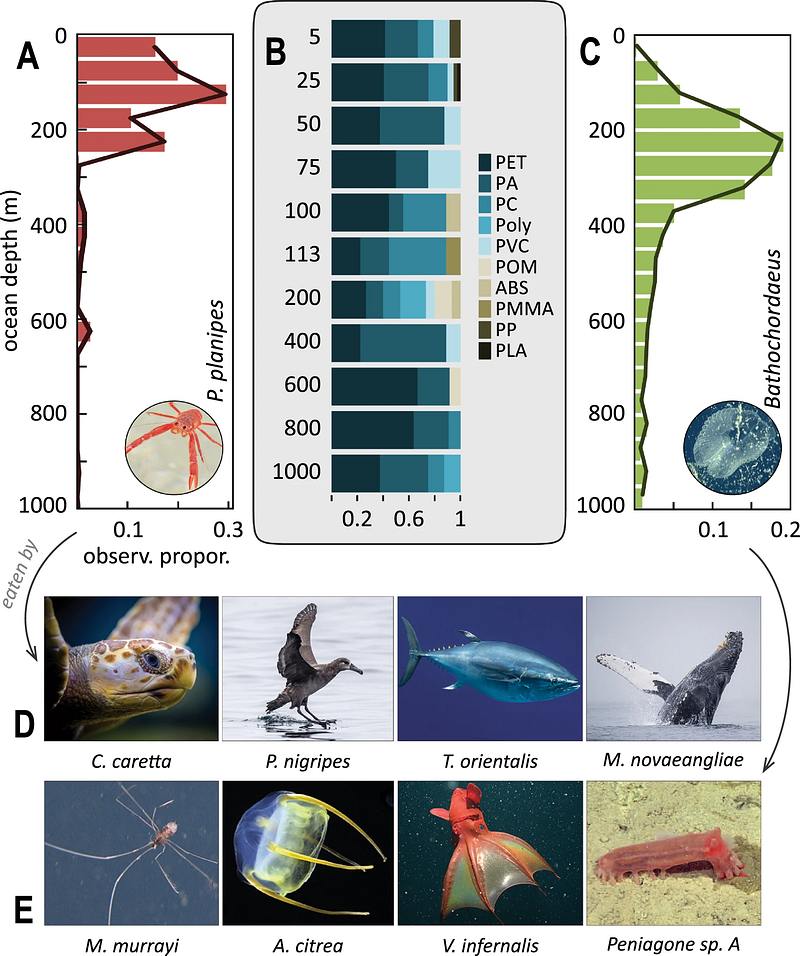
Ingested microplastics are transported into marine food webs by particle feeders. (Source: The vertical distribution and biological transport of marine microplastics across the epipelagic and mesopelagic water column)

The Blue Oceans

The escalating presence of plastic waste in water bodies has emerged as a global concern, encompassing critical issues that include climate change, global warming, ocean acidification, and loss of marine biodiversity.

Notably, a study highlights that hydrophobic microplastics in aquatic habitats serve as attachment points for various harmful microorganisms, expediting the formation of biofilms and introducing the risk of microbial infections into marine ecosystems. This is called the plastisphere, which comprises the microbial community on plastic debris.

Beyond the immediate implications for marine health, the biofilm-coated microplastics experience a loss of hydrophobicity and altered floatation kinetics, causing them to sink to the ocean’s depths. This significant sinking ability adversely affects the distribution of organic carbon in aquatic ecosystems, ultimately disrupting the ocean’s carbon stock.

The Biological Carbon Pump: A Disrupted Climate Solution

Oceans are one of the primary natural carbon dioxide sinks, vital in mitigating atmospheric carbon dioxide levels. Phytoplankton and zooplankton are the most important producers and consumers of the ocean. Consequently, any perturbation in their carbon dioxide sequestration can lead to a detrimental impact on the global carbon cycle.
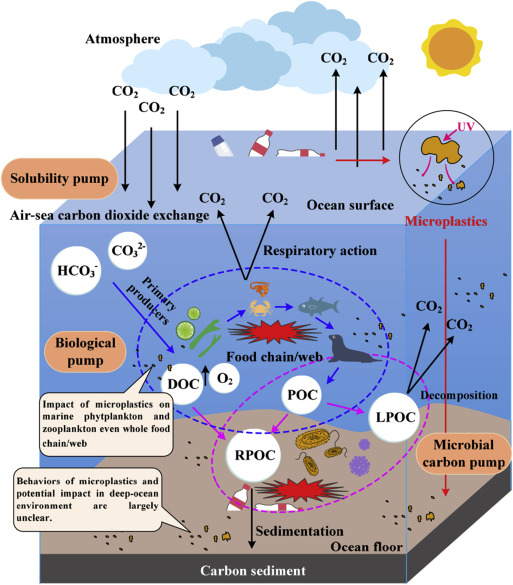
Source: Can microplastics pose a threat to ocean carbon sequestration?

Phytoplankton aren’t just microscopic plants that feed whales; they are instrumental in sequestering carbon dioxide by utilizing water and sunlight to generate oxygen and organic matter. In doing so, they contribute at least 50 percent of all oxygen to our atmosphere and transfer 10 gigatons of CO2, an estimated 40% of all CO2 emissions, into the deep ocean yearly. To put things in perspective, this is equivalent to the amount of CO2 captured by 1.70 trillion trees — four Amazon forests’ worth — each year.

Marine biota heavily relies on these phytoplanktons as a source of food. However, when these phytoplanktons ingest plastic fragments, they reduce their organic carbon consumption, disturbing the “biological carbon pump” within marine ecosystems. This surge in carbon within marine bodies leads to ocean acidification. Notably, research indicates that the rate of photosynthesis in marine phytoplankton after ingesting microplastics has been reduced by approximately 45%. Moreover, ingestion of nanoplastics by green algal species, such as Scenedesmus and Chlorella, has decreased chlorophyll A content and increased active oxygen formation in cells.

Similarly, zooplankton, critical for regulating carbon concentrations in water bodies, suffer from reduced carbon consumption due to microplastic ingestion. Microplastics also impede the sinking rate of zooplankton’s sinking fecal pellets, extending the time they drift through the water and making them more susceptible to breakage and consumption by other organisms. This disruption significantly reduces the chances of carbon reaching the seafloor for permanent storage.

Smaller microplastics are particularly susceptible to ingestion by marine organisms, leading to inflammation of the intestinal cavities. After ingesting microplastics, marine organisms exhibit changes in behavior, reduced appetite, oxidative stress, and fertility issues. An illustrative study has even suggested that the presence of microplastics in water bodies disrupts the ability of hermit crabs to choose shells, affecting their fundamental behavior of shell swapping.

Bottom line — Microplastics in the ocean have several significant impacts: 1) they can disrupt phytoplankton photosynthesis and growth; 2) pose toxicity to zooplankton, disrupting their development and reproduction; 3) they interfere with the marine biological pump and affect the ocean’s carbon stock 4) affect biodiversity by ingestion.
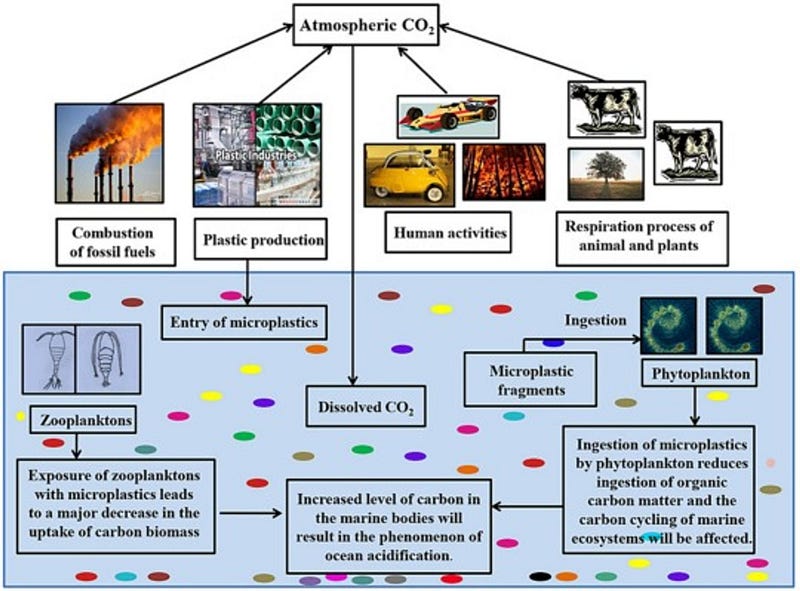
Effect of plastic production and corresponding CO2 emission on the marine ecosystem (Source: Contribution of plastic and microplastic to global climate change and their conjoining impacts on the environment)

The White Polar Regions

Despite their small size, microplastics have found their way to extreme environments, including Polar Regions. Their presence is attributed to various factors, including atmospheric transport, wind patterns, and precipitation. Snow, for instance, captures these tiny plastic particles during snowfall, as evidenced by the discovery of microplastics in snow samples from Greenland and Svalbard.

The persistence of microplastics in these extreme ecosystems is a significant threat, given their low genetic variation and vulnerability to climatic changes. Polar regions, typically considered untouched environments, are facing dramatic changes, from glacial retreat to rising sea levels. These changes, in turn, are affecting biodiversity, altering population distribution, phenology, and ecosystem composition and function.

Because microplastics are infiltrating sea ice and sediments in these vulnerable regions, not only contaminating but also reducing snow albedo, accelerating melting, and further compromising the delicate balance of these environments.
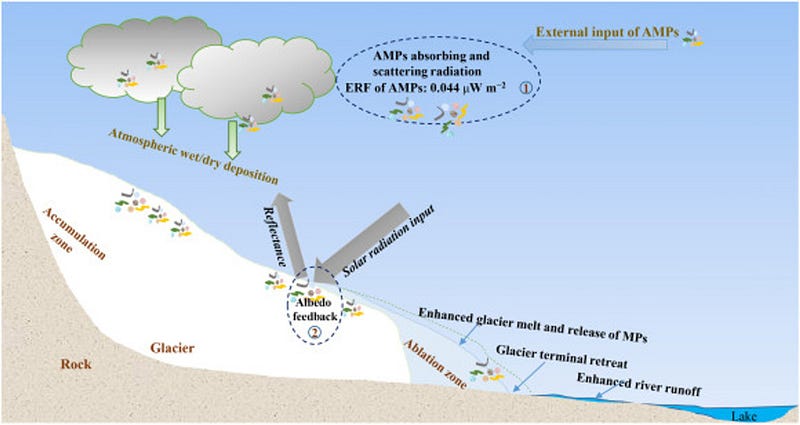
Sketch map of airborne microplastics (AMPs) transported to the glacier and potential albedos feedbacks (Source: Microplastics have light-absorbing ability to enhance cryospheric melting)

Ripple Effects on Arctic and Antarctic Species

The decline in sea ice due to rising temperatures reduces ice algae, a vital nutrient source in icy conditions. Zooplankton, which feeds on ice algae, sees a decline, affecting Arctic cod. As Arctic cod populations dwindle, predators higher up the food chain, like polar bears, face the brunt of this ecological imbalance.

The equation is easy:

Less zooplankton = less Arctic cod = less polar bears = less carbon capture

In a positive feedback loop, whales eat krill. After digestion, the fecal plumes act as a fertilizer for phytoplankton. Krill then eats the phytoplankton. Moreover, whale movements — especially when diving — tend to push nutrients from the bottom of the ocean to the surface, where they feed phytoplankton and other marine flora, fish, and other smaller animals. But if microplastics disrupt the phytoplankton cycle, there is less krill, then less food for whales.

The equation is much the same:

Less phytoplankton = less krill = less whales = less carbon capture

Air and The Green Earth

Apart from its evident effect on marine life, plastics in soil alter fundamental parameters, affecting vital nutrient cycles and food production. This disruption can lead to soil erosion and forest fires, ultimately causing a loss of land biodiversity.

Tiny plastic particles in the air hamper pollination by mimicking pollen size and obstructing pollen grains. Mainly, this issue is pressing in tropical regions, rich in endemic plant species. The persistence of these plastic fragments in such areas endangers diverse plant life, especially the rare and endemic species, threatening their seed banks and overall biodiversity.

In the terrestrial system, one crucial component affected by microplastics is the soil, which plays a pivotal role in maintaining nutrient cycles and serving as a foundation for food and feed production. Soil ecosystems receive substantial amounts of plastic debris from various sources, including soil compost, effluent irrigation, plastic mulching, and biosolids. This influx of plastic alters fundamental soil characteristics and triggers emissions of N2O and CO2, ultimately diminishing soil fertility. Furthermore, these plastic fragments bring about shifts in soil temperature conditions and modify soil decomposition rates, potentially jeopardizing soil ecosystem services.

The changes in physicochemical soil parameters have far-reaching consequences, notably in forested areas. They can result in soil erosion and forest fires, ultimately leading to biodiversity loss. Soil temperature, alongside other physicochemical factors, plays a pivotal role in supporting micro and macro soil fauna. Soil temperature conditions influence egg hatching and the determination of hatchling sexes. The persistent presence of plastic in soil ecosystems significantly impacts the population dynamics and the survival of microbial fauna.

The Pollutant and the Polluted

Plastic production is expected to double in the next 25 years. Oceans will be filled with plastics by 2050. Over 700 marine species have been adversely affected due to marine plastic pollution and the “plastisphere.” Soil is also changing, experiencing physicochemical modifications and exacerbated droughts and fires. The air is transporting all these microplastics to the remotest regions into the human food chain.

The threat posed by plastics has obvious and predictable repercussions for human health. Microplastics have now infiltrated our food chain, showing up in meat, table salt, and even human breast milk. When ingested or inhaled, these minute particles pose serious health risks, including inflammation, cardiovascular diseases, and neurodegenerative disorders.

The toxicity of plastics is further exacerbated by the chemicals they harbor, such as phthalates, lead, and brominated flame retardants. These compounds disrupt endocrine systems, causing reproductive disorders and developmental issues. Shockingly, even unborn fetuses are not immune, with plastic particles detected in the placentas of pregnant women.

If it wasn’t clear enough yet, the plastic menace we are producing has environmental and, thus, health consequences at every stage of its lifecycle, emitting greenhouse gases and exacerbating global warming. It all starts with its production:

  1. Plastics, derived from petroleum, rely on oil and gas extraction materials. In 2019, plastics generated 1.8 billion tonnes of greenhouse gas emissions — 3.4% of global emissions — 90% from their production and conversion from fossil fuels. By 2060, emissions are set to more than double, reaching 4.3 billion tonnes of GHG emissions.
  2. Leakage of methane, ethane, and other gases at fracking sites contributes to around 33 million metric tons of greenhouse gases annually, akin to Serbia’s emission in 2021.
  3. Pipelines ferrying fracked gas to processing plants leak more greenhouse gases.
  4. Ethane “cracker” plants that turn fracked gas into plastic are major greenhouse gas emitters.
  5. Plastic production not only warms the planet but also releases harmful chemicals into the air, water, and soil.
  6. Plastic insulation’s blowing agents, like hydrofluorocarbons, emit a staggering 24.5 million metric tons of greenhouse gases annually. Some agents can trap heat over 1,400 times more effectively than CO2.
  7. Hydrofluorocarbons from plastic insulation can leach into the air for decades, persisting even after the insulation is landfilled.
  8. Improper plastic disposal, mainly through burning due to inadequate recycling, releases nearly 13 million metric tons of greenhouse gases annually, equivalent to the emissions of 800,000 Americans in 2019.
  9. “Chemical recycling” facilities often convert discarded plastic back into fossil fuels for burning.
  10. Every year, an estimated 14 million tons of plastic waste enter our oceans, wreaking havoc on marine life and ecosystems and emitting potent greenhouse gases like methane and ethane when degraded by sun and water.
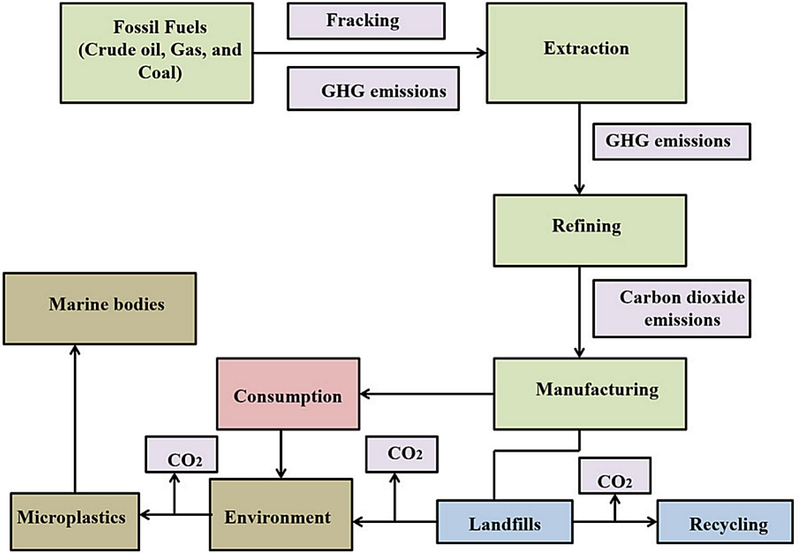
Overview of the lifecycle of plastic and GHG emission. (Source: Microplastics have light-absorbing ability to enhance cryospheric melting)

So, how long will we keep denying our environmental impacts, our deeply flawed systems and values, and the self-inflicted climate crisis? Will we keep feeding our embryonic babies, hermit crabs, phytoplankton, and everything in between with toxic plastics? All while catastrophes pile one on top of the other to the point where we seem to live in a constant loop of floods, droughts, hurricanes, and wildfires?

The cost of climate inaction is exorbitant. Recent groundbreaking research, just published by the British Institute of Actuaries, delivers a stark conclusion: half of our economies could be destroyed by 2070. 50% of GDP. Gone. Actuaries have no incentive to exaggerate; their essence lies in precision and accuracy. They calculate risk, the backbone of the insurance industry. On the contrary, even a modest addition to annual global infrastructure investments could significantly limit temperature increases.

What I will ask for now is hard, but it could be game-changing: assess your consumption patterns, take notice of all the plastic you devour, and re-evaluate. Then, go spread the word: that’s when we start making a positive impact. Because if we stay arms-crossed, expecting somebody else to do it, it will be too late.

Thank you for your thorough reading and support! If you crave more insights into climate change, scientific progress, and geopolitics with a Patagonian twist, subscribe to the newsletter Antarctic Sapiens and dive into thought-provoking content weekly.

Climate Change
Plastic
Science
Technology
Pollution
Recommended from ReadMedium