
Medieval History
The Plague That Made People Dance Themselves to Death
Now dancing doesn't seem that appealing, does it?
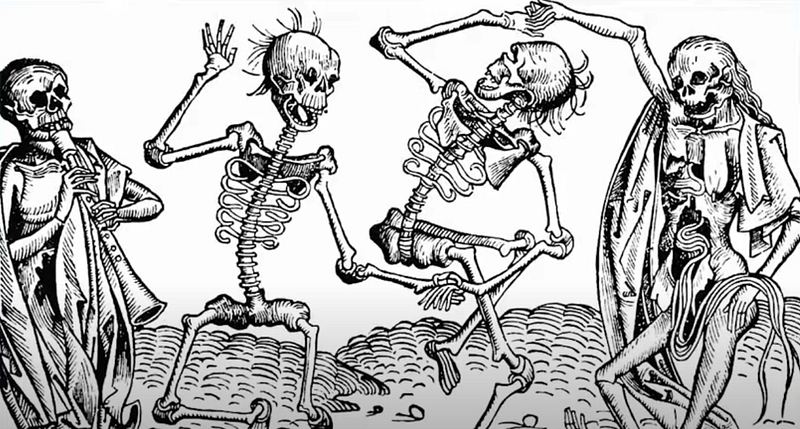
Medieval Europe had no shortages of super-deadly disease outbreaks that could wipe out a chunk of the population without much of an effort but none of them were quite as fun as the bizarre case of Frau Troffea and the dancing plague that had upwards of 400 people compulsively dancing in the streets some even to their deaths.
This story will examine the plague that made people dance themselves to death.
1. A German housewife was the first to start dancing
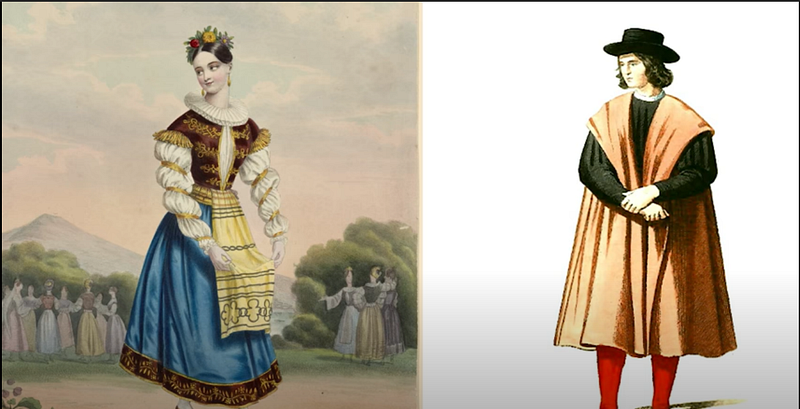
Our story begins on a hot July day in 1518 when German housewife Frau Troffea stepped out of her home in Strasburg and starting to get down to a boogie that no one else could hear.
She danced in the streets of her small town all day, to the embarrassment of her husband who was not himself equally compelled to dancing in any way. Frau stopped dancing long enough for a few hours of restless sleep before waking the next day and tapping her toes bloody again.
A crowd began to form around the seemingly insane woman dancing do absolutely nothing with bruised and bloody feet. What a fun little Street performance the villagers must have thought as this poor woman danced herself to very possible death.
Soon however she wasn’t alone. Frau formed a whole dance troupe with roughly 30 others catching the jitterbug and joining her in a spontaneous dance-off.
2. 400 people danced non-stop in Strasbourg
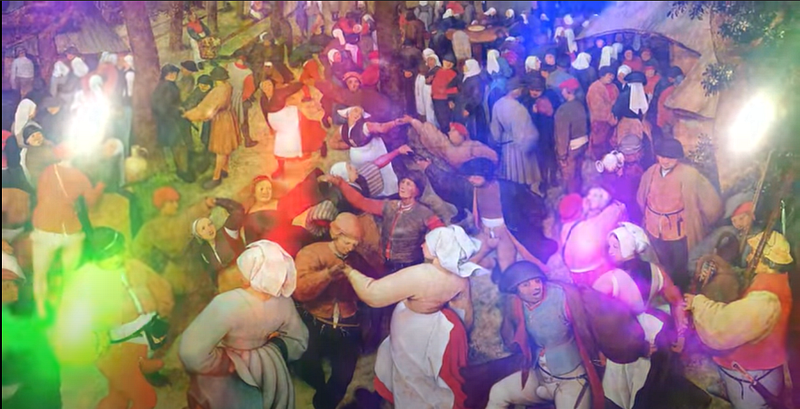
Frau soon had a full marching band worth of people dancing with her. The dancing mania as it was eventually labeled spread to more people in Strasbourg with estimates as high as 400 people involuntarily joining her dance crew.
They quickly grew into a full-grown crisis that the City Council had no clue how to manage. They don’t teach you how to handle spontaneous raves and crisis management courses at Business School.
The only clear thing they could agree on was these groovy kids were not having a groovy time. Dancers were in obvious pain screaming in agony and begging for mercy from whatever bizarre affliction they were suffering from. As the summer stretched on the temperatures rose as many as 15 people a day for dying from dancing in the streets.
3. Physicians diagnosed the dancers with ‘’Hot Blood’’
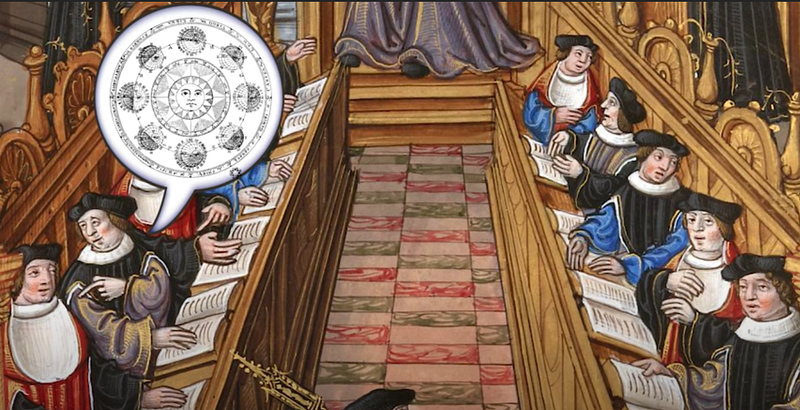
Fresh out of ideas on how to handle this makeshift prom themselves, the City Council consulted with local physicians to diagnose the problem and shut it down for good. After ruling out the standard astrological causes and supernatural causes, the doctor diagnosed the exhausted dancing maniacs with the probable case of hot blood, which sounds like a diagnosis from the band foreigner.
But really, the theory was that hot blood was a problem with the balance in a person's humor in the case of hot blood doctors believe the brain would overheat which in turn would cause madness.
The typical remedy, it’s the 1500s. So if you guessed bloodletting, you guessed right. However, given these victims' specific inability to voluntarily stop moving physically removing any blood, regardless of temperature wasn’t a feasible course to take.
So unlike the town in footloose, they prescribed even more dancing. They hired musicians to get the crowd hyped and brought in extras to mix up the energy of this Lane party, hoping the burning out the dancers, but to no avail. This cure, like a poorly chaperone prom, was a failure and actually exasperated the problem.
4. The party atmosphere backfired
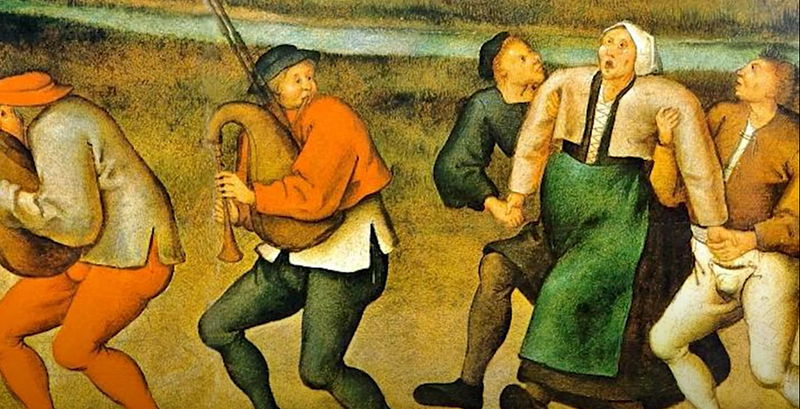
As the exhausted dancers were beginning to stumble and slow down, the musicians didn’t think to play the slow jams and cool the room off. Instead, they speed up the tempo, causing the townspeople to move faster with the music. You can’t play a banger and not expect the crowd to react, DJ medieval guy.
Not only did these party beats fail to stop the sporadic dancing, but it also attracted volunteer booty shakers to the square as passer-bys joined in on what was being misperceived as fun.
The City Council realized that having this giant block party to burn out the afflicted wasn’t the best solution to this problem. Clearly, these poor dancing Queens were not suffering from hot blood. No, no, it was obviously a curse on the city, sent as a warning to repent for their sins or suffer the consequences.
5. The city cracked down on gambling and prostitution
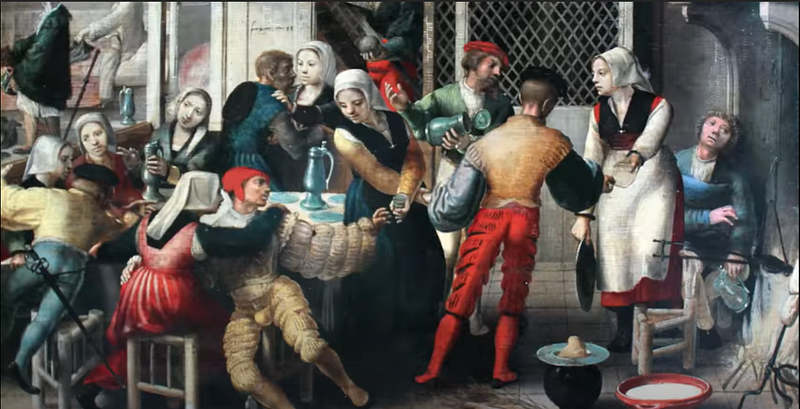
Now, acting as the town in Footloose, the police of Medieval Europe liked to run a pretty tight ship to keep the sinners at bay. If this dancing mania was a curse, sin would have to reign within the walls of Strasbourg.
Gambling houses, gone. Brothels, please not in this city. We hear you loud and clear Saints who have cursed our town with dance as a punishment for gambling and prostitution.
The city also gathered up, ah, the loose people and banished them from the city. 1518 was a poor time to have a bad reputation — in Strasbourg. They even tried to send gifts to the Saint by donating a 100-pound candle to the cathedral. One candle just didn’t cut it and the dancing plague kept on hustling.
6. The city even banned dancing and music
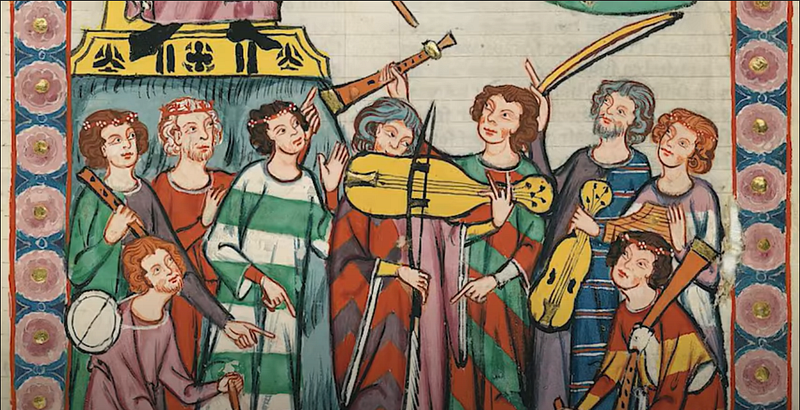
You knew it was coming. They went full footloose. The town took the drastic step of outlawing dance, tacking on a fine of 30 shillings for anyone caught moving their hips to a beat.
They also banned music, with the exception of string music for weddings. ‘’But they’re on their conscience, not to use tambourines and drums,’’ the municipal archive reported.
Drums were the most dangerous instrument since they allegedly triggered the strange epidemic. Please, everybody knows the most dangerous instruments sax. It oozes sexiness, really riles up the Saints.
In spite of all of Strasburg’s best efforts and bad gifts, the epidemic continued. But would you believe this was not the first dancing mania that struck Europe?
7. Dancing mania strikes Europe
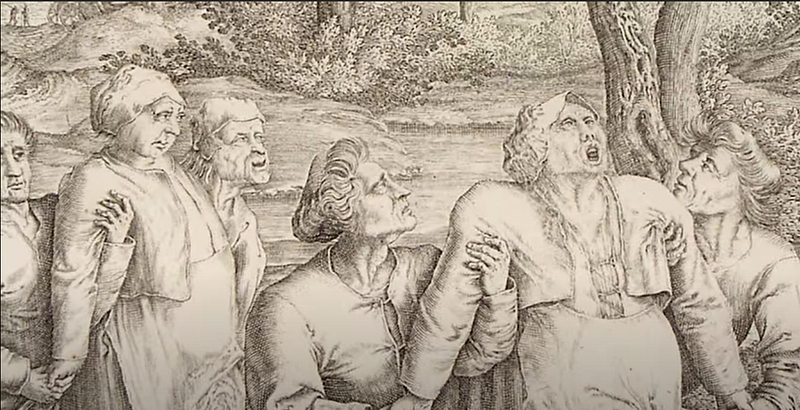
In 1374, a dancing outbreak hit the city of Aachen and quickly spread across the Rhine Valley. This was less of a free-for-all mosh pit of wild dancing and more of a hands-across-America-situation.
Dancers afflicted held hands in a circle and danced for hours together, in wild delirium, until at length they fell to the ground in state exhaustion. Sounds like the city of Aachen was just collectively tripping balls.
Aachen officials disagreed. they chalk this up to your standard demonic possession exorcists were brought in to bathe the dance circles with holy water while shouting incantations in the faces of the possessed. Honestly, it sounds like Aachen just didn’t know what to do. But, of course, when all else fails, you can always blame the women.
8. Paracelsus blamed the women
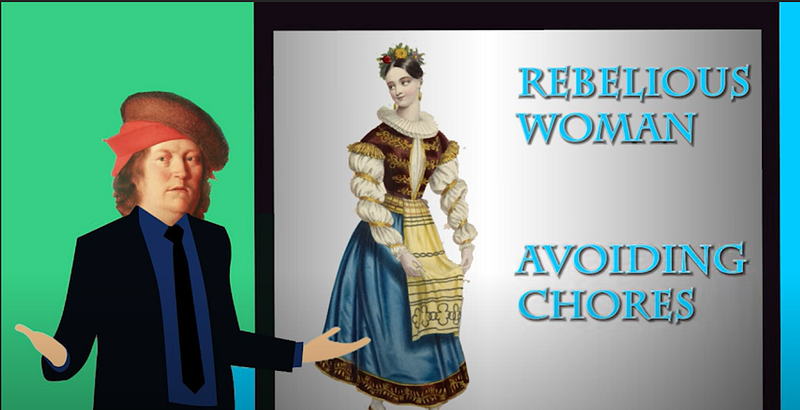
In 1526, around 10 years after the strange dancing phenomena had tired itself out, renaissance physician Paracelsus visited Strasburg for a postmortem, and to diagnose the F in their, what the fuck situation.
According to Paracelsus forced natural dancing was an involuntary physical response, like a reflex that could be caused if certain parts of the body were manipulated. But because this was 1526, for good measure he also blamed the women. He scrutinized the role of our hero Frau Troffea and saw her as a rebellious woman, who set off like dancing mania in order to avoid doing a house chore or two.
Paracelsus claimed, right before she started dancing, her husband had asked her to do something she didn’t want to do. This would make sense as a woman. And women specifically are famously known to dancing the night, feat bleeding, in order to avoid a little housework. It sounds a little presumptuous of Paracelsus to assume the task he asked her to do had not been to start dancing and don't stop till I say so.
9. The dancers turned to Saint Vitus to cure them
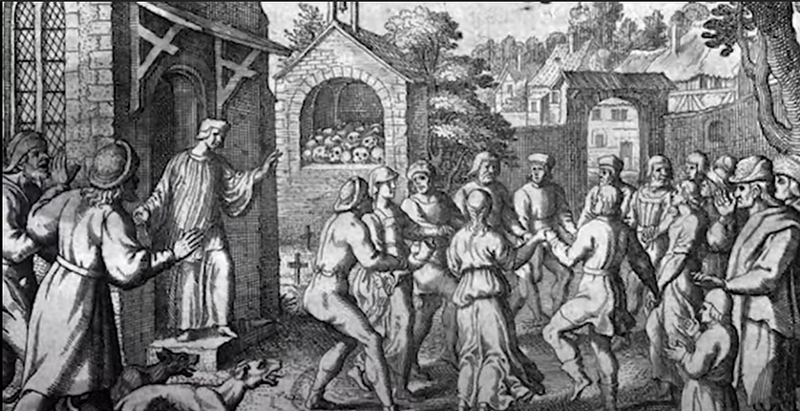
As dancers continued to wave their hands in the air like they very, very much did not care, the city continued to search for a cure for these poor souls, AT one point turning to the medieval cure-all, pray to Saint Vitus, who had been martyred as a child in the year 303 on the orders of emperors Diocletian and Maximilian.
His tormentors tossed him into a cauldron of boiling lead and tar. And tossed this lead and tar marinated child to a lion. So cruel. And isn't the lion overkill at that point?
Well, legend has it Vitus emerged unharmed from the cauldron. And the hungry Lion simply licked Vitus’s yummy metallic-scented hands. He was OK. And he gained a lion friend. That guy earned his sainthood.
Saint Vitus had a reputation for healing illnesses, particularly one with trembling limbs. So you could see why the city of Strasburg prayed to this guy for an assist.
10. The dancers were carted in wagons to a shrine
Running out of ideas for how to stop this dancing plague, the city gave an unconventional method a shot. Taking a big swing, they piled all of those afflicted with dancing fever onto wagons and carted them up a mountain to St Vitus, a shrine to the Saint.
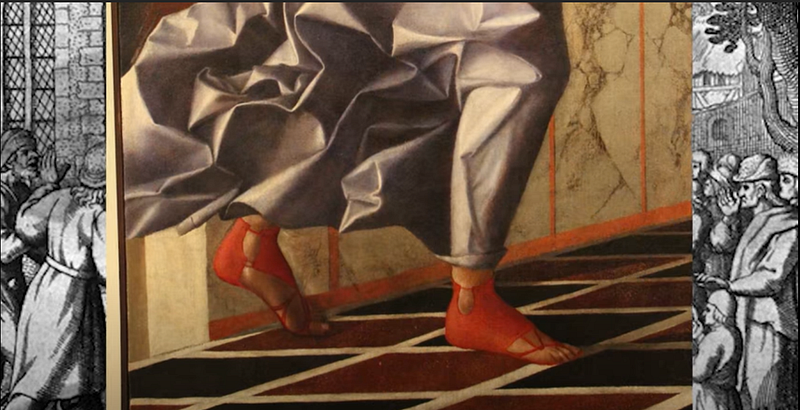
Dancers continued to fall on the altar. So the priest gave a mass over them and handed out little crosses and red shoes, which had been blessed with holy oil on both the tops and the souls. The red holy-soaked shoes apparently worked like a charm. The affliction seemed to break. And the dancing party slowly came to an end.
Most of the dancers regained control of their bodies. The time of the dancing mania soon became known as St Vitus’s dance, either because the Saint had cured the dancers or caused the whole thing.
11. What caused the strange dancing outbreak?
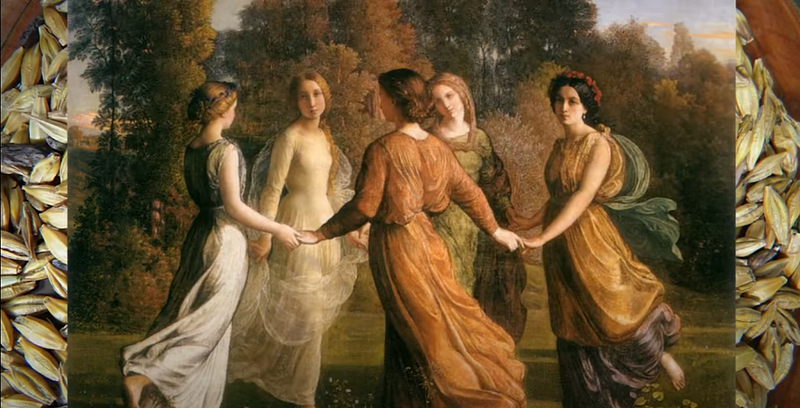
Modern experts don’t all agree on what exactly caused the 1518 outbreak. It’s been suggested by some that a possible grain poisoning which is known to cause convulsions, could be the culprit. That would account for the tight choreography, which was described less as random convulsing and more like coordinated movement.
Others suggested a group case of epilepsy or other medical conditions which wouldn’t explain, of course, how the mania became contagious since epilepsy is not something you can catch. And if your mind was floating towards a weird dance cult, you are not alone.
One theory out there is this was all the work of the secret members of a heretical cult that emerged every decade to revel in public. This, of course, fails to connect other dancing seemed to spread amongst the people since it was clear the dancers were in complete agony, and many died.
And at a time when Europe was in heightened alertness for suspected heretic cult antics, it’s unlikely this one simply slipped under the radar. The likely cause of the dance party that couldn’t stop, wouldn’t stop, was a classic case of mass hysteria.
12. Roots of mass hysteria
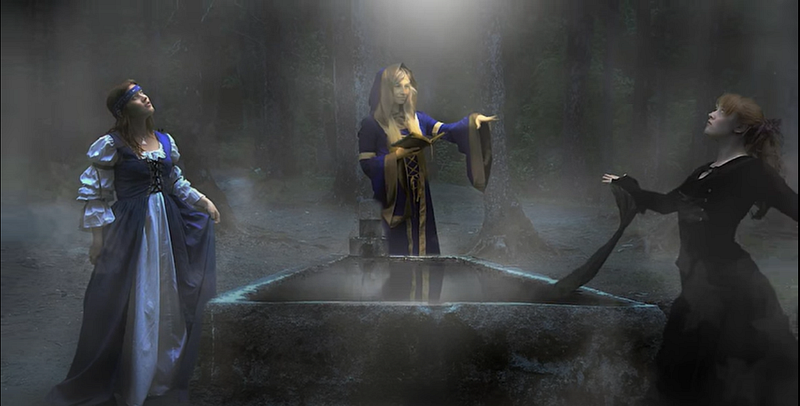
To say things in Strasburg in 1518 had been pretty bleak would be an understatement. The city suffered from not one, not two, but four serious famines between 1492 and 1511. In 1516, food prices shot way up. And in 1517, a fifth famine killed countless people.
One chronicler labeled it ‘’the bad year.’’ And sometimes a nickname really fits. In 1518, smallpox and leprosy were on the rise. And the orphanage was overpacked with at least 300 new orphans. Fear of being possessed drove people insane. And the city was ripe for an outbreak of mass hysteria.
Superstitious beliefs led people to believe their minds and bodies were being controlled by force so powerful, the bodies were no longer their own to control. They were convinced they were victims of an unseen power which makes sense considering the ultimate cure that stop dancing was a visit to the shrine of Saint Vitus and a new pair of holy-bless shoes.
It checks all the mass hysteria boxes and explains how it began, how it spread, and how it was ultimately defeated. That is, of course, until the guy started a little music festival in the desert of California.
In closing
But that my friends, is enough of your time. What do you think of the dancing plague? good time or great time? If you think, we all are kind of dancing to the tunes of a single virus, isn’t it?


