
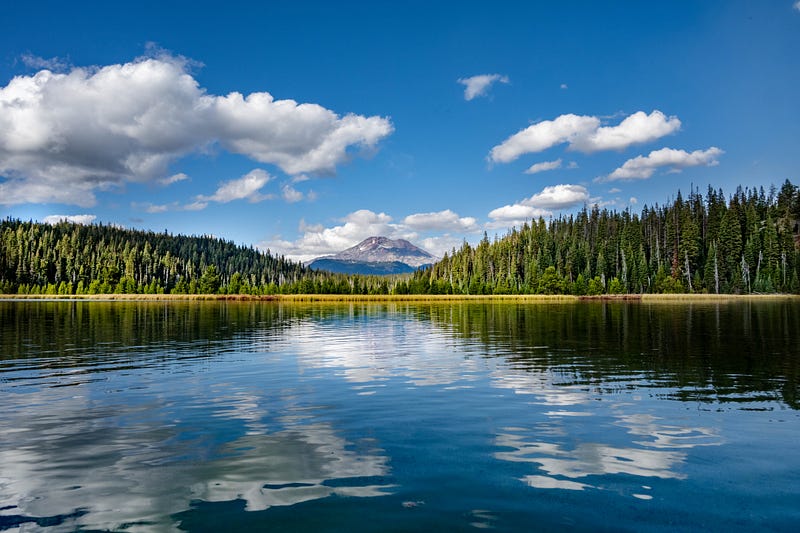
Photography, Travel, Poetry, Life
The Place Without Names
Birthday reflections while kayaking in Bend, Oregon
I’ve just returned from a venture to Bend, Oregon, where we celebrated my birthday. I find birthdays to be annual occasions to dive inside of myself and really evaluate what is working in my life and what is not, and also to dive outside of myself and into the totality of being. And surrounded by nature’s glories and the evidence of her moods and seasons, I always seem to be able to feel the pulsing rhythm of the universe and the ephemerality of the moment with just a little bit more ease.
The older I get, the more I feel the press of time and the desire to immerse myself in the projects and relationships that really matter. We all are drawn into the dramas of life. It is unavoidable. But, with every year, I have been trying harder to be more selective about which dramas I choose to participate in. And, more importantly, I’ve been more focused on immersing myself into the experiences that move me.
It is becoming increasingly apparent that there are only so many moments in life, and I am becoming increasingly unwilling to waste them.
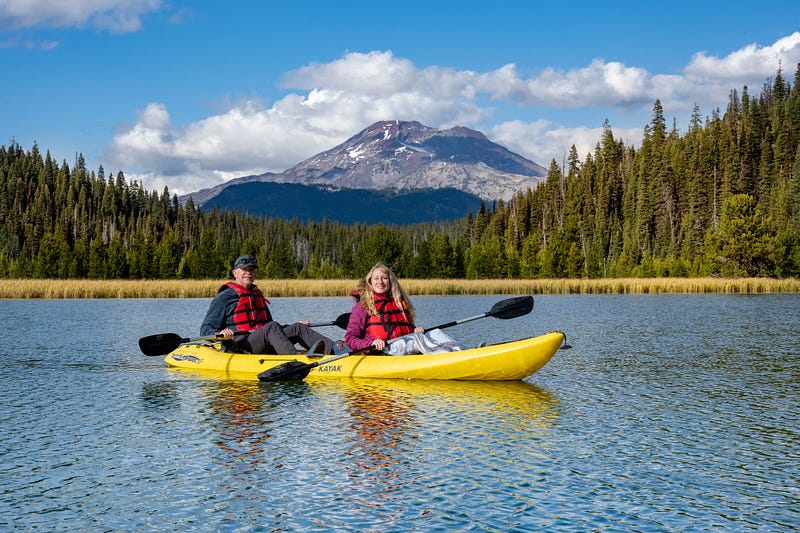
Dipping my paddle into the calm waters of Hosmer Lake, near Bend, Oregon, last week, on my fifty-fifth birthday, I began to feel the weight of the world slip away, second by second, breath by breath, stroke by stroke. All around us, the moldering of autumn blanketed the forest floor where it peeked out in sun-warmed patches from beneath the shadows of the pines. And the summer’s decay had also begun to choke the dry tule reeds, which were nodding over into the shallows at the edge of the lake.
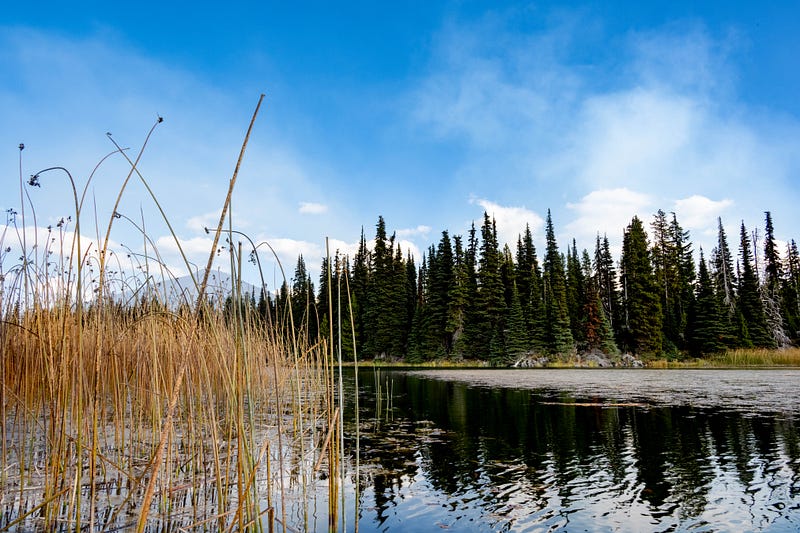
Last year, about this time, I wrote this poem about the Moldering Earth:
You can smell it on the air, the moldering of sunlight and fire, summer’s desire, melting into the muck of the earth, that dark, fertile layer which births next year’s growth.
Within that pungent carpet, redolent of ammonia and decay, lies the secret of life.
Without death there is no birth.
Without darkness, there is no light.
Without strife, there is no joy.
There is no pleasure without pain, no burst of spangled sunlight until you’ve lain stretched out in a wide meadow, your skin peppered by rain.
Do not disdain the decay, the fallowing, the lay of golden leaves, so recently green and shuddering with life in the breath of spring’s soft breezes.
Breathe it in, that moldering, deep into your lungs, and know that the ending is the beginning.
A new earth cycle has just begun.
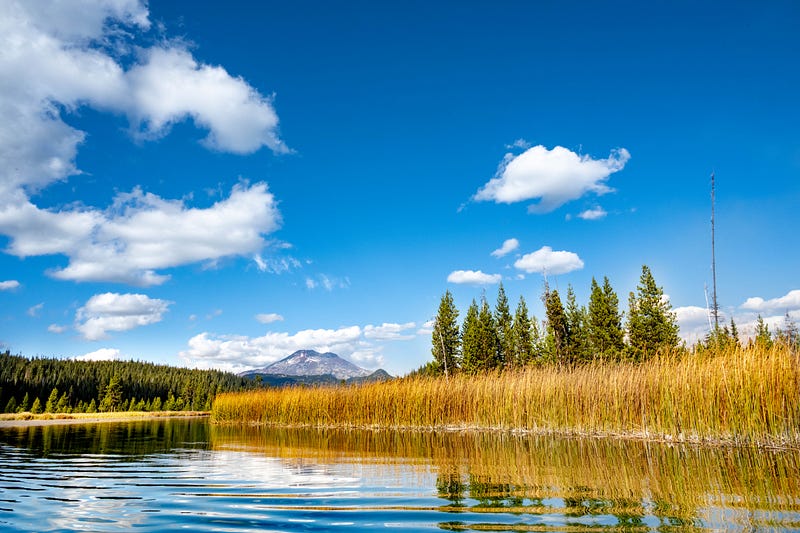
People, like plants, also go through periods of growth and periods of dormancy, where they draw their nutrients in and germinate new possibilities. For the last couple of years, I have felt very much like the nodding tule plants at the lake’s edge, or like the oak, whose leaves now dampen the sound of my boots on the forest floor in these days when the shadows are growing longer — I’ve been called to return to the source and replenish myself.
So, I do not disdain the fallowing. I have breathed it in. I have let it molder within my soul.
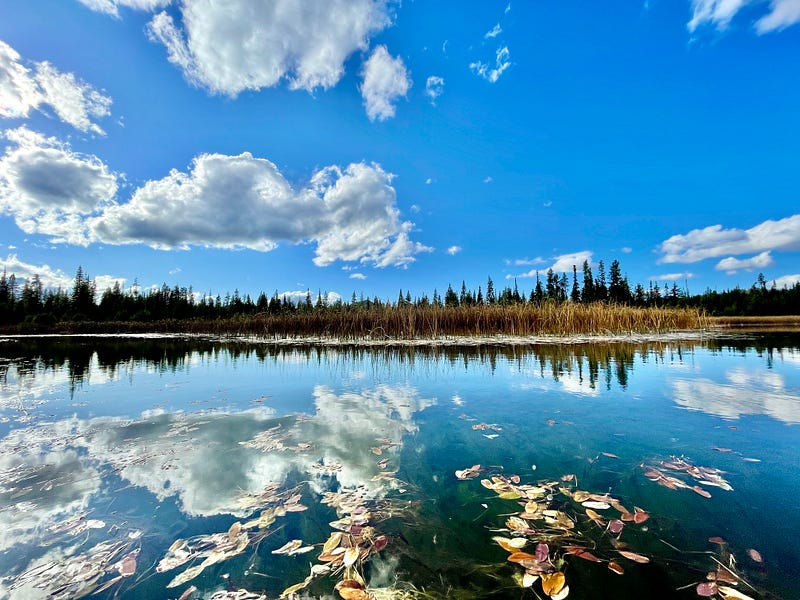
Mid-paddle, I glanced to my left, towards where the flaming sumac joined the slant of the sun at the water’s edge. Between me and the shoreline, I saw nothing but clouds.
Do you know that little snort that happens in the back of your nose when you are so surprised by the beauty of the moment that you just can’t breathe?
The ancient Kashmiri Shaiva text, the Spanda Karika, considers moments like these to be portals to another state of consciousness, a state where we can sense the pulsation of the universe within every cell of our being. You might call it awe.
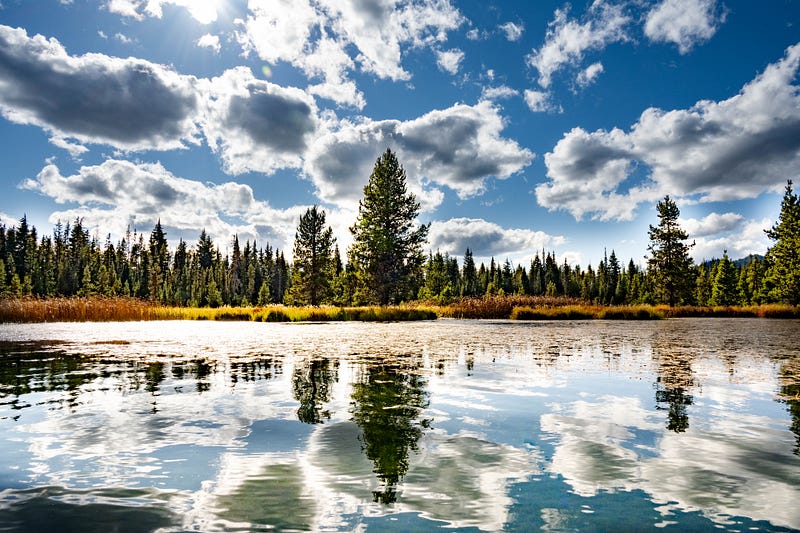
I don’t really have a name for it, that feeling. But I think that it is where all of inspiration comes from — those places without names. As writers, it is our job to visit those places and to find a way to describe the un-nameable to others.
I don’t have any regrets for the moments which form the beads of the necklace of my past. They have strung me along to the point in which I find myself today. I would not be the writer I want to be in the next segment of my life without the years of teaching yoga and of delving deeply into ancient Eastern teachings like the Upaniṣads, and without experiencing what it is like to be utterly rejected as a step-mother by one child and loved by another, or to be cherished as a lover and a wife.
When I was younger, I always had the sense that I needed to wait until I was a bit older to have something of value to write about. I’m not sure that a moment which clearly presents itself as “the moment” will ever come.
But I know that this gift of life is as precious as a pearl tucked away in a calcified shell. It takes the time of darkness and dormancy to create form. And it takes the thrumming of the string of the bow to launch that form out into the world.
I think sometimes about Emerson or Thoreau or Whitman, or about my guru, Mary Oliver, each of whom filled volumes with their expressions of awe.
And I also think about John Keats, who died at the age of twenty-five. What a waste of brilliance that was. Or Van Gaugh, who only sold one painting in his life, and died at the age of thirty-eight.
I look again at those waters, and I know. It’s time to dive into those rippling clouds. It is time to snort with awe. And it’s time to re-emerge with some new words, to form some pearls. It’s time to fill some volumes.
Erika Burkhalter is a yogi, neurophilosopher, cat-mom, photographer, and lover of travel and nature, spreading her love and amazement for Mother Earth’s glories, one photo, poem or story at a time. (MS Neuropsychology, MA Yoga Studies).
I hope you enjoyed my photos and musings. You might also like:
Photos and story ©Erika Burkhalter. All rights reserved.


