
The Physics of Hydrogen Fuel Cells
As the world shifts towards cleaner and more sustainable energy solutions, hydrogen fuel cells have emerged as a promising technology with the potential to revolutionize the way we power our vehicles. In previous articles, I looked at how hydrogen is produced, transported, stored, and burned. In this article, I delve into the physics and working principles behind hydrogen fuel cells, highlighting their current applications, the potential for improvement, and their pivotal role in extending the range of electric vehicles.
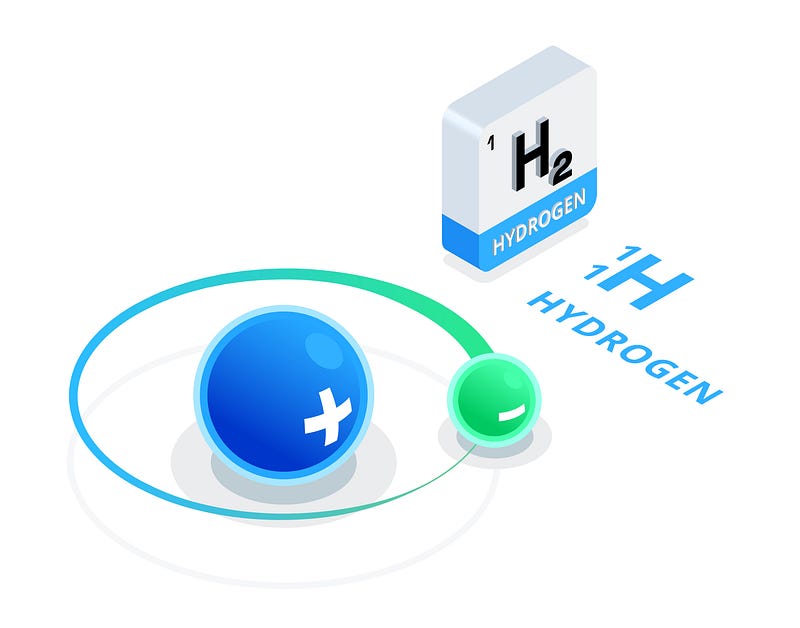
The Physics Behind Hydrogen Fuel Cells
Hydrogen fuel cells operate on the principles of electrochemistry. At their core, they consist of an anode (negative electrode), a cathode (positive electrode), and an electrolyte in between. The most common type of hydrogen fuel cell is the proton exchange membrane fuel cell (PEMFC). The electrolyte in a PEMFC is a proton-conducting polymer membrane.
The commonly used electrolyte material in PEMFCs is a perfluorosulfonic acid polymer, with Nafion being one of the most well-known examples. Nafion is a synthetic polymer that has excellent proton-conducting properties, high chemical stability, and good mechanical strength. It allows protons to move through its structure while repelling electrons, ensuring the efficient flow of electric current and preventing electrical short-circuits within the fuel cell.
The use of a proton-conducting polymer membrane as the electrolyte is a defining feature of PEMFCs and is key to their high energy efficiency and fast response to changes in power demand.
In a PEMFC, hydrogen gas (H2) is introduced at the anode, where it undergoes a crucial reaction:
Anode Reaction: H2 → 2H+ + 2e-
This reaction splits hydrogen molecules into protons (H+) and electrons (e-). The protons travel through the electrolyte, while the electrons are forced to take an external path, creating an electric current. This flow of electrons generates electrical energy.
At the cathode, oxygen gas (O2) is supplied, and the following reaction occurs:
Cathode Reaction: O2 + 4H+ + 4e- → 2H2O
In this reaction, oxygen combines with protons and electrons to form water (H2O). This electrochemical process generates electrical energy, with the only byproduct being water vapor.
The voltage generated by each fuel cell is relatively low, typically around 0.7 volts. To achieve higher voltages, individual fuel cells are stacked together in series. The combination of multiple fuel cells in a stack results in a system that can deliver the required voltage for various applications.
Potential for Improvement
While hydrogen fuel cells offer numerous advantages, such as zero-emission operation and high energy efficiency, there are ongoing efforts to enhance their performance and affordability.
One key area for improvement is the development of more efficient and cost-effective catalysts, which are essential for the electrochemical reactions within the fuel cell. Innovations in catalyst materials, such as platinum group metals and non-precious metal alternatives, aim to reduce costs and increase the longevity of fuel cells. Additionally, advancements in hydrogen storage technologies are crucial to making fuel cell vehicles more practical and competitive. Research is focused on developing high-density hydrogen storage methods, such as solid-state materials and advanced tank designs, to increase the energy density and range of hydrogen fuel cell vehicles.
Advancements in Catalysts
Improving the efficiency of catalysts is central to enhancing fuel cell performance. Research is underway to reduce the reliance on expensive platinum-based catalysts and explore alternatives like transition metal oxides, nitrogen-doped carbon nanotubes, and other innovative materials. These advancements aim to increase the catalytic activity, lower the cost, and extend the operational lifespan of fuel cells.
Hydrogen Storage Technologies
Enhancing hydrogen storage methods is pivotal for the practicality of fuel cell vehicles. Advanced storage materials, such as metal-organic frameworks (MOFs), offer the potential for higher hydrogen storage capacities and safer storage conditions. Additionally, innovations in tank designs, including composite materials and pressure vessel technology, aim to make hydrogen storage more efficient and safer for widespread adoption.
You can find more about hydrogen storage in my previous article The Journey of Hydrogen: Transportation and Storage Solutions
One of the most significant advantages of hydrogen fuel cells lies in their capacity to extend the range of electric vehicles (EVs). While battery electric vehicles (BEVs) have made remarkable strides, they are often constrained by the limitations of energy storage capacity and charging time, which affects their driving range. Hydrogen fuel cell vehicles (FCVs) bridge this gap by combining the benefits of electric propulsion with the rapid refueling and extended range of traditional internal combustion engine vehicles. FCVs can be refueled in a matter of minutes, offering a driving experience similar to gasoline-powered cars. This unique feature not only addresses range anxiety but also presents a compelling solution for long-distance travel and various applications, making hydrogen fuel cells a pivotal player in the evolution of sustainable transportation. As the infrastructure for hydrogen refueling continues to grow, FCVs hold the potential to revolutionize our mobility while contributing to a greener and more sustainable future.
In conclusion, hydrogen fuel cells are poised to be a driving force in the transition to cleaner and more sustainable energy sources. Their physics, based on electrochemical processes, offer a high-efficiency and zero-emission energy solution. With ongoing research and development, hydrogen fuel cells have the potential to further revolutionize the automotive industry by extending the range of electric vehicles, making them a key player in the green energy landscape of tomorrow.
This article is one of a series of articles about the (potential) hydrogen economy. In the previous articles, I outlined how a hydrogen economy could look, how do we make hydrogen, what hydrogen combustion has to offer, and how hydrogen is stored and transported. In the next article I will take a closer look at how green hydrogen really is and how it impacts the greenhouse effect.


