
The Philosophy of The Last Kingdom
More than Fate is Inexorable
The philosophy and worldview of Uhtred of Bebbanburg has remained consistent, despite becoming a thirteen book series and an acclaimed Netflix series. Bernard Cornwell’s The Last Kingdom series, offers a near barbaric perspective which is as sophisticated as anyone’s today.
The world of Uhtred is one with thatch roofs, swords, shields, war and war lords. At the beginning of series, he is kidnapped after his father’s death, held captive by Danes and adopted as one of the Northmen. As an adult, he finds himself oath sworn to Alfred of Wessex, a king he respects but hates, and fighting the Danes who he loves. It is a world filled with conflict, of both a personal and visceral nature.
Through Uhtred’s life, we witness the battles and divisions which create the kingdom which would become “England.” The kingdom of the West Saxons starts as the Last Kingdom of the English speaking people, assaulted by the invading Danes. As we reach the conclusion, Wessex has become the eminent power of the isle of Britain, with only Uhtred’s Northumbria as the Last Kingdom outside of their control.
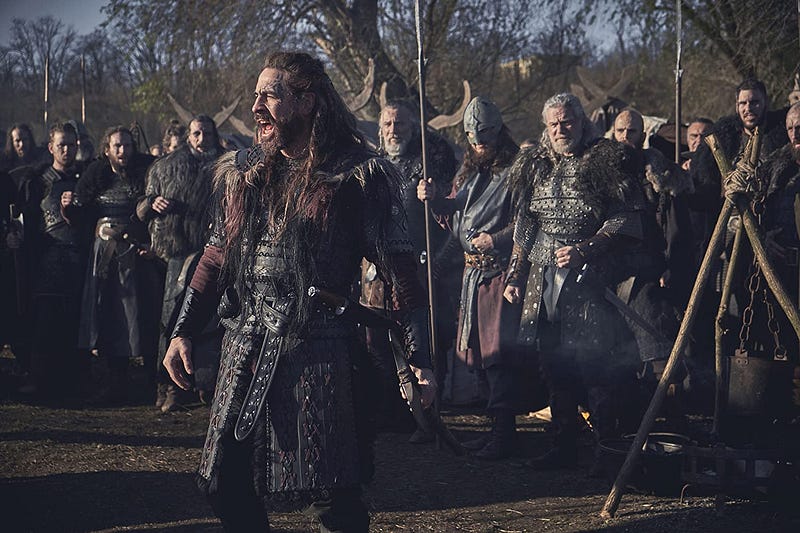
There are three themes which are repeatedly brought up in this saga, themes which are explicitly relate to the life of the warrior in an ancient kingdom, but also implicitly apply to those of us in modernity. I may not use a battle ax in my daily employment, but it’s not for want of trying. The battles we face today are not of shield walls for scraps of land, they are wars of words and ideas clashing for influence and position in a world which considers us irrelevant and replaceable.
Decline is Inevitable
“It was an unsettling thought, that somehow we were sliding back into the smoky dark and that never again would man make something so perfect as this small building.” — The Last Kingdom
“[Alfred] wanted to improve the world, while I did not believe and never have believed that we can improve the world, just merely survive as it slides into chaos.” — The Burning Land
Living in the ghosts of a Roman Britain, Uhtred constantly sees the remnants of a civilization greater than his own. He wonders often, if they too will see their world fall away. Not an empty threat, with the invasions of the Scandinavian warriors from North frequently harassing, even conquering, kingdoms of the Saxons.
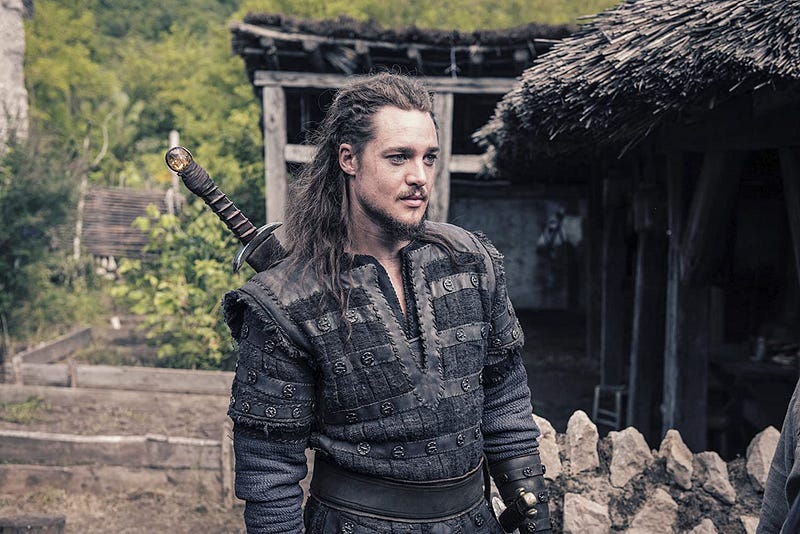
It is not by accident decline and decay are reflected in a series known as, The Last Kingdom. There’s a sense of finality which permeates the struggle of Uhtred’s outlook as he ages, living far longer than an average man of his time. He lives long enough to see three young kings sit on the throne of Wessex as it grows to become England.
Decay and decline are as inevitable in our own lives. The Second Law of Thermodynamics declares this for anyone who cares to read it, and the ache in our bones reminds us of its reality regardless. Being finite beings, with little life upon the earth, we are reminded to make the time we’re here matter. In this struggle for relevance, we build empires, forge legacies and dynasties to create the illusion of immortality. In the end, we are all forgotten. The once proud empires of the earth are now shrouded in myth and legend, their deeds remembered by but a few and their once great cities are now tourist traps.
Meditating upon the nature of our hubris, Rudyard Kipling wrote a poem entitled, Cities and Thrones and Powers. The final verse says:
“So Time that is o’er-kind
To all that be,
Ordains us e’en as blind,
As bold as she:
That in our very death,
And burial sure,
Shadow to shadow, well persuaded, saith,
“See how our works endure!”
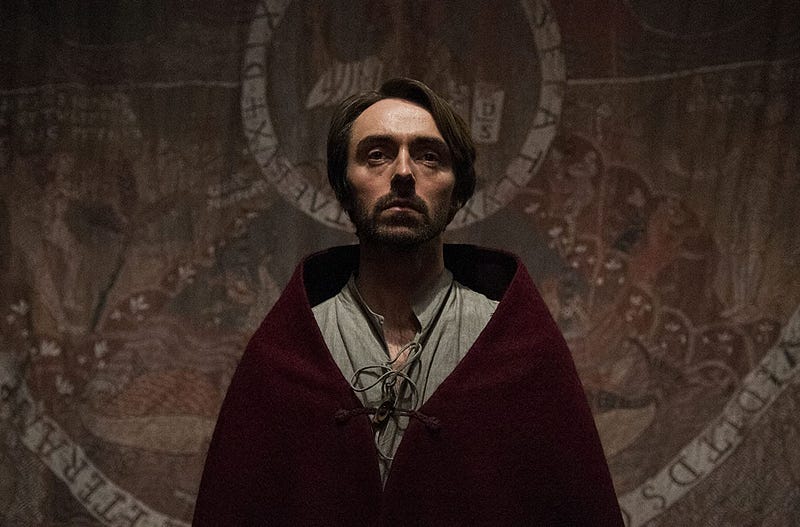
Instead of dwelling in despondency for the end of all things we know, we should not let the forgetfulness of history dampen the efforts we make today. Alfred of Wessex, now known as Alfred the Great, had a vision of a kingdom known as England. It became a kingdom which lead to some of the greatest advancements in Western Civilization, a society from which I claim ancestry and am ever thankful for. Will Alfred’s legacy last for all time? No, but we never know how long the hour glass lasts, we can only work until the time runs out.
We shouldn’t ignore the action of today because it will be forgotten and misattributed tomorrow. The present moment has present demands, and we have a responsibility to do our part. Avoid the hubris of believing your actions immortal or glorious to posterity, but be humble enough to make a difference in the present day.
Reputation is Everything
Among all the phrases uttered by Uhtred of Bebbanburg, the one I repeat most often is this, “Reputation is everything.” He says this from the perspective of a warrior. He is Uthred who slew Ubba by the sea and unseated Swain of the White Horse. This shorthand resume was the currency of the warrior, and the only thing he believed could follow him beyond the grave.
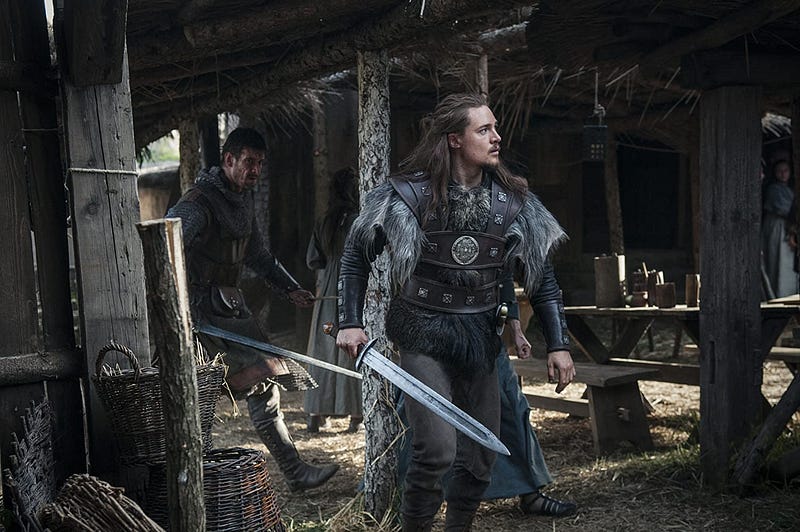
There was a practical and material consideration for a warrior’s reputation, it’s what got him employed. Much like the resume of today, a warrior would be hired based on his qualifications and track record. When fighting was your principal income source, having a high survival rate was a plus in your favor.
It is a form of pride which is not generally inclined to destruction. A reputation earned, the warrior’s pride, is the thing which makes him fearsome in battle, a force to be reckoned with by friend and foe. Uhtred says, “Pride makes a man, it drives him, it is the shield wall around his reputation… Men die, they said, but reputation does not die.”
There are positives and negatives to building a reputation. The greater the reputation, the greater you attract both opportunity and opportunists around you. Because of your reputation, once built, you will have more doors open to you. The gatekeepers have heard of your ability and knack and expect great things from you. On the opposite side, there will be those who see your fall from grace as their elevator to the top. A man with a reputation earned has something to lose, and the greater the reputation of the opponent the greater the glory in defeating them.
Your reputation, if built and reinforced through glory and deeds, will be the thing which outlives you longest. It was the greatest currency in the age of sword and shield, and it remains the greatest currency of the modern age.
Fate is Inexorable
“Wyrd biõ ful ãræd,” I said. Fate is fate. It cannot be changed or cheated.” — The Pale Horseman
The greatest enemy Uhtred ever faces is fate. Regardless of the size and strength of the army he is fighting against, fate is the enemy he struggles against most. It is fate which put him upon the road to fight for and against the West Saxons at various stages, to fight against the Danes whom he loved and defend a king he disliked.
Frequently, Uhtred says, “Wyrd bið ful āræd. Fate is inexorable.” He believes in the three spinners, weaving the tapestry of the lives of men, determining their destinies and decisions. Fate, no matter your actions or attempts to subvert it, will end victorious. This fatalistic attitude was not uncommon to this dark age, whether you were a Pagan or a Christian. What occurs, will occur, despite our best efforts to change it.
The tricky thing about fate is, we don’t know what it determines until the moment arrives. The moment we push against something with all our might, and it doesn’t give an inch. This leaves us in an uncertainty about our future and the results of our best efforts.
The only way to resolve conflict with fate is to accept it. Frederick Nietzsche used the phrase, Amore Fati, which means to love fate. If fate is an unchangeable determination, we are best to strive to embrace it, rather than to expend all our energy struggling against an immoveable object.
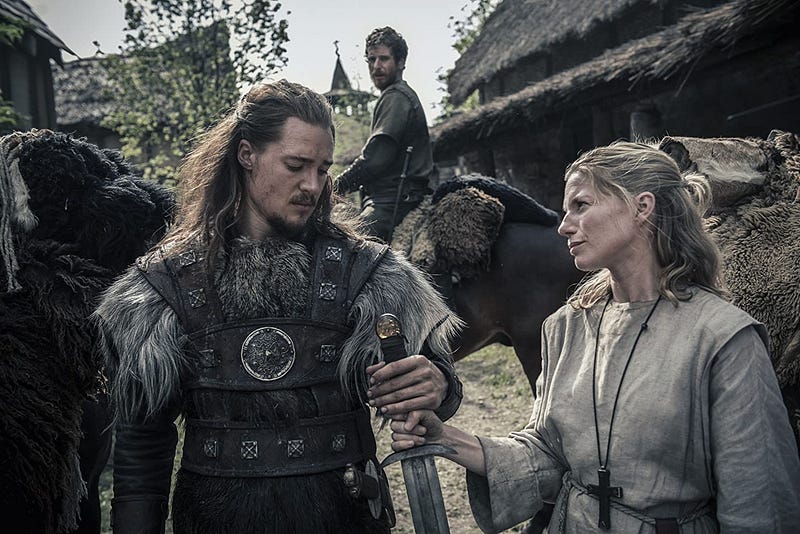
In many ways, Amor Fati is the philosophy Uhtred takes in his adventures. Although he may not love fate in many cases, he chooses to accept what happens and play his part in these events as they occur. He views this with an irony, witnessing how his actions have advanced the agenda of a Christian kingdom which despises his beliefs, but needs his strong sword in battle.
Many of us waste time struggling against what has happened, hoping beyond belief we can change a circumstance beyond our control. This wasted energy could more usefully be employed by utilizing our circumstances better, finding a way to thrive where we are, rather than fighting to get somewhere else.
Fate is inexorable. It will not be changed by an impassioned plea on our part, or by bribes and empty promises. What happened happened. If we accepted the external circumstances for what they are and play our part, there is nothing more to do.
Life is finite. The more of it we waste pushing against what we cannot change we lose that time. Externals are beyond our control, what we can focus on is how we respond and act. Fate may make our decisions, but we make our choices. It is up to you to chose how you will respond. Will fate be the wretched relative you avoid at a family reunion or a dear friend you are excited to see again?
Summary
I am grateful the demands of my life do not involve storming castles, or risking my life in a bloody battle where a blunt sword can hack me to ribbons (even if having a battle ax at work would be cool). There are however, many parts of Uhtred’s world which still possesses relevance to my life.
There are times where, in pride of success we forget the inevitability of decline, and the end of our decadence. Reputation is a surer footing to stand upon for the future, then the temporary achievements. Rather than fight against the uncertainty, to struggle against what I cannot control, I will merely play my part.