
The Philosophy of Mathematics and its Relation to Finance.
In this article, the main focus would be whether or not mathematics can provide a universal truth of nature and whether or not it converts finance into a hard science.
Human logic, the framework of reasoning that guides our understanding and decision-making, is not infallible. Rooted in our cognitive processes, it is subject to the limitations of human thought. While logic aims to structure arguments and deduce conclusions from premises, it is bounded by the constraints of language, perception, and interpretation.
Ambiguities in language, cognitive biases, and the subjective nature of interpretation can lead to logical fallacies, even in carefully constructed arguments. This inherent imperfection in human logic suggests that our understanding of truth and falsity is, at best, a reflection of our limited perspective. Mathematics, often seen as the purest form of logical reasoning, is not immune to these limitations.
The Twin Prime Conjecture
A prime number is a natural number greater than 1 that has no positive divisors other than 1 and itself, and twin primes are pairs of prime numbers that have a difference of two. For example, (3, 5), (11, 13), and (17, 19), and so on.
The conjecture has been known for centuries and is attributed to the mathematician Alphonse de Polignac, who formulated it in 1846 and asserts that there are infinitely many twin primes. That is, there are infinitely many pairs of primes p and p + 2.
The conjecture claims the existence of an infinite number of twin prime pairs. Proving something about an infinite set using finite methods is inherently challenging in mathematics. As numbers get larger, primes become less frequent. The uncertainty about the distribution of primes, especially as they grow larger, adds to the complexity of proving the conjecture.
There is no known general formula for finding prime numbers, let alone twin primes. This lack of a predictable pattern makes the conjecture difficult to prove.
Prime numbers play a crucial role in modern cryptography, particularly in algorithms like RSA encryption, a widely used method of secure data transmission and one of the earliest public-key cryptosystems, which is still used in protocols like HTTPS and SSL/TLS for secure internet communications. Understanding the properties of primes, including twin primes, can influence cryptographic methods and security.
The twin prime conjecture is just a simple example that illustrates the fact that there are true statements that cannot ever be proven.
Georg Cantor (1845–1918)
Georg Cantor (1845–1918) was born in Saint Petersburg, Russia. His father was a successful merchant, and his mother was an artistically talented musician.
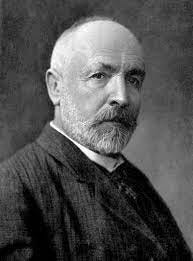
He moved to Germany at a young age, where he received his education. Cantor displayed an aptitude for mathematics early on. He studied at the University of Zurich briefly, then moved to the University of Berlin, studying under eminent mathematicians like Leopold Kronecker and Karl Weierstrass. He completed his doctorate at the University of Berlin in 1867.
Cantor began his academic career at the University of Halle, where he spent most of his professional life. Initially, his work was in number theory and analysis.
Cantor was one of the first to formally define a set as a collection of distinct elements. This simple yet powerful concept became the foundation of set theory. He introduced the concept of the cardinality of a set, which is a measure of the “number of elements” in a set. This was a crucial development, especially for comparing the sizes of infinite sets.
Georg Cantor made groundbreaking distinctions between different types of infinity in mathematics. He demonstrated that certain infinite sets, such as the set of natural numbers, are countable. Natural numbers are the basic positive integers used for counting and ordering, like 1, 2, 3, and so forth, commonly denoted by the symbol N. Being countable means that the elements of these sets can be put into a one-to-one correspondence with the natural numbers themselves. In other words, you can “match up” each natural number with each element in the set without missing any.
In stark contrast, Cantor showed that other sets, notably the set of real numbers, are uncountable. Real numbers encompass all the rational numbers (which include integers and fractions) and all the irrational numbers (which cannot be expressed as simple fractions). This set includes every conceivable number on the number line, encompassing positive and negative numbers, zero, and numbers with decimal or infinite decimal expansions. The real numbers represent quantities along a continuous line and are denoted by the symbol R. Being uncountable means that it’s impossible to establish a one-to-one correspondence between the real numbers and the natural numbers; there are always more real numbers than can be matched with natural numbers.
Cantor’s most famous contribution to this area of mathematics is his diagonalization proof, which elegantly demonstrates the uncountability of the set of real numbers. His diagonalization proof was not only a profound mathematical discovery but also a somewhat paradoxical and counterintuitive revelation at the time. It fundamentally changed the understanding of infinity and the nature of mathematical sets, illustrating that there are indeed different “sizes” of infinity.
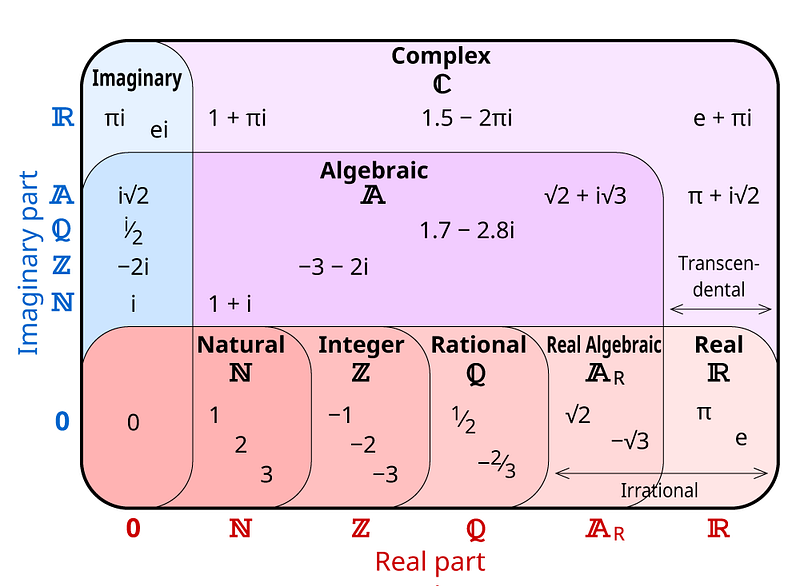
Cantor hypothesized that there is no set whose cardinality is strictly between that of the integers and the real numbers. In other words, he suggests that the set of real numbers (the “continuum”) is the next larger size of infinity after the set of natural numbers. This statement, known as the Continuum Hypothesis, became a central question in set theory.
Contor’s work alongside the discovery of non-Euclidean geometry crumpled the foundations of mathematics, and many started the axiomatization process in order to build the mathematical foundations again and set them on solid ground.
The Foundational Crisis in Mathematics
The work of Georg Cantor divided mathematicians into two schools of thought. On one side were intuitionists like Georg Cantor’s Professor Leopold Kronecker, and on the other side were formalists like David Hilbert. This crisis, also known as the “Grundlagenkrise der Mathematik” in German, was a period of intense examination and debate over the foundations of mathematics.
Formalists think of mathematics as a game with symbols (like numbers and operators). In this game, the rules are the most important thing. It doesn’t matter what these symbols mean in the real world.
Intuitionists believe that mathematics is all about what we can mentally picture or construct. They think that if you can’t somehow build or directly understand a mathematical idea in your mind, it doesn’t count. They were thus believing that Cantor’s work should not be taken into account.
Cantor’s ideas about infinity, especially his theory of transfinite numbers and the notion that there are different “sizes” of infinity, were revolutionary. They challenged the traditional view of infinity as a monolithic concept.
Cantor’s work led to the discovery of several paradoxes, such as the famous “Cantor’s paradox,” which arises from considering the set of all sets and questioning its cardinality.
David Hilbert (1862–1943)
David Hilbert (1862–1943) was born in Königsberg, Prussia (now Kaliningrad, Russia).
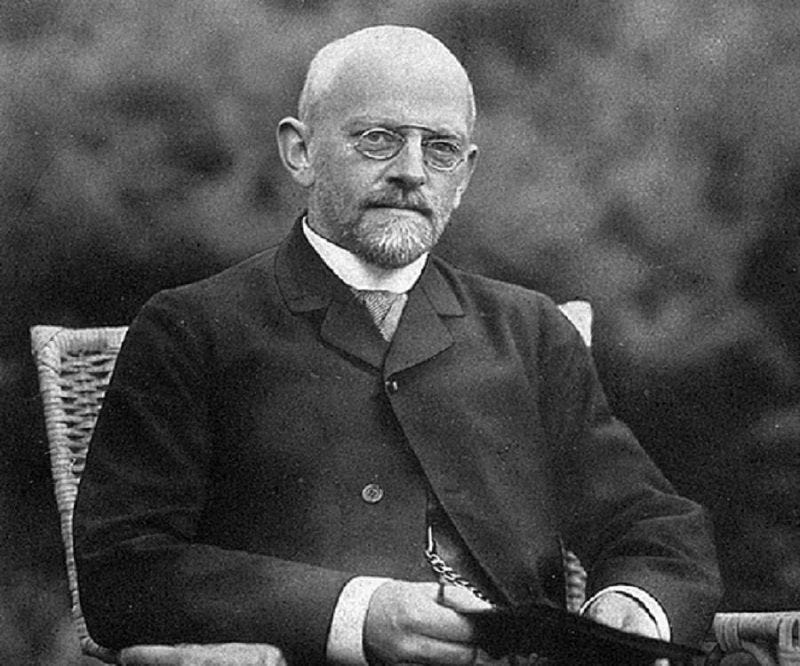
He studied at the University of Königsberg, a renowned center for mathematics and physics. He completed his doctorate in 1885 under the supervision of Ferdinand von Lindemann. Hilbert would later spend most of his academic career at the University of Göttingen, which became a leading center for mathematics during his tenure. He joined the faculty in 1895 and remained there until his retirement.
The quest for completeness was significantly advanced by David Hilbert, who sought a complete and consistent axiomatization of mathematics. The concept of decidability was also central to Hilbert’s Entscheidungsproblem (decision problem).
Perhaps his most famous contribution was the presentation of 23 unsolved problems in mathematics at the International Congress of Mathematicians in 1900. These problems guided much of 20th-century mathematical research.
The Infinite Hotel Paradox, aka Hilbert’s Hotel
David Hilbert popularized this thought experiment that illustrates the strange properties of infinity.
Imagine a hotel with an infinite number of rooms, each numbered sequentially: “Room 1”, “Room 2”, “Room 3”, and so on infinitely, and every room in the hotel is occupied. There isn’t a single vacancy.
During the night, another new guest arrives. The hotel is full, but this guest wants a room, and thus the hotel manager needs to find a solution. The hotel manager moves the guest in “Room 1" to “Room 2", the guest in “Room 2" to “Room 3", and so on. Every guest moves from “Room n” to “Room n+1".
During the same night, a bus with an infinite number of new guests arrives, with each person in it needing a room. The manager moves each current guest from “Room n” to “Room 2n” (Room 1 to Room 2, Room 2 to Room 4, Room 3 to Room 6, etc.).
After a while, an infinite number of buses, each with infinite guests, arrive. Using a more complex reassignment strategy, the manager can still find a room for every new guest.
This paradox shows that infinite sets are not like finite sets. You can subtract or add elements without changing their size. The story illustrates “countable infinity” (like the set of natural numbers) and hints at the concept of “uncountable infinity” (like real numbers).
Bertrand Russell (1872–1970)
Bertrand Russell (1872–1970) was born in Monmouthshire, Wales. He came from a prominent aristocratic family. His grandfather, Lord John Russell, was a former Prime Minister of the United Kingdom. He was educated at home until he entered Cambridge, in 1890. At Cambridge, he excelled in mathematics and philosophy.
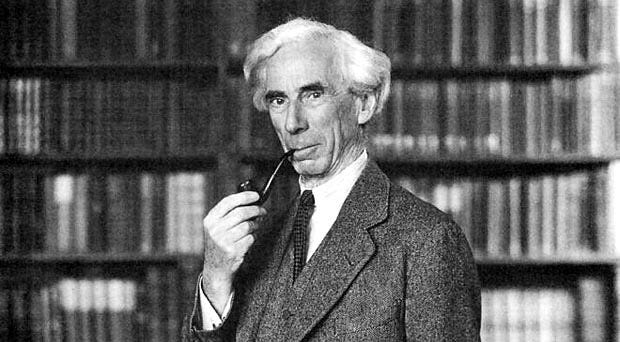
Russell was known for his pacifism, especially during World War I, which led to his imprisonment in 1918. He was an outspoken advocate for nuclear disarmament and social reform.
Along with Alfred North Whitehead, Russell authored “Principia Mathematica” (1910–1913), a monumental work in logic and the foundations of mathematics. The book aimed to derive all mathematical truths from a set of axioms using formal logic. His work in set theory was part of his broader effort to base mathematics on solid logical foundations. He was interested in addressing the paradoxes and inconsistencies that had arisen in naive set theory.
Russell’s Paradox (also known as the self-reference paradox) is a famous problem he discovered in naive set theory. The paradox arises when considering the set of all sets that do not contain themselves. Does this set contain itself? If it does, by definition it should not. If it does not, by definition it should. This paradox showed that naive set theory was inherently contradictory. The classic example of a self-reference paradox is the “liar paradox,” where a statement says, “This statement is false.” If the statement is true, then it must be false, but if it’s false, it must be true.
“Jim is my enemy. But it turns out that Jim is also his own worst enemy. And the enemy of my enemy is my friend. So Jim, is actually my friend. But, because he is his own worst enemy, the enemy of my friend is my enemy so actually Jim is my enemy. But…”
— Dwight Schrute, The Office
Kurt Gödel (1906–1978)
Kurt Gödel (1906–1978) was born in Brünn, Austria-Hungary (now Brno, Czech Republic).
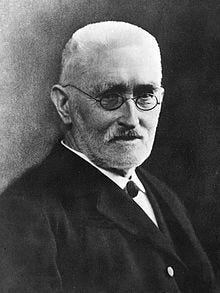
Gödel studied at the University of Vienna, where he was influenced by the work of philosopher and mathematician Hans Hahn. He completed his Ph.D. in 1929 with a thesis on the completeness of first-order logic.
Gödel and Albert Einstein developed a close friendship at the Institute for Advanced Study, often walking home together.
Incompleteness Theorems (1931)
Gödel’s incompleteness theorems are a pair of fundamental results in mathematical logic and the foundations of mathematics, developed in the early 1930s.
Gödel’s First Incompleteness Theorem states that in any sufficiently powerful and consistent formal mathematical system, there are statements that cannot be proven true or false using the rules and axioms of that system.
This means that no matter how comprehensive our set of rules and axioms is, as long as the system is powerful enough to include basic arithmetic, there will always be true mathematical statements that we can’t prove within that system.
Imagine a book that claims to contain every true statement about numbers. Gödel’s theorem is like finding a note that says, “This sentence is not in the book.” If the note is telling the truth, then it should be in the book. But if it’s in the book, then it’s lying. So, the book can’t contain every true statement about numbers.
This creates a tension between the objectivity of mathematical truth and the incompleteness of formal systems. On the one hand, mathematical truth is objective and exists independently of our minds. On the other hand, our best formal systems are incomplete and cannot prove all mathematical truths.
Gödel’s Second Incompleteness Theorem states that in any sufficiently powerful and consistent formal mathematical system, the system cannot prove its own consistency. In other words, the system cannot demonstrate, using its own rules and axioms, that it does not contain any contradictions.
This means that we cannot use a mathematical system to prove that it won’t lead to contradictions without stepping outside of that system.
Imagine you have a friend who says, “I cannot tell if I am lying or telling the truth.” Can you trust your friend to determine if they are lying? Gödel’s Second Incompleteness Theorem is like this situation but applied to mathematical systems. It says a consistent mathematical system cannot prove its own truthfulness (consistency).
Gödel’s work did not invalidate their contributions but rather illuminated the inherent limitations of formal systems, reshaping the understanding of mathematical foundations.
Mathematics and Finance
Gödel’s Incompleteness Theorems, while primarily of philosophical and mathematical significance, also have indirect and conceptual implications for fields like finance. These implications are more about the way we understand systems and models in finance rather than direct applications of the theorems.
For example, financial models can be viewed as formal systems which are used to understand and predict market behavior. Gödel’s theorems imply that any sufficiently complex system (including mathematical models in finance) has limitations. There will always be truths (or market behaviors) that these models cannot predict or explain.
Also, the theorems highlight the inherent limitations in our ability to predict and account for every possible event in a system. This translates to the understanding that market models cannot foresee every possible scenario, especially those involving human behavior and external shocks.
Gödel’s work also underscores a need for caution and humility, recognizing that models and forecasts are tools with limitations. There are no ‘perfect’ models or strategies, which encourage a culture of questioning and critical evaluation.
Closing Thoughts
The implications of these inherent limitations are profound. They remind us that our pursuit of knowledge, whether through logic or mathematics, is an ongoing journey rather than a destination.
The existence of unprovable truths invites a sense of wonder and curiosity about the unknown and the unknowable. It encourages us to view logic and mathematics not as definitive arbiters of truth but as tools that are both powerful and limited.
Embracing these limitations does not diminish the value of logic and mathematics, but rather, it enriches our understanding of these disciplines. It encourages a more nuanced view of knowledge, one that acknowledges uncertainty and complexity. In recognizing the inherent flaws in our systems of thought, we open ourselves to a broader spectrum of inquiry, one that values questions as much as answers.
In conclusion, the recognition that human logic and mathematics are flawed at their core and that there are always true statements beyond the realm of proof is not a cause for despair but an invitation to humility and wonder. It is a reminder that the universe of knowledge is vast and mysterious, offering endless opportunities for exploration and discovery.
Sources
- https://www.britannica.com/science/set-theory/Schema-for-transfinite-induction-and-ordinal-arithmetic
- Katz, V.J., 2009. A History of Mathematics: An Introduction. 3rd ed. Boston: Addison-Wesley.
Visit us at DataDrivenInvestor.com
Subscribe to DDIntel here.
Have a unique story to share? Submit to DDIntel here.
Join our creator ecosystem here.
DDIntel captures the more notable pieces from our main site and our popular DDI Medium publication. Check us out for more insightful work from our community.
DDI Official Telegram Channel: https://t.me/+tafUp6ecEys4YjQ1