
The Philosophy in Politics
Idealistic Fantasy or a Realistic change
Plato’s Republic, renowned for its unique and fascinating ideas surrounding justice and the morality of man, offers far more than just the individual, namely politics, or more specifically the philosophy in politics. The idea of the Philosopher King is a cornerstone of Plato’s Republic, as the ancient writer explained his opinion on how the perfect state requires a philosopher to be at the head. The argument surrounding the Philosopher King revolves around the nature and ideals of the philosophers, and how their values and upbringing make them the perfect candidate to make decisions and implement policies at the executive level. Although this idea has long been dismissed as authoritarian and unrealistic, could any part of it be implemented into a modern democratic framework?
Origins of the Theory
Aside from the personal profession of Plato, his wish for philosophers to play an active in the administration can be explained by the infamous state of the field at the time. Far from the glamourous quick-witted men in togas, we imagine today, the philosophers that Plato describes are corrupted by materialism and a few large personalities conflicting with the discussion basis of philosophy, which caused society to look down upon these troublemakers. Subsequently, the few philosophers Plato deemed worthy could not make their ideas heard or implemented, causing an atmosphere of complacency.
As a result, Plato claimed that society is the one unsuited to the potential benefits that philosophy can bring. Opting to counteract this flaw, Plato wanted to directly place philosophers into the spotlight of governance, thus bettering the state as a whole, while rooting out the unworthy ones in philosophy.
Fit to rule
What makes philosophers such great rulers? Knowledge. In Plato’s mind, the only concern of a philosopher is on finding the objective truth, and that knowledge must be objective. This comes down to the idea of Forms, which is the philosophical idea that certain things such as beauty and justice exist in a higher reality, and for the intents and purposes of the Philosopher King, only people trained in philosophy can see through the Forms.
Plato also states that only the unwilling should rule. Philosophers fit this description as their obsession with truth, knowledge and justice makes them indifferent to the gritty world of politics and power.
to turn his eyes downward upon the petty affairs of men, and so engaging in strife with them to be filled with envy and hate, but he fixes his gaze upon the things of the eternal and unchanging order, and seeing that they neither wrong nor are wronged by one another, but all abide in harmony as reason bids, he will endeavor to imitate them and, as far as may be, to fashion himself in their likeness and assimilate1 himself to them. Or do you think it possible not to imitate the things to which anyone attaches himself with admiration?” “Impossible,” he said. “Then the lover of wisdom
Plato Republic. 500c.
Implementation
With the “why” dealt with, the ‘how’ is next. How can elements of the Philosopher King be implemented into a modern framework? There is no clear answer, but a possible idea is the involvement of philosophers in policymaking. Although Plato’s idea that only philosophers can see through the Forms cannot be implemented, they do possess key critical thinking skills due to the argumentative nature of the field. It may be a stretch to make philosophers the policymakers of new laws, but they can at least discuss them and lull over the morality, benefits, and flaws in the policies on an official basis.
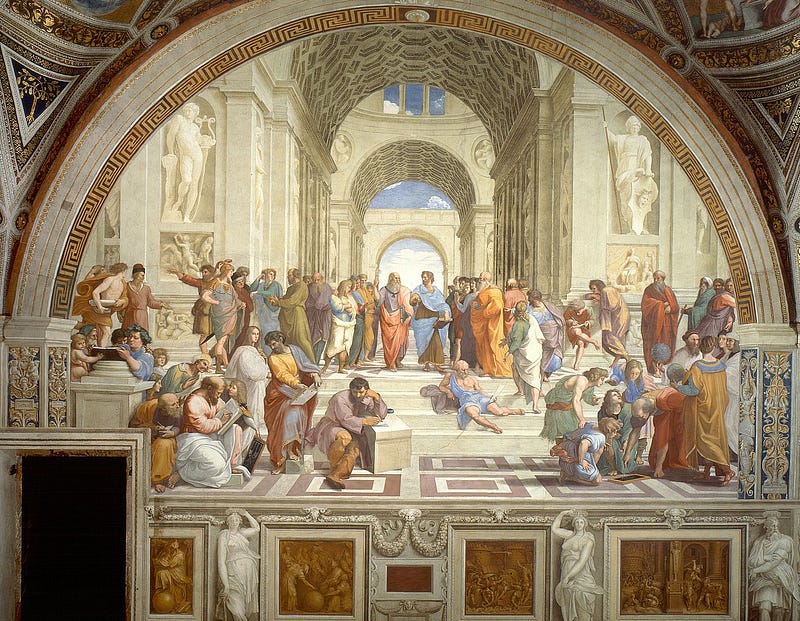
Furthermore, philosophy in politics had been prominent in governments before, but in the form of autocratic rulers. The Roman Emperor Marcus Aurelius and the French “Sun King” Louis XIV often come to mind when thinking of philosopher rulers. They are unique, as instead of philosophers directly influencing politics, the Kings adopt certain philosophies which impact their policies, and to an extent, the values of the state.
Obviously, these are merely suggestions to a broad topic, and the mere existence of philosophers in politics can be put into question, but nevertheless, Plato’s Republic gives society a basis to judge the idea of the Philosopher King, as either an outdated or autocratic Renaissance idea, or an unorthodox solution to modern problems.
Sources:
Plato, . The Republic. Baltimore, Md: Penguin Books, 1955. Print.


