avatarJake Cutter

Summary

The web content discusses the extensive and diverse team of professionals behind astronauts' success, including mission control, engineers, training staff, and manufacturers, who work tirelessly to ensure the safety and success of space missions.

Abstract

The article titled "The People Behind the Astronauts" sheds light on the critical role that numerous individuals play in space exploration, beyond the astronauts in the spotlight. It highlights the responsibilities of mission control in ensuring astronaut safety and managing unexpected situations, with teams split between flight control and ground support. The piece acknowledges the global community of engineers and manufacturers who contribute their technical expertise to the construction of complex spacecraft components, such as those used in the BFR and SpaceX's Starship. It emphasizes the rigorous testing and development process, including the creation of the Mars rover and moon lander, and the ongoing innovation in aviation technology. The article also mentions the collaborative efforts between NASA and Russian mission control, and it quotes NASA's recognition of mission control as merely the tip of the iceberg in the vast support system.

Opinions

  • Mission control is recognized as the visible but minor part of the extensive support team for astronauts, managing safety and unexpected events.
  • The engineering and manufacturing community is celebrated for their precise and critical contributions to space missions, without whom missions would not be possible.
  • NASA emphasizes the development of advanced technologies for aviation on Earth, indicating a commitment to transformative innovation beyond space travel.
  • The article praises the craftsmanship and engineering design behind SpaceX's Starship, noting the strenuous process of prototyping and rebuilding required for cargo missions.
  • The collaboration between NASA and the Russian mission control in Korolev is presented as an integral aspect of international space operations.

The People Behind the Astronauts

We have all seen the videos of astronauts floating in space or walking on the moon. But behind the daring adventures in space, there are thousands of people working around the clock to make sure the mission is a success. Mission control, engineers, training staff of all aspects, and the thousands of manufacturers that create rockets like the BFR and SpaceX’s newest rocket Starship.
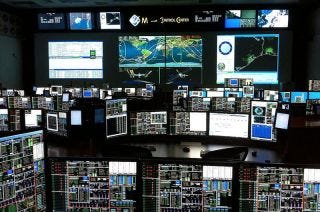
Mission control is responsible for the constant safety of the astronauts. They make standard operating procedures for events that could be unexpected such as a fire on the space station or trouble with the rocket on its way or on its descent. It's split into two different sections: flight control and ground team (NASA). The two teams build procedures for common occurrences and mission-specific guidelines (NASA). Along with mission control in TX, the Russian’s have a mission control room in Korolev, just outside Moscow (NASA). Most importantly, nasa.gov says, “Mission Control is the visible part, but it’s less than 1 percent of the support team. We’re just the tip of the iceberg.”

The engineers and manufacturers, not only at NASA but across the world apply their technical knowledge to be able to make the miracle missions come to fruition. They make parts for the rockets that are so specific and flush that they won’t spark during a launch sequence. They built the mars rover and moon lander and machined the astronaut's ability to walk on the moon. Without their help, it just wouldn’t get done.

“We’re developing cutting-edge technologies in alternative propulsion and supersonic flight to transform the future of aviation, right here on Earth.” — NASA

SpaceX Starship is looking to carry cargo and people eventually to multi-planetary missions (SpaceX). Starship has 37 raptor engines and 6 landing legs. I will leave a link below for a raptor engine test. The amount of testing, prototyping, and rebuilding just to get qualified to fly cargo was strenuous. This was done thanks to the craftsmanship of the machiners and the engineering design department.

References:

NASA
Space
Spacex
Astronauts
Engineering
Recommended from ReadMedium