
The Pearl Harbor Effect
When it all comes crashing down, purpose and leadership help us discover our real potential
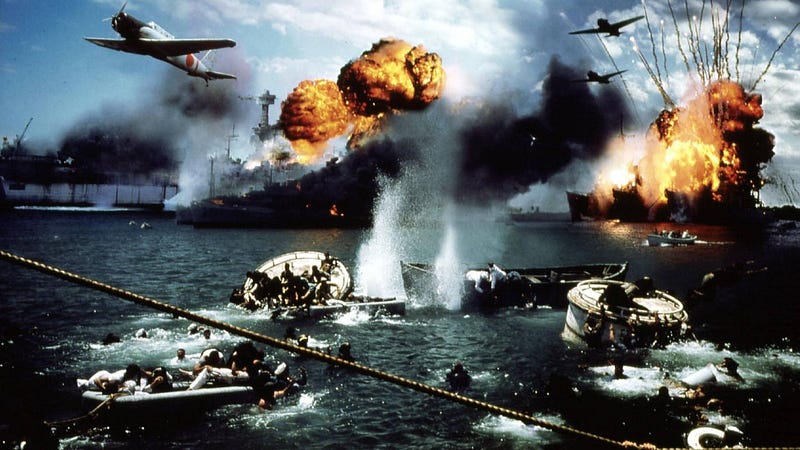
Shortly before 8 a.m. on December 7, 1941, hundreds of Japanese aircraft came hurtling down from the sky in a surprise attack on the United States’ strategically-important naval base in Hawaii. It killed more than 2,400 Americans.
The attack on Pearl Harbor shocked and outraged the nation and provoked the country into war at a time when Congress and the American people had been split on the response to an already embattled world.
Americans — long hesitant to touch the war — now rose from their seats. SNAP. Their psyche had been altered. The United States declared war on Japan the very next day, and several days later, the Nazis declared war on the United States.
The world had shifted, rather instantly. It was a catalyst.

Do not poke the bear. You don’t know what it’s capable of.
After Pearl Harbor, America showed it’s might…and speed. The industrial production of aircraft, ships, tanks, munitions, and more grew to output velocities that were previously thought to be preposterous. Quickly deploying the military to fight a two-front global war in conjunction with the Allied powers seemed impossible, but it happened.
In times of crisis, humans are capable of staggering outcomes. In these moments, incompetence tends to be overrun by brute force. But this doesn’t happen magically. It takes a united purpose and brave individuals to spur the right action.
When systems collapse, purpose guides us
“He who has a why to live can bear with almost any how.” — Friedrich Nietzsche
When things are bad, we can’t waste time. There’s no room for bickering and pointing fingers. When your family, organization, or nation faces a crisis, it’s all about the greater good. And by acting for the greater good, we can trace how that benefits our self-interested minds.
In short, those that rise to the occasion find purpose and are enlivened by it.
We’re experiencing a unified sense of purpose now with COVID-19 — most people on this planet have never experienced such collective unity around a singular topic. Truly, it’s akin to how Pearl Harbor triggered U.S. involvement in WWII. We all seek the light at the end of the tunnel.
When norms and institutions collapse in times of crisis, we can’t afford to drown in the negative. “Worry is contagious,” as Warren Buffett warned during the 2007 Financial Crisis, “it sort of makes its own truth after a while.”
Especially in the absolute worst of times, we can’t let worry overtake us.
Flipping our fixation from worry to forward-moving purpose involves changing our perceptions. For each of us, perception is reality, but we have control over this. As Epictetus stated:
“It isn’t the events themselves that disturb people, but only their judgments about them.”
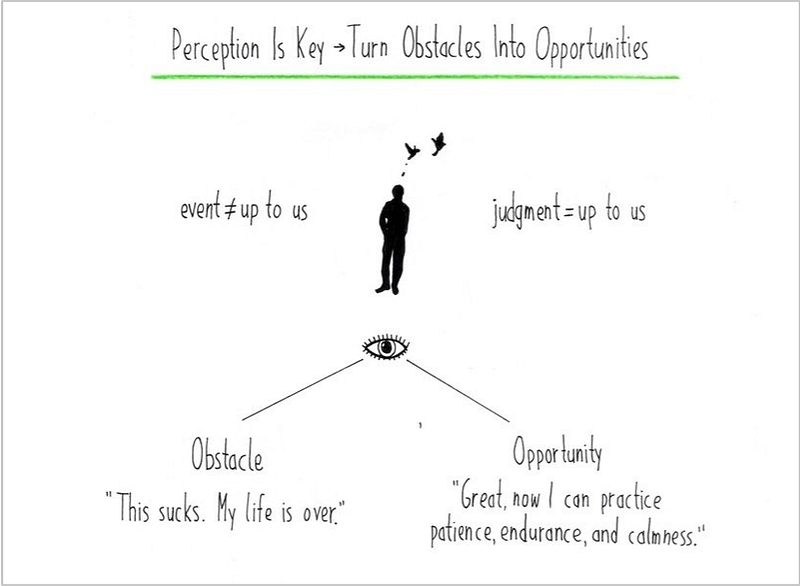
In times of crisis, it’s on each of us to set our intent — course-correct our views when they don’t serve us. Will we stay mired in worry? Or will we forge on, driven by hope?
In the Civil Rights Movement, Martin Luther King Jr. bravely carved a path for an impoverished people. Amidst extreme adversity and violence, King leaned in and united a massive movement to change the course of history — to give African Americans a greater chance at experiencing their unalienable rights: life, liberty, and the pursuit of happiness. He brought people together and ignited progress through a vibrant and clearly-communicated purpose.
Purpose can do such much for us…if we let it. As Robert Greene eloquently stated in The Laws of Human Nature, “Even our moments of doubt, even our failures have a purpose — to toughen us up. With such energy and direction, our actions have unstoppable force.”
Establishing a clear purpose doesn’t happen magically, and neither does the hard work that comes after it. Amid chaos, both aspiring and known leaders feel something surge inside them. They know it’s an opportunity for them to share their gift with the world. It takes a brave moment of courage to get off the starting blocks, but they do. Inside, they know they have to.
Leaders step up
Those leaders capable of great things come from all over…and often, out of nowhere.
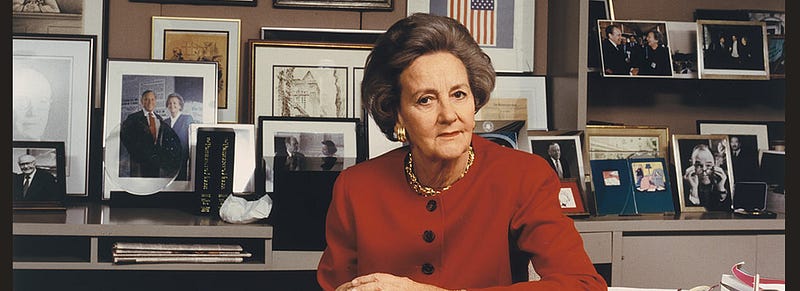
That’s what happened in 1971 with The Washington Post’s Katherine Graham. Thrust into the paper’s leadership role after her husband’s death, she bravely resisted the political pressures to simply “do what was expected” in covering up scandals, and instead found herself driven by an important purpose. She fought through her fears and made sure the free press truly was free, publishing the controversial Pentagon Papers. Graham then took her purpose more broadly, helping many journalists do the same.
Winston Churchill was similar. Driven by an underlying obsession to protect the empire, he saw the rise of Hitler in the 1930s and warned Parliament feverishly that Britain shouldn’t sit idly by, but Churchill was not welcome. As Hilter pummelled and conquered major swaths of Europe in a hurry, it became strikingly clear that Prime Minister Chamberlain’s appeasement strategy was an utter failure. To the chagrin of many, this opened the door for Churchill to take the top spot and lead. And lead he did, providing the emotional and intellectual energy that successfully guided England through the most perilous situation in its history.
As Nancy Koehn tells us, leaders are forged in crisis. And they are made, not born.
We don’t all need to wait for a coronavirus or war to prompt our leadership. The triggers can be on a much smaller scale, such as needing to care for a family after the sudden death of a loved one, or working to unite a sports team after the star player goes down with a season-ending injury. Crises are all around us — we need leaders everywhere and every day.
So, what do leaders do when a “Pearl Harbor” happens?
They…
- Develop collective purpose: establishing the clearest and most compelling “why” possible, giving people the courage to stand up and face even the most daunting challenges.
- Ruthlessly prioritize and bring focus: using a systems thinking mindset to differentiate symptoms from root causes, and shedding a spotlight on that which matters most.
- Take stock of resources and set direction: being practical and creative with your limited resources, creating force-multiplying partnerships where possible, and giving clear “must-do” objectives to your audience.
- Encourage experimentation, failure, and learning: even when battling a crisis, it’s a time to test many small ideas to see what works, and quickly scale once you’ve got something.
- Orchestrate and unify: stepping back and seeing the whole picture, it’s about launching both incremental and transformative efforts where others take on very specific, outcome-focused tasks.
- Empower and clear roadblocks: making it easy for your group to make progress in a situation that already feels daunting — giving them room to reach their highest potential.
We’re facing a crisis now. It’s time to find and be emboldened by purpose. And who is standing up? Which people will truly make a difference?
Want to stay in touch? Follow me on matthewdoan.com, Medium, LinkedIn, and Twitter.