
The Pay-to-Win Problem in Adaptive Sports
How economics prevent fairness — and even participation — for disabled athletes.
I recently competed at nationals for power soccer, and I was struck by how different the lowest division of competition is from the others. The tournament is divided into four conferences, with the top two placing teams moving up a conference and the bottom two moving down.
Since nationals didn’t happen for two years due to the pandemic, more than just the top two teams from the last nationals had to be moved out of the lowest conference to accommodate newly competitive teams. This is how my team wound up moving up, and it led to the lowest conference consisting almost entirely of new teams.
Watching these teams play, there’s a much bigger difference in skill level in this lowest conference than in the other three. While coaching, experience, and talent are all factors, one factor seems to matter above all others: equipment.
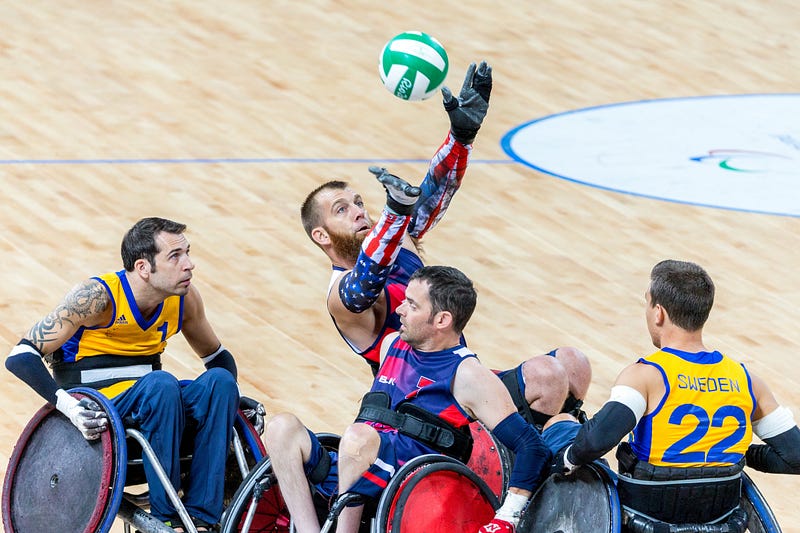
Most adaptive sports utilize specialized equipment to allow disabled athletes to participate. Wheelchair rugby/basketball players use sport chairs with slanted wheels to both allow faster acceleration and protect their hands when they crash into each other. Amputees running track use running blades instead of a typical prosthetic foot. Wheelchair fencers use low-backed chairs strapped into place, allowing them to solely use their arms and core strength.
Basically, every sport has its own specialized equipment athletes need to compete.
While athletes competing at high levels are likely to get sponsorships and prize money to help pay for equipment, those just starting out don’t have that same luxury. This is true in all sports, but adaptive sports are unique because of the type of equipment needed at even the lowest levels.
For example, let’s compare soccer and power soccer. Soccer players generally need cleats, socks, and shin guards to play. However, the cleats worn by the child playing for the first time are much different than those worn by the professional playing in the world cup. The cost of the equipment needed increases as the skill level increases.
This isn’t the case in power soccer. To be competitive at all, players need a Strike Force chair. These chairs are designed for power soccer, and other chairs aren’t able to execute the same passes and spin kicks as Strike Forces. In the lowest conference, the top teams were the ones that had all their players in Strike Forces, and pretty much everyone in the other conferences uses one.
Strike Force chairs are built and sold by one man at one company, the creatively-named Power Soccer Shop. The base price for one of these chairs is $8,500, but most people pay more than this. Add-ons like a headrest ($300) or swing-away torso supports ($500) add to the cost.
My chair cost over $10,000.
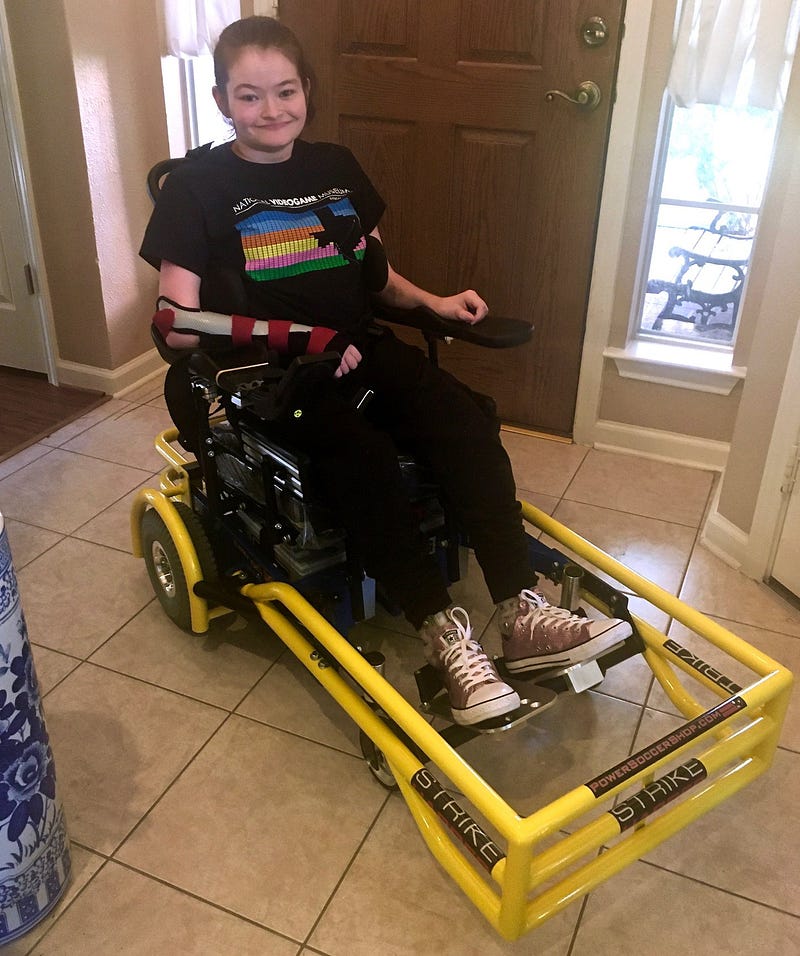
If a child tries to play this sport in a typical power chair, they won’t be able to keep up and will probably get bored or frustrated; however, spending $10,000 so your kid can try out a sport is absurd. The national team players use the same equipment as players just starting out, and in any abled sport we’d call that outrageous. In power soccer? We call it normal.
These high price tags are seen in other sports as well. According to Challenged Athletes Foundation, a sport wheelchair used in wheelchair rugby/basketball will cost anywhere from $2,000 to $6,000, not including the replacement wheels, spokes, and castors that are often needed. A running blade costs around $15,000, and double amputees must buy two.
Since these sports are by their very nature recreational, insurance provides no coverage for these pieces of equipment. The entire cost is out of pocket. And just to be clear, none of these things actually cost this much. If a word like “adaptive,” “disability,” or “medical” is attached to a product, the price is jacked up because consumers don’t have an alternative.
This is the reality of adaptive sports. Where thousands of dollars must be invested just to try a sport. Where the winner is often determined by who’s using a custom-built chair and who’s using a used chair that doesn’t fit properly.
Even once equipment has been obtained, economics continue to play a role. Some cities have a large organization that many adaptive sports are run through, providing each of them with paid coaches and fundraising.
This also allows these groups to run multiple teams in the same sport. For example, Turnstone is an organization in Indiana that runs many adaptive sports, including two power soccer teams. One team, the Flyers, plays in the top conference. The other team, the Furious Flyers, plays in the lowest conference.
The benefit of this setup is that it allows the program to grow while also allowing athletes to play at the appropriate level. Highly skilled players can be put on the team in the higher conference, while new players can be recruited to the other team.
My team, on the other hand, has really struggled to grow. New players aren’t ready to play in our conference, but our team coach, a parent volunteer, can’t really handle two teams. It’s also difficult to maintain complete impartiality when one parent coaches the team and another manages all the equipment.
This once again skews the advantage toward the teams with more money. If one coach works a full-time job while another can study game footage, apply for grant money, and work on fundraising full time, one will clearly be more effective as a coach.
For most athletes, getting new equipment is based less on need and more on who gets the coveted annual grants from the Challenged Athletes Foundation. We need more organizations like this to provide equipment for disabled athletes. We also need communities to help fund adaptive sports programs so competitive opportunities are available to more disabled people.
I’ve included below a couple organizations that help provide resources to disabled athletes. If there’s a disabled athlete or aspiring athlete in your life, I’d encourage you to make sure they know these resources are available. Too many disabled people have been kept away from athletics for solely economic reasons.
If you’d like to support my writing, you can use this link to sign up for a Medium membership. I earn a small commission when you use this link.