
The Part of Climate Change We Always Miss
The answer is right in front of us
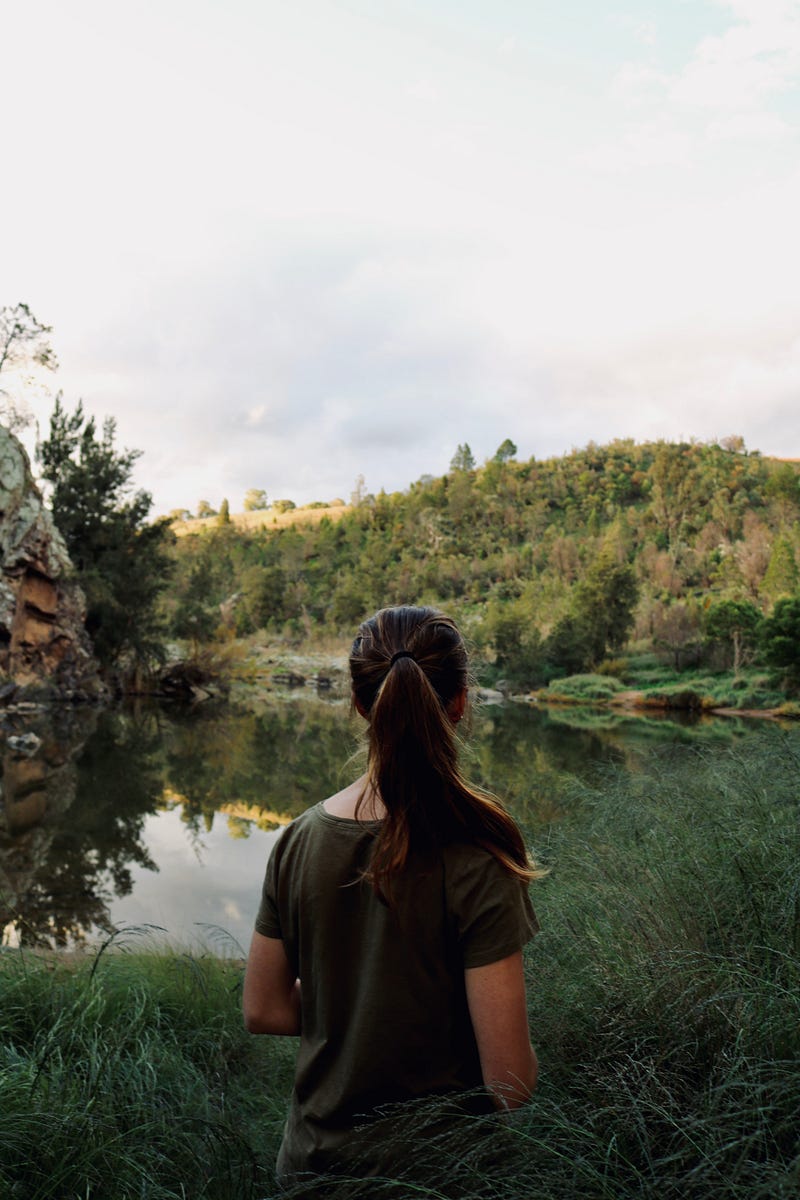
Take anyone, anywhere in the developed world right now, and drop them in the middle of nowhere, see how long they last.
This piece is not about doomsday-prepper chest-thumping, it’s a thought experiment meant to illustrate a point: we are completely dependent on the system.
Consider homelessness. Picture the filthy tents lining the streets down on Skid Row, or tucked under bridges and roadways in any major city. A significant portion of homelessness stems from untreated mental health disorders and addiction, such as neglectful and abusive childhoods. But many homeless people lost their job, or couldn’t pay their mortgages, often due to corporate greed, Wall Street chicanery, a technological shift, and the outsourcing of employment. But really imagine the scenario: you’re a slave to the grind, maybe you’re working for peanuts as it is, barely able to afford rent or a mortgage. And then you lose your job. Imagine you have no kids, and you’re unmarried. You’re free!
Why, in the name of God, would you want to live in some derelict part of a polluted city? Why not run off to the wilderness somewhere, go Jeremiah Johnson on that shit, build yourself a cabin, hunt yourself deer, pheasant, wild turkey?
Every day, millions of people wake up and begin participating in a global industrial consumer culture, and this is how they function until they go to bed at night. (Well, they’re still participating even as they sleep.)
You make a paycheck, you spend it at the supermarket, the big box store. There is no direct relationship to your food — it comes from factories and monocultures miles away from where you live. There is no direct relationship to any of the products you consume; not the food, not the clothes, not the items providing you shelter.
The piece we so often miss when considering the problem of ecological overshoot and its myriad of symptoms we call climate change and impending collapse is how we’ve completely lost our connection to the natural world. The vast majority of us, anyway. We’ve turned what our forebears did, the daily reality of our ancestors, into TV shows like “Survivor” and “Alone.” Because we have lost just about every last scrap of ability to fend for ourselves, it’s become a game to see if we can even last a little while attempting to reconnect.
In the industrialized west, you’d be hard-pressed to find a single person around you who could live in the wild, and fend for themselves, let alone just make do with a severely crimped supply chain, food shortages, and lack of general amenities.
Consider now your community. If you live in New York City or some small town as I do, the scenario will have different details, but be fundamentally the same: imagine the power goes out. Imagine, the next day, no trucks come into the region bringing food for the grocery stores. No trucks indefinitely. What happens?
It won’t be a pretty picture. Most people, when the world gets unplugged and the things they rely on every day to survive simply aren’t there on the shelf to buy, would have no idea what to do next.
Again, this isn’t about being a doomsday prepper. Prepping has its place, and greater self-reliance should be encouraged across the board. This is about the piece of climate change, its acceptance, and solutions, we continue to miss.
Among the first people to notice the changing climate were probably farmers. Growers. People who worked the land. For sure, some big agribusinesses probably did no better than big oil companies, noticing the problem than working out ways to ignore it and thrive in spite of it. But a direct relationship between the land and the sea most assuredly keeps a person more in touch with what’s happening to the climate. Wilderness guides, field biologists, indigenous peoples and tribes — they’ve been aware of the changes, and have been among the first to sound the alarms. Even though we’ve mostly ignored them.
Today, this lack of connection to the natural world promotes a couple of things, none of them good. It promotes denialism. A significant portion of people who deny climate change is doing so because they’re afraid. Climate change might mean everything from giving up some creature comforts (or feeling guilty/ashamed about not doing so) to losing one’s house, or loved ones, or way of life. It’s easier to deny, negate, or disavow. We all do it, on some level. We can’t imagine a life where we’d have to be independently resourced, or rely on a small community to meet all of our needs.
The other thing our dependency does is keep us insulated. We live in artificial worlds. We live in climate-controlled environments, with food in our fridges whether in season or not. Blueberries from Brazil. Avocados from Mexico. Coffee from Bolivia.
As is often pointed out, we live in a time of unprecedented wealth and prosperity. Recently, I sought to contact a friend and found out that friend was gone on a trip to Central and South America. Oh, okay. I’m not picking on that friend in the slightest but isn’t it just an amazing thing that someone can just be a few miles down the road one minute and off touring foreign countries the next? “Back in a few days!”
It’s astonishing, really, when you think about it: if you have the money, right now you can go pretty much anywhere in the world. You might need a passport or temporary visa, but that’s just paperwork. The technology is there, the energy has been extracted for you to just disappear in one place and pop up in pretty much any other place on the planet. And, for the most part, we take it for granted. It’s not natural, by any means — humans did not evolve to travel five hundred miles per hour — but we do it like it's no big deal. It becomes another part of our insulated experience.
Because we’re part of a global industrial consumer culture, we’re often cut off even from our communities. We can work remotely, we can order our goods online, and we don’t even have to leave the house. When I see the empty shells of homes in Detroit, or Kansas City, when I consider the opioid epidemic in West Virginia, the rampant diseases of despair affecting the country — even a piece of racial inequality — I see this broken connection to the natural world. When manufacturing jobs leave an area bereft of employment, identity, and purpose, I don’t just see an issue with outsourcing or bad trade deals. I see generations of human beings trained to rely on a system that provides them with jobs and all the material goods they need to survive. Take that away, and the people collapse.
Yet it could be liberating to shrug off the yolk of dangerous, dirty work. It could be exhilarating to shed the trappings of modern society. Instead, it’s so traumatic for us we turn to addiction and despair. We elect rabble-rouser leaders to get back for us the things we lost — the things that connected us to the system.
National politics is something we can only do something about every few years, yet we’re glued to our screens, following would-be presidents years out, agonizing over federal-level issues. We often ignore our local politics, where we could actually make a difference. We’re living in a global mindset because we are part of a global industrial consumer culture. This too cuts us off from our local communities.
Encountering nature directly is the first level. The work we can do on ourselves. No, we can’t all be Jeremiah Johnsons (and anyway, look how that turned out for him). Rugged individualism has its limits. So the next level is community. Capitalism actually isn’t so bad when you have a small town of a few hundred people. The butcher, the baker, and the candlestick-maker can trade services, or use some medium of exchange. Different people are good at different things, and by working together, we can meet our needs. Fulfillment comes from simple things: connection to our fellow humans. Putting in a good day’s work. Labor heals the troubled mind. But we’ve traded all of this for a global system that has us feeling isolated, cut off, and completely detached from the natural world and its rhythms. We are consumers completely dependent on a massive system that brings us food and materials. Many of us work jobs that support that system. Retail is one of the highest employment sectors. Driving trucks is the number one occupation for high school-level men. We work for Amazon, we work for Walmart, and we work to serve the global industrial system. Even the military is arguably there, since WWII, to serve this system by protecting the waterways for trade. By securing sites for resource extraction.
There is greed, and there is a massive, blind beast called capitalism, but it’s hard, if not impossible, to change these things. What we can do is take steps to restore our relationship with the natural world and to communities. This can also be challenging, as so many people, even in small towns, are hostage to the larger world. But we can start with ourselves, level one, and see where it leads us. We can take up self-reliance projects. Start a garden, whether at home or in the community. Perhaps down the line a bit, we can work locally with other people to start an organization that considers climate change adaptations. There are, of course, communities springing up that are dedicated to sustainable living and adaptation. But it’s not always easy to just move there, or get started — this is just the beginning. We have to take steps.
See the world through this lens: we are dependent consumers and this engenders denial, disavowal, insulation, and a sense of helplessness. Climate change is an existential threat, which is, by its nature, scary. Climate change is complex, a hyper object, and it can be hard to know what to do. But we can always begin by doing our own work. This doesn’t mean we expect to survive by being preppers. It means that we can work on our ability to exist outside of the system. That ability to self-rely will eventually change the system, but it starts with each person becoming aware that they’ve become dependent and challenging that.
Go for a hike. Visit a local farm. Plant a kitchen garden. Walk to work if you can, and learn to adjust your day to include more time doing the things you would otherwise expect to get quickly done. Make a meal from scratch. Turn off the TV and read a book. Spend more time outside, just being present. Wave at your neighbors. Find out what other people around you are thinking and feeling about climate change. Find a good place to live, if the people around you just suck. You can’t escape climate change, but are you living in the place that best suits your growing desire to reconnect with nature and community?
Buy less stuff. Instead of flying to some other country, explore the part of the world that’s right around you. Go deeper. Notice more. Take a journal with you and record the winters each year, the summers each, and see for yourself what’s changing. Learn about foraging. Skin a rabbit. Anything. Everything. Nothing will change or get better if we keep living in this disconnected, dependent way. It’s like an addiction — the healing doesn’t begin until you first abstain from the substance.
It’s one day at a time.
Start today.


