
The Parable of Two Monkeys
a verse response to David S.’s prompt
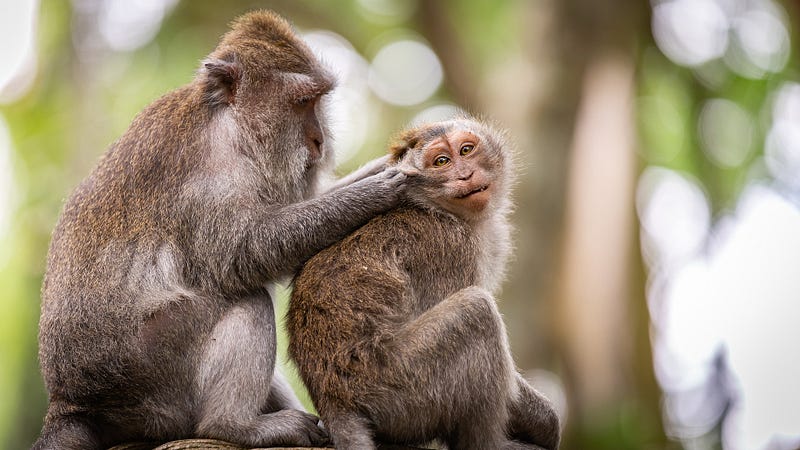
by Joe Váradi
In the jungle deep and shaded, two monkeys they congregated.
One was known as old and wise, with an ego twice his size,
while the other’s reputation — mediocre, in relation.
All the monkeys in his troop called him simply: nincompoop.
These two, in the mood for lunch hit upon a ripened bunch
of bananas — golden, fleshy and as the two friends got ready
to enjoy the tasty treat, the dimwit had the wise one beat,
reached and plucked the finest fruit, proceeded to peel his loot,
casually tossed the peel, sat back and devoured his meal.
It is now the smart one’s turn, eyes his partner, looking stern,
shoulders his way to the tree, snaps a plump banana free.
With a smug look — Listen, son, watch and learn how this is done …
holds his prize up to the light, then, takes one decisive bite,
one more and he gulps it down, holding back the faintest frown.
His sidekick is at a loss: “Why didn’t you peel it, boss?”
"Because I,” he says with pride, "knew already what’s inside!”
I remembered this parable from many years ago — not as a poem … that was my own innovation. I forget the original context; I’m not even sure if it was told to me or whether I read it. But the story left an impression, as more than just a silly animal tale with a surprise twist ending.
The behavior of the wise monkey is something we can observe from time to time among members of the human race as well. Long story short — people sometimes do stupid things in an attempt to show how smart they are.
Nota Bene: I liberally borrowed and paraphrased two lines from my own translation of ‘Three Rabbits’, below, to form the opening couplet of the poetic parable above.


