
The Pandemic is Giving People a New Kind of Dreams
Many people around the world — including more than 600 featured in just one study — say they are experiencing a new phenomenon: coronavirus pandemic dreams.
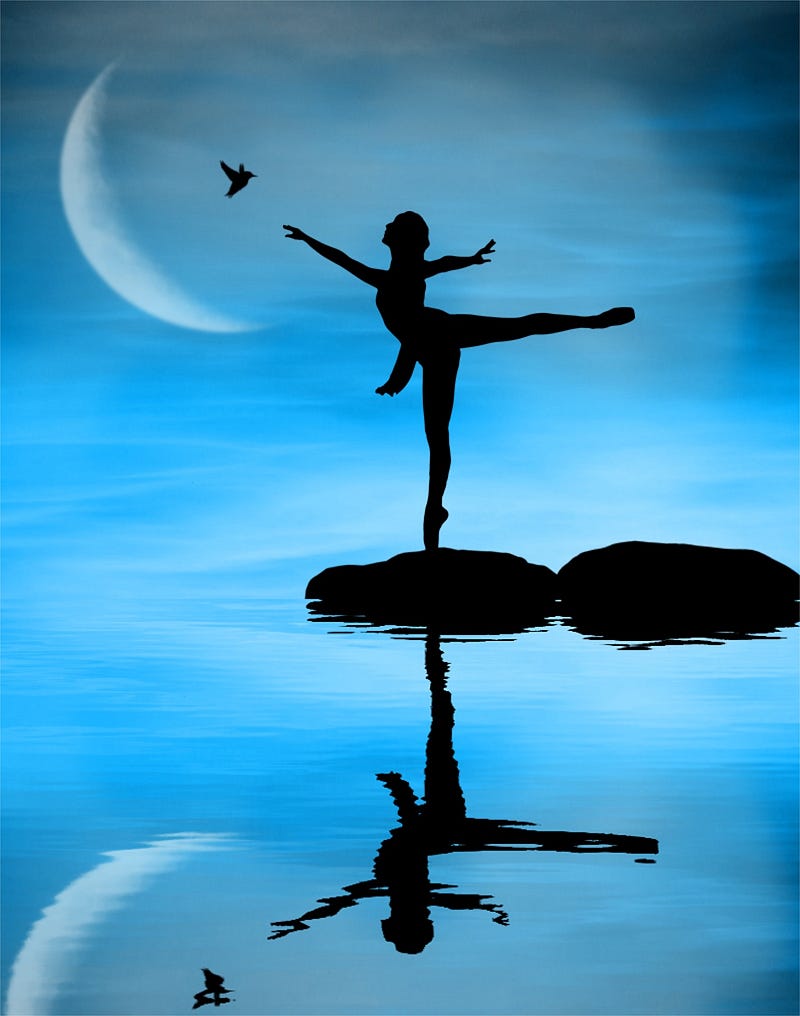
John Lewis and Jimmy Carter sit with me in first class. We’re on our way to New York to watch a special joint performance of American Ballet Theater and New York City Ballet. Mikhail Baryshnikov, Natalia Makarova, Peter Martins, Rudolf Nureyev, Natalia Osipova and Surgei Polunin are performing. There’s a note for me at the box office. Nureyev wants me to join them. I’m back stage in my dressing room and someone comes in and hands me the most gorgeous tutu I’ve ever seen.
But before I can change into it, Margorie Taylor Greene comes running in, grabs my tutu, shoves me out the stage door and slams it behind me. I try to get back in but it’s locked. I pound on it and a guy in black leather and a metal studded belt who looks like a bouncer from Studio 54 opens the door but tells me he has no idea who I am and if I don’t leave, he’ll call the police.
All of a sudden, the theater fades away until it’s no longer there and I’m alone and lost in the middle of nowhere. The only thing I see are Dali’s melting clocks hanging from every tree, each one reflecting a different time.
I interpreted the dream as falling back on my long-time love of dance which merged with a particularly stressful political era and my constant focus on the news so as not to be surprised by another Trump related disaster. I think the clocks probably represented the confusion of time and day that the lack of structure has caused so that more often than not I have absolutely no idea what time it is. Often I don’t know the day either.
Like many people I’ve been having really bizarre, vivid dreams since the pandemic began, particularly after I became ill with the virus. It seems like I’m also remembering them more.
There has been another change in other aspects of my dreams. I’ve had anxiety since I was a kid. To deal with it, I began to change my dreams as I slept. This ability to lucid dream served me well at other stressful times in my life.
Yet for some reason, I don’t seem to be able to do this anymore. Otherwise, I would have burst back through that stage door, reclaimed my tutu and triumphantly danced with some of the most astounding dancers that have ever existed! But instead, I was a passive observer.
From what I’ve read, this is unusual, as people capable of lucid dreaming are doing it more and many who have never done it before are now developing the ability. Dream experts have commented on this, saying it’s because of the loss of control in our world. I know from experience that lucid dreaming does re-establish a sense of control.
Perhaps, at least for me, this is why I’m not able to engage in lucid dreaming right now. I know many of us feel like the pandemic has taken control for our lives away from us. We feel like we are waiting in the wings for it to be over so we can take up where we left off.
Maybe for me, that instead of being able to assert control in my dream life, the lack of control I feel in my waking life is affecting what happens when I’m asleep. So just like I feel a loss of control when I’m awake, I experience it when I’m sleeping as well.
I’m not alone in having unusual dreams since the beginning of the pandemic. Researchers say that withdrawal from our usual environments due to social distancing has left us with a lack of inspiration. This is forcing our subconscious minds to draw more heavily on themes from our past as opposed to new experiences. (I wonder if this affects us as writers as well.)
Numerous research teams at Universities in several countries are collecting data on changes in dream states that have occurred during the pandemic. One of the conclusions that has been made so far is that pandemic dreams are being affected by stress, isolation, fear and changes in our sleep patterns. This results in a backdrop of negative emotions that make the dreams we are having now seem different from our regular dreams.
The amount of time we are sleeping also affects how much we dream and how likely we are to recall our dreams. Our last REM period of the night is the when we have our longest and most vivid dreams. Having to wake early to go to work or school frequently will cut off that last REM period. Now that our schedules are more our own, many of us no longer set alarm clocks but wake when it’s natural to do so resulting in the ability to experience this last REM state.
Those of use who are sleeping much less may not be having as many dreams as we otherwise would but frequent night awakenings may occur in the middle of REM sleep. This makes it more likely that we’ll remember our dreams.
Overcoming Coronavirus Pandemic Dreams
For those experiencing coronavirus nightmares, there is growing evidence that “dream mastery techniques” can decrease their negativity. We can consider how we want the dreams to be different in order to program new scripts. Writing this down and rehearsing it several times before bed can help influence our dreams.
These scenarios can range from “normal” solutions like fighting off attackers or making ourselves strong enough to withstand whatever we fear, to more fantasy related solutions such as shrinking the attacker until they disappear or using magic to prevent whatever is making us anxious.
Focusing on the bizarre can also help. Changing the context or location or overriding the laws of physics such as seeing yourself able to fly to get out of a negative situation can provide a different angle that helps downplay the negative emotions.
Have your dreams changed since the beginning of the pandemic? If so, how? Let us know in the comments below.

If you enjoyed reading this story, you might also like these:
You can find links to my other work on Medium and follow me here. Thanks for reading and for supporting Mental Gecko!