
TRAVEL FOR CULTURE
The Panama City Paradox
Wild yet industrialized, modern yet historic, foreign yet indigenous, wealthy yet impoverished, independent yet influenced, making sense of a visit to Panama City
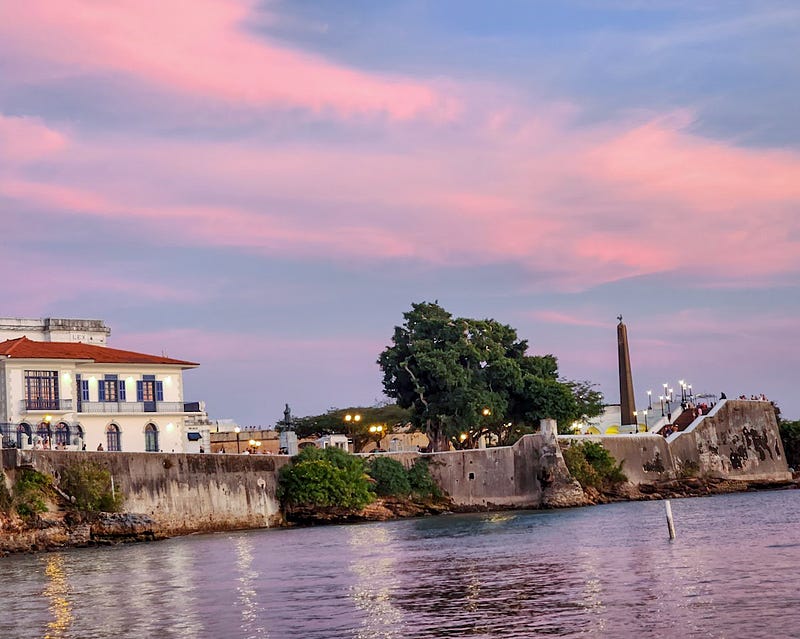
Panama City's Casco Viejo neighborhood provides a unique perspective of the city, both physically and metaphorically. Recently, I visited the area with a mission to take in as much of the city as possible on a short visit.
The City felt unique and memorable in a way I couldn't quite put my finger on upon first arriving. The entire visit felt like a hunt. I was gathering evidence to try to understand its elusive peculiarity.
As I aimlessly wandered the streets of Casco Viejo, Panama City's historic district, I was finally able to piece it together. All around me, I spotted paradoxes, incongruities, anachronisms, and contradictions, like multiple worlds existing at a singular moment and in a singular place.
Panama lies between Colombia, where I currently live, and Costa Rica, an area I explored several years ago. Therefore, I expected Panama's culture to resemble those of its neighbors.
After all, they share similar terrain and climate, their histories are inextricably linked, and their people have interacted with and influenced one another, sharing cultures since long before colonization.
Panama was even part of the nation Gran Colombia prior to seeking its independence in 1903. Today, however, it's evident Colombia and Panama are distinguishable by more than just an impassible jungle frontera(border).
Wild Yet Industrialized
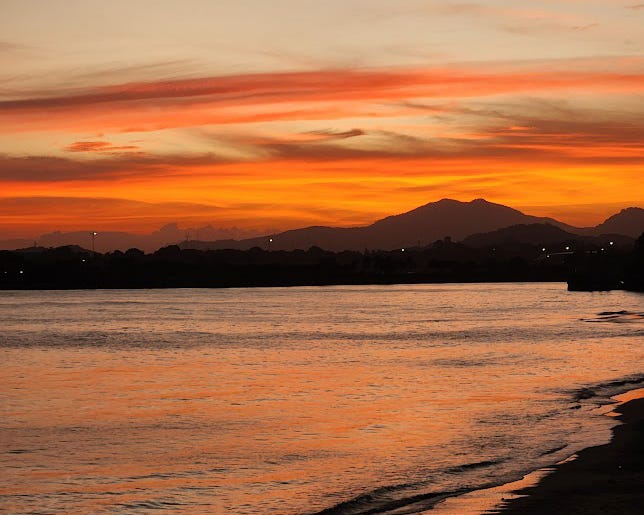
From the cape at the tip of France Square, I gazed out toward the horizon and noted another striking contradiction.
To the southeast, a sprawling skyline of volcanic mountains, the Tabasara range blanketed by dense jungle beautifully framed by the fiery sunset sky and reflected in the rippling sea.
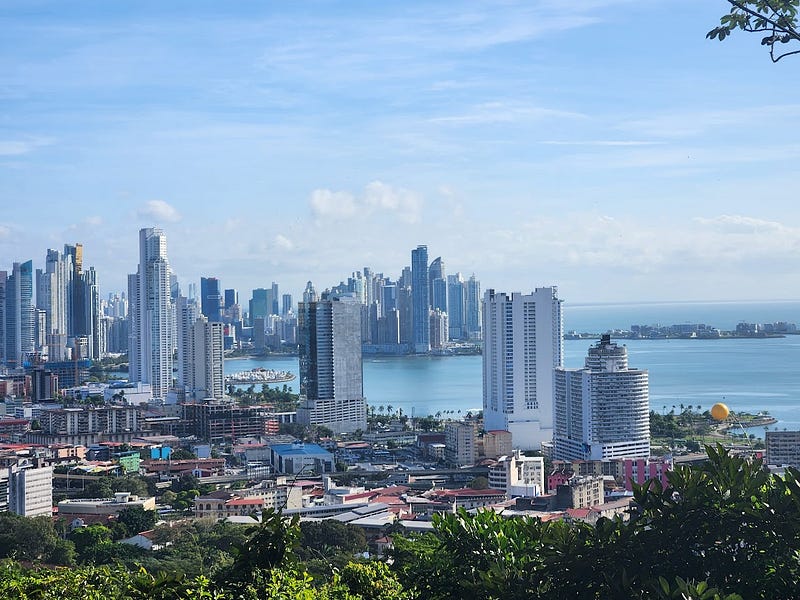
Turn 180 degrees, and a modern city skyline competes with the mountains in their skyward reach.
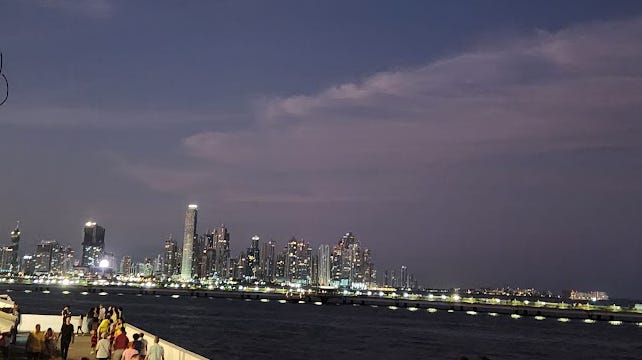
I was astounded at the ability to stand in one place and take in such contradictory views. An experience that seemed to establish a theme for my perspective on Panama City.
Modern Yet Historic
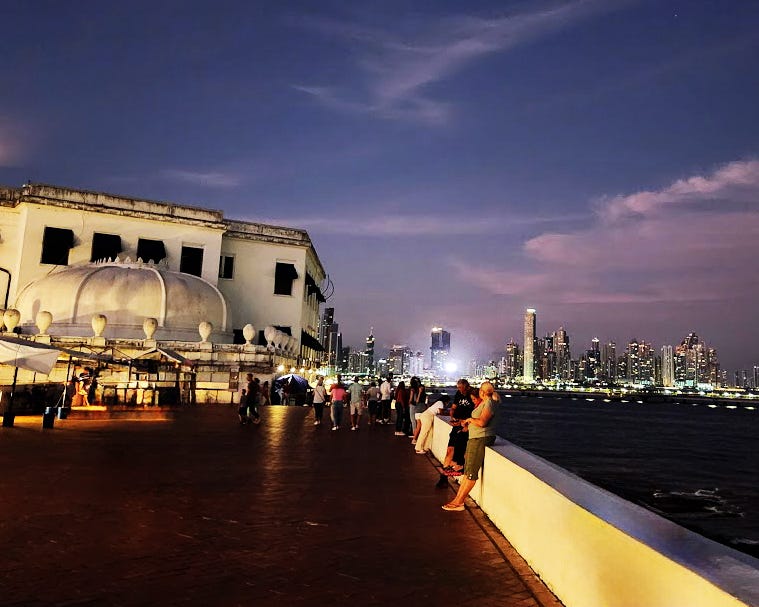
The anachronistic architecture was the first hint toward the city's paradoxical nature. The contrast is evident with a cursory scan of the skyline from the Panama Canal Monument at the tip of France Square, a small peninsula jutting into the Pacific.
Modern skyscrapers stand tall just beyond historic buildings and landmarks in varying states of disrepair from bygone eras.
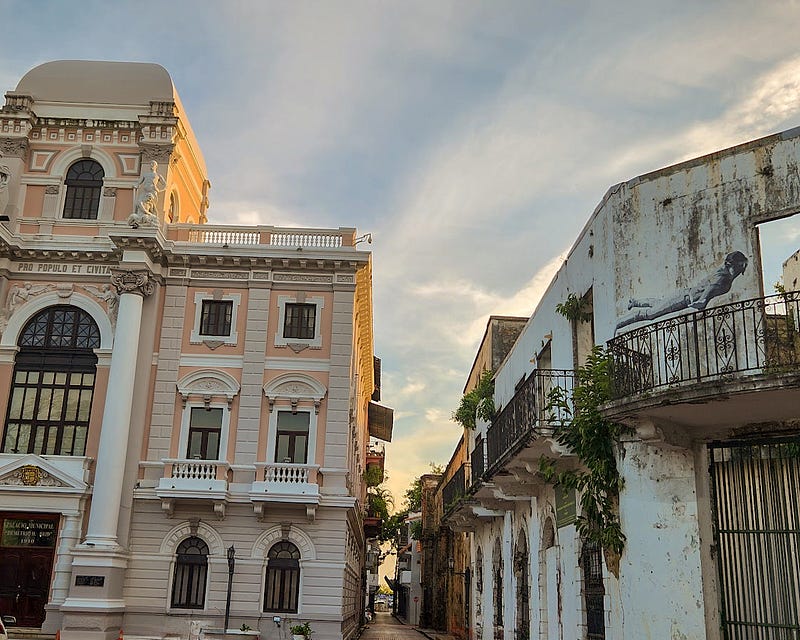
Dilapidated structures stand beside pristine Spanish colonial structures. The neglected structures are gutted. Nothing but worn, graffiti-adorned facades remain, in stark contrast to their elegant neighbors.
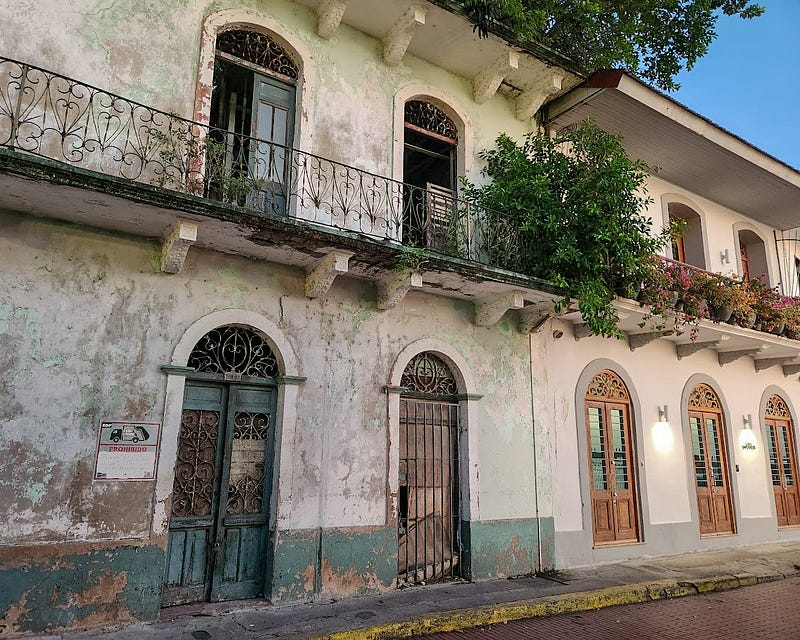
It sometimes seemed like an act of random selection. One building sits neglected and robbed of its contents, yet its nearly identical neighbor is renovated, opulent, and thriving.
Foreign Yet Indigenous
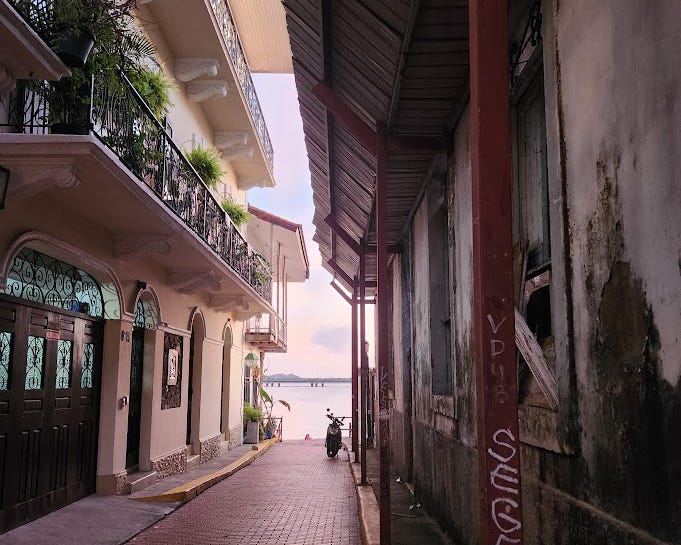
The contrasting cultural influences also contributed to the vexing experience. At several points along my promenade, I was struck by the sense I was again in Europe.
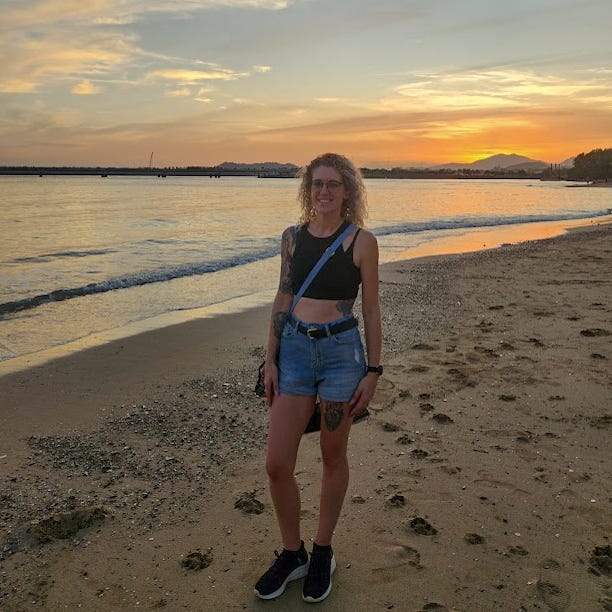
The narrow alleyways and an oceanfront drew memories of Venice. (Photo Above) Following one, I encountered a tiny beach littered with sea glass. I arrived just in time to catch one of the most beautiful sunsets I've ever witnessed.
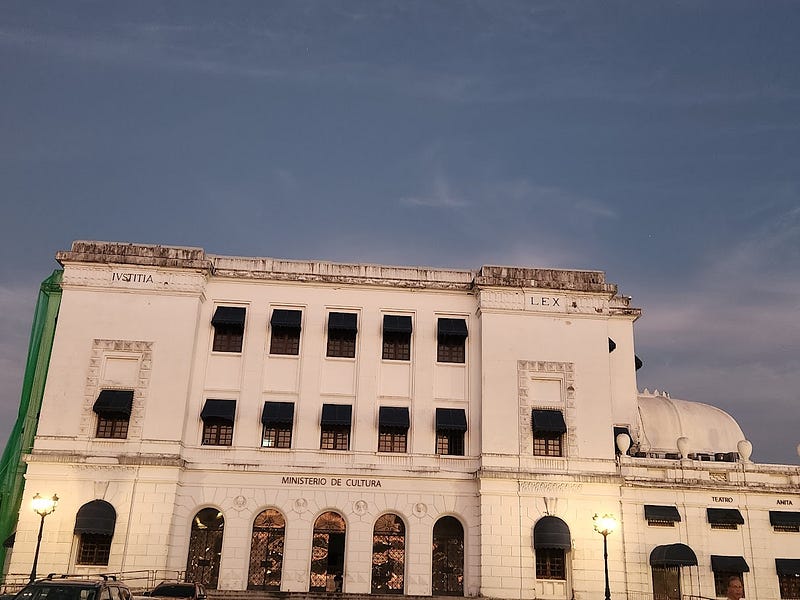
The Teatro Anita Villalaz is another example of the Italian influence. Built in 1931 by Italian architect Genaro Ruggieri, it was designed as a "mini Italian theater." (https://es.wikipedia.org/wiki/Teatro_Anita_Villalaz).
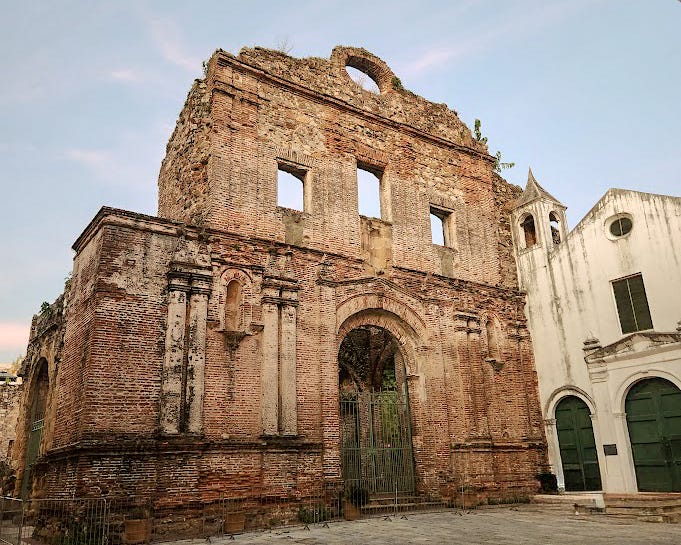
Turning a random corner, I was certain I'd returned to Rome, where my husband and I had commented on a trip in the past how exhilarating it was to encounter the ruins scattered randomly about the city.
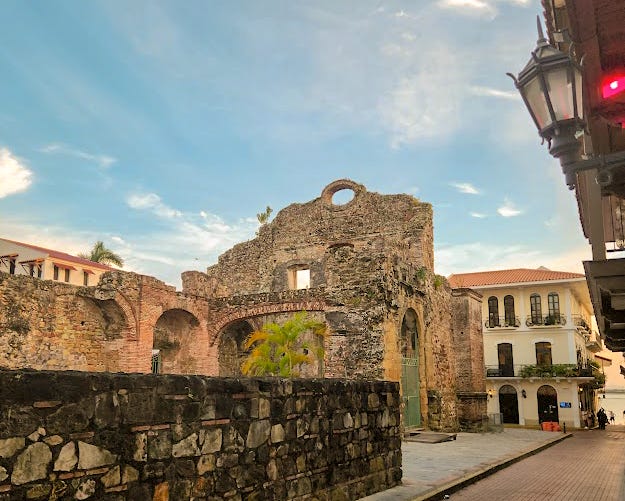
In Panama, the remains of the historic Santo Domingo Convent and Church, built in the 1500s, sparked the same thrill.
A bit further, I encountered a plaza encircled by colorful, historic buildings that could have been Madrid, Spain, except for the incongruity of the circle of Indigenous children performing a dance to flute music.
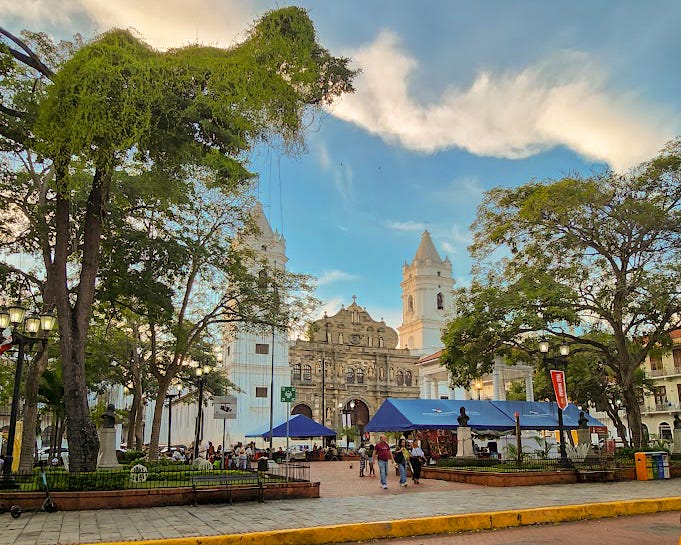
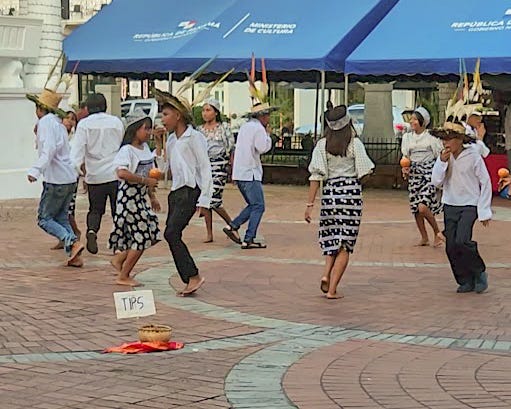
I found the indigenous presence in a virtual shrine of well-preserved and maintained relics of Panama's 300 years under the rule of the Spanish Empire to be another notable juxtaposition. The buildings better cared for than the people who suffered Spain's brutality.
Today, the streets in front of those colonial relics are lined with stalls for indigenous vendors to market their goods. Most famously the vivid, colorful, hand-crafted molas in every imaginable style and design.
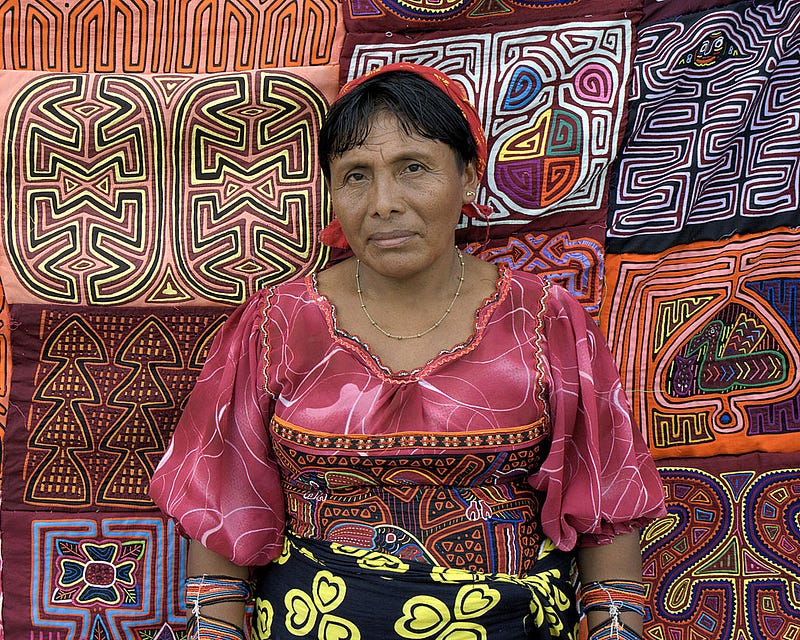
*Note: I try to avoid photographing people just trying to make a living since they themselves aren’t tourist attractions. That is why I don’t have a good photo of the vendors or molas being sold in Casco Viejo.
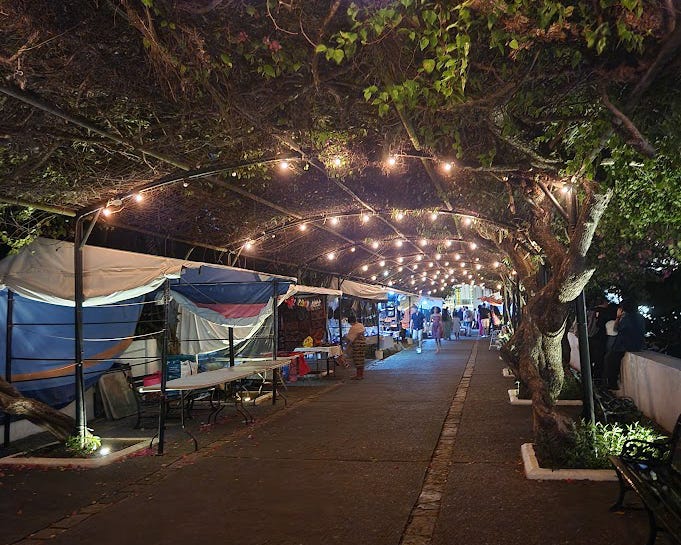
Today, Panama is independent, but I wonder if what remains of their once thriving indigenous population isn't much like the dilapidated, gutted buildings. Their culture, only a shell of what was, stripped of their once grand population, traditions, and potential in the brutal conquest.
Despite their persistence, they now sit in make-shift shops in competition with the historic landmarks of the atrocities their people have suffered. As they attempt to eke out a living selling their handcrafted wares to tourists. While ships from global economic powerhouses come and go, weighted down by cheaply made modern goods.
The Spanish were ousted, but their presence is still felt in the city.
Wealthy Yet Impoverished
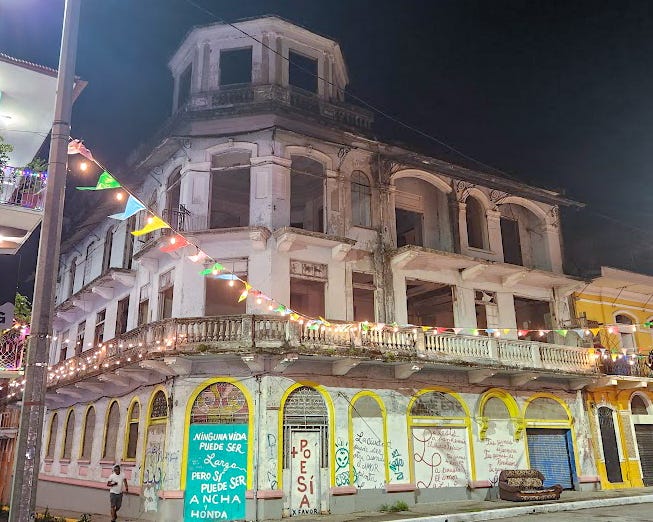
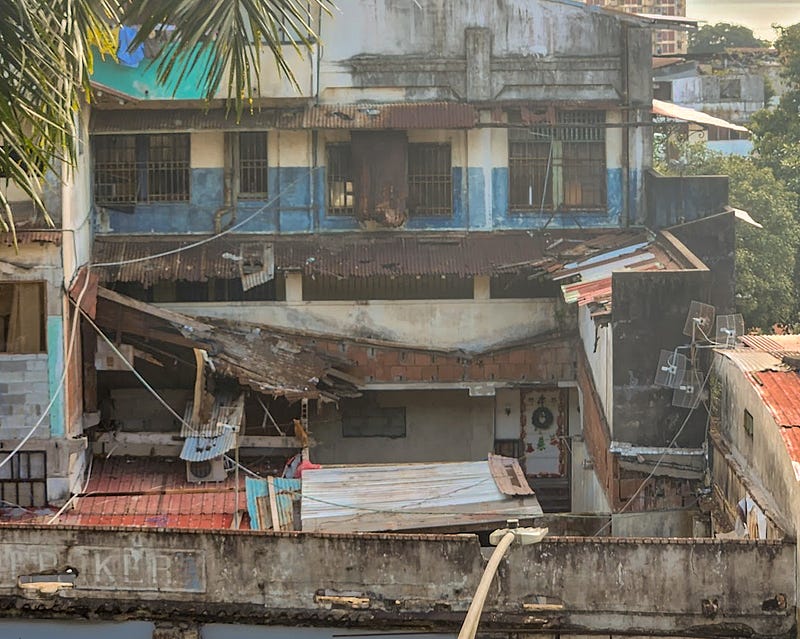
Panama’s economy confounded me during my visit.
Its complicated economic history is evident in its architecture. Numerous signs indicate a wealthy economy, modern skyscrapers, infrastructure, and commercial centers. However, interspersed are obvious signs of extreme poverty and economic distress. Poorly maintained structures, abandoned high-rise apartments, and desperately poor citizens inhabiting them.
Walking the street market in Casco Viejo, I was astounded to find stores offering cheaper clothing and housewares than in Colombia, a country with a much poorer economy.
Currency conversion and comparison is something I’ve learned to do well out of necessity. However, trying to make sense of discovering goods at values lower than those in Colombia yet employing the US dollar had me wishing I knew an economist to consult.
Nevertheless, evidence of Panama’s complicated economy abounded in Casco Viejo and throughout the city.
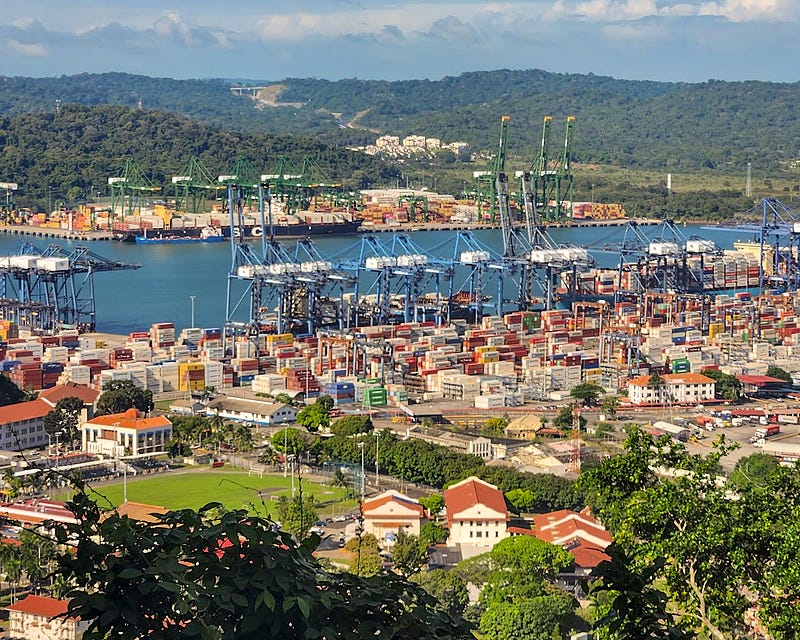
As the gateway between the Atlantic and Pacific, economic powerhouses the world over pass daily with their goods.
In the malls, spotting their influence is as simple as turning the corner from one corridor to the next.
One hall offers high-end European brands, Gucci, Versace and Hermes.
Another corridor is packed with stores like the Japanese Miniso and South Korean Mumuso, which offer cheaply-made, pastel-colored, and anime-adorned goods from Asia, generic tech, cosmetics, stationary, and home goods.
Yet another takes me home. Familiar name brands like Samsung, Skechers, and Columbia market athleisurewear and electronics from the US at a premium.
Independent Yet Influenced
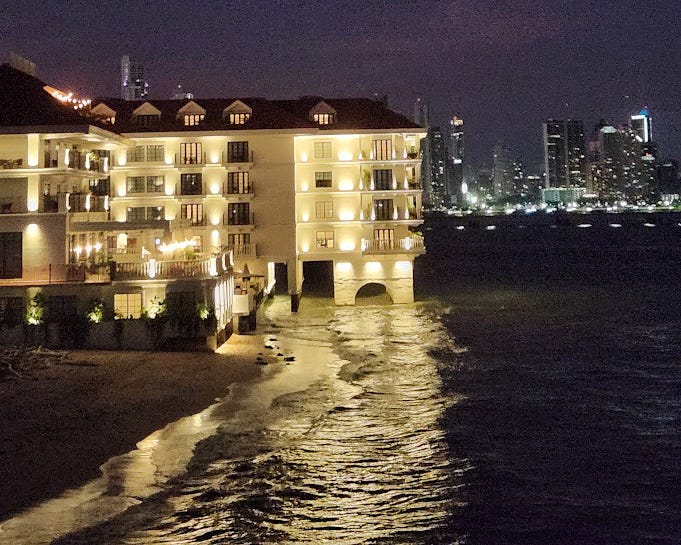
I stopped to rest on a bench amid the cultural cacophony when I spotted the beautiful hotel jutting into the Pacific, pictured above. Again, it reminded me of Venice’s casual integration of surrounding bodies of water.
As I sat, I reflected, attempting to make some semblance of a sense of everything I’d seen. Being from the US, my first inclination to understand the many varying and, at times, disjointed cultural elements was to consider the salad bowl metaphor often attributed to US culture.
Like a salad, individuals maintain their personal, cultural identities (lettuce, carrots, tomatoes), but when mixed, they form a distinctive, unique concoction (the salad) known as “American.”
This logic fell apart when I realized if this were the case, it wouldn’t feel so abnormal to me. Shouldn’t it feel familiar, like home?
Jotting a list of everything I’d surveyed that stood out to me, I stumbled upon a theory. The difference was in the source of the cultural influences.
Panama isn’t a mixing bowl like the US, composed of various cultures and peoples. It’s a mixture of external cultures imported, imposed, and occasionally adopted.
Doing some research, I’ve discovered there are grounds for my hypothesis. Approximately 7% of Panama’s population are immigrants (Worldometers), nearly half the percentage of immigrants in the US, which is 13.6% (American Immigration Council).
Additionally, according to Panama’s 2010 census (their most recent since the 2020 census was postponed due to Covid-19), approximately 12% of the total Panamanian population claim indigenous roots in one of the seven Indigenous groups of Panama, the Ngäbe, the Buglé, the Guna, the Emberá, the Wounaan, the Bri bri, and the Naso Tjërdi (IWGIA — International Work Group for Indigenous Affairs).
In comparison, only 2% of the American Population identify as Indigenous (IWGIA — International Work Group for Indigenous Affairs).
Therefore, Panamanian culture isn’t the product of a diverse population, making the country their home. It’s the result of diverse cultures foisted upon them by nations with political or economic interests.
As a result, Panama’s identity seems lost or overpowered by outside forces who value its economic potential more than its cultural significance.
Evidence of the negative repercussions of this fleeting and fickle economic interest exists. Just look at the abandoned properties inhabited by local Panamanians who have been priced out of property ownership in their own homeland by outside investors.
I’m left wondering, is Panama’s culture something one must squint to see amidst the outside influences imposed via ruthless conquest, political manipulation, and economic exploitation? Or, is its culture plainly perceptible, an amalgamation of its history and external exploiters?
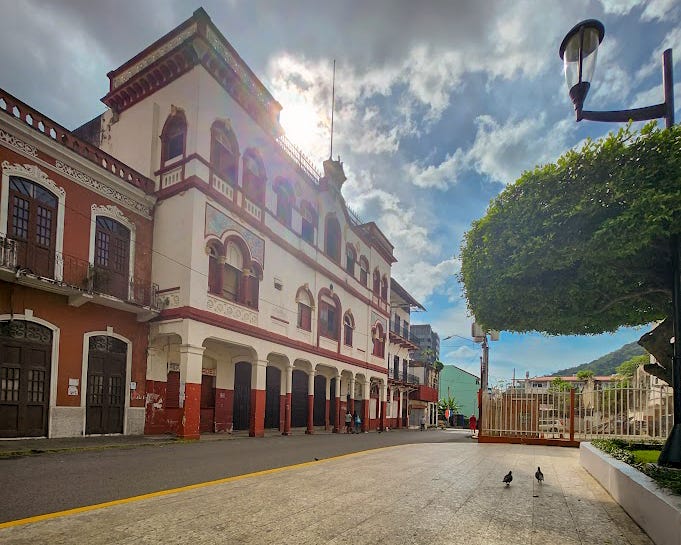
Though my stay in Panama was short, one thing it provided me was an ongoing curiosity about the country's history and what shapes its present-day culture. A unique country with an interesting past, it has faced great hardship and has tremendous potential.
Since leaving, I've continued to research in hopes of gaining a better understanding of what I saw, and I hope to return soon to gain further understanding and insight.
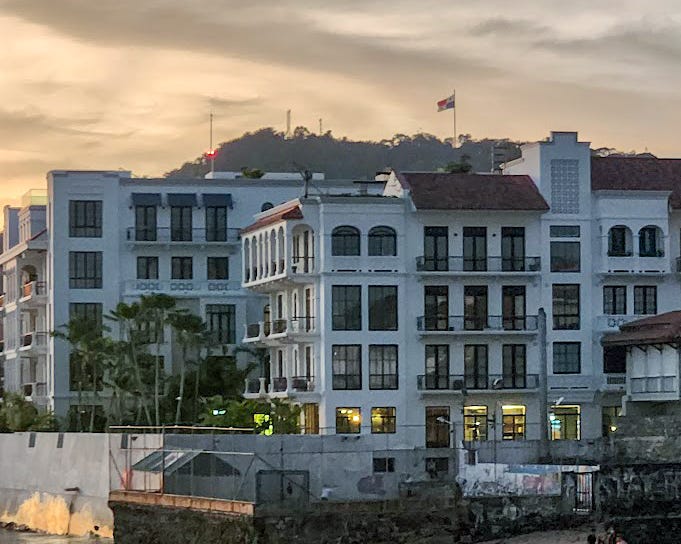
I hope you enjoyed my musing. If you did, check out the article below, which was also inspired by my visit. It takes you along my hike at Cerro Ancon to La Bandera (the flag), pictured above. Along the way, I spotted some unique wildlife and incredible views of the city from above.


