
The Palladino Principle Explains How Brilliant Innovators Use Pointless Knowledge
Steve Jobs knew the value of the obscure.
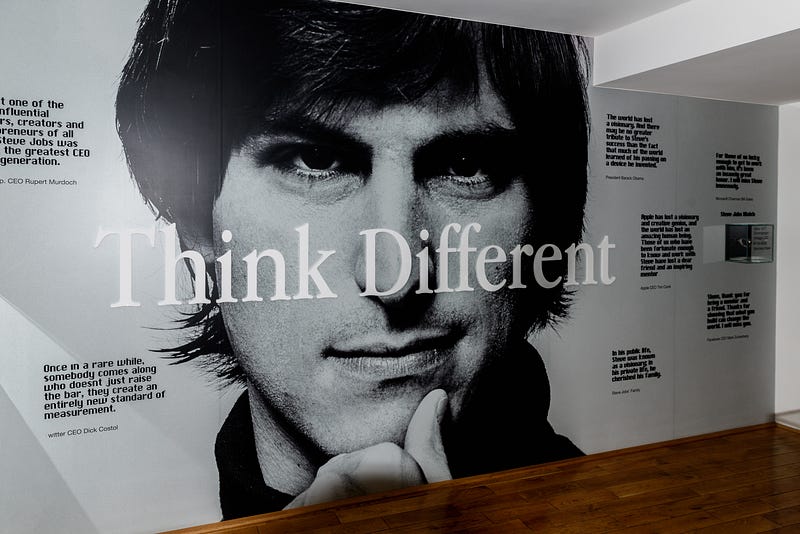
Steve Jobs would be nothing without his pointless education. That’s an odd thing to say, considering he was a dropout who spent most of his life calling college graduates “bozos.”
To understand what I’m saying, you have to listen to his commencement address at Stanford in 2005. That’s where Jobs talks about a course on typography he took with a professor named Robert Palladino, who devoted his life to the study of calligraphy:
None of this had even a hope of any practical application in my life… If I had never dropped in on that single course in college, the Mac would have never had multiple typefaces or proportionally spaced fonts.
— Steve Jobs
His education was pointless, until it was priceless.
Pointless knowledge always has a purpose.
It was a professor’s passion for design that inspired Jobs to pay attention to little details, the things his products are now famous for. You could even call it the secret to his entire legacy at Apple.
It’s what makes them different from every other brand.
The lesson is simple:
Something that looks pointless on the surface always has a hidden purpose. It’s just waiting for the right person to use it at the right time.
We’ve lost the love of pointless knowledge.
That magical typography class happened in 1972. Unfortunately, there’s been a war on knowledge since then. Our culture has launched endless assaults on anything that appears “pointless.”
Americans only want what’s “practical” now. We’ve developed a utilitarian mindset. We only see value in knowledge with an immediate application. We can’t stand boring books. We think libraries are wastes of space. We call universities drains on taxpayers.
It’s one of the reasons we’ve fallen so far behind in just about every way, including technology and innovation.
We don’t learn to learn anymore.
We love pointless knowledge for a reason.
Although we’ve been taught to reject pure knowledge, your brain likes it. Your brain has a way of holding onto pieces of information it’s fascinated with. You don’t always know why at first.
That’s a good thing.
Knowledge has value for its own sake. Our conscious minds don’t always see what to do with it, but the rest of our minds have an intuitive understanding of its worth. It can decide what facts and insights to store for later use, when they might come in handy.
Until then, we have to trust ourselves a little.
Life is still filled with geniuses who tunnel through weird rabbit holes. They spend months or years collecting useless facts. They devote themselves to hobbies that make no sense to anyone else.
It all looks pointless, until it pays off.
You have to connect the dots.
We’ve been lucky to have so many weird minds spend so much time on bizarre pursuits. It’s all that “useless information” that fuels brilliant discoveries and innovations. That’s what innovation comes down to, connecting one dot to another. It can take years, or decades. It can take one person building on the discoveries of others going back centuries.
That’s why we should celebrate pointless knowledge. There’s always a potential to change the world.
Pointlessness is subjective, and beautiful.
Not everyone can agree on what’s truly pointless.
Take Palladino. He loved calligraphy, but he had no idea what computers were and had no interest in ever learning to use one.
When Jobs came to him later with ideas about adapting fonts for personal computers, Palladino didn’t laugh at him. He encouraged him. Apple was the lovechild of pointless ideas.
Those pointless ideas converged and changed the world forever.
Not bad…
Palladino retired to a 20-acre ranch, where he spent the rest of his life raising sheep after the death of his wife.
Later, he became a priest.
Palladino didn’t have to see the point of computers back in the 1970s in order to respect Jobs, or his ideas. He knew the pure joy of pointless knowledge, and where it can lead.
Small minds trivialize pointless knowledge.
You can tell how small a person’s mind is by watching them react to new information. They don’t want to connect the dots. They don’t like being surprised by facts. They ask, “What good is it?”
They don’t like sitting around reading books or watching documentaries for their own sake. They have no curiosity.
Maybe they did once, but our culture squeezed it all out of them. All they care about now is what knowledge can do for them in the moment. It’s a selfish, short-sighted way to look at the world.
You see this mindset in politicians. You also see it in more and more entrepreneurs. They forget that it was the love of pointless knowledge that got them where they are.
Pointless knowledge is going extinct.
The war on knowledge has bled into education. The general public mocks universities now. They say there’s “no point” in teaching students anything about art or music, or philosophy. Everyone insists they should only be learning math and science.
It’s all we fund anymore.
Politicians have slashed budgets for universities to the bone. Colleges have responded by hiring more administrators and firing faculty, even tenured professors. They’re shutting down arts and humanities programs. They’re eliminating foreign languages.
They’re raising tuition so high the average person can’t afford a single semester without going into debt.
This isn’t a society that values knowledge. It’s not one that innovates. All it can do is consume and reproduce the same thing, over and over. This is a world where everything has to have a point.
It’s a barren one.
Rediscover the joy of pointless knowledge.
Steve Jobs had no idea his fascination with fonts and calligraphy would lead to a revolution in technology. He just allowed himself to enjoy learning. He didn’t let anyone judge him.
Imagine a world where we stopped throwing away every piece of knowledge that didn’t sparkle with the entrepreneurial gold.
We could find new value in libraries and museums. We could turn universities back into what they used to be, houses of knowledge that help bright minds meet each other and connect dots.
You could read a book because it sounds interesting. You could take a class that has nothing to do with your career. You could indulge in a hobby that only matters to you. You could let knowledge just sit in your mind for months or years, like a dot waiting to be connected at some vague point in the future, but worth the wait.
That would be a brilliant mind.
Remember The Palladino Principle.
Pointless knowledge is priceless. It’s just waiting for the right person.
Maybe that person is you.


