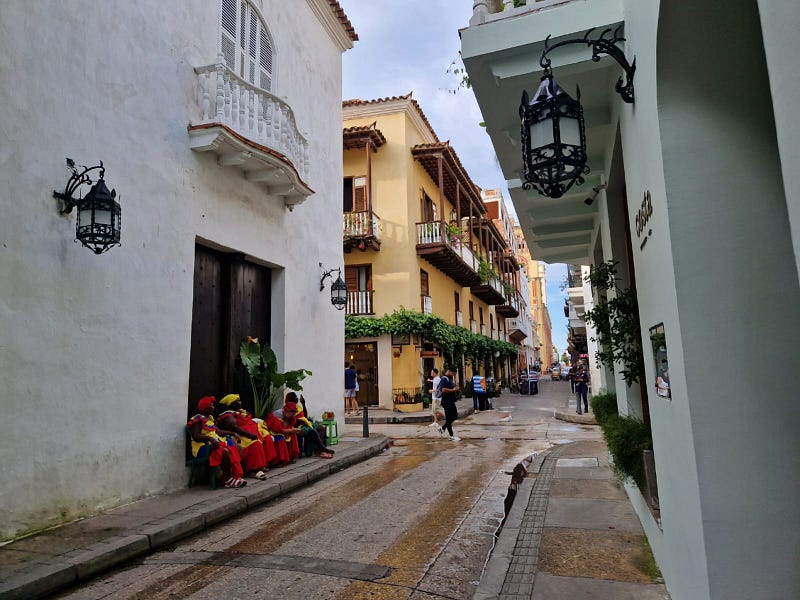
The Palenqueras of Cartagena
The iconic figures gracefully strolling on the streets of Cartagena de Indias
Many of you reading this article have probably not heard the word “palenqueras” before. It is not a well-known term, don’t worry, and I had not stumbled upon it either before I got the chance to visit Cartagena de Indias, a colonial city in South America.
Some of you might have noticed that I have not been active much (if at all) on Medium for most of November. This was because my trip to Colombia finally took place. I am glad to report it was well worth the wait.
I will probably be writing about the many places I have visited and about my impressions of the country in the next few articles, but I would like to dedicate this first one to the “palenqueras”.
I first heard details about this trip I later decided to go on at the end of 2021. The owner of the travel agency I usually go with told me that the trip to this particular destination in South America was one of their most spectacular.
Back then, I didn’t know much about Colombia. I was aware that this country was located in South America and I also knew that Gabriel Garcia Marquez, the Nobel prize winner, had been born there. That was pretty much it. Call me ignorant if you wish, but I did not have a clue about it being Pablo Escobar’s country and everything that this entailed.
Later on, in 2022, I saw some pictures from Cartagena de Indias from a trip organised by the same agency. The colorful streets and the pictures of the “palenqueras” immediately caught my eye. I am a sucker for street art and I was quickly sold. The vibrantly coloured attire of these black women (that I knew absolutely nothing about) was a major factor in my decision. They seemed so different from everything I had ever seen that I had to go on this trip. I knew that it would definitely be my cup of tea. And it was.
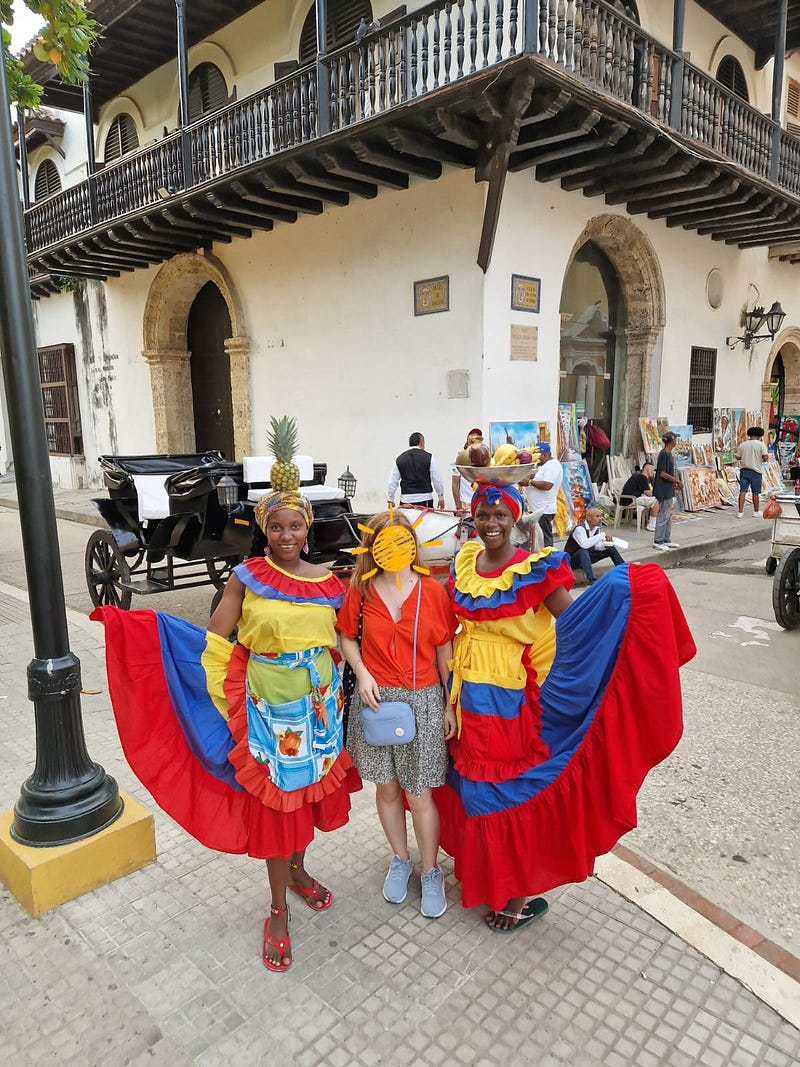
The “palenqueras” have become representative figures on the streets of Cartagena. These women dressed in very colourful traditional costumes can be seen strolling in the city center, carrying baskets full of tropical fruits on their heads. Pineapples, mangos, bananas, and sometimes even watermelons… nothing seems to be too heavy for them.
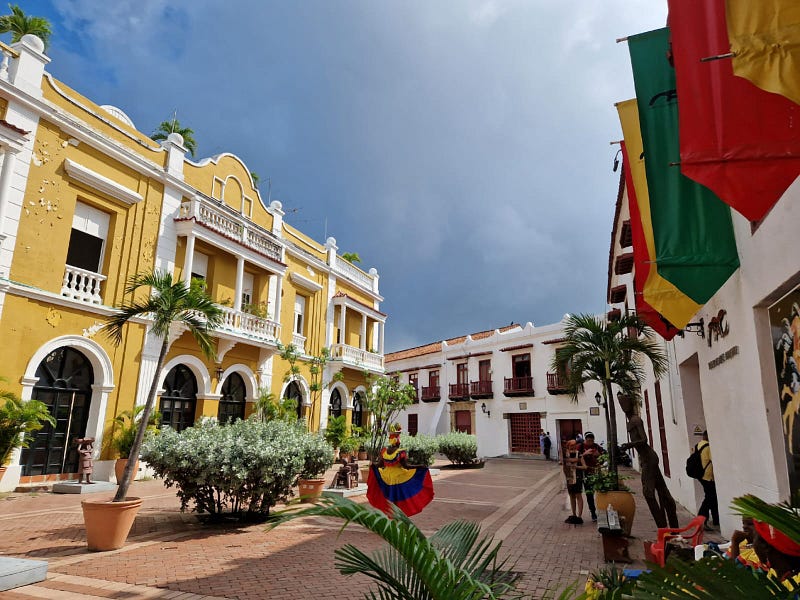
While initially they came from their village to Cartagena to sell fruits because they were very poor, nowadays they mostly earn money from posing for tourists. The “palenqueras” live in San Basilio de Palenque (a small town located relatively close to Cartagena) which was the first town of free Black slaves in the Americas.
Back in the early 17th century, an African man named Domingo Benkos Biohó managed to escape from a slave ship that capsized in the waters of the Magdalena River. Along with some of his peers, he founded San Basilio. This was a community for fugitive slaves in a remote location, away from their former masters. They fortified the place by surrounding it with wooden fences, or palenques, from which the “palenqueras” take their name. (source)
This little town (village, according to Wikipedia) was added to the Unesco World Heritage list in 2005.
San Basilio de Palenques does not have a mayor. Nor does it have a hospital. I’m not sure how the inhabitants manage the administrative stuff, but according to our local guide, a shaman assists sick people. The ones with very severe conditions must be going to hospitals in the towns and cities nearby… if they can afford it.
According to the same guide, the runaway slaves seeking refuge in this town were from different states in Africa, so they did not speak the same languages and most were illiterate. There was thus no way for them to get written instructions on how to reach San Basilio de Palenque (their captors might have also been able to decipher them if so).
Biohó’s people were however resourceful and found a fairly ingenious method to guide the runaways into the liberated territory: they were braiding the maps into their hair. The Spaniards had no idea that clues were hidden in plain sight.
Domingo Benkos Biohó was unfortunately captured by the colonialists (after being tricked into signing a treaty) and he was hanged in 1621. His remains were spread throughout the city of Cartagena. His legacy however remained.
I have not visited San Basilio de Palenque, but I find its history fascinating. Moreover, the presence of the “palenqueras” on the streets adds charm and vividness to the visual tapestry of Cartagena de Indias. It also prods the visitors to dig deeper into the annals of the Internet to find more about the history of slavery in South America.